 Viktor Vasnetsov1848–1926
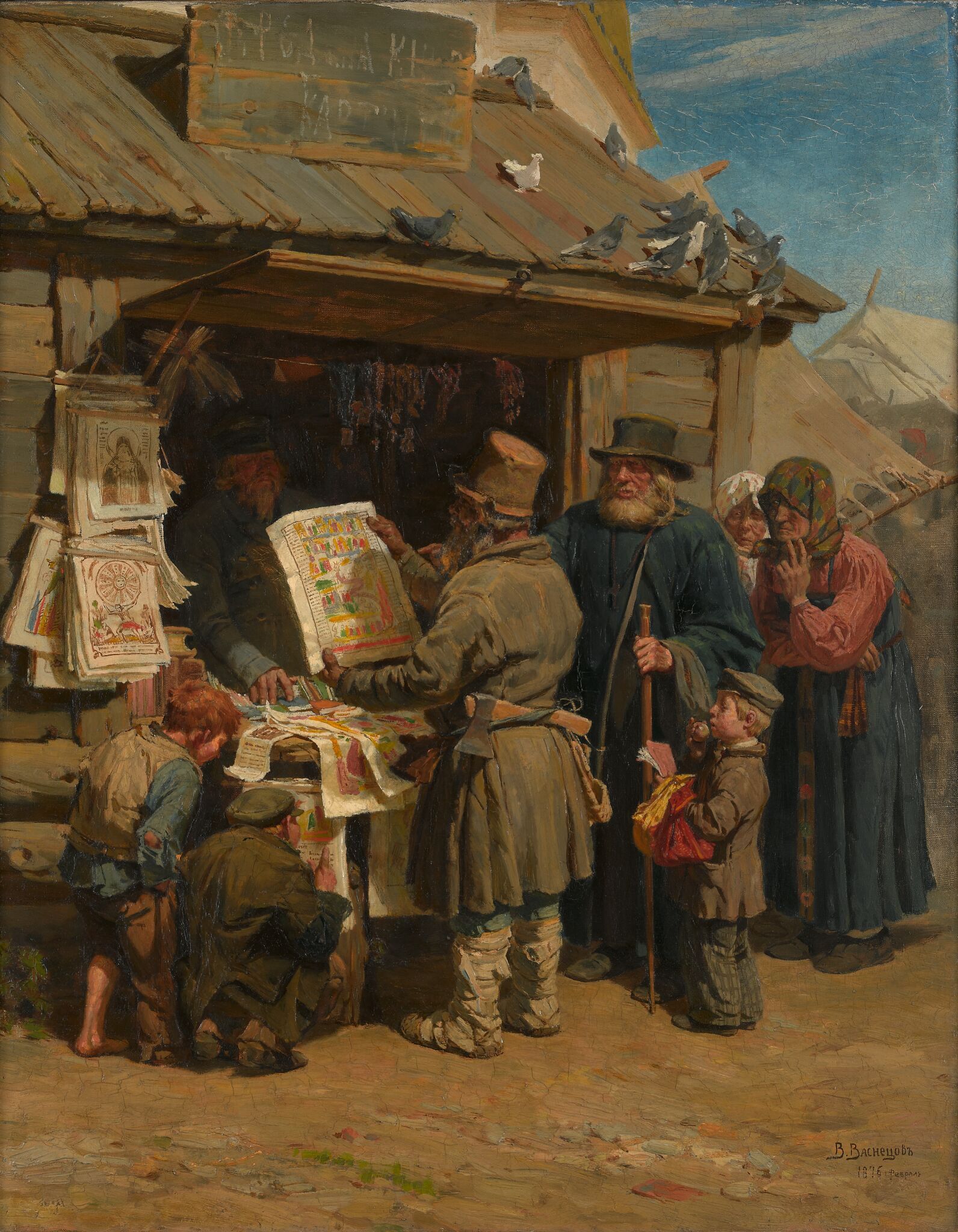
Книжная лавочка
Si può ammirare?
Non si sa

Mosca, Russia
Il proprietario è noto; non si sa se oggi sia esposta.
- Fonte
- Il museo
Sul dipinto
Con le parole del museo — in russo
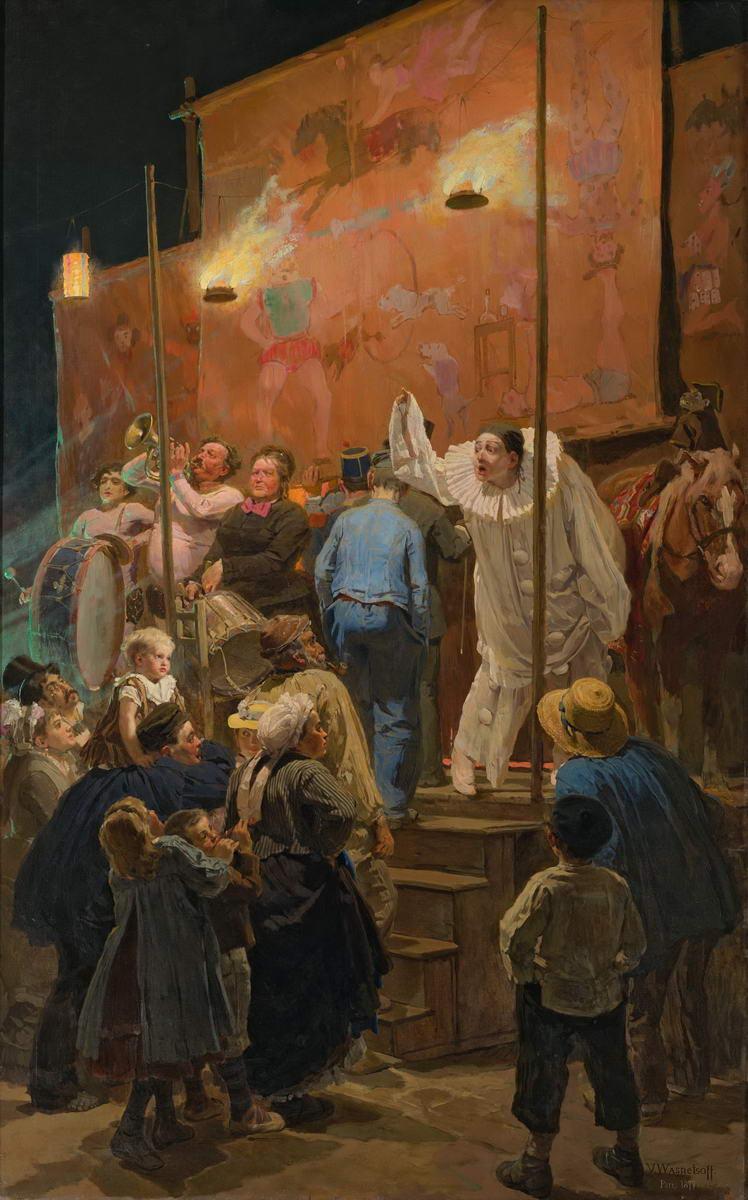
Васнецов обладал особым умением быстро схватывать разные типы людей и характер их поведения, он начинал свой творческий путь как рисовальщик народных сцен. В 1874 году художник сделал рисунок для гравюры, напечатанной в журнале «Пчела» (1875, № 27). Вероятно, ему припомнился забавный эпизод, увиденный когда-то на ярмарке. Подобные балаганы и базары устраивались перед большими христианскими праздниками не только в Вятке, но и в родном селе Рябове, где в храме Рождества Иоанна Предтечи служил его отец, священник Михаил. Приятные воспоминания детства, безусловно, способствовали тому, чтобы этот графический набросок воплотился в живописи. В 1875 году художник обратился к полюбившемуся мотиву вновь – исполнил эскиз маслом. Его приобрел известный московский коллекционер И.Е. Цветков, затем работа попала в собрание Русского музея.
Leggi
Спустя год на 5-й выставке Товарищества передвижных художественных выставок 1876–1877 годов зрители увидели окончательный вариант картины со значительно усложненной композицией. Тогда же эта жанровая сцена стараниями критика А.В. Прахова была переложена в занимательный рассказ: «Где-то в глуши России, на ярмарке, у импровизированной книжной лавочки остановился мужичок в армяке, с топориком за поясом, как есть православный человек, и разглядывает лист с изображением Страшного суда. Случившийся при этом попик-гречкосей не упускает случая принять грозную мину и наставительно растолковать серой овце о значении змия, извивающегося через весь лист, испачканный желтой и красной краской; пара старушек прислушиваются подле, да мальчугашка-кутейник, сын батюшки, в козакинчике, с парою пестрых узелков на руке, остановился над ненадкушенным яблоком.
С другой стороны пара оборванцев ребятишек присели и, смеясь, рассматривают какого-нибудь Бову Королевича, да в тени лавочки возвышается олимпийски-спокойная фигура торгаша, бесстрастно внимающего и наставительным, и веселым речам, упершись пальцами в прилавок».
«Книжная лавочка» была приобретена П.М. Третьяковым, затем передана им С.Н. Голяшкину, после смерти которого в 1903 году перешла в Третьяковскую галерею. Находится в постоянной экспозиции.
Galleria Tret'jakov
Scheda
- Numero di inventario
- 1007
In catalogo
Fonti
- Galleria Tret'jakov
- Immagine: Galleria Tret'jakov — © State Tretyakov Gallery
Nel frattempo, nella vita di Viktor Vasnetsov
Tutta la vita1868–1876
Friendship with Repin and the “evenings” at Antokolsky’s
In St Petersburg he grew very close to Ilya Repin; he attended the “evenings” at the apartment of Repin and the sculptor Mark Antokolsky, where the student Ivan Savenkov read bylinas in a slow chant, in the northern accent so familiar to Vasnetsov — and so his interest in early Russian culture and folk epic finally took shape.
1873–1875
He leaves the Academy before graduating
In 1873, a year before the end of the course, he almost stopped attending the Academy and went only to Chistyakov’s studio: Chistyakov told him he had already got from the Academy all it could give, and Kramskoi advised the same; on 4 (16) February 1875 he was formally discharged, receiving a certificate that listed two small silver medals and one large one.
1876–1877
Mamontov’s letter, homesickness and the first sketch for the “Bogatyrs”
In Polenov’s Paris studio he and Repin re-read a letter from Savva Mamontov calling the artists to Moscow; the letter sharpened his homesickness (“Alone, alone and alone!”), and it was there that the first painted sketch of the “Bogatyrs” was made.
1877
Wedding to Alexandra Ryazantseva
Before leaving for Paris he had proposed to Ryazantseva; the wedding took place in November 1877 in the Church of Saints Peter and Paul of the Semyonovsky-Alexandrovsky military hospital in St Petersburg.
1878
He moves to Moscow, the city of his life’s work
In 1878, his resolve strengthened by Mamontov’s letter, he moved to Moscow, the city to which most of his creative life would be tied: he settled in a small flat in 3rd Ushakovsky Lane near Ostozhenka, walked the city for hours admiring the Kremlin and St Basil’s, and until 1885 the family changed rented flats in Moscow six times.
1878–1880
Mamontov’s commission for the Donetsk Railway
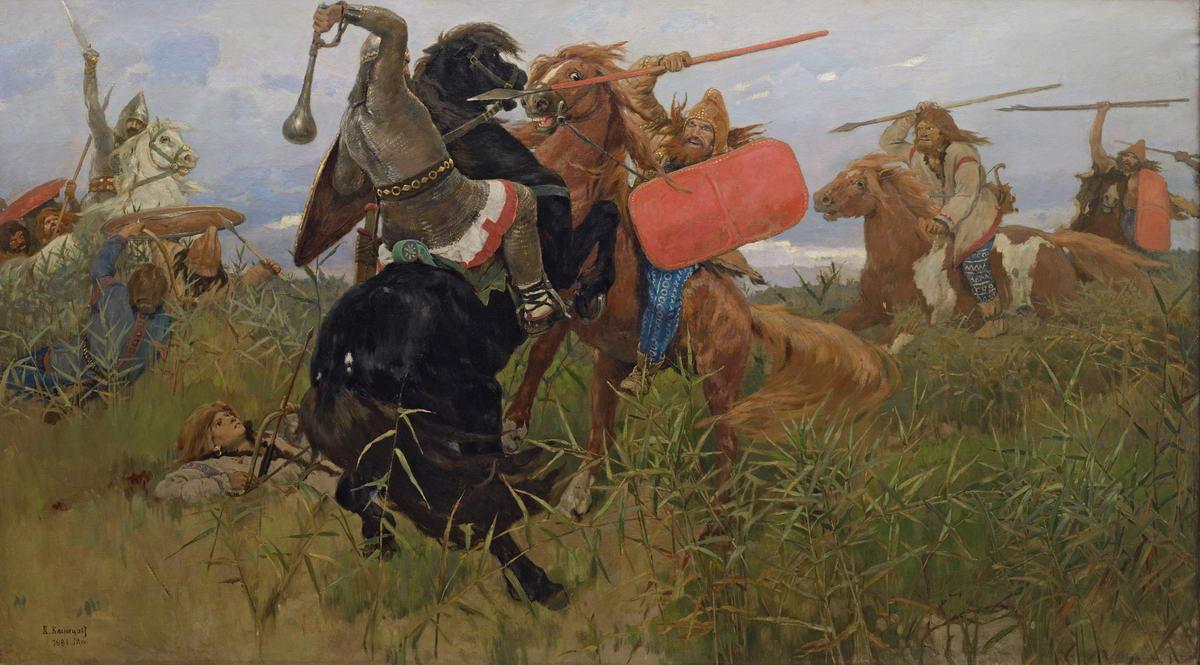
Repin brought him to the house of Savva Mamontov, who commissioned three fairy-tale pictures for the boardroom of the Donetsk Railway — “The Battle of the Russians with the Scythians”, “The Flying Carpet” and “The Three Princesses of the Underground Kingdom” (the princesses of gold, precious stones and coal); the princess Coal, a modest dark-haired girl in a black dress, was especially successful.