Homer
Si può ammirare?
Sì, riceve visite

Londra, Regno Unito
SalaBritish Galleries, Room 52, The George Levy Gallery
Esposta al pubblico.
- Verificato
- Ultimo cambio di stato
- Fonte
- Il museo
Sulla scultura
Object Type
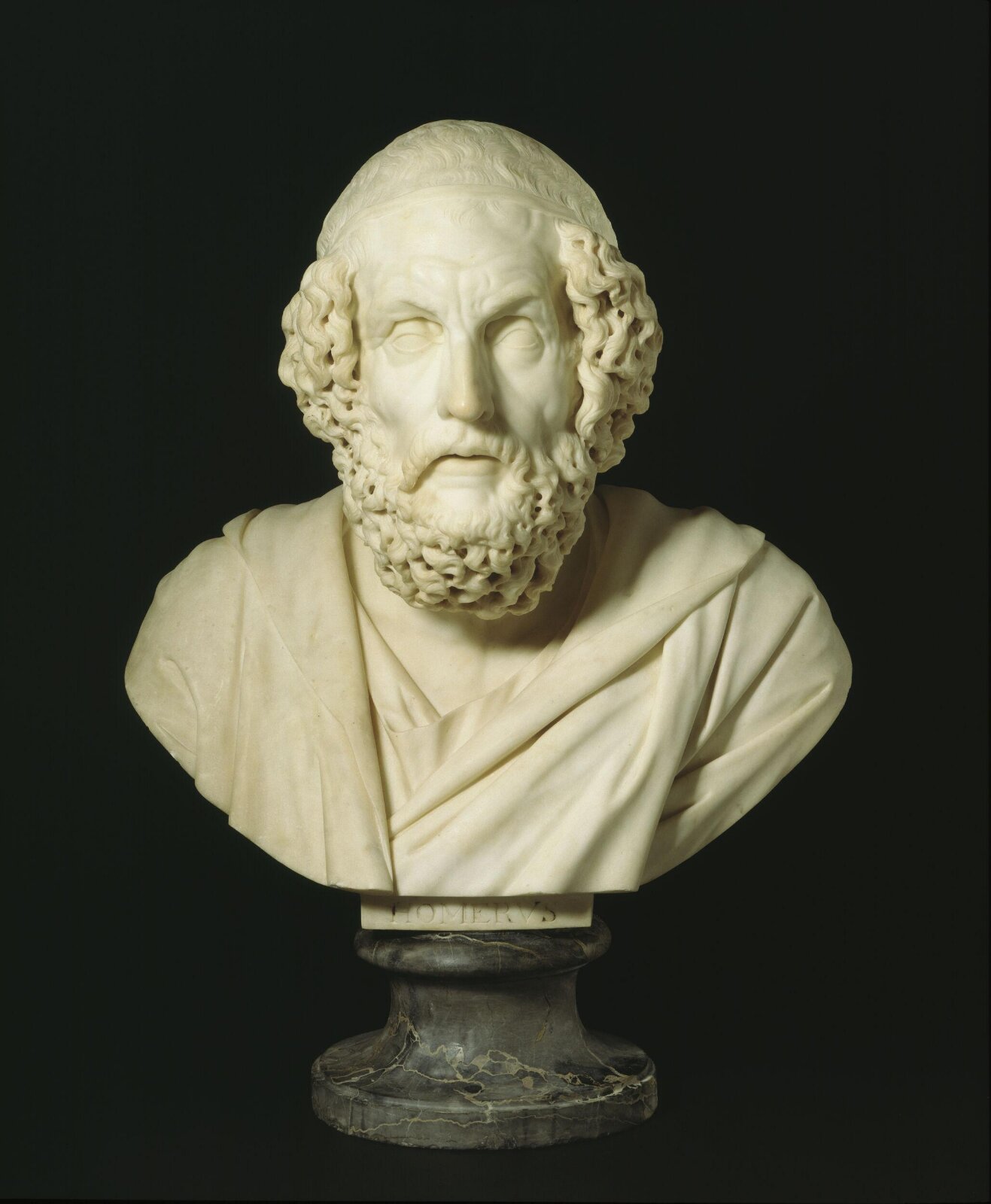
This bust of the ancient Greek poet Homer may have been one of a set carved for a library. It was made in Florence, where the sculptor Francis Harwood spent some of his working life, mostly undertaking commissions for British visitors on the Grand Tour. Library busts, usually set on top of bookcases, were extremely popular in the homes of the well-to-do and in universities (for example, the library at Trinity College, Cambridge) in the18th century.
People
Leggi
Francis Harwood (born about 1727; died 1783) spent 30 years working first in Rome and then in Florence. He specialised in carving busts and figures after the antique, including the Venus de' Medici and the Apollo Belvedere. The sculptor Joseph Nollekens (1737-1823) wrote in a letter from Rome in 1769 in his idiosyncratic style: 'there is F.H. at Florence who is knocking the marbil about like feway, & belive he as got more work to do than any One Sculptor in England'.
Materials & Making
Marble busts were among the most prestigious types of portrait commissioned in Britain during the 18th century. Harwood was able to obtain the material relatively easily in Italy, probably from the quarries at Carrara. He may also have learned the skills needed to carve marble in Florence, or more probably Rome, which was the most important artistic centre for an aspiring artist at this date, partly because of the rich collections of antique sculpture, and partly because of the concentration of both artists and patrons.
Victoria and Albert Museum
Scheda
- Numero di inventario
- A.8-1958
Che cosa raffigura
In catalogo
Fonti
- Victoria and Albert Museum
- Immagine: Victoria and Albert Museum — © Victoria and Albert Museum, London