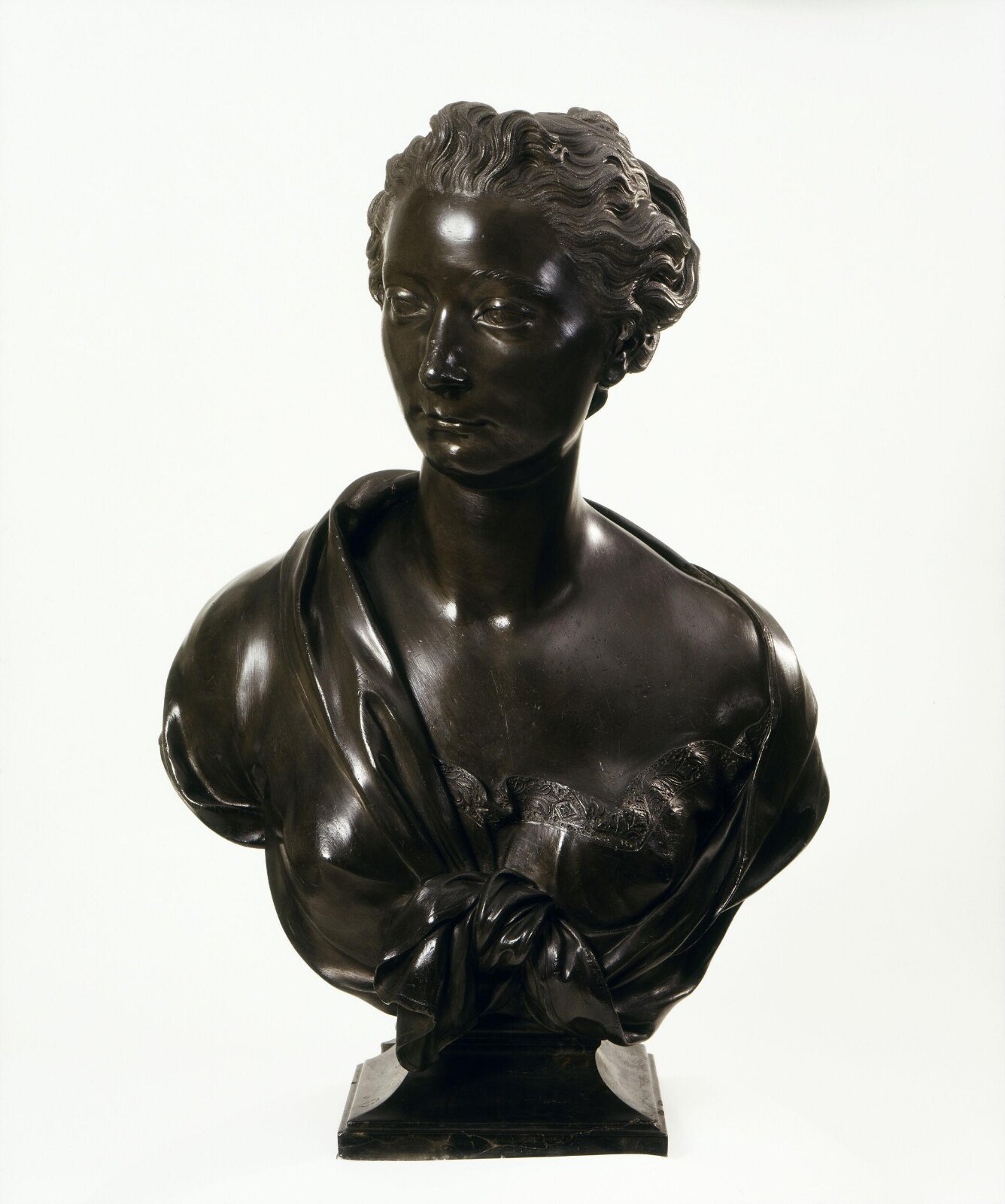
probably John Cheere
Mary Salmon
Si può ammirare?
Sì, riceve visite

Victoria and Albert Museum
Londra, Regno Unito
SalaBritish Galleries, Room 52, The George Levy Gallery
Esposta al pubblico. Chi lo garantisce è indicato qui sotto.
- Verificato
- 9 giorni fa
- Ultimo cambio di stato
- 25 set 2026
- Fonte
- I dati di collezione del museo stesso
About the sculpture
Object Type
This portrait bust was one of a pair, made along with the companion lead bust of Mary's husband, Dr W. H. Salmon. The sitters were not aristocrats, and the fact that they (or possibly members of their family) commissioned portraits of them of this sort indicates the sculpture's popularity among the professional classes at mid-century. The busts of Dr and Mrs Salmon were probably made to be displayed in their own home, perhaps on a chimneypiece. No other copies of this bust are known, although lead was a reproductive material, and this piece would have been cast from a mould.
Materials & Making
Read on
Lead sculptures were cast from models probably of clay or terracotta (literally 'baked clay'). A mould would have been made from the sculptor's original clay or terracotta model, and lead versions were then cast from it. Lead is a soft and malleable metal, and the subtlety of the original modelling in the clay is seen clearly in the surface here, especially in the lace bodice. Since lead was a relatively cheap material, such a bust was less costly than a carved marble one would have been. Henry Cheere (1703-1781) is likely to have been the sculptor, both because the socle (the small integral base on which the bust stands) replicates one at Belton House, Lincolnshire, known to be by him, and because his brother, John Cheere (1709-1787), produced many sculptures in lead, and could well have been involved in the production of this piece.
Victoria and Albert Museum
Scheda
- Numero di inventario
- A.20&A-1921
What it shows
In catalogo
Fonti
- Victoria and Albert Museum: the museum's own open data · acquisita 9 giorni fa
- Immagine: Victoria and Albert Museum — © Victoria and Albert Museum, London







