 Gustav KlimtAustria, 1862–1918
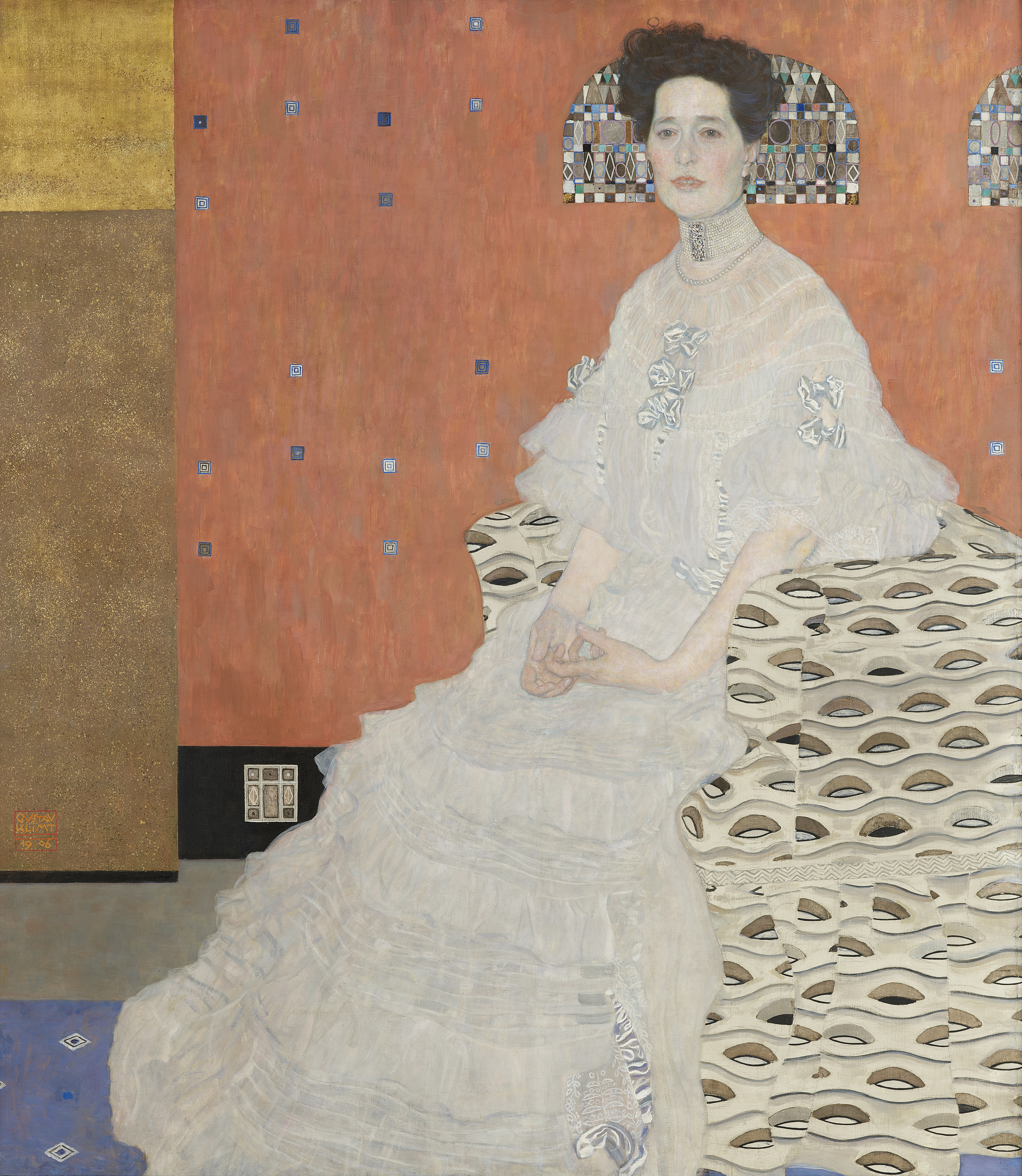
Fritza Riedler
Si può ammirare?
Non si sa

Vienna, Austria
Il proprietario è noto; non si sa se oggi sia esposta.
- Ultimo cambio di stato
- Fonte
- Il museo
Sul dipinto
Con le parole del museo — in tedesco
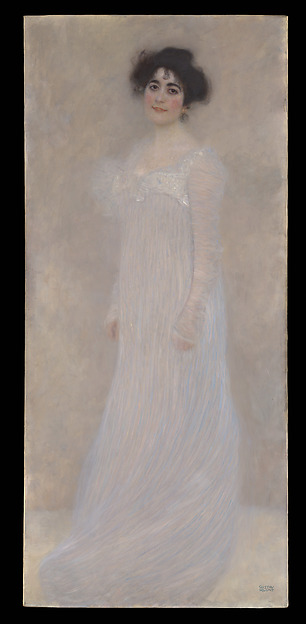
Würdevoll, zurückhaltend, majestätisch thront Fritza Riedler (1860–1927), die Gattin eines wohlhabenden Maschinenbauingenieurs, im Sessel. Die feinen Züge ihres blassen Gesichts stehen in wirkungsvollem Kontrast zum dunklen Haar. Kein Mienenspiel, nicht die kleinste Regung erlaubt Rückschlüsse auf das Innere der Porträtierten. Gustav Klimt verbindet die naturnahe Wiedergabe seines Modells mit einer ornamentalen Auflösung des Umfeldes. Selbst das Sitzmöbel wird zum Ornament aus Wellenbändern und altägyptischen Augenmotiven. Dieses Wechselspiel zwischen Tiefenwirkung und gleichzeitiger Betonung der Bildfläche ist charakteristisch für Klimts Werke der sogenannten „Goldenen Periode”.
Österreichische Galerie Belvedere
Scheda
In catalogo
Fonti
- Österreichische Galerie Belvedere
- Immagine: Österreichische Galerie Belvedere — CC BY-SA 4.0
Nel frattempo, nella vita di Gustav Klimt
Tutta la vita1897–1917
Society portraits of Viennese ladies
Over twenty years Klimt painted nearly twenty society portraits of women, which gave him financial independence; Carl Moll introduced him to many of the sitters, most of them from the Jewish upper bourgeoisie. In the portraits the ladies are hidden in sumptuous clothing, their heads and hands seeming to float detached from reality.
1900–1907
He returns the advance and keeps the paintings
The state commission refused to accept the three “Faculty Paintings”; Klimt told the minister he would return the 60,000-krone advance, refused to work for the Austrian state again and kept the pictures. The ministry demanded them, but Klimt did not open the door to the removal men — and the affair ended in his victory.
1905
Klimt and his group leave the Secession
Klimt and his “stylist” followers, who held that art should enter every sphere of life, fell out with the “naturalists”; the decision against Klimt's group was carried by a single vote. For the next three years the group had no joint exhibitions.
1906
The “Kunstschau” group
A year after the split Klimt formed the “Kunstschau” group, or “Klimt group”, which included Carl Moll, Otto Wagner and other leading Austrian artists.
1908
Klimt defends Kokoschka
The public and critics fell on the debutant Oskar Kokoschka so fiercely that the scandal of the “Faculty Paintings” came to mind; Klimt did not turn away from his pupil and defended his place in the show even if it were to be closed. Hevesi granted him talent but denied him taste; Klimt replied that art has nothing to do with taste.
1 June – 16 November 1908
The first Vienna Art Show
For the sixtieth anniversary of Franz Joseph's reign pavilions with 54 rooms were built on a temporary site and over 900 works shown. Room 22, which Peter Altenberg called “the church of modern art named after Gustav Klimt”, held “The Kiss”, “Adele Bloch-Bauer I”, “Danaë” and “The Three Ages of Woman”.