Alexander CalderStati Uniti, 1898–1976
Fourth Flurry '48
Si può vedere?
Non si sa
Dove si trova «Fourth Flurry '48» oggi? Collezione: Yale University Art Gallery, New Haven. Non si sa se oggi sia esposta.
New Haven, Stati Uniti
Il proprietario è noto; non si sa se oggi sia esposta.
- Ultimo cambio di stato
- Fonte
- Il museo
Sulla scultura
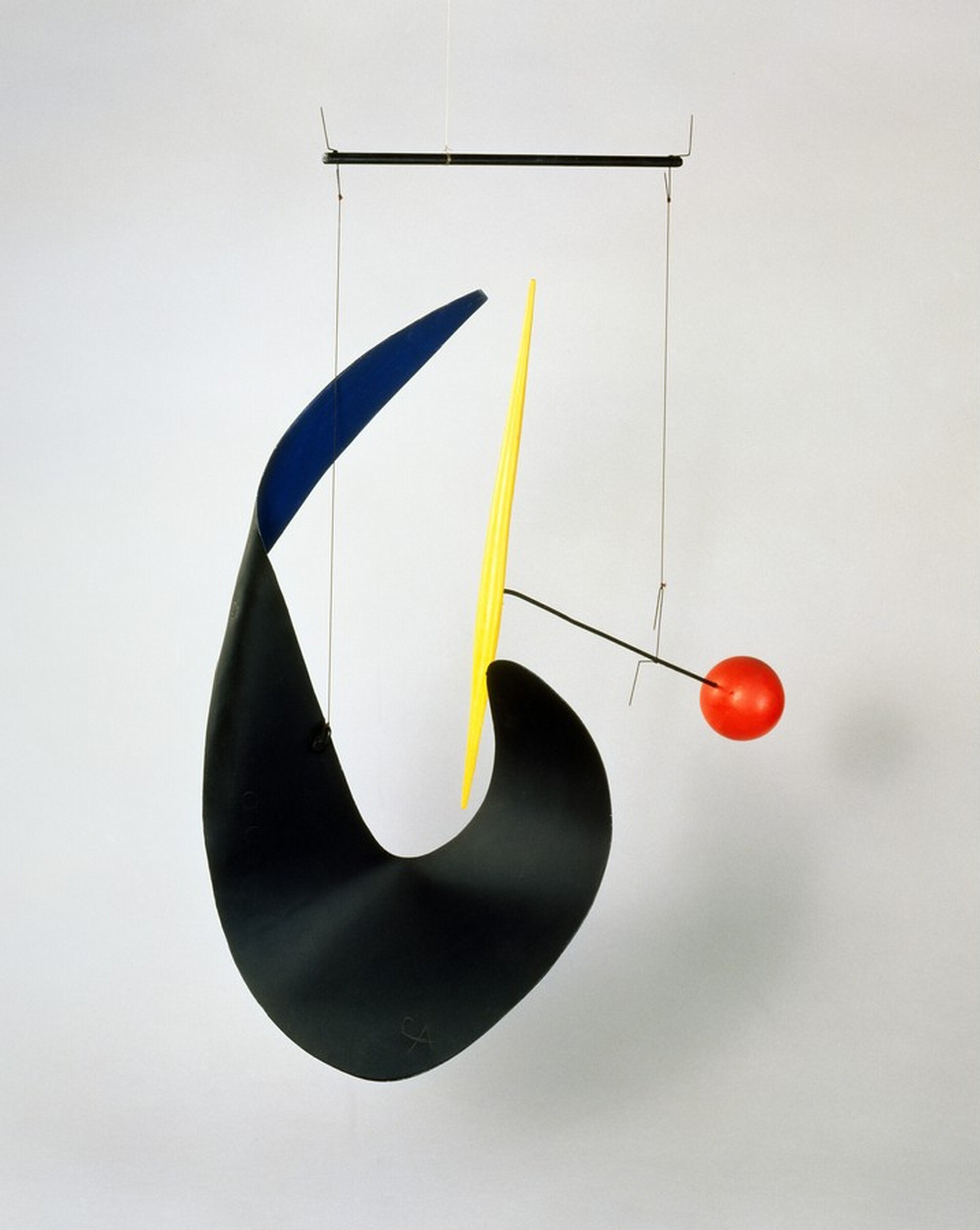
This three-dimensional work consists of approximately thirty white discs of graduated size attached to metal wires of various weights and lengths. This type of suspended sculpture is known as a "mobile," the term that Marcel Duchamp suggested for Alexander Calder's unique form of sculpture that moved in response to natural forces. Fourth Flurry '48 sways and shifts in response to air currents and the counterbalances of gravity, creating a constantly changing, asymmetrical yet balanced composition. Looking up at the slowly moving sculpture, the viewer is presented with a sensation evocative of a wide variety of natural forms and systems in motion, from snowflakes to solar systems, from atoms to galaxies. At the same time, this airy graceful sculpture functions on purely abstract terms. The white circular shapes, which create a rhythm through their repetition, are juxtaposed with the black-painted wire lines, creating a whimsical, abstract drawing in space.
Yale University Art Gallery
Scheda
- Numero di inventario
- 1948.298
In catalogo
Fonti
- Yale University Art Gallery
- Immagine: Yale University Art Gallery — Image: Yale University Art Gallery · In Copyright
Nella vita di Alexander Calder
Tutta la vita1946
La mostra da Louis Carré e il saggio di Sartre
Nel 1946 la galleria Louis Carré di Parigi ospita una mostra di Calder organizzata da Duchamp, composta soprattutto da mobiles sospesi e su sostegno; a causa dei rigidi limiti postali sulle dimensioni, l'artista smonta alcune opere e le spedisce per posta. La mostra suscita un'enorme impressione, così come la prefazione al catalogo di Jean-Paul Sartre.
1948
A Rio de Janeiro, quasi tutte le opere vendute
Nel 1948 le opere di Calder vanno ormai a ruba: la sua personale a Rio de Janeiro viene venduta quasi per intero, e lui diventa il primo scultore di fama internazionale.
summer 1949
«Scultura internazionale» a Filadelfia
Nell'estate 1949 Calder è uno dei 250 scultori della terza mostra «Sculpture International» al Philadelphia Museum of Art; il suo «International Mobile» ne diventa l'opera centrale.
1950
La Galerie Maeght diventa la sua galleria parigina
Dal 1950 e fino alla fine della sua vita, la Galerie Maeght rappresenta Calder a Parigi. Entrambe le sue gallerie, Maeght a Parigi e più tardi Perls Galleries a New York, organizzavano in media una sua mostra all'anno ciascuna.