ART WIKI32.963 in sala
MappaCollezioneArtistiMuseiMostreRivista
Accedi

ART WIKI

Dove è appeso il capolavoro, e quando si può entrare.

Collezioni: Art Institute of Chicago, Cleveland Museum of Art, Ermitage, Galleria Tret'jakov, Getty Museum, Harvard Art Museums, Hirshhorn Museum and Sculpture Garden, Metropolitan Museum of Art, Minneapolis Institute of Art, Museo del Louvre, Museo Puškin delle belle arti, Museo russo, Museum of Modern Art, National Gallery of Art, National Museum of Asian Art, National Portrait Gallery, Rijksmuseum, Smithsonian American Art Museum, Statens Museum for Kunst, Victoria and Albert Museum, Villa Getty, Whitney Museum of American Art, Catalogo statale del fondo museale russo (274 musei), Europeana (19 musei), Wikidata (6 musei), Paris Musées (12 musei) e Joconde, la banca dati dei musei del Ministero della Cultura francese (495 musei). Le immagini appartengono ai titolari dei diritti.

Sezioni

  • Mappa
  • Ricerca
  • Collezione
  • Capolavori
  • Esposte ora
  • Artisti

Altro

  • Musei e gallerie
  • Mostre
  • Rivista
  • Da dove vengono i dati
  • Privacy e cookie
HomeMappaCatalogo
  1. Collezione/
  2. Cleveland Museum of Art/
  3. Flowers and Grasses
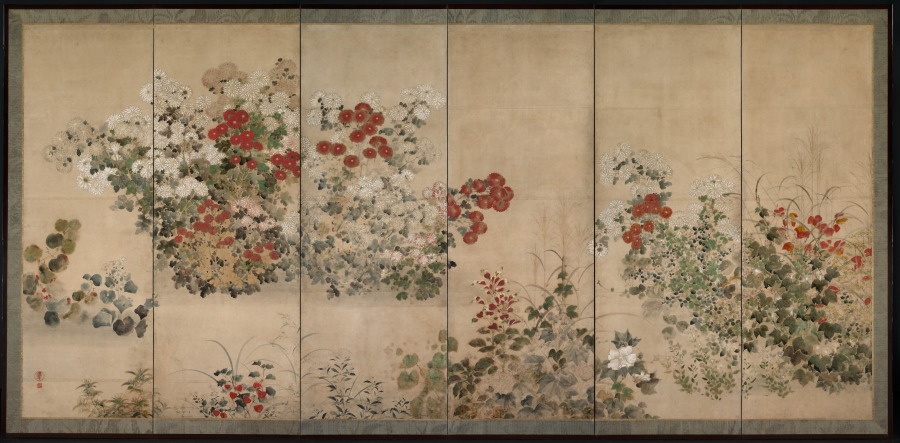
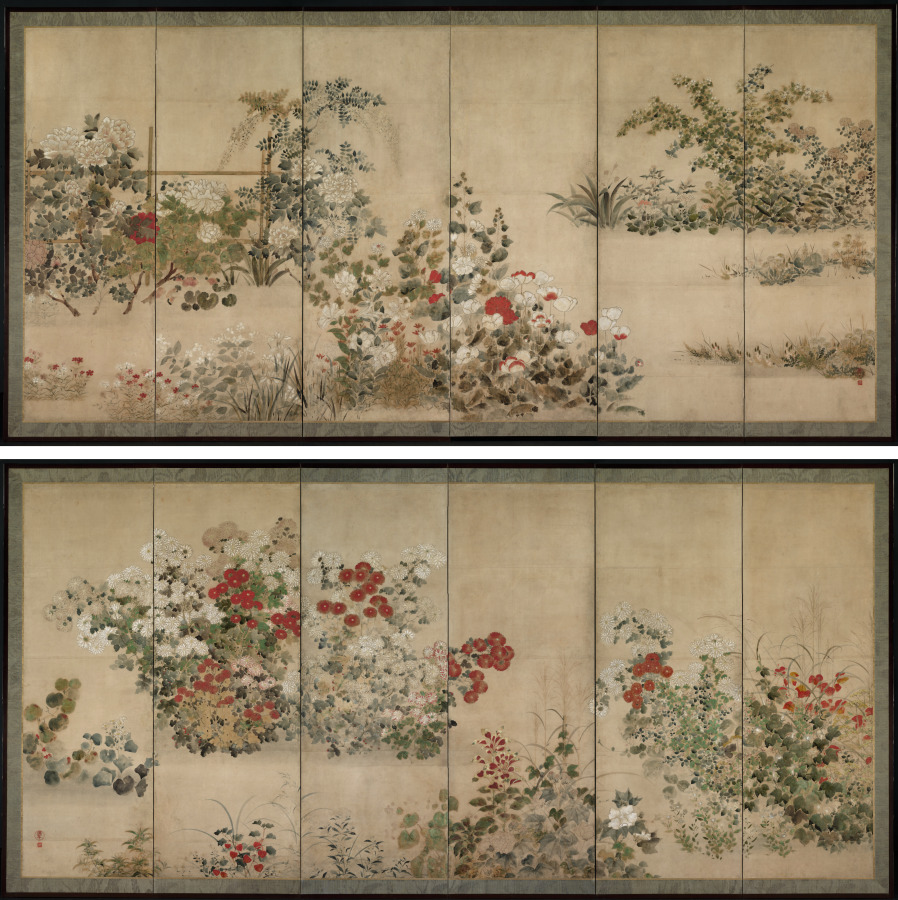
Flowers and Grasses, Kitagawa Sōsetsu, mid-1600s
KKitagawa SōsetsuGiappone, 1639

Flowers and Grasses

mid-1600s · Painting

Si può ammirare?

Al momento non riceve

Cleveland Museum of Art

Cleveland, Stati Uniti

Appartiene alla collezione, ma al momento non è esposta.

Verificato
3 giorni fa
Ultimo cambio di stato
19 ago 2026
Fonte
Il museo
Sulla mappaPagina del museo

Sul dipinto

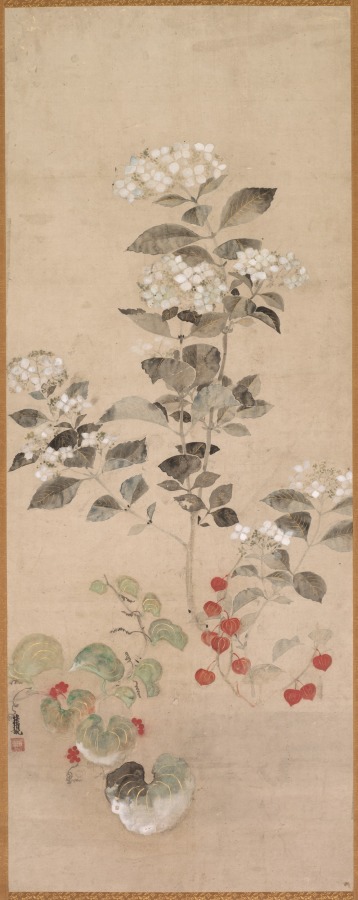
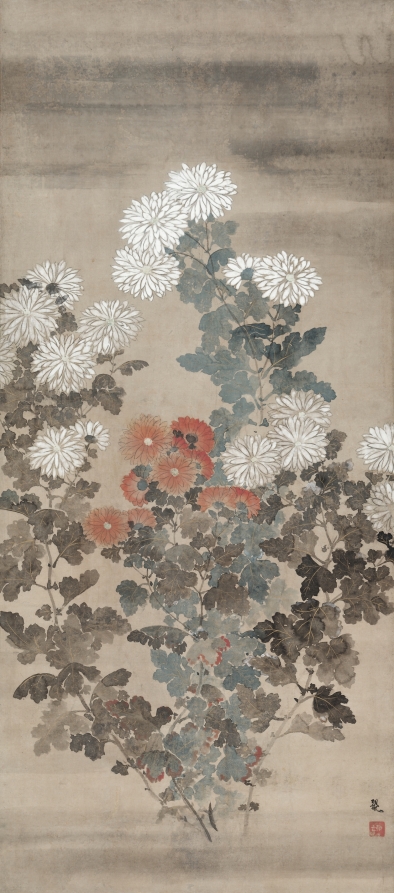
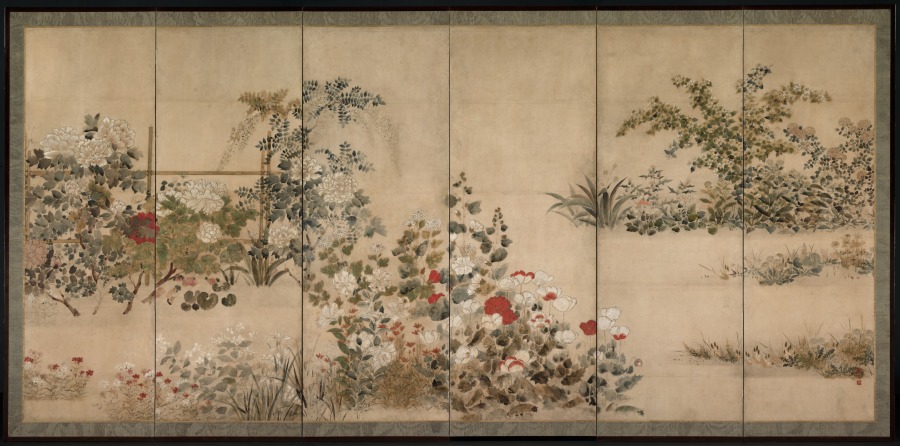
Kitagawa Sōsetsu painted for the Maeda family, powerful rulers of what is present-day Ishikawa Prefecture on the central northern coast of Honshū, Japan’s main island. Screens served as room dividers and backdrops in Maeda grand residences. This composition is considered one of the artist’s masterpieces. Kitagawa Sōsetsu is thought to have been a student of Tawaraya Sōsetsu, who was in turn the student of Tawaraya Sōtatsu the Kyoto-based master painter regarded as the creator of the style that came to be known as Rinpa. By selecting a painter of this lineage, the Maeda family consciously connected their aesthetics to those of the imperial capital as a means of proclaiming their elevated status.

Cleveland Museum of Art

Scheda

Numero di inventario
1968.193

In catalogo

DipintiInchiostroPittura giapponeseJapan, Edo period (1615–1868)

Fonti

  • Cleveland Museum of Art
  • Immagine: Cleveland Museum of Art — Museum open access
Altre opere di Kitagawa Sōsetsu

Tutte le opere
Summer Flowers, Kitagawa Sōsetsu, mid-1600s

Summer Flowers

mid-1600s · Non esposta · Cleveland Museum of Art

Summer Flowers, Kitagawa Sōsetsu, mid-1600s

Summer Flowers

mid-1600s · Non esposta · Cleveland Museum of Art

Flowers and Grasses, Kitagawa Sōsetsu, mid-1600s

Flowers and Grasses

mid-1600s · Non esposta · Cleveland Museum of Art

Chrysanthemums, Kitagawa Sōsetsu, mid 1600s

Chrysanthemums

mid 1600s · Non esposta · Cleveland Museum of Art

Flowers and Grasses, Kitagawa Sōsetsu, mid-1600s

Flowers and Grasses

mid-1600s · Non esposta · Cleveland Museum of Art

Sotto lo stesso tetto: Cleveland Museum of Art

Pagina del museo
The Red Kerchief, Claude Monet, c. 1868–73

Claude Monet

The Red Kerchief, c. 1868–73

Melencolia I, Albrecht Dürer, 1514

Albrecht Dürer

Melencolia I, 1514

The Virgin and Child with the Pear, Albrecht Dürer, 1511

Albrecht Dürer

The Virgin and Child with the Pear, 1511

The Nativity, Albrecht Dürer, probably c. 1509/1510

Albrecht Dürer

The Nativity, probably c. 1509/1510

The Virgin and Child on a Crescent with a Starry Crown, Albrecht Dürer, 1508

Albrecht Dürer

The Virgin and Child on a Crescent with a Starry Crown, 1508

The Lamentation, Albrecht Dürer, 1507

Albrecht Dürer

The Lamentation, 1507

Large Horse, Albrecht Dürer, 1505

Albrecht Dürer

Large Horse, 1505

Nemesis (The Great Fortune), Albrecht Dürer, c. 1501/1502

Albrecht Dürer

Nemesis (The Great Fortune), c. 1501/1502