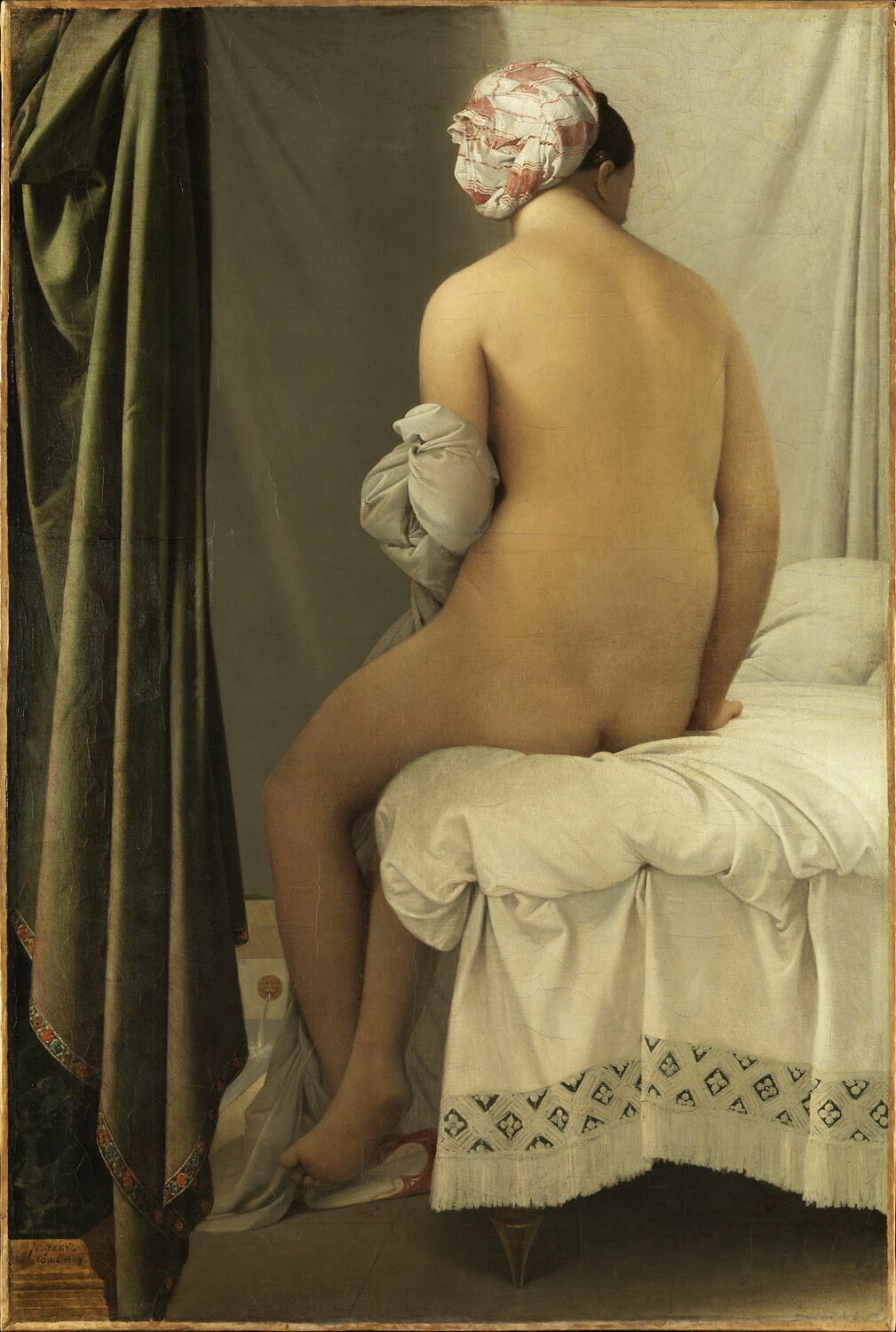
Jean-Auguste-Dominique IngresFrancia, 1780–1867
Fatima en Odalisque
Si può vedere?
Non si sa
Dove si trova «Fatima en Odalisque» oggi? Collezione: Mohamed Mahmoud Khalil Museum, Il Cairo. Non si sa.

Il Cairo, Egitto
Il proprietario è noto; non si sa se oggi sia esposta.
- Ultimo cambio di stato
- Fonte
- Il museo
Scheda
In catalogo
Fonti
- Wikidata
- Immagine: Mohamed Mahmoud Khalil Museum — Jean-Auguste-Dominique Ingres · Public domain · Wikimedia Commons
Nella vita di Jean-Auguste-Dominique Ingres
Tutta la vita1815–1820
Portrait drawings of tourists to make a living
With the French administration gone, painting commissions were rare, and Ingres supplemented his income with pencil portraits of wealthy tourists, chiefly English. To visitors who asked whether this was where the man who draws the little portraits lived, he answered irritably: “No, the man who lives here is a painter!”
1819
Critics condemn the “Grande Odalisque” at the Salon
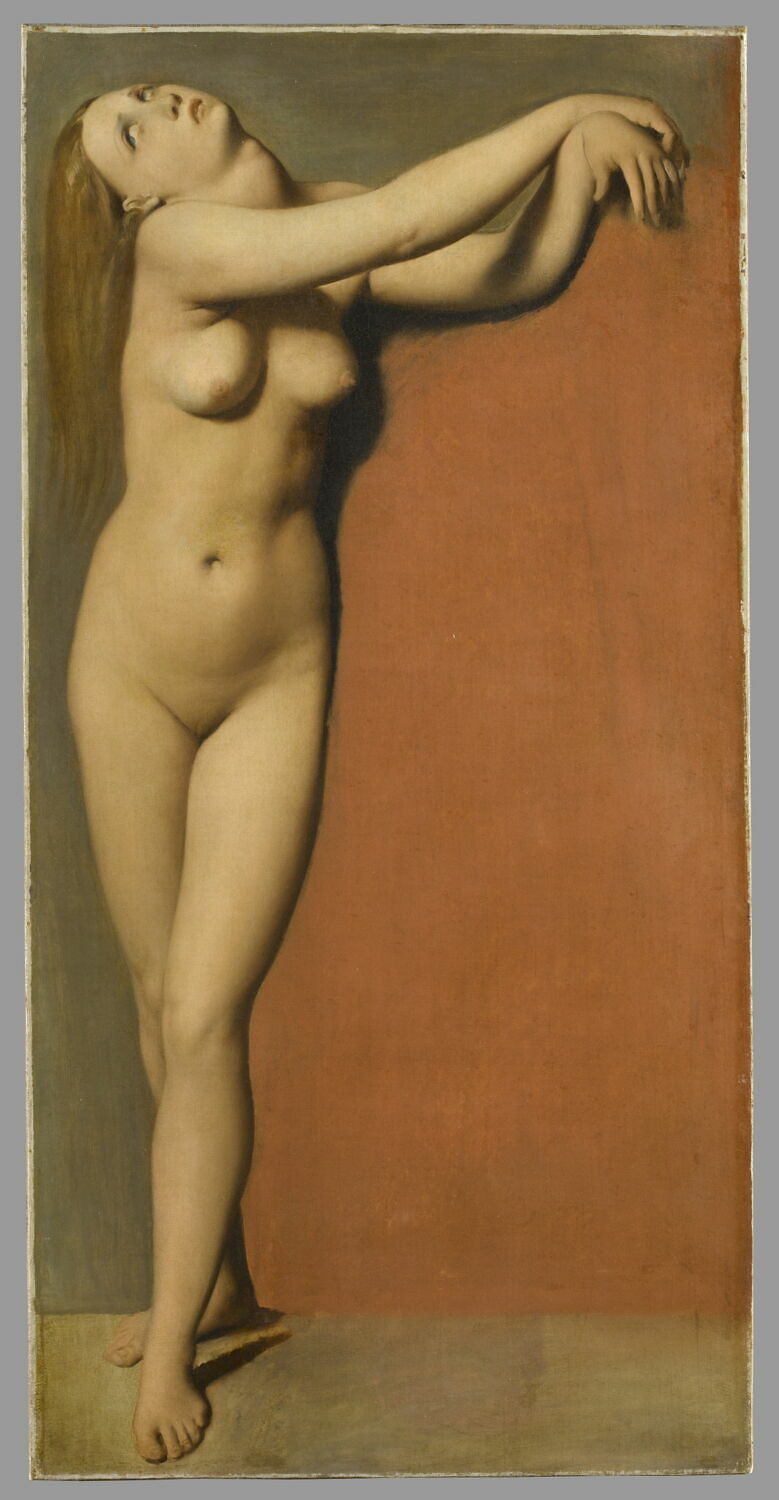
In 1819 Ingres sent the Grande Odalisque, Philip V and the Marshal of Berwick and Roger Freeing Angelica to the Salon, but critics again condemned his work as gothic and unnatural. The critic Kératry complained that the Odalisque's back was three vertebrae too long.
29 August 1820
The commission for “The Vow of Louis XIII” for Montauban Cathedral
The French Ministry of the Interior commissioned Ingres to paint an altarpiece for the cathedral of his native Montauban on the theme of the Vow of Louis XIII. The commission, which took four years, changed his life and brought him back to the canons of Neoclassicism.
1824
The start of the feud with Delacroix
The confrontation at the Salon of 1824 began Ingres's feud with Delacroix, who embodied the opposite aesthetic. Ingres called Delacroix his “anti-self” and used the administrative resources at his disposal to keep him out of the Institut de France.
12 November 1824
“The Vow of Louis XIII” at the Salon of 1824
Ingres showed the picture to which he had given four years at the Salon on 12 November 1824, alongside Delacroix's Massacre at Chios, and it was dubbed the “Salon of the Romantic battle”. Admirers and critics alike said the same of him: “the Raphael of our day” and “the best antidote to the Romantic threat”.
c. 1824 – 1825
His own drawing school in Paris
Soon after the Salon closed Ingres rented a studio on the rue des Marais-Saint-Germain and opened a school for young artists there; the first pupil was Amaury-Duval, and within a year as many as a hundred could attend. He called it the “School of Drawing”.