Édouard ManetFrancia, 1832–1883
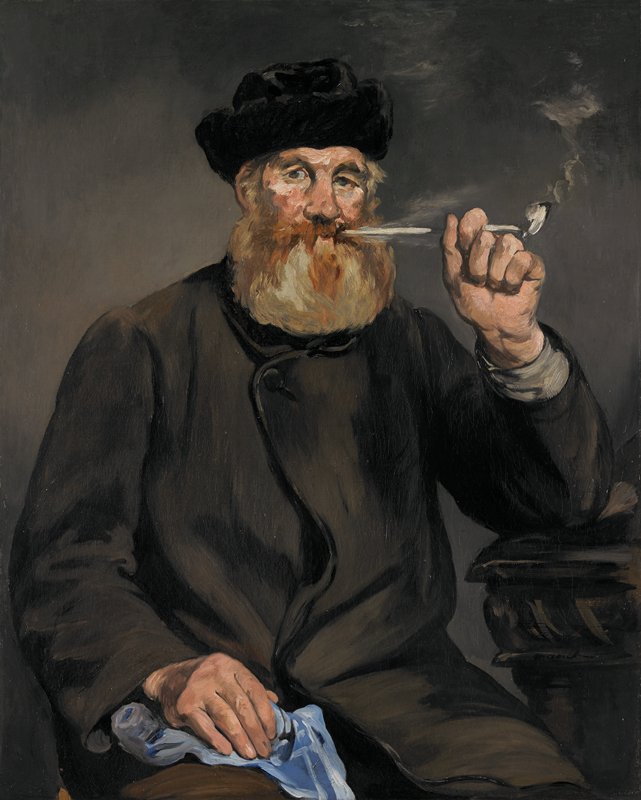
Edgar Poe
Si può ammirare?
Non si sa: il museo mantiene il riserbo

Galleria nazionale slovacca
Bratislava, Slovacchia
Il proprietario è noto. Se oggi sia esposta, il museo non lo dice, e a indovinare non ci hanno insegnato.
- Ultimo cambio di stato
- Fonte
- I dati di collezione del museo stesso
Scheda
Che cosa raffigura
In catalogo
Fonti
- Galleria nazionale slovacca: i dati aperti del museo · acquisita 8 giorni fa
- Immagine: Galleria nazionale slovacca — Public Domain Mark 1.0
Nel frattempo, nella vita di Édouard Manet
Tutta la vita1848–1849
A voyage to Brazil aboard the “Havre et Guadeloupe”
In 1848, after failing the entrance exam of the naval school, Manet set out on a training voyage aboard the sailing ship “Havre et Guadeloupe” and visited Brazil. He brought back many drawings and studies, and in letters to relatives described the carnival in Rio de Janeiro and judged slavery critically.
July 1849
A second failure at the naval school and his father's consent
In July 1849, back in Paris, Manet again failed the naval school examination. His father, having seen the drawings brought from the voyage, no longer doubted his son's vocation and advised him to enter the École des Beaux-Arts in Paris.
1850
In Thomas Couture's studio
Fearing the overly rigid academic programme of the École des Beaux-Arts, in 1850 Manet entered the studio of the fashionable Thomas Couture, who had become famous in 1847 for his monumental canvas “The Romans of the Decadence”.
1859
“The Absinthe Drinker” rejected; a final break with Couture
In 1859 Manet decided that his education was complete and submitted “The Absinthe Drinker” to the Salon; Couture reacted negatively and Manet finally broke with his teacher. The Salon jury rejected the painting: only Delacroix voted for it, while Couture voted against.
1863
“The Luncheon on the Grass” at the Salon des Refusés
The Salon of 1863 rejected “The Luncheon on the Grass” (originally “Le Bain”), and Manet exhibited it at the Salon des Refusés, a parallel exhibition initiated by Napoleon III after a public outcry, the jury having accepted only 2,217 of more than 5,000 submissions. The juxtaposition of dressed men and a nude woman and the sketch-like handling caused a scandal; one critic compared the brushwork to a “floor mop”.
1865
“Olympia” at the Salon: a scandal
In 1865 the Salon accepted “Olympia”, and the frank depiction of a self-assured prostitute created a scandal; according to Antonin Proust, only the precautions taken by the administration prevented the painting from being punctured and torn. The popular press caricatured it, while the avant-garde, including Courbet, Cézanne and Monet, championed it.