ART WIKI32.963 in sala
MappaCollezioneArtistiMuseiMostreRivista
Accedi

ART WIKI

Dove è appeso il capolavoro, e quando si può entrare.

Collezioni: Art Institute of Chicago, Cleveland Museum of Art, Ermitage, Galleria Tret'jakov, Getty Museum, Harvard Art Museums, Hirshhorn Museum and Sculpture Garden, Metropolitan Museum of Art, Minneapolis Institute of Art, Museo del Louvre, Museo Puškin delle belle arti, Museo russo, Museum of Modern Art, National Gallery of Art, National Museum of Asian Art, National Portrait Gallery, Rijksmuseum, Smithsonian American Art Museum, Statens Museum for Kunst, Victoria and Albert Museum, Villa Getty, Whitney Museum of American Art, Catalogo statale del fondo museale russo (274 musei), Europeana (19 musei), Wikidata (6 musei), Paris Musées (12 musei) e Joconde, la banca dati dei musei del Ministero della Cultura francese (495 musei). Le immagini appartengono ai titolari dei diritti.

Sezioni

  • Mappa
  • Ricerca
  • Collezione
  • Capolavori
  • Esposte ora
  • Artisti

Altro

  • Musei e gallerie
  • Mostre
  • Rivista
  • Da dove vengono i dati
  • Privacy e cookie
HomeMappaCatalogo
  1. Collezione/
  2. Albertina/
  3. Ecce Homo
Ecce Homo, Albrecht Dürer, 1512
Albrecht Dürer, ritrattoAlbrecht DürerGermania, 1471–1528

Ecce Homo

1512 · Print

Si può ammirare?

Non si sa: il museo mantiene il riserbo

Albertina

Vienna, Austria

Il proprietario è noto. Se oggi sia esposta, il museo non lo dice, e a indovinare non ci hanno insegnato.

Ultimo cambio di stato
27 set 2026
Fonte
I dati di collezione del museo stesso
Sulla mappaPagina del museo

Scheda

1512 · a 41 anni
14711528

In catalogo

StampeRinascimentoXVI secolo

Fonti

  • Albertina: i dati aperti del museo · acquisita 8 giorni fa
  • Immagine: Albertina — Public Domain Mark 1.0

Nel frattempo, nella vita di Albrecht Dürer

Tutta la vita
  1. 1507–1528 · Luogo di lavoro

    Nuremberg

  2. 1511

    Publishes the Great Passion and the Life of the Virgin

    Dürer published two woodcut series as books, the Great Passion and the Life of the Virgin, with a second edition of the Apocalypse and the 37 woodcuts of the Little Passion. His post-Venetian woodcuts developed chiaroscuro modelling.

  3. 1512

    Emperor Maximilian I becomes his chief patron

    From 1512 Emperor Maximilian I was Dürer's chief patron. For him Dürer and his workshop produced the Triumphal Arch, a giant woodcut 295 × 357 cm printed from 192 blocks and modelled on the triumphal arches of ancient Rome.

  4. 3 January 1512

    Nuremberg's privilege against forgeries

    Nuremberg's city council granted Dürer a privilege for the sale of his prints, with penalties for anyone who forged them.

  5. 1513–1516

    Three years without painting

    Complaining that painting did not pay enough to justify the time compared with his prints, Dürer produced no paintings from 1513 to 1516.

  6. 1514

    Death of his mother

    In the year of Melencolia I and St Jerome in His Study, the artist's mother, Barbara Holper, died.
Altre opere di Albrecht Dürer

Tutte le opere
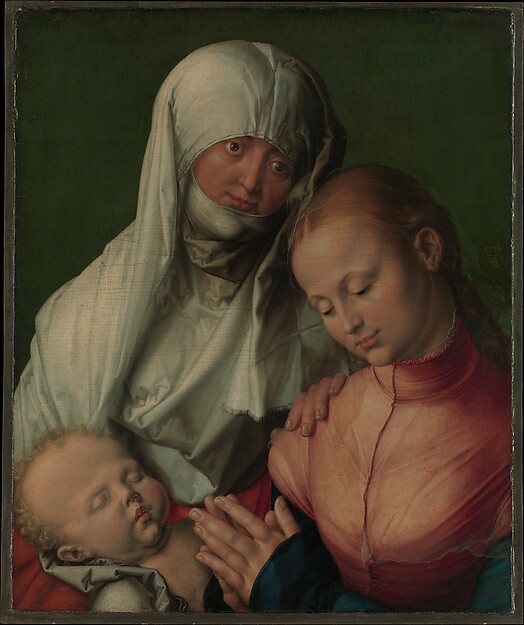
Virgin and Child with Saint Anne, Albrecht Dürer, probably 1519

Virgin and Child with Saint Anne

probably 1519 · Metropolitan Museum of Art

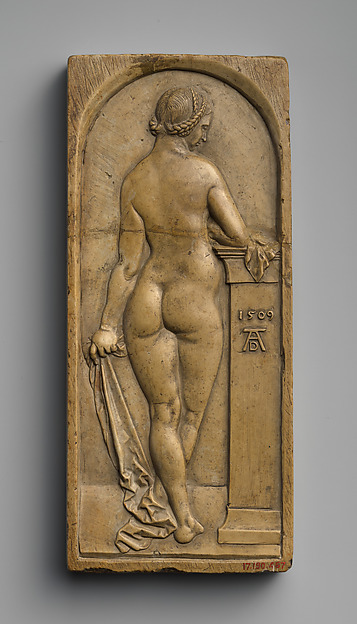
Female Nude Seen from Behind, Albrecht Dürer, early 17th century

Female Nude Seen from Behind

early 17th century · Metropolitan Museum of Art

Madonna and Child [obverse], Albrecht Dürer, c. 1496/1499

Madonna Haller

c. 1496/1499 · National Gallery of Art

Lot and His Daughters [reverse], Albrecht Dürer, c. 1496/1499

Lot and His Daughters [reverse]

c. 1496/1499 · National Gallery of Art

The Martyrdom of Saint Catherine, Albrecht Dürer, ca. 1498

The Martyrdom of Saint Catherine

ca. 1498 · Metropolitan Museum of Art

Nemesis (The Great Fortune), Albrecht Dürer, c. 1501/1502

Nemesis (The Great Fortune)

c. 1501/1502 · Cleveland Museum of Art

Large Horse, Albrecht Dürer, 1505

Large Horse

1505 · Cleveland Museum of Art

The Lamentation, Albrecht Dürer, 1507

The Lamentation

1507 · Cleveland Museum of Art