ART WIKI32.963 in sala
MappaCollezioneArtistiMuseiMostreRivista
Accedi

ART WIKI

Dove è appeso il capolavoro, e quando si può entrare.

Collezioni: Art Institute of Chicago, Cleveland Museum of Art, Ermitage, Galleria Tret'jakov, Getty Museum, Harvard Art Museums, Hirshhorn Museum and Sculpture Garden, Metropolitan Museum of Art, Minneapolis Institute of Art, Museo del Louvre, Museo Puškin delle belle arti, Museo russo, Museum of Modern Art, National Gallery of Art, National Museum of Asian Art, National Portrait Gallery, Rijksmuseum, Smithsonian American Art Museum, Statens Museum for Kunst, Victoria and Albert Museum, Villa Getty, Whitney Museum of American Art, Catalogo statale del fondo museale russo (274 musei), Europeana (19 musei), Wikidata (6 musei), Paris Musées (12 musei) e Joconde, la banca dati dei musei del Ministero della Cultura francese (495 musei). Le immagini appartengono ai titolari dei diritti.

Sezioni

  • Mappa
  • Ricerca
  • Collezione
  • Capolavori
  • Esposte ora
  • Artisti

Altro

  • Musei e gallerie
  • Mostre
  • Rivista
  • Da dove vengono i dati
  • Privacy e cookie
HomeMappaCatalogo
  1. Collezione/
  2. Herzog Anton Ulrich-Museum/
  3. Die drei Bauern
Die drei Bauern, Albrecht Dürer, 1497–1498
Albrecht Dürer, ritrattoAlbrecht DürerGermania, 1471–1528

Die drei Bauern

1497–1498 · Print

Si può ammirare?

Non si sa

Herzog Anton Ulrich-Museum

Braunschweig, Germania

Il proprietario è noto; non si sa se oggi sia esposta.

Ultimo cambio di stato
27 set 2026
Fonte
Il museo
Sulla mappaPagina del museo

Scheda

1497–1498
14711528

Nel frattempo, nella vita di Albrecht Dürer

Tutta la vita
  1. 1494–1495

    First journey to Italy

    Within three months of the wedding Dürer left alone for Italy, perhaps fleeing an outbreak of plague in Nuremberg. Crossing the Alps he made watercolour landscapes; in Venice he studied its art and judged Giovanni Bellini the best of its painters; Mantegna and Pollaiuolo left their mark on him.

  2. 1495

    Opens his own workshop

    Dürer opened his own workshop in Nuremberg, where over the next ten years he created much of his printmaking. His godfather, the publisher Anton Koberger, helped issue the first series; the city's crafts were governed by the Council rather than guilds, leaving him free to try new techniques and sell his own impressions.

  3. 1500

    Jacopo de' Barbari and the secret of proportion

    The Venetian Jacopo de' Barbari, whom Dürer had met in Venice, came to Nuremberg, and Dürer said he learned much from him about perspective, anatomy and proportion. Feeling that de' Barbari would not explain everything he knew, Dürer began studies of his own that became a lifelong preoccupation.
Altre opere di Albrecht Dürer

Tutte le opere

Dalla collezione: Herzog Anton Ulrich-Museum

Pagina del museo

Sullo stesso tema · Männlicher Bauer

Tutte le opere sul tema

Che cosa raffigura

Männlicher BauerHieb- und Stichwaffen: SchwertEtwas in einer Tasche, in einem Korb oder Rucksack, etc. tragenBehälter aus pflanzlichen Materialien (außer Holz): KorbBauerKittelSwordHutKorbKopfbedeckung

In catalogo

StampeRinascimentoXV secolo

Fonti

  • Herzog Anton Ulrich-Museum
  • Immagine: Herzog Anton Ulrich-Museum — CC BY-NC-SA 4.0
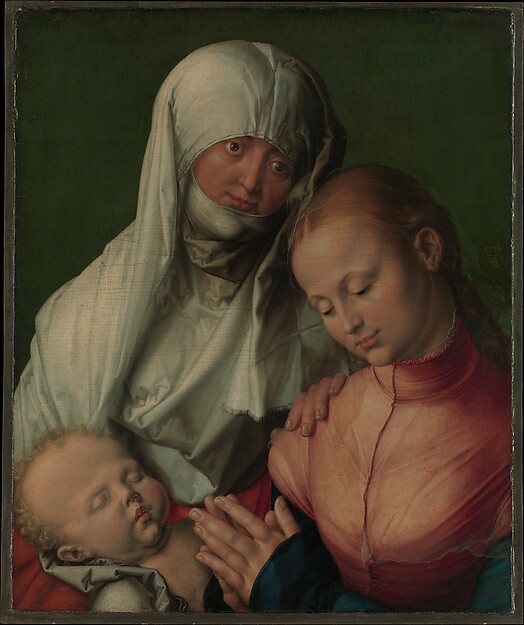
Virgin and Child with Saint Anne, Albrecht Dürer, probably 1519

Virgin and Child with Saint Anne

probably 1519 · Metropolitan Museum of Art

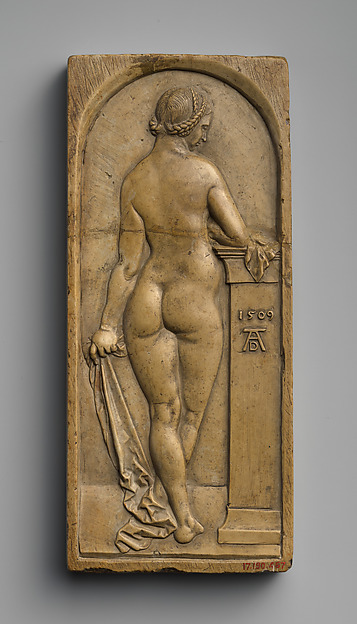
Female Nude Seen from Behind, Albrecht Dürer, early 17th century

Female Nude Seen from Behind

early 17th century · Metropolitan Museum of Art

Madonna and Child [obverse], Albrecht Dürer, c. 1496/1499

Madonna Haller

c. 1496/1499 · National Gallery of Art

Lot and His Daughters [reverse], Albrecht Dürer, c. 1496/1499

Lot and His Daughters [reverse]

c. 1496/1499 · National Gallery of Art

The Martyrdom of Saint Catherine, Albrecht Dürer, ca. 1498

The Martyrdom of Saint Catherine

ca. 1498 · Metropolitan Museum of Art

Nemesis (The Great Fortune), Albrecht Dürer, c. 1501/1502

Nemesis (The Great Fortune)

c. 1501/1502 · Cleveland Museum of Art

Large Horse, Albrecht Dürer, 1505

Large Horse

1505 · Cleveland Museum of Art

The Lamentation, Albrecht Dürer, 1507

The Lamentation

1507 · Cleveland Museum of Art

Portrait d'Adolphe de Vignacourt Grand Maître de Malthe, Caravaggio, 1704–1755

Caravaggio

Portrait d'Adolphe de Vignacourt Grand Maître de Malthe, 1704–1755

Ecce Homo, Caravaggio, 1674–1684

Caravaggio

Ecce Homo, 1674–1684

Heiliger Hieronymus, Caravaggio

Caravaggio

Heiliger Hieronymus

Bildnis eines Mannes, Rembrandt, 1839–1850

Rembrandt van Rijn

Bildnis eines Mannes, 1839–1850

Bildnis einer Frau, Rembrandt, 1839–1850

Rembrandt van Rijn

Bildnis einer Frau, 1839–1850

Tobias und seine Frau, Rembrandt, 1773

Rembrandt van Rijn

Tobias und seine Frau, 1773

Tobias und seine Frau, Rembrandt, 1773

Rembrandt van Rijn

Tobias und seine Frau, 1773

Lot mit seinen Töchtern, Rembrandt, 1771

Rembrandt van Rijn

Lot mit seinen Töchtern, 1771

[Ein Bauer mit hoher Mütze und Gehstock; A Peasant in a High Cap, Standing Leaning on a Stick; Juif à grand bonnet], Rembrandt, 1639

Rembrandt van Rijn

[Ein Bauer mit hoher Mütze und Gehstock; A Peasant in a High Cap, Standing Leaning on a Stick; Juif à grand bonnet], 1639

Herzog Anton Ulrich-Museum

[Die drei Bäume; The Three Trees; Paysage aux trois arbres], Rembrandt, 1643

Rembrandt van Rijn

[Die drei Bäume; The Three Trees; Paysage aux trois arbres], 1643

Herzog Anton Ulrich-Museum

[Ein Bauer antwortet: "Dats niet"; A Peasant Replying: "Dats niet"; Deux gueux en pendans: Seconde pièce], Rembrandt, 1634

Rembrandt van Rijn

[Ein Bauer antwortet: "Dats niet"; A Peasant Replying: "Dats niet"; Deux gueux en pendans: Seconde pièce], 1634

Herzog Anton Ulrich-Museum

[Ein Bauer mit seinen Händen hinter dem Rücken; Peasant with His Hands behind His Back; Paysan, les mains derrière le dos], Rembrandt, 1629

Rembrandt van Rijn

[Ein Bauer mit seinen Händen hinter dem Rücken; Peasant with His Hands behind His Back; Paysan, les mains derrière le dos], 1629

Herzog Anton Ulrich-Museum

[Ein Bauer mit seinen Händen hinter dem Rücken; Peasant with His Hands behind His Back; Paysan, les mains derrière le dos], Rembrandt, 1629

Rembrandt van Rijn

[Ein Bauer mit seinen Händen hinter dem Rücken; Peasant with His Hands behind His Back; Paysan, les mains derrière le dos], 1629

Herzog Anton Ulrich-Museum

[Ein Bauer antwortet: "Dats niet"; A Peasant Replying: "Dats niet"; Deux gueux en pendans: Seconde pièce], Rembrandt, 1634

Rembrandt van Rijn

[Ein Bauer antwortet: "Dats niet"; A Peasant Replying: "Dats niet"; Deux gueux en pendans: Seconde pièce], 1634

Herzog Anton Ulrich-Museum

Man muss anfangen, Wenceslaus Hollar, 1627–1677

Wenceslaus Hollar

Man muss anfangen, 1627–1677

Herzog Anton Ulrich-Museum

[Die Spinnerin; The woman spinning; La fileuse], Adriaen van Ostade, 1652

Adriaen van Ostade

[Die Spinnerin; The woman spinning; La fileuse], 1652

Herzog Anton Ulrich-Museum