 Nicolas PoussinFrancia, 1594–1665
Die Anbetung der Könige
Si può vedere?
Non si sa
Dove si trova «Die Anbetung der Könige» oggi? Collezione: Gemäldegalerie Alte Meister, Dresda. Non si sa.

Dresda, Germania
Il proprietario è noto; non si sa se oggi sia esposta.
- Ultimo cambio di stato
- Fonte
- Il museo
Scheda
Che cosa raffigura
In catalogo
Fonti
- Gemäldegalerie Alte Meister
- Immagine: Gemäldegalerie Alte Meister — In Copyright
Nella vita di Nicolas Poussin
Tutta la vita1624–1640
Domenichino’s academy, anatomy, measuring ancient statues
He resumed his study of anatomy with the surgeon Larchet, drew models at Domenichino’s academy, worked in the open air and measured ancient statues — on the back of the drawing “The Victory of Joshua” survive his measurements of the Apollo Belvedere; unlike many, he did not “restore” the lost fragments of antiques. In his Roman years he began to learn modelling, made wax models, arranged them in the order he wanted on a board, and copied Titian’s “Bacchanal” — in oil and as a bas-relief together with one of the Duquesnoy brothers.
1630s
Cassiano dal Pozzo — his chief patron
Poussin’s flowering coincided with his complete abandonment of church commissions: he gathered a circle of patrons around him but strove for independence, accepting commissions from connoisseurs without binding himself to any of them permanently. The most important was Cassiano dal Pozzo; in the surviving correspondence the relationship comes close to servitude, although the painter did not live in his house.
1630s
Brother-in-law Gaspard Dughet — his first pupil
After the wedding Poussin went on living in the house on the Via Paolina; with him lived Anne-Marie’s brother Gaspard Dughet, the future well-known landscape painter, and from 1636 his younger brother Jean. Poussin became Gaspard’s first teacher, and Gaspard later took his surname; the marriage seems to have been a happy one, but childless.
1631
Court papers of 1631: what he earns
Documents of a 1631 lawsuit concerning one of his buyers show that Poussin earned well: he received 400 scudi for “The Martyrdom of St Erasmus”, 60 for “The Death of Germanicus”, 100 for “The Empire of Flora” and 110 for “The Plague of Ashdod”. His pictures were prized, many wanted at least a repetition, and a certain Caroselli made copies of his canvases.
1632
Elected to the Academy of St Luke
In 1632 Poussin was elected a member of the Academy of St Luke — two years after he had given up monumental commissions for cabinet painting.
1635
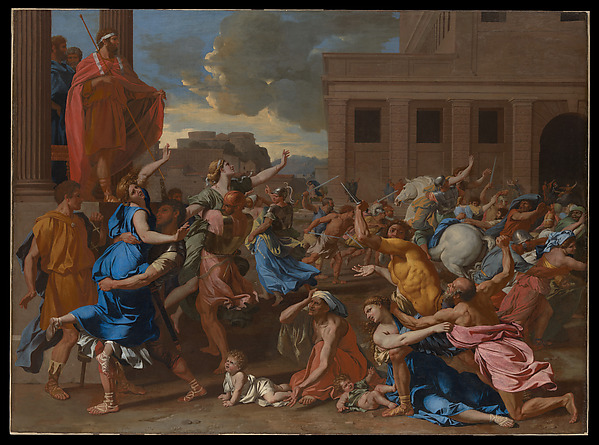
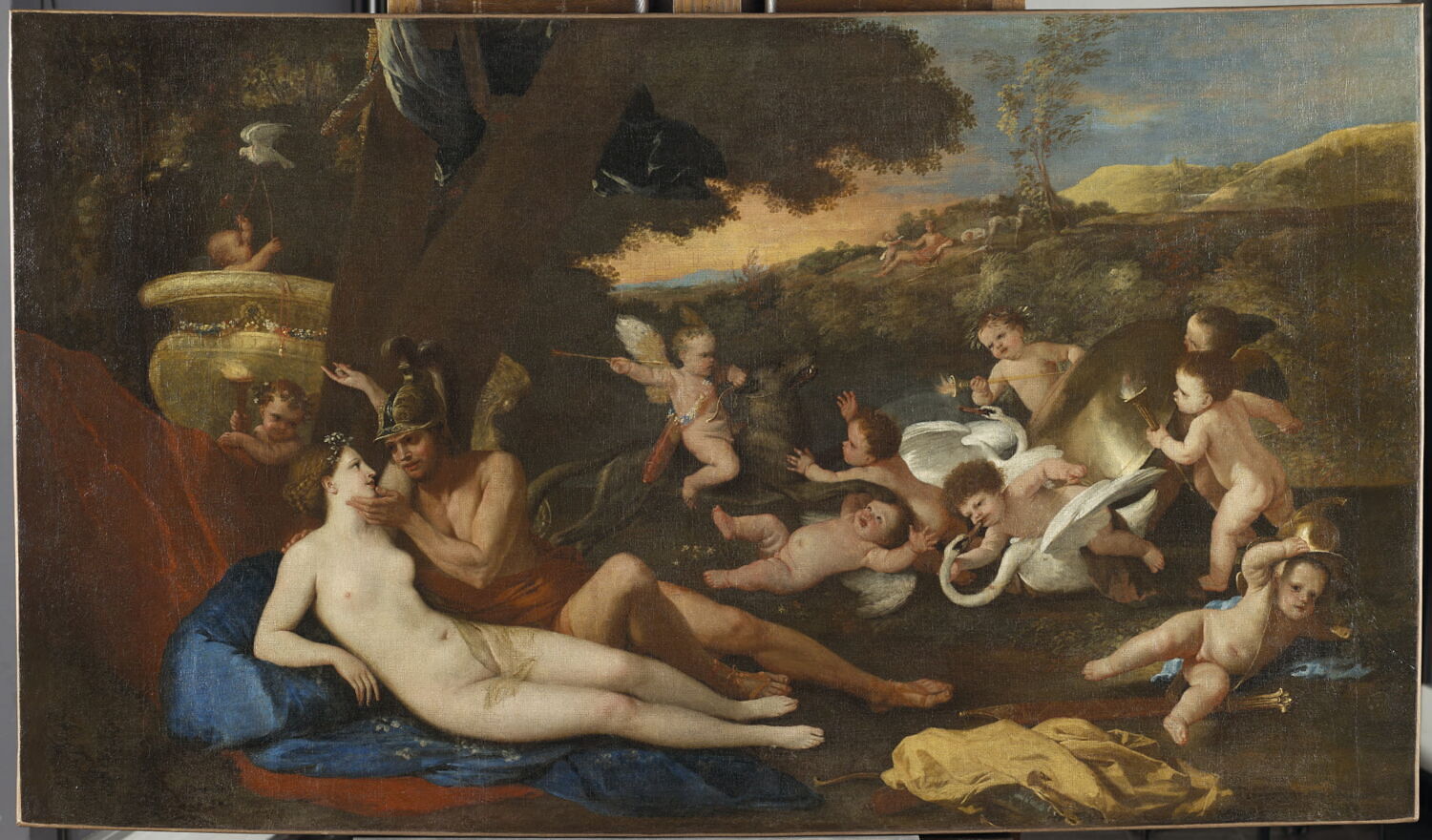
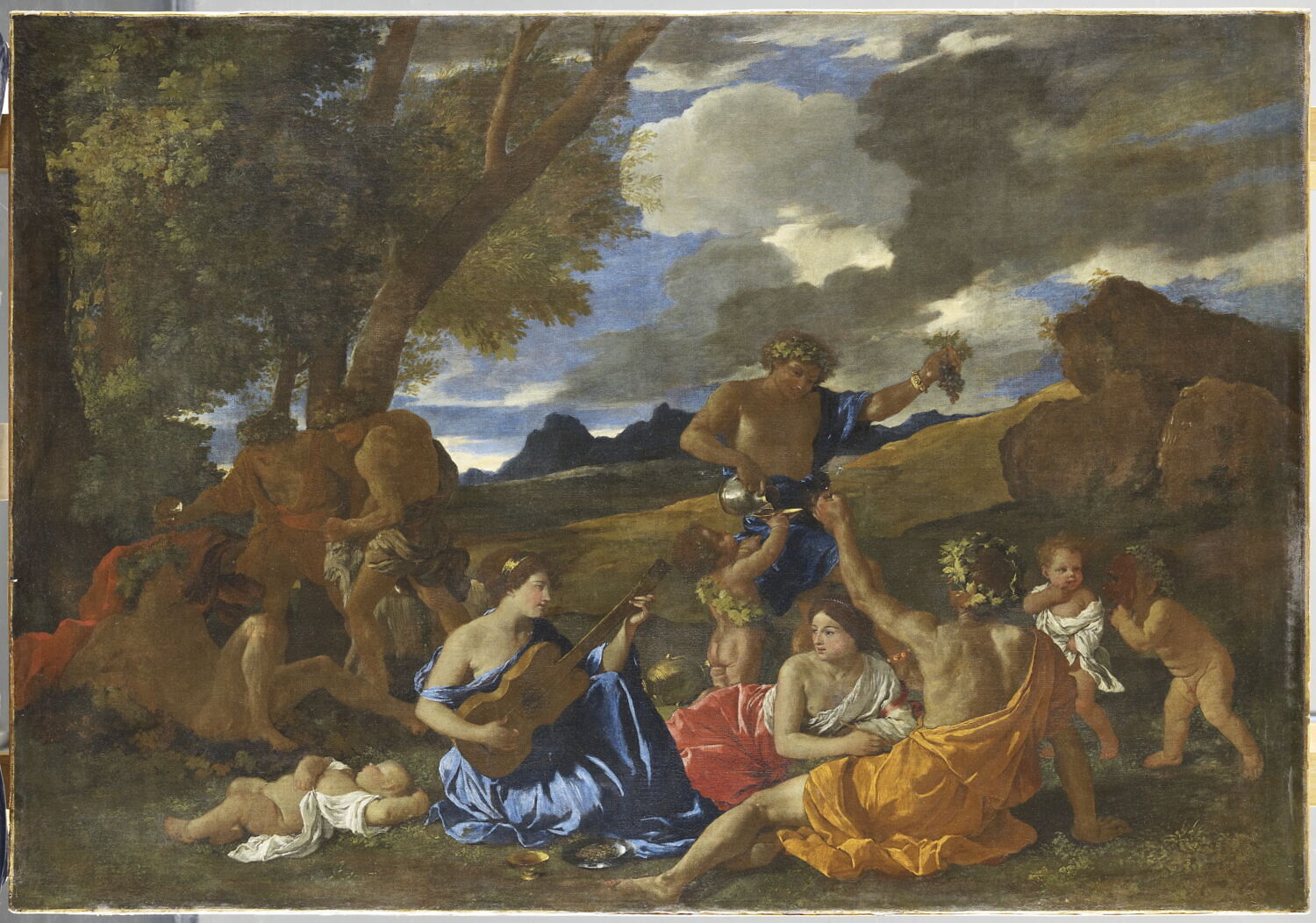
Richelieu commissions “Bacchanals” and “The Birth of Venus”
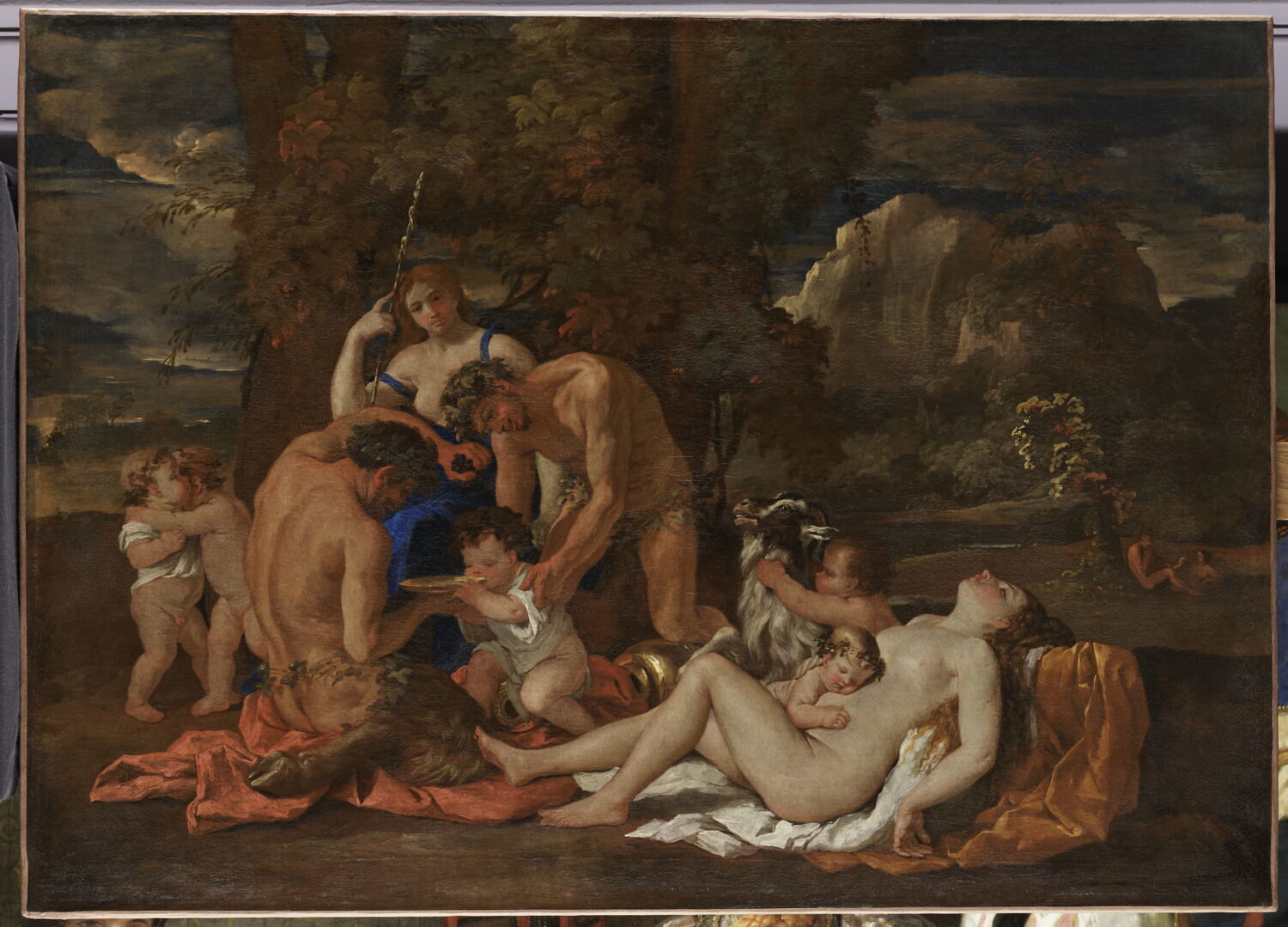
His first French commissions came from the envoy François de Créquy and then from Cardinal Richelieu — a series of “Bacchanals”; for Richelieu he also created “The Birth of Venus” (1635), an elaborate composition full of dynamic figures.


![[Die Anbetung der Hirten mit der Lampe; The Adoration of the Shepherds with the Lamp; La Nativité], Rembrandt, 1654](https://diglib.hab.de/varia/haum/rembrandt-ab3-0054/max/000001.jpg)
![[Die Anbetung der Hirten mit der Lampe; The Adoration of the Shepherds with the Lamp; La Nativité], Rembrandt, 1654](https://diglib.hab.de/varia/haum/rembrandt-v3-4537/max/000001.jpg)


![[Die Anbetung der Hirten], Annibale Carracci, 1606](https://diglib.hab.de/varia/haum/carracci-ann-v3-0908/max/000001.jpg)