 Kazimir MalevichRussia, 1879–1935
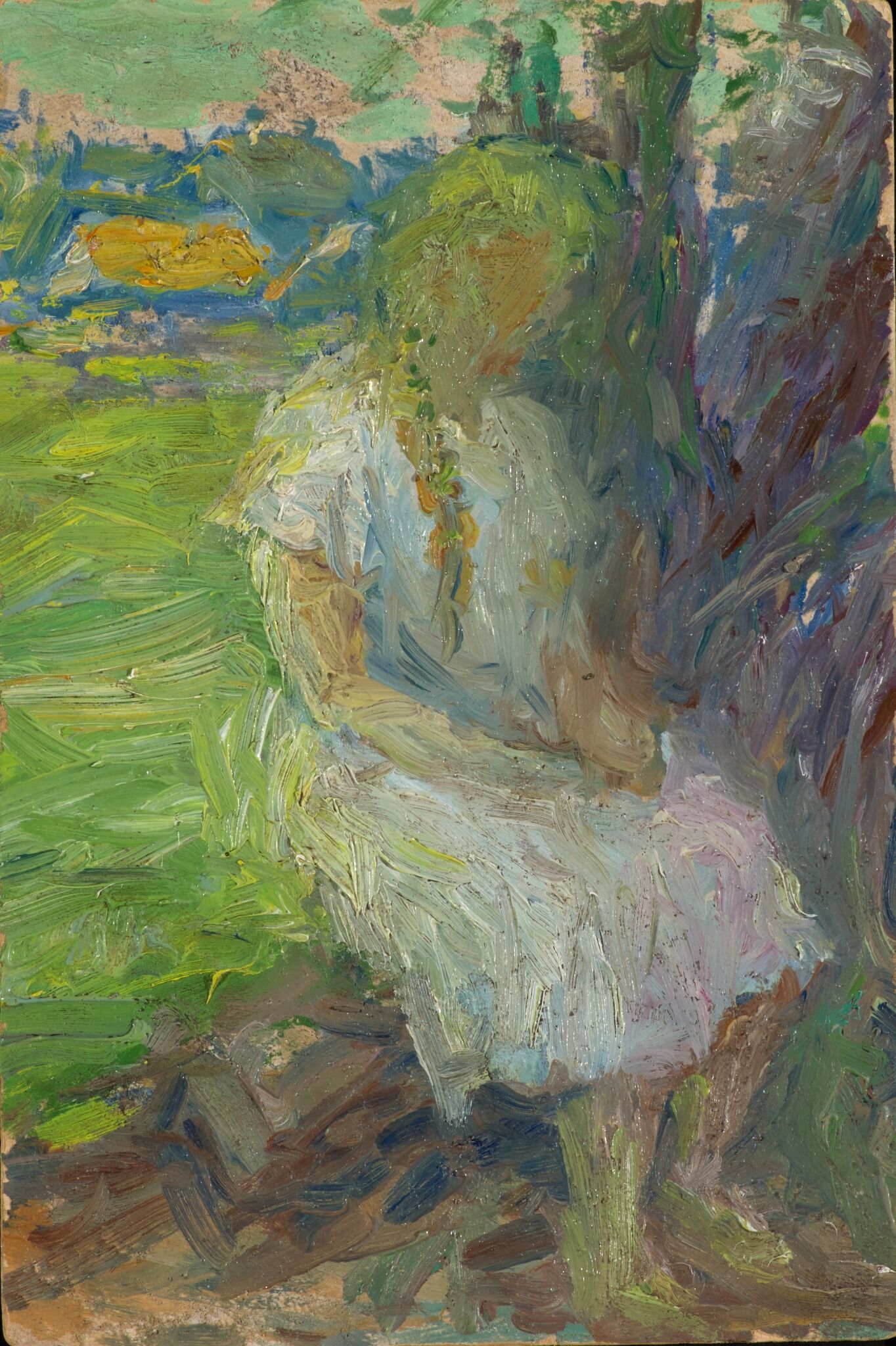
Девочка под деревом. Этюд
Si può vedere?
Non si sa
Dove si trova «Девочка под деревом. Этюд» oggi? Collezione: Galleria Tret'jakov, Mosca. Non si sa.

Mosca, Russia
Il proprietario è noto; non si sa se oggi sia esposta.
- Fonte
- Il museo
Sul dipinto
Con le parole del museo — in russo
Работа относится к периоду так называемого возвратного импрессионизма, который начался в творчестве Малевича в 1928–1929 годах и был связан как с чисто живописными задачами (воспроизведением своих ранних работ перед персональной выставкой в Третьяковской галерее), так и с теоретической разработкой импрессионизма как первой системы в его классификации нового искусства.
Leggi
Этюд выполнен за один сеанс, предположительно в Немчиновке под Москвой, где начиная с 1917 года Малевич проводил каждое лето. Здесь в доме своей бабушки Рафалович жила его дочь Уна (Анна) Казимировна Малевич, в замужестве Уриман (1920–1989). Вероятнее всего, именно она изображена сидящей под деревом. Уна была одной из любимых – удобных и безотказных – моделей Малевича: он написал два ее портрета, в летние пейзажи вводил эскизное изображение девочки в качестве оживляющего стаффажа. В настоящей работе портретное сходство мало интересует художника, фигура вылеплена широкими мазками, лицо едва намечено. Главное для него – связать рефлексы на белом платье, оттенки тела и освещенных волос с пронизанным солнцем и утопающим в голубой дымке пейзажем. Сама девочка может показаться высокой и рослой, в то время как Уна была небольшого роста.
Кроме того, на фотографиях дочь Малевича кажется темноволосой. Но эти несовпадения, скорее всего, несущественны для автора. В том, что перед нами именно девочка-подросток, убеждает ее немного скованная пластика, принужденная поза (сложенные руки, параллельно поставленные ступни ног), отсутствие девического изящества; эти черты заметны и на других портретах и фотографиях Уны этих лет. Что касается цвета волос, то нужно вспомнить, что именно с такими золотистыми косичками Малевич изобразил дочь на портрете 1930 года (Художественный музей, Стокгольм), также написанном в Немчиновке и по живописному решению очень близком к этому этюду.
Galleria Tret'jakov
Scheda
- Numero di inventario
- ЖС-7006
In catalogo
Fonti
- Galleria Tret'jakov
- Immagine: Galleria Tret'jakov — © State Tretyakov Gallery
Nella vita di Kazimir Malevich
Tutta la vita1928–1930
Kiev: teaching and the journal “Nova Generatsiia”
In 1928 (by other accounts already in 1927) Malevich moved to Kiev, where through the efforts of Mykola Skrypnyk normal conditions for creative work were created for him; he taught at the Kiev Art Institute together with Fedir Krychevsky, Mykhailo Boichuk, Viktor Palmov, Oleksandr Bohomazov and Vladimir Tatlin, and in 1928–29 published in the Kharkiv journal “Nova Generatsiia”. The start of repressions against part of the Ukrainian intelligentsia forced him to return to Leningrad.
20 September – December 1930
Arrested by the OGPU on a charge of espionage
In the autumn of 1930 Malevich was arrested by the OGPU on a charge of espionage: he was interrogated in Leningrad and threatened with execution, and released in early December — the investigator V. A. Kishkin showed no fanaticism. Shortly before, he had lost his job: the department he headed at the Institute of Art History had been closed.
1932
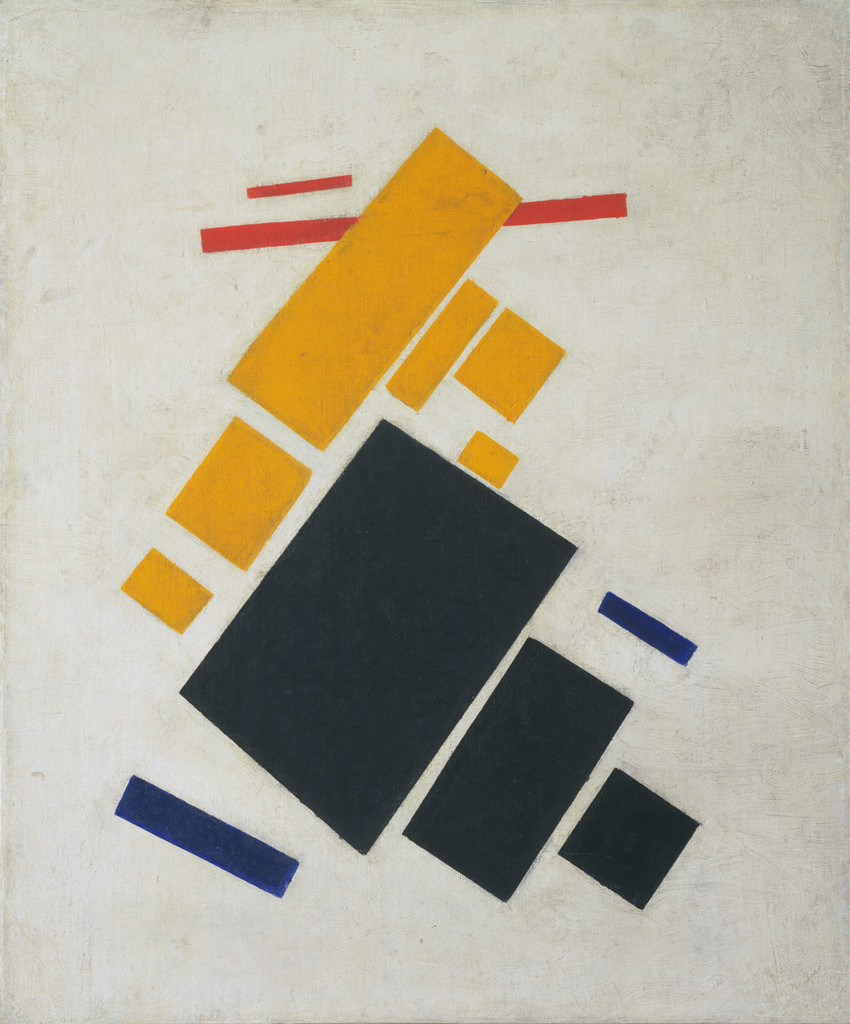
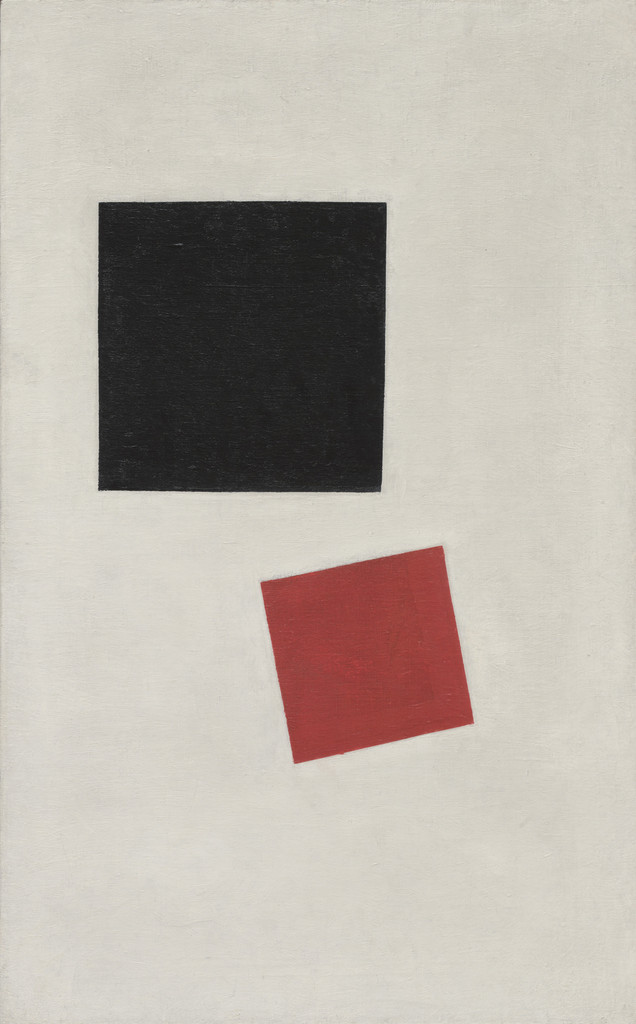
“Artists of the RSFSR: 15 Years”: the black and red squares
In 1932 Malevich took part in the jubilee exhibition “Artists of the RSFSR: 15 Years” in Leningrad; its centrepiece was two squares, a black one and a red one. For it, some specialists believe, he painted the smallest and probably the last “Black Square” (now in the Hermitage): the reverse bears the date “1913”, but it is believed to have been made in the late 1920s or early 1930s.
1933
Diagnosis: prostate cancer
In 1933 Malevich’s grave illness began — prostate cancer; he was not allowed to leave the Soviet Union to seek treatment abroad.
15 – 21 May 1935
Death and a Suprematist funeral
Malevich died of prostate cancer in Leningrad on 15 May 1935; on his deathbed he was displayed beneath the “Black Square”, and mourners at the funeral rally were allowed to wave a banner bearing a black square. By his will his body was to be placed in a Suprematist coffin in the shape of a cross with outstretched arms, but the organisers ordered a rectangular one decorated in the Suprematist spirit; after cremation in Moscow his ashes were buried on 21 May under his favourite oak near Nemchinovka, and Nikolai Suetin designed a white cube with a black square for the grave.
15 maggio 1935
Died