 Kazimir MalevichRussia, 1879–1935
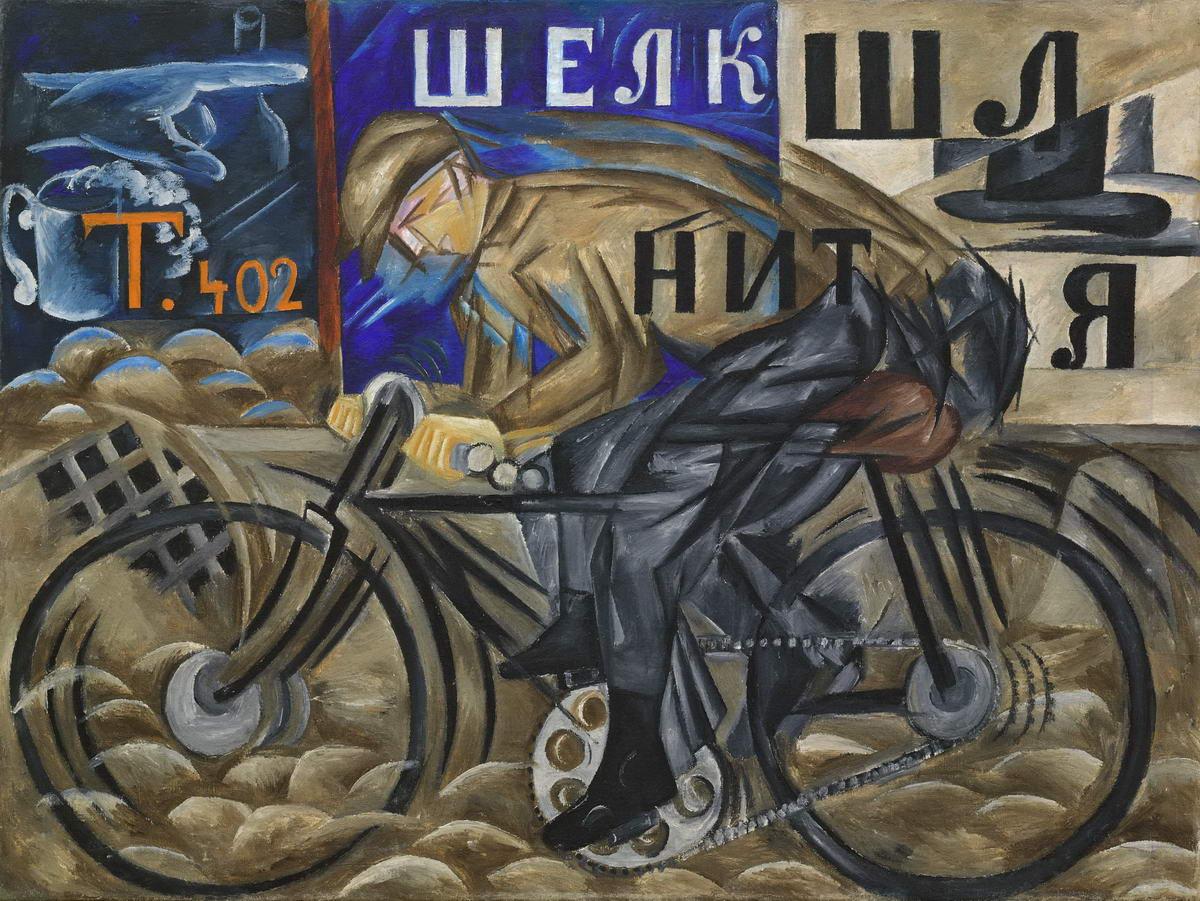
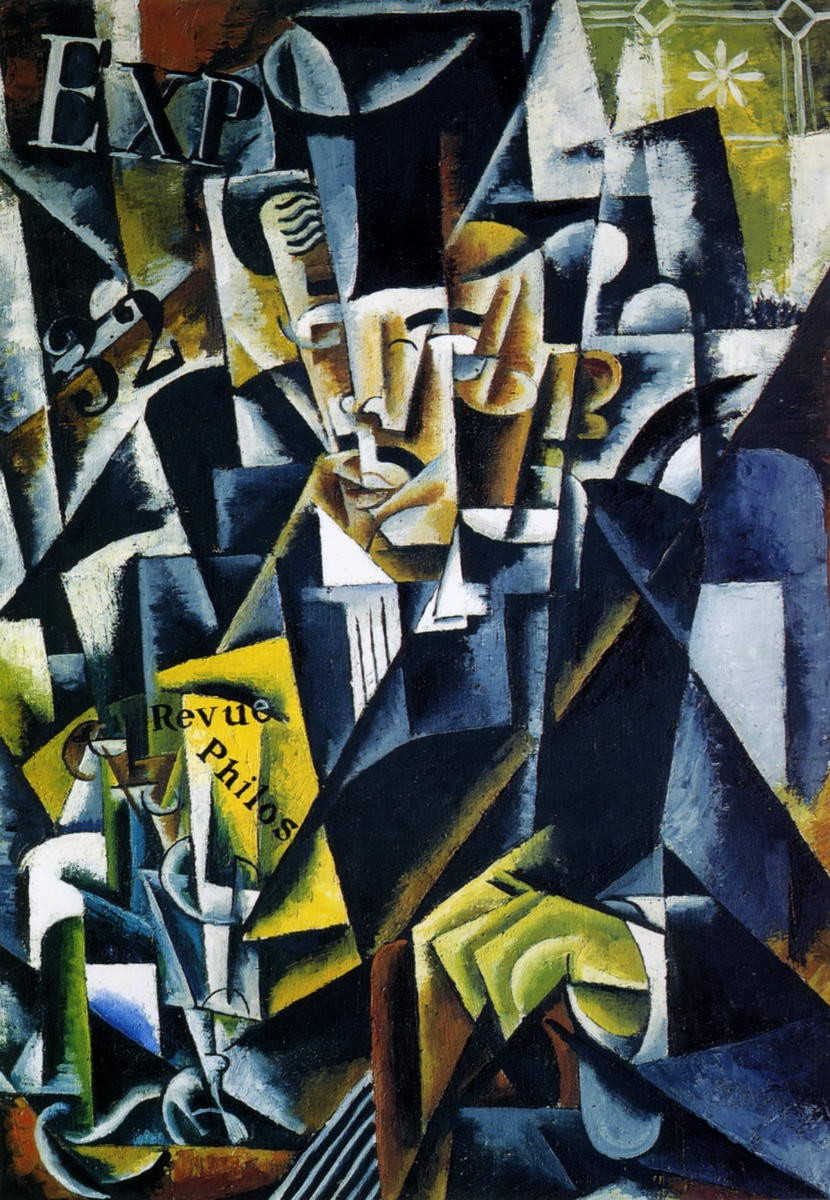
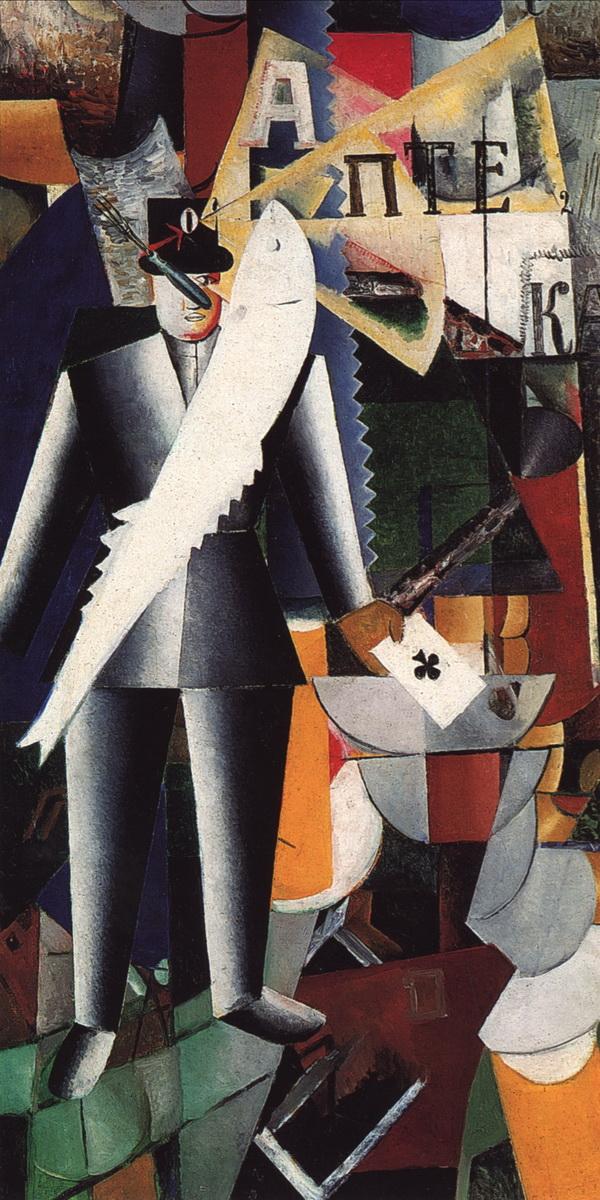
Авиатор
Si può vedere?
Sì, esposta ora
Dove si trova «Авиатор» oggi? Museo russo, Korpus Benua, Zal 75, San Pietroburgo. Sì, esposta ora. Verificato 28 settembre 2026.

Chiuso· apre domani alle 10:00
Esposta al pubblico.
- Verificato
- Ultimo cambio di stato
- Fonte
- Il museo
Sul dipinto
Con le parole del museo — in russo
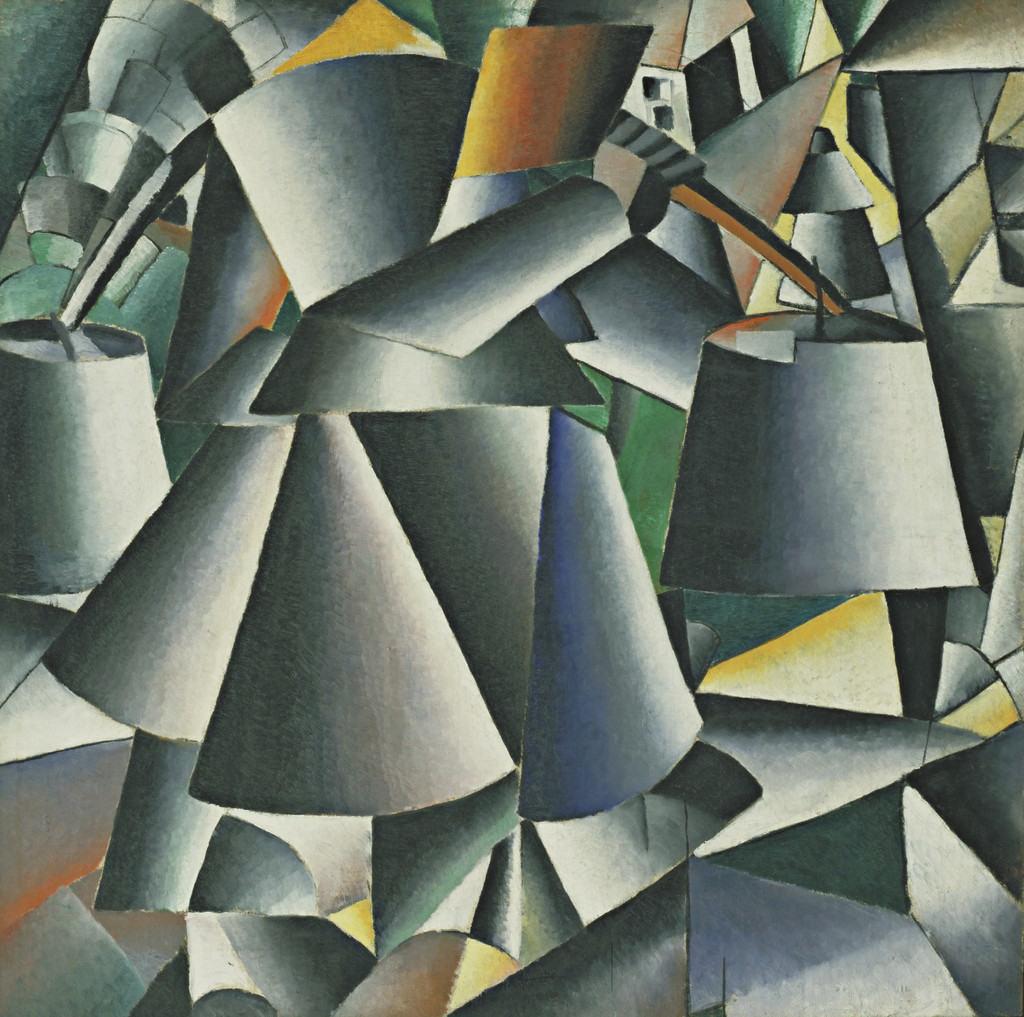
Кубофутуризм, усиленный в творчестве Малевича элементами алогизма, пожалуй, впервые дал ему ощутить то особое состояние господства над формой, которое он несколько позже определит как "раскрепощение художника из подражательного подчинения вещи к непосредственному изобретению творчества". В "Авиаторе" художник создает свою систему не столько видимого, сколько расчисленного, изобретенного мира, существующего по своим, не подвластным обывательскому "здравому смыслу" законам. Более того, он охотно использует то, что можно было бы назвать игрой слов. Так, белый силуэт рыбы, пересекающий словно парящую в тяжелом, насыщенном кубистическом пространстве фигуру авиатора, приводит на память слово "воздухоплавание".
Museo russo
Scheda
- Numero di inventario
- Жб-1348
Che cosa raffigura
In catalogo
Fonti
- Museo russo
- Immagine: Museo russo — © State Russian Museum
Nella vita di Kazimir Malevich
Tutta la vita1912
Meeting Mikhail Matyushin
In 1912 Malevich met the composer Mikhail Matyushin, the future composer of “Victory over the Sun” and publisher of his first Suprematist texts.
March – April 1912
The “Donkey’s Tail”: neo-primitivism
In March 1912 Malevich showed more than twenty neo-primitivist works at the “Donkey’s Tail” exhibition in Moscow (it ran until April), among them the peasant-inspired gouaches “Floor Polishers” and “Washerwoman”. That same year he took part in the exhibitions of the “Union of Youth” and the “Blue Rider” in Munich.
summer – autumn 1915
The first “Black Square” and a hurried brochure
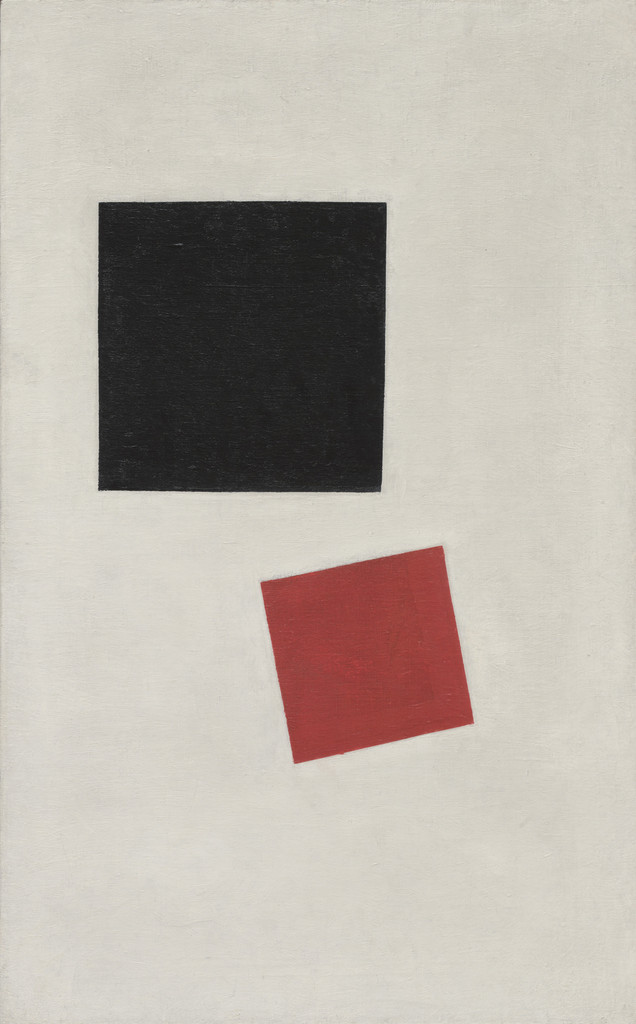
In the summer of 1915 Malevich produced his first abstract composition, a black quadrilateral on a white ground. When Ivan Puni visited his studio in September and saw the new work, the artist, afraid that the idea would be copied, composed with Matyushin’s help his first text on Suprematism — the basis of the manifesto “From Cubism to Suprematism”.
19 December 1915
“0,10”: the “Black Square” in the icon corner
On 19 December 1915 (1 January 1916 in the new style), at the “Last Futurist Exhibition of Paintings 0,10” in Nadezhda Dobychina’s Art Bureau in Petrograd, Malevich showed 39 abstract works under the general title “Suprematism of Painting”; he hung the “Black Square” in the upper corner of the room — where an icon hangs in a Russian home. His brochure “From Cubism and Futurism to Suprematism” accompanied the show; in the next room Tatlin exhibited his corner reliefs, and the exhibition was seen by more than six thousand people.
1916
Founds the “Supremus” society
In 1916 Malevich organised the “Supremus” society, which included Olga Rozanova, Lyubov Popova, Aleksandra Exter, Ivan Klyun, Vasily Pestel, Nadezhda Udaltsova, Mstislav Yurkevich and others, and prepared a journal of the same name for publication.
1916
Sixty Suprematist canvases and a lecture with Puni
In 1916 Malevich gave the paper “Cubism — Futurism — Suprematism” at the “Public Popular-Science Lecture of the Suprematists”, organised with Ivan Puni, took part in the “Shop” exhibition and showed 60 Suprematist canvases at the “Knave of Diamonds” exhibition.