ART WIKI33.040 in sala
MappaCollezioneArtistiMuseiMostreRivista
Accedi

ART WIKI

Dove è appeso il capolavoro, e quando si può entrare.

Collezioni: Art Institute of Chicago, Cleveland Museum of Art, Ermitage, Galleria Tret'jakov, Getty Museum, Harvard Art Museums, Hirshhorn Museum and Sculpture Garden, Metropolitan Museum of Art, Minneapolis Institute of Art, Museo del Louvre, Museo Puškin delle belle arti, Museo russo, Museum of Modern Art, National Gallery of Art, National Museum of Asian Art, National Portrait Gallery, Rijksmuseum, Smithsonian American Art Museum, Statens Museum for Kunst, Victoria and Albert Museum, Villa Getty, Whitney Museum of American Art, Catalogo statale del fondo museale russo (274 musei), Europeana (19 musei), Wikidata (6 musei), Paris Musées (12 musei) e Joconde, la banca dati dei musei del Ministero della Cultura francese (495 musei). Le immagini appartengono ai titolari dei diritti.

Sezioni

  • Mappa
  • Ricerca
  • Collezione
  • Capolavori
  • Esposte ora
  • Artisti

Altro

  • Musei e gallerie
  • Mostre
  • Rivista
  • Da dove vengono i dati
  • Privacy e cookie
HomeMappaCatalogo
  1. Collezione/
  2. Herzog Anton Ulrich-Museum/
  3. Der Apostel Thomas
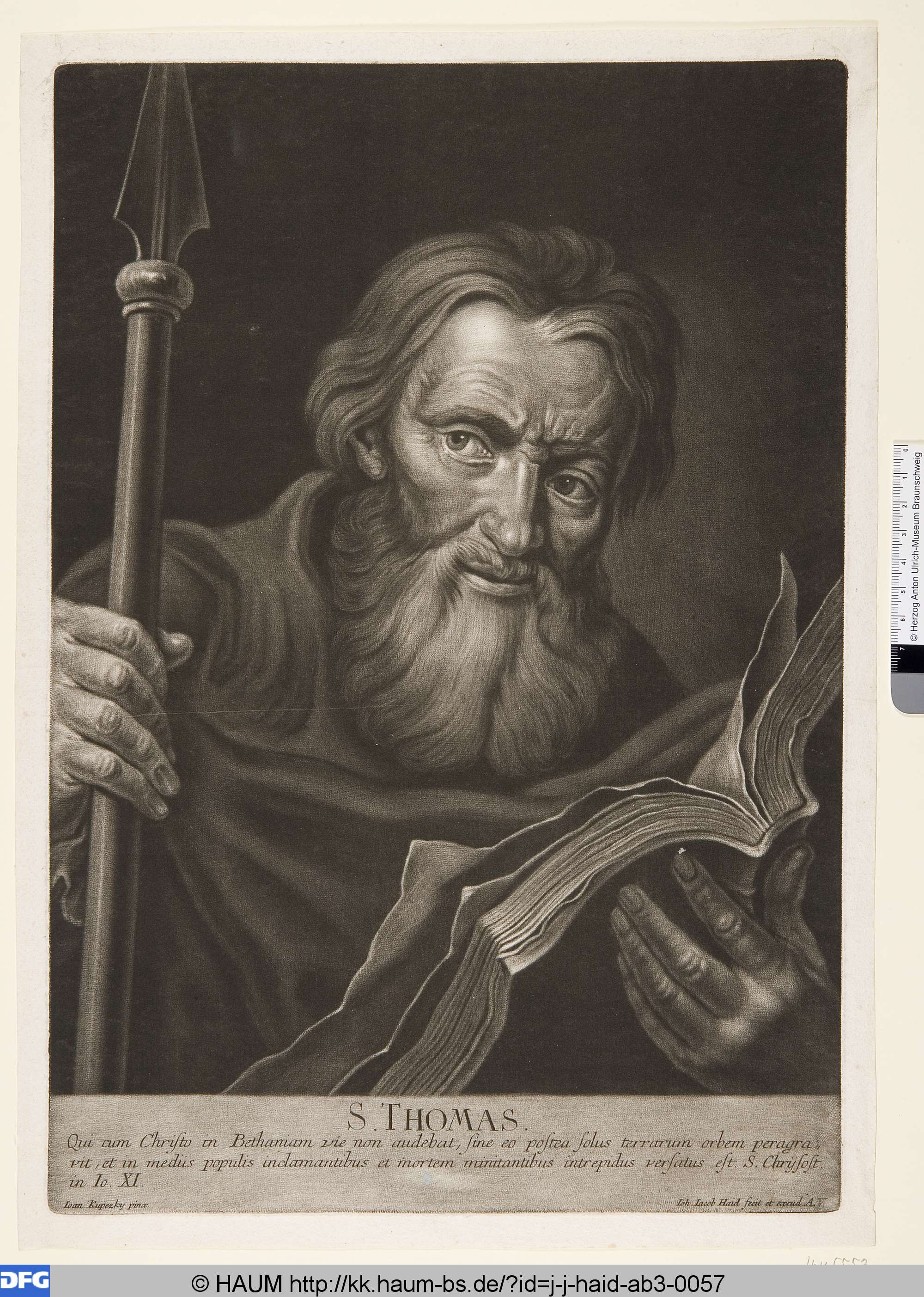
Der Apostel Thomas, Albrecht Dürer, 1514
Albrecht Dürer, ritrattoAlbrecht DürerGermania, 1471–1528

Der Apostel Thomas

1514 · Print

Si può ammirare?

Non si sa

Herzog Anton Ulrich-Museum

Braunschweig, Germania

Il proprietario è noto; non si sa se oggi sia esposta.

Ultimo cambio di stato
27 set 2026
Fonte
Il museo
Sulla mappaPagina del museo

Scheda

1514 · a 43 anni
14711528

Nel frattempo, nella vita di Albrecht Dürer

Tutta la vita
  1. 1507–1528 · Luogo di lavoro

    Nuremberg

  2. 1512

    Emperor Maximilian I becomes his chief patron

    From 1512 Emperor Maximilian I was Dürer's chief patron. For him Dürer and his workshop produced the Triumphal Arch, a giant woodcut 295 × 357 cm printed from 192 blocks and modelled on the triumphal arches of ancient Rome.

  3. 3 January 1512

    Nuremberg's privilege against forgeries

    Nuremberg's city council granted Dürer a privilege for the sale of his prints, with penalties for anyone who forged them.

  4. 1513–1516

    Three years without painting

    Complaining that painting did not pay enough to justify the time compared with his prints, Dürer produced no paintings from 1513 to 1516.

  5. 1514

    Death of his mother

    In the year of Melencolia I and St Jerome in His Study, the artist's mother, Barbara Holper, died.

  6. 1515

    A life pension from the emperor

    The perpetually cash-strapped Maximilian could not pay on time and offered to exempt the artist from city taxes, which the Nuremberg Council opposed. At Dürer's request the emperor granted him a life pension of 100 guilders a year from the sums Nuremberg paid into the imperial treasury.
Altre opere di Albrecht Dürer

Tutte le opere

Dalla collezione: Herzog Anton Ulrich-Museum

Pagina del museo

Sullo stesso tema · Der Apostel Thomas

Tutte le opere sul tema

Che cosa raffigura

Der Apostel ThomasMögliche Attribute: Buch, Kelch, Gürtel, Herz, Lanze oder Speer, Schriftrolle, Winkelmaß, SteineApostelLanzeMärtyrerThomas (Heiliger)

In catalogo

StampeRinascimentoXVI secolo

Fonti

  • Herzog Anton Ulrich-Museum
  • Immagine: Herzog Anton Ulrich-Museum — CC BY-NC-SA 4.0
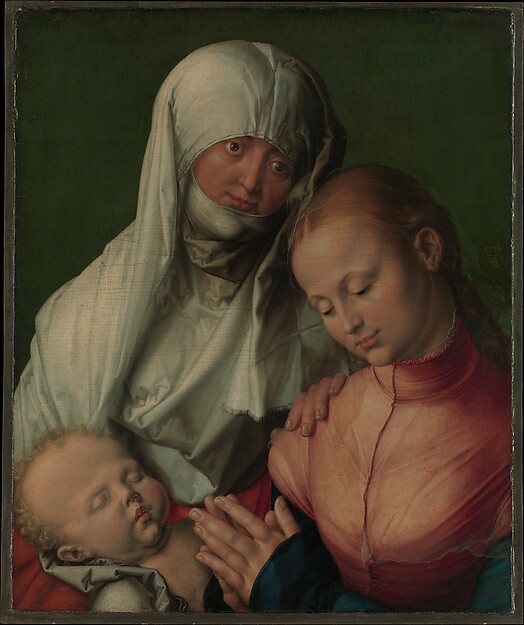
Virgin and Child with Saint Anne, Albrecht Dürer, probably 1519

Virgin and Child with Saint Anne

probably 1519 · Metropolitan Museum of Art

Madonna and Child [obverse], Albrecht Dürer, c. 1496/1499

Madonna Haller

c. 1496/1499 · National Gallery of Art

Lot and His Daughters [reverse], Albrecht Dürer, c. 1496/1499

Lot and His Daughters [reverse]

c. 1496/1499 · National Gallery of Art

The Martyrdom of Saint Catherine, Albrecht Dürer, ca. 1498

The Martyrdom of Saint Catherine

ca. 1498 · Metropolitan Museum of Art

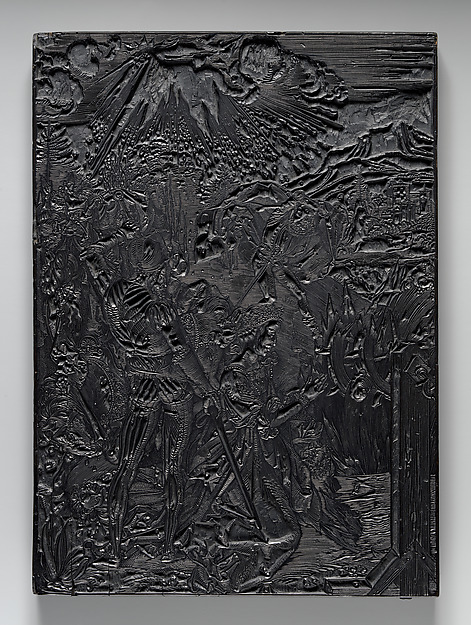
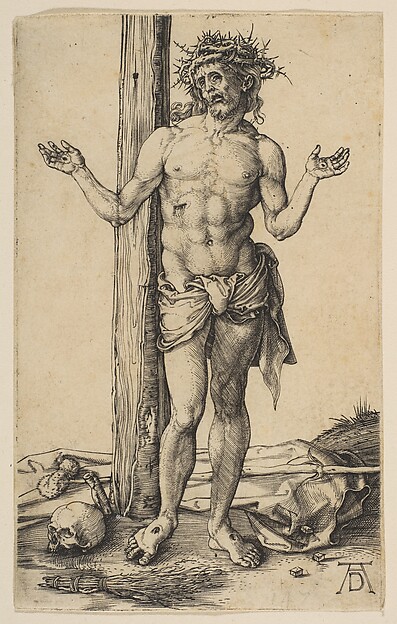
Man of Sorrows with Arms Outstretched, Albrecht Dürer, ca. 1500

Man of Sorrows with Arms Outstretched

ca. 1500 · Metropolitan Museum of Art

Nemesis (The Great Fortune), Albrecht Dürer, c. 1501/1502

Nemesis (The Great Fortune)

c. 1501/1502 · National Gallery of Art

Large Horse, Albrecht Dürer, 1505

Large Horse

1505 · National Gallery of Art

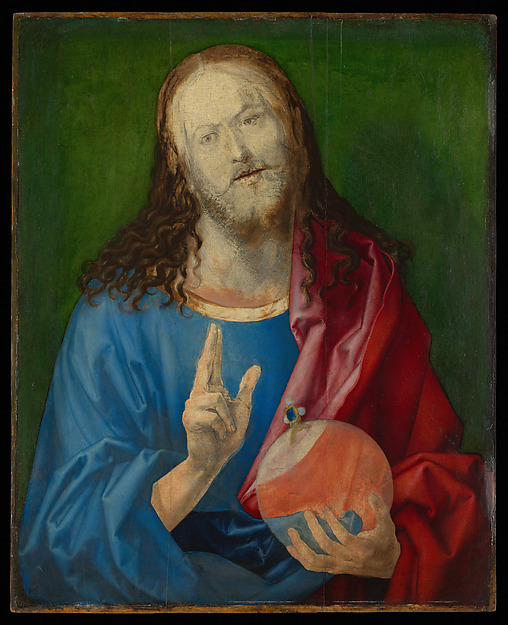
Salvator Mundi, Albrecht Dürer, ca. 1505

Salvator Mundi

ca. 1505 · Metropolitan Museum of Art

Portrait d'Adolphe de Vignacourt Grand Maître de Malthe, Caravaggio, 1704–1755

Caravaggio

Portrait d'Adolphe de Vignacourt Grand Maître de Malthe, 1704–1755

Ecce Homo, Caravaggio, 1674–1684

Caravaggio

Ecce Homo, 1674–1684

Heiliger Hieronymus, Caravaggio

Caravaggio

Heiliger Hieronymus

Bildnis eines Mannes, Rembrandt, 1839–1850

Rembrandt van Rijn

Bildnis eines Mannes, 1839–1850

Bildnis einer Frau, Rembrandt, 1839–1850

Rembrandt van Rijn

Bildnis einer Frau, 1839–1850

Tobias und seine Frau, Rembrandt, 1773

Rembrandt van Rijn

Tobias und seine Frau, 1773

Tobias und seine Frau, Rembrandt, 1773

Rembrandt van Rijn

Tobias und seine Frau, 1773

Lot mit seinen Töchtern, Rembrandt, 1771

Rembrandt van Rijn

Lot mit seinen Töchtern, 1771

Die Apostel Andreas und Thomas, Hans Sebald Beham, 1520

Hans Sebald Beham

Die Apostel Andreas und Thomas, 1520

Herzog Anton Ulrich-Museum

St. Thomas, Jan Kupecký, 1725–1767

Jan Kupecký

St. Thomas, 1725–1767

Herzog Anton Ulrich-Museum

Thomas, Israhel van Meckenem, 1460–1503

Israhel van Meckenem

Thomas, 1460–1503

Herzog Anton Ulrich-Museum

Thomas, Virgil Solis, 1568

Virgil Solis

Thomas, 1568

Herzog Anton Ulrich-Museum

[St. Thomas debout; St. Thomas; Hl. Thomas], Antonio Maria Zanetti, 1700–1749

Anton Maria Zanetti I and Giovanni Antonio Faldoni and Andrea Zucchi

[St. Thomas debout; St. Thomas; Hl. Thomas], 1700–1749

Herzog Anton Ulrich-Museum

Hl. Thomas, Peter Paul Rubens, 1628–1666

Peter Paul Rubens

Hl. Thomas, 1628–1666

Herzog Anton Ulrich-Museum

Der Hl. Thomas von Aquin, 1495–1505

Der Hl. Thomas von Aquin, 1495–1505

Herzog Anton Ulrich-Museum

S.Thomas, Domenico Falcini, 1607

Domenico Falcini

S.Thomas, 1607

Herzog Anton Ulrich-Museum