 Viktor Vasnetsov1848–1926
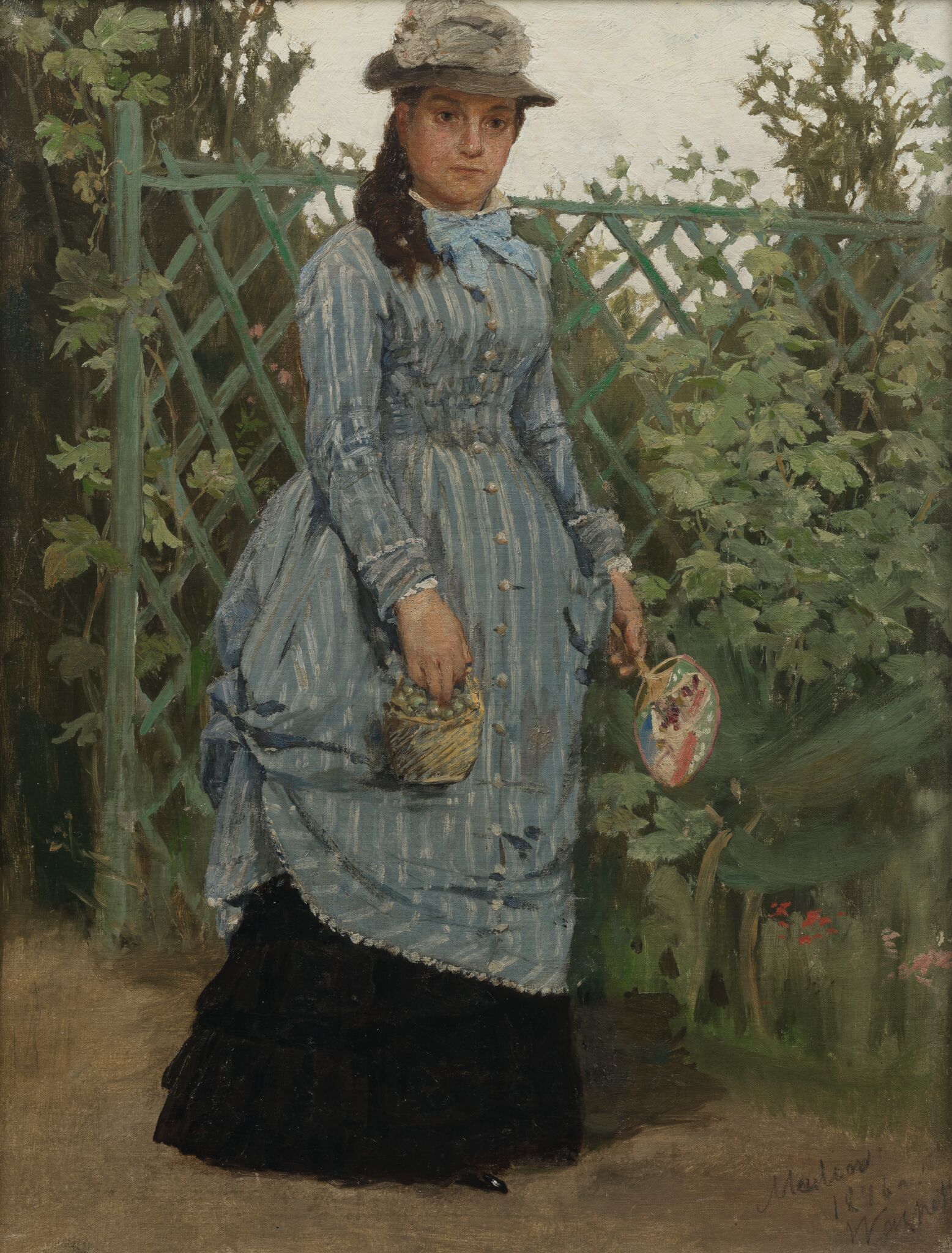
Дама в голубом на фоне изгороди
Si può vedere?
Non si sa
Dove si trova «Дама в голубом на фоне изгороди» oggi? Collezione: Galleria Tret'jakov, Mosca. Non si sa.

Mosca, Russia
Il proprietario è noto; non si sa se oggi sia esposta.
- Ultimo cambio di stato
- Fonte
- Il museo
Sul dipinto
Con le parole del museo — in russo
Важным этапом в творческой биографии Виктора Михайловича Васнецова стала поездка во Францию (март 1876 – май 1877). Он предпринял ее по настойчивому приглашению Ильи Репина, который указывал на пользу заграничного путешествия: «на всё открывает глаза» и «не будешь неопределенно предаваться тоске по неизвестному».
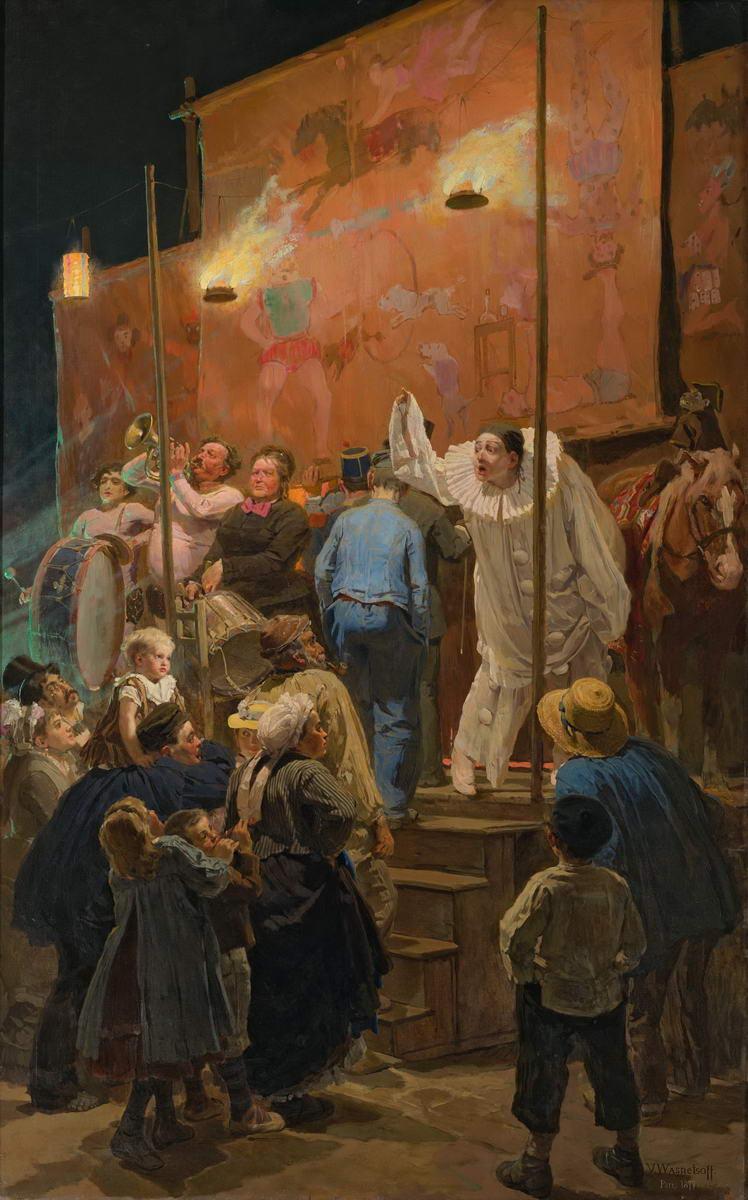
Васнецов посещал парижские музеи и выставки, однако из соображений экономии вскоре переехал в Медон, предместье Парижа. Там художник провел почти год, бродя по местным улочкам, работая над многочисленными этюдами городской жизни для двух версий картины «Акробаты (На празднике в окрестностях Парижа)» (1876, Государственная Третьяковская галерея; 1877, Государственный Русский музей).
Leggi
Из этой поездки Васнецов привез множество этюдов. Он писал их в Медонском лесу и, вероятно, в самом Париже. Этюды спасали его «от неожиданных ураганов грусти и скуки самой тяжелой, самой отчаянной», которая нападала на него на чужбине. Франция оказала достаточно сильное влияние на стиль Васнецова. Если раньше он акцентировал внимание на выявлении характерных черт образа, то во Франции стал больше заботиться о цвете. В это время он тяготел к более чистым и светлым тонам, нюансированной колористической разработке. В пейзажных этюдах чувствуется опыт работы художника на пленэре, натурность и естественность первого впечатления. Время, проведенное художником во Франции, обогатило его творческие возможности. В собрании галереи хранится несколько работ этого периода – «Дама в голубом на фоне изгороди», «Пирамидальные тополя», «Лесные дали», «Мансарда» и «Плющ»; все – 1876.
Galleria Tret'jakov
Scheda
- Numero di inventario
- ДМВ Ж-156
In catalogo
Fonti
- Galleria Tret'jakov
- Immagine: Galleria Tret'jakov — © State Tretyakov Gallery
Nella vita di Viktor Vasnetsov
Tutta la vita1868–1876
Friendship with Repin and the “evenings” at Antokolsky’s
In St Petersburg he grew very close to Ilya Repin; he attended the “evenings” at the apartment of Repin and the sculptor Mark Antokolsky, where the student Ivan Savenkov read bylinas in a slow chant, in the northern accent so familiar to Vasnetsov — and so his interest in early Russian culture and folk epic finally took shape.
1873–1875
He leaves the Academy before graduating
In 1873, a year before the end of the course, he almost stopped attending the Academy and went only to Chistyakov’s studio: Chistyakov told him he had already got from the Academy all it could give, and Kramskoi advised the same; on 4 (16) February 1875 he was formally discharged, receiving a certificate that listed two small silver medals and one large one.
1876–1877
Mamontov’s letter, homesickness and the first sketch for the “Bogatyrs”
In Polenov’s Paris studio he and Repin re-read a letter from Savva Mamontov calling the artists to Moscow; the letter sharpened his homesickness (“Alone, alone and alone!”), and it was there that the first painted sketch of the “Bogatyrs” was made.
1877
Wedding to Alexandra Ryazantseva
Before leaving for Paris he had proposed to Ryazantseva; the wedding took place in November 1877 in the Church of Saints Peter and Paul of the Semyonovsky-Alexandrovsky military hospital in St Petersburg.
1878
He moves to Moscow, the city of his life’s work
In 1878, his resolve strengthened by Mamontov’s letter, he moved to Moscow, the city to which most of his creative life would be tied: he settled in a small flat in 3rd Ushakovsky Lane near Ostozhenka, walked the city for hours admiring the Kremlin and St Basil’s, and until 1885 the family changed rented flats in Moscow six times.
1878–1880
Mamontov’s commission for the Donetsk Railway
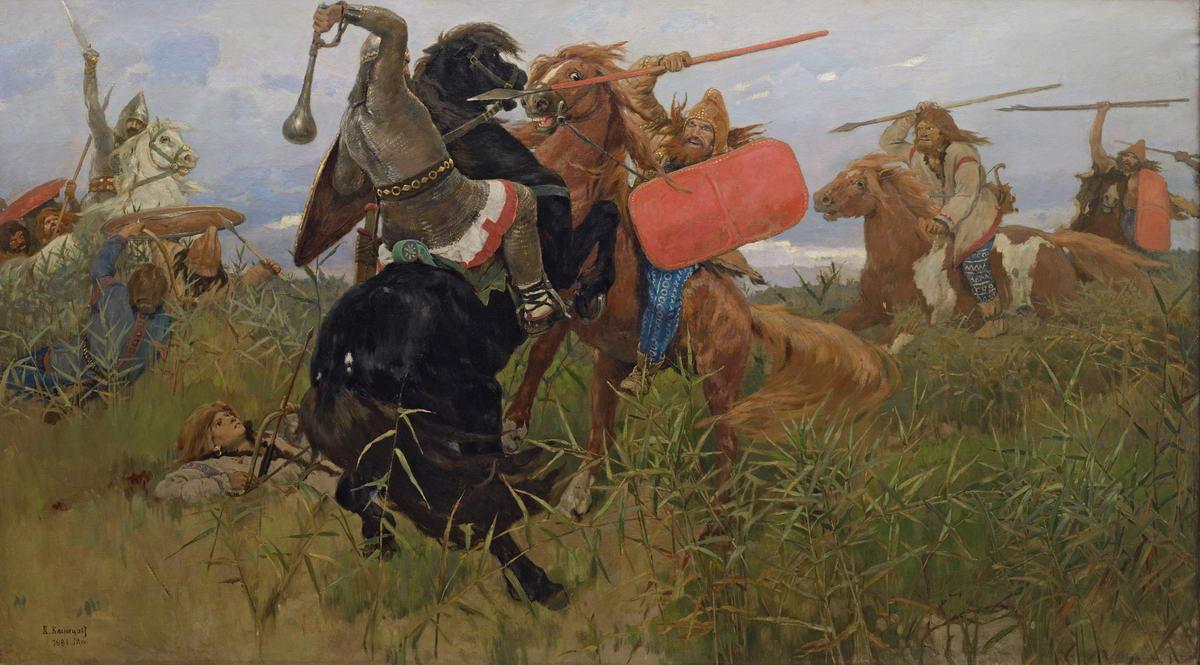
Repin brought him to the house of Savva Mamontov, who commissioned three fairy-tale pictures for the boardroom of the Donetsk Railway — “The Battle of the Russians with the Scythians”, “The Flying Carpet” and “The Three Princesses of the Underground Kingdom” (the princesses of gold, precious stones and coal); the princess Coal, a modest dark-haired girl in a black dress, was especially successful.