ART WIKI32.963 in sala
MappaCollezioneArtistiMuseiMostreRivista
Accedi

ART WIKI

Dove è appeso il capolavoro, e quando si può entrare.

Collezioni: Art Institute of Chicago, Cleveland Museum of Art, Ermitage, Galleria Tret'jakov, Getty Museum, Harvard Art Museums, Hirshhorn Museum and Sculpture Garden, Metropolitan Museum of Art, Minneapolis Institute of Art, Museo del Louvre, Museo Puškin delle belle arti, Museo russo, Museum of Modern Art, National Gallery of Art, National Museum of Asian Art, National Portrait Gallery, Rijksmuseum, Smithsonian American Art Museum, Statens Museum for Kunst, Victoria and Albert Museum, Villa Getty, Whitney Museum of American Art, Catalogo statale del fondo museale russo (274 musei), Europeana (19 musei), Wikidata (6 musei), Paris Musées (12 musei) e Joconde, la banca dati dei musei del Ministero della Cultura francese (495 musei). Le immagini appartengono ai titolari dei diritti.

Sezioni

  • Mappa
  • Ricerca
  • Collezione
  • Capolavori
  • Esposte ora
  • Artisti

Altro

  • Musei e gallerie
  • Mostre
  • Rivista
  • Da dove vengono i dati
  • Privacy e cookie
HomeMappaCatalogo
  1. Collezione/
  2. Art Institute of Chicago/
  3. Convention Fury
Convention Fury, Idelle Weber, 1968
IIdelle WeberStati Uniti, 1932–2020

Convention Fury

1968 · Sculpture

Si può ammirare?

Al momento non riceve

Art Institute of Chicago

Chicago, Stati Uniti

Appartiene alla collezione, ma al momento non è esposta.

Verificato
3 giorni fa
Ultimo cambio di stato
19 ago 2026
Fonte
Il museo
Sulla mappaPagina del museo

Sulla scultura

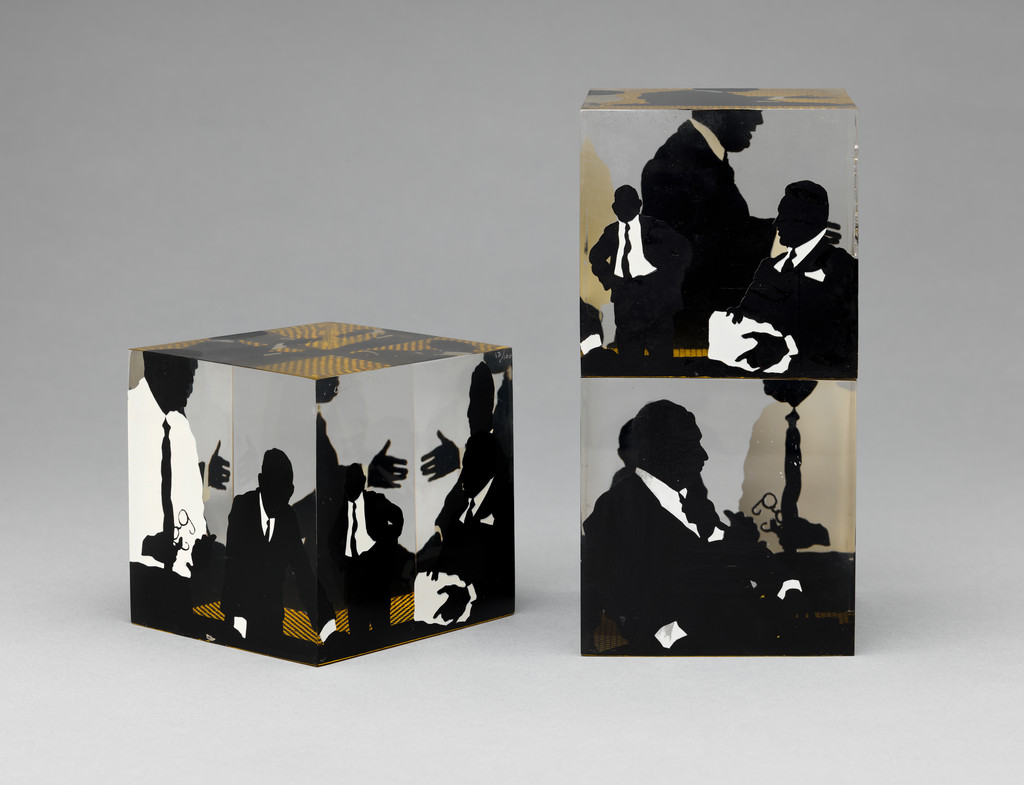
Inspired by the anti–Vietnam War protests and subsequent police riots that erupted outside the Chicago Democratic National Convention in 1968, Idelle Weber’s Convention Fury implicates the viewer as a witness to police brutality. The transparent plastic cube, painted by hand, lets different scenes come to the foreground depending on which side is viewed. From one angle, a protestor is arrested while demonstrators march in the background, and from another, a police officer raises his baton as others look on. The act of watching is dynamic throughout the piece: politicians watch police, police watch protesters, and the viewer watches the scene unfold. By confronting issues of responsibility and voyeurism, Weber’s Convention Fury urges viewers to consider two questions: Who stands on the sidelines and why?

Art Institute of Chicago · CC BY 4.0

Scheda

1968 · a 36 anni
19322020
Numero di inventario
2023.3086

In catalogo

SculturaArte del dopoguerraXX secoloStati Uniti

Fonti

  • Art Institute of Chicago
  • Immagine: Art Institute of Chicago — © the artist or rights holder

Altre opere di Idelle Weber

Tutte le opere
Blue Monday Man, Idelle Weber, 1962

Blue Monday Man

1962 · Non esposta · Art Institute of Chicago

Untitled, Idelle Weber, 1968–1970

Untitled

1968–1970 · Non esposta · Museum of Modern Art

Lever Building II, Idelle Weber, 1970

Lever Building II

1970 · Non esposta · Whitney Museum of American Art

Cambridge Series A11, Idelle Weber, 1992

Cambridge Series A11

1992 · Non esposta · Whitney Museum of American Art

M L 11.92, Idelle Weber, 1992

M L 11.92

1992 · Non esposta · Art Institute of Chicago

Cambridge Series Landscape 218*1*92, Idelle Weber, 1992

Cambridge Series Landscape 218*1*92

1992 · Non esposta · Harvard Art Museums

Sotto lo stesso tetto: Art Institute of Chicago

Pagina del museo
The Bedroom, Vincent van Gogh, 1889

Vincent van Gogh

The Bedroom, 1889

A Sunday on La Grande Jatte — 1884, Georges Seurat, 1884–86, border added 1888–89

Georges Seurat

Una domenica pomeriggio sull'isola della Grande-Jatte, 1884–86, border added 1888–89

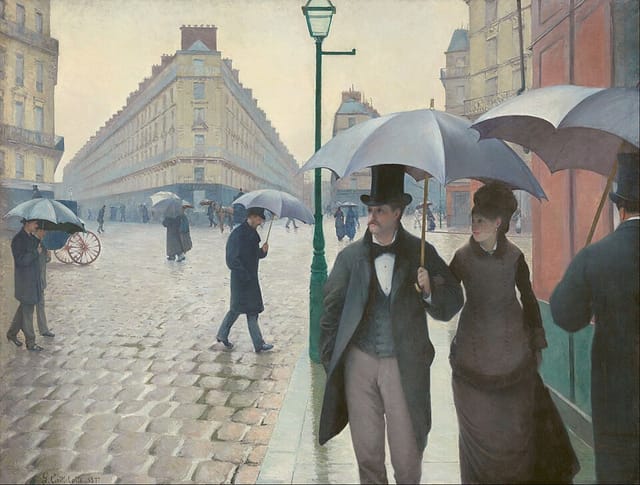
Paris Street; Rainy Day, Gustave Caillebotte, 1877

Gustave Caillebotte

Strada di Parigi in un giorno di pioggia, 1877

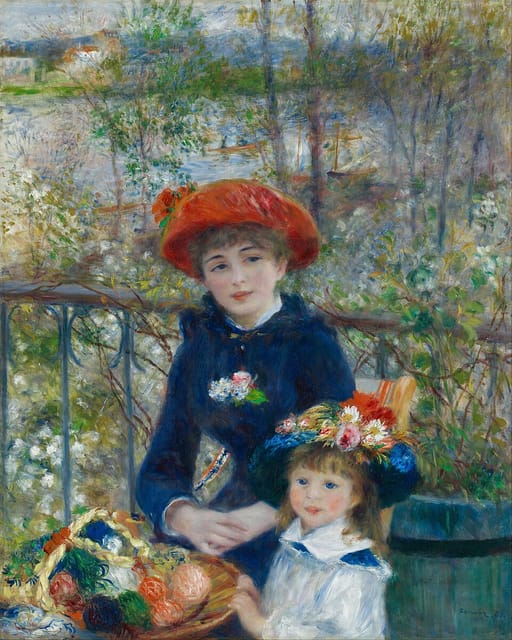
Two Sisters (On the Terrace), Pierre-Auguste Renoir, 1881

Pierre-Auguste Renoir

Sulla terrazza, 1881

The Basket of Apples, Paul Cézanne, c. 1893

Paul Cézanne

il cesto di mele, c. 1893

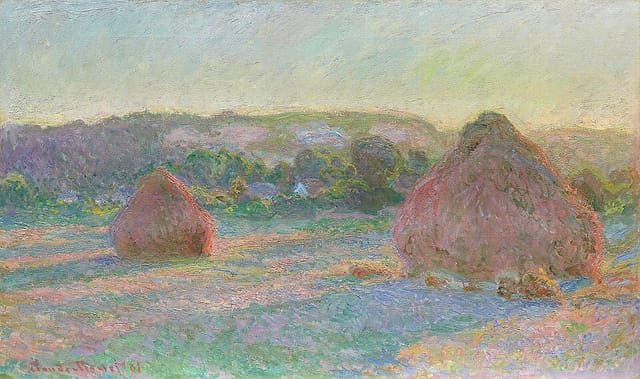
Stacks of Wheat (End of Summer), Claude Monet, 1890–91

Claude Monet

Stacks of Wheat (End of Summer), 1890–91

American Gothic, Grant Wood, 1930

Grant Wood

American Gothic, 1930

Nighthawks, Edward Hopper, 1942

Edward Hopper

I nottambuli, 1942