Gino SeveriniItalia, 1883–1966
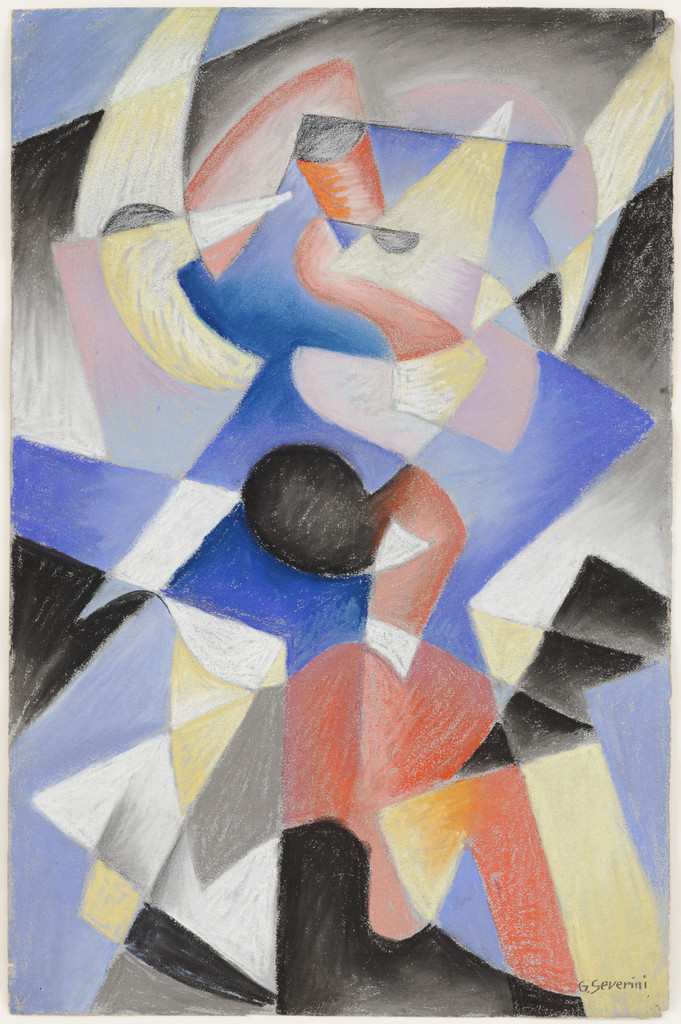
Composizione
Si può vedere?
Non si sa
Dove si trova «Composizione» oggi? Collezione: Galleria d'arte contemporanea Osvaldo Licini, Ascoli Piceno. Non si sa se oggi sia esposta.
Ascoli Piceno, Italia
Il proprietario è noto; non si sa se oggi sia esposta.
- Ultimo cambio di stato
- Fonte
- Il museo
Sull’opera
Il disegno non è datato, si può supporre che sia stato realizzato intorno alla metà del Novecento quando sotto l'influenza della corrente neocubista (Turcato, Corpora, Fazzini, Guttuso ed altri) Severini `modernizza` il proprio linguaggio prediligendo una pittura di segni libera da qualsiasi legame oggettuale. L'opera è indicata nell'atto notarile con il titolo `Composizione`
Galleria d'arte contemporanea Osvaldo Licini
Scheda
- Numero di inventario
- inv., n. 862
Che cosa raffigura
In catalogo
Fonti
- Galleria d'arte contemporanea Osvaldo Licini
- Immagine: Galleria d'arte contemporanea Osvaldo Licini — Soprintendenza Archeologia, Belle Arti e Paesaggio per le province di Ascoli Piceno, Fermo e Macerata · Beni Culturali Standard (BCS) · Catalogo generale dei Beni Culturali (ICCD – MiC)
Nella vita di Gino Severini
Tutta la vita1899
Moves to Rome with his mother
For a while he works with his father; then in 1899 he moves to Rome with his mother, where, working as a shipping clerk, he paints in his spare time — it is in Rome that he first shows a serious interest in art.
1900
Meets Boccioni and Balla: Divisionism
He meets Umberto Boccioni; together they visit the studio of Giacomo Balla, where they are introduced to Divisionism — painting with adjacent rather than mixed colours, breaking the surface into a field of dots and stripes. The ideas of Divisionism strongly influenced Severini’s early work and Futurist painting of 1910–1911.
1906
Moves to Paris
He settles in Paris, in Montmartre, and devotes himself to painting; he would later say that he was born physically in Cortona and intellectually and spiritually in Paris.
February – April 1910
Signs the manifestos of Futurist painting
Invited by Filippo Tommaso Marinetti and Boccioni to join the Futurist movement, he co-signs, with Balla, Boccioni, Carlo Carrà and Luigi Russolo, the Manifesto of the Futurist Painters (February 1910) and the Technical Manifesto of Futurist Painting (April of the same year).
1935
First prize for painting at the Rome Quadrennial
At the Rome Quadrennial he wins the first prize for painting, with an entire room devoted to his work.
26 febbraio 1966
Died