Henri Cartier-BressonFrancia, 1908–2004
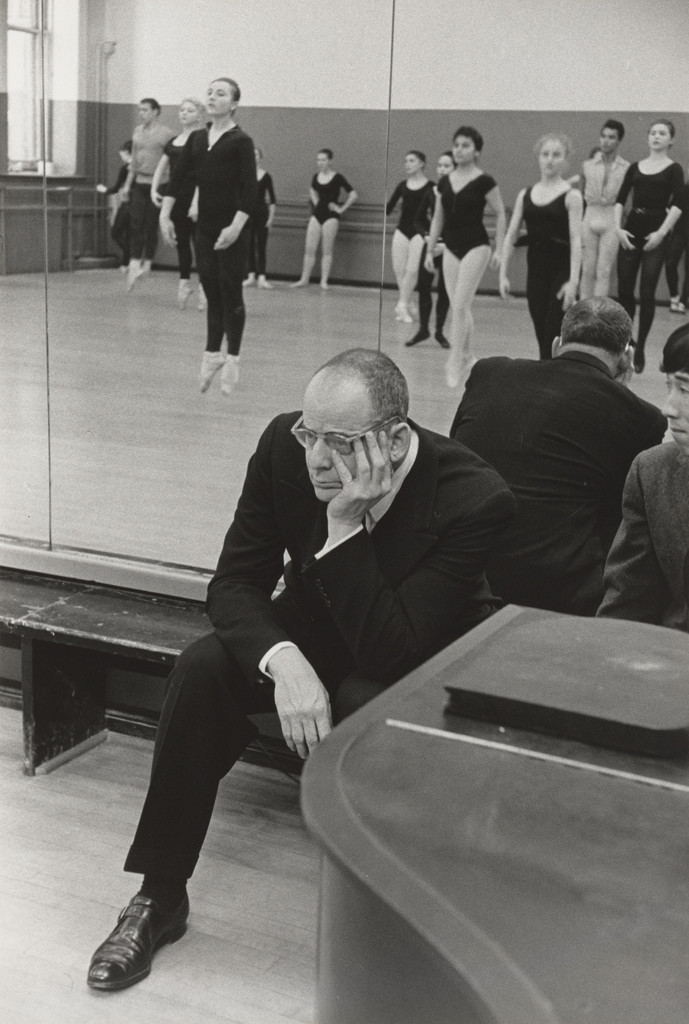
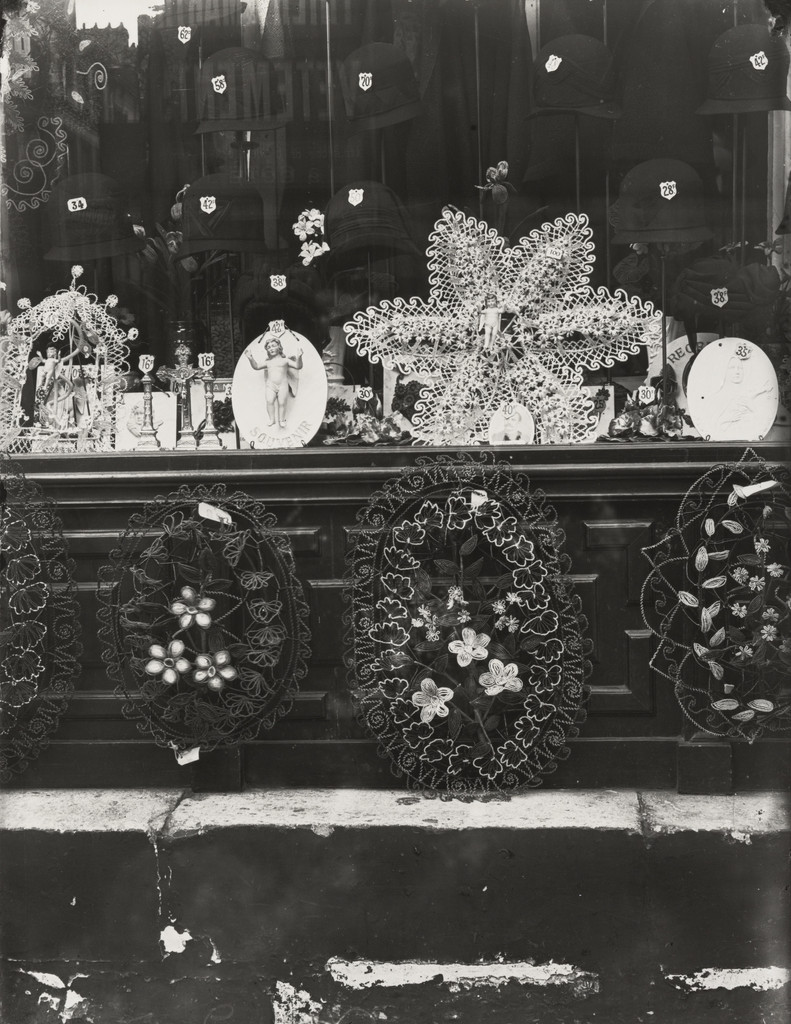
Barcelona
Si può vedere?
Non esposta al momento
Dove si trova «Barcelona» oggi? Collezione: National Gallery of Art, Washington. Non esposta al momento. Verificato 29 settembre 2026.

Washington, Stati Uniti
Appartiene alla collezione, ma al momento non è esposta.
- Verificato
- Ultimo cambio di stato
- Fonte
- Il museo
Scheda
- Numero di inventario
- 2021.5.9
Che cosa raffigura
In catalogo
Fonti
- National Gallery of Art
- Immagine: National Gallery of Art — © the artist or rights holder
Nella vita di Henri Cartier-Bresson
Tutta la vita1931–1932
Munkácsi’s photograph, a Leica and the choice of photography
Recovering in Marseille, he saw Martin Munkácsi’s photograph “Three Boys at Lake Tanganyika” and “suddenly understood that a photograph could fix eternity in an instant”; he gave up painting and bought a Leica with a 50 mm lens, darkening its shiny parts to stay unnoticed.
1933
First exhibitions: New York and Madrid
In 1933 his photographs were first exhibited at the Julien Levy Gallery in New York and then at the Ateneo Club in Madrid.
1934
He meets Chim, and through him Capa
In 1934 he met the young Polish intellectual and photographer David Szymin, known as “Chim” (later David Seymour), and through him the Hungarian photographer Endré Friedmann, the future Robert Capa; he would later found Magnum with them.
1940
Captured at Saint-Dié
In June 1940, during the Battle of France, he was captured by German soldiers at St. Dié in the Vosges Mountains and spent 35 months in prisoner-of-war camps doing forced labour.
c. 1943
The third escape succeeds: a farm in Touraine
He twice tried to escape the camp and failed, and was punished with solitary confinement; the third attempt succeeded — he hid on a farm in Touraine and obtained false papers that let him travel in France.
early 1947
Magnum Photos is founded
In early 1947, with Robert Capa, David Seymour, William Vandivert and George Rodger, he founded Magnum — a cooperative picture agency owned by its members; he was assigned India and China, and later also travelled to Pakistan, Burma, Indonesia, Mexico, Japan, Cuba, Canada and the USSR.


![Ginevra de' Benci [obverse], Leonardo da Vinci, c. 1474/1478](https://api.nga.gov/iiif/8f29e3c9-a289-4d53-abf0-31a66e9e98fa/full/!2400,2400/0/default.jpg)
![Wreath of Laurel, Palm, and Juniper with a Scroll inscribed Virtutem Forma Decorat [reverse], Leonardo da Vinci, c. 1474/1478](https://api.nga.gov/iiif/ff62e8d0-45c4-498f-ad36-6358de827e04/full/!2400,2400/0/default.jpg)