 Félix NadarFrancia, 1820–1910
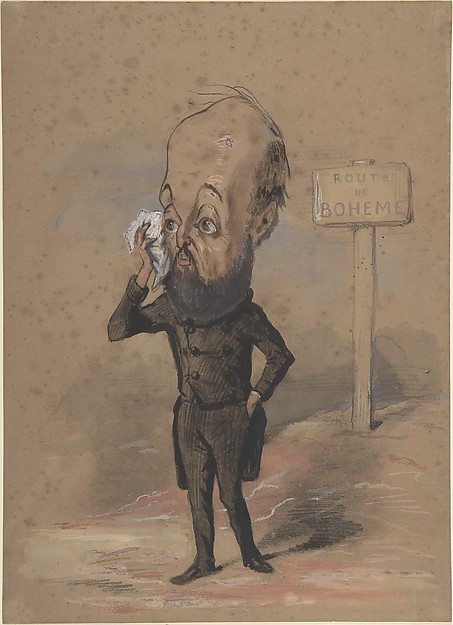
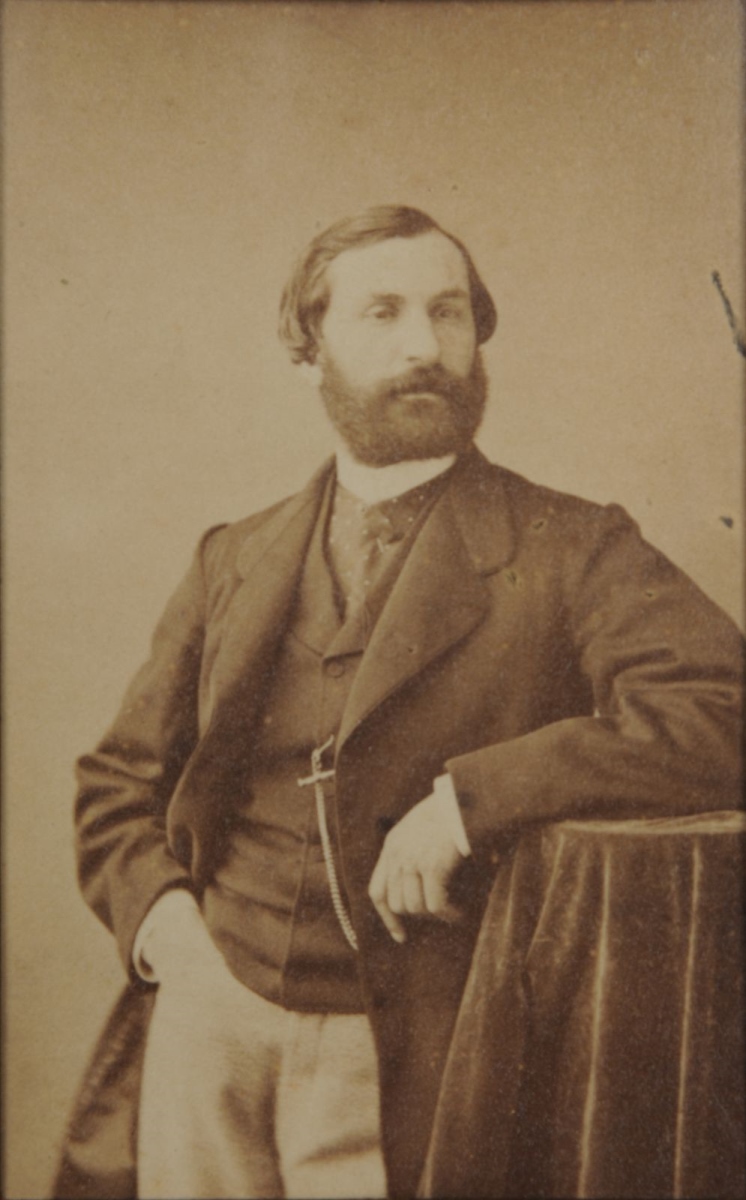
Arthur Morizet
Si può vedere?
Non si sa
Dove si trova «Arthur Morizet» oggi? Collezione: Museo di belle arti di Reims, Reims. Non si sa se oggi sia esposta.
Reims, Francia
Il proprietario è noto; non si sa se oggi sia esposta.
- Ultimo cambio di stato
- Fonte
- Il museo
Sull’opera
Con le parole del museo — in francese
Tirage albuminé sur papier contrecollé sur papier cartonné ; Homme, en pied, à mi-corps, de face, en costume, la main droite dans la poche, le bras gauche accoudé.
Museo di belle arti di Reims
Scheda
- Numero di inventario
- 2007.0.1387.9
Che cosa raffigura
In catalogo
Fonti
- Museo di belle arti di Reims
- Immagine: Museo di belle arti di Reims — © CHRISTIAN DEVLEESCHAUWER; Ministère de la Culture (France), base Joconde
Nella vita di Félix Nadar
Tutta la vita1855
Gold medal at the Exposition Universelle for the Pierrot series
The “Expressions of Pierrot” series was shown at the Exposition Universelle in Paris in 1855, where it won a gold medal.
1858
The world’s first aerial photographs
He became the first person to take aerial photographs, using the wet-plate collodion process: the plates had to be prepared and developed in the basket while aloft, and escaping gas ruined the images until Nadar invented a gas-proof cotton cover for his baskets. He also pioneered the use of artificial light in photography, working underground in the catacombs of Paris.
1860
A studio at 35 Boulevard des Capucines
In 1860 Nadar moved to 35 Boulevard des Capucines, where he photographed politicians (Guizot, Proudhon), stage actors (Sarah Bernhardt, Paulus), writers (Hugo, Baudelaire, Sand, Nerval, Gautier, Dumas), painters (Corot, Delacroix, Millet) and musicians (Liszt, Rossini, Offenbach, Verdi, Berlioz). In the studio he eschewed traditional sumptuous decors and unnecessary accessories and preferred natural daylight.
1863
Commissions the enormous balloon “Le Géant”
He commissioned the prominent balloonist Eugène Godard to build an enormous balloon, 60 metres high with a capacity of 6,000 cubic metres, named “Le Géant” (The Giant); it inspired Jules Verne’s “Five Weeks in a Balloon”.
1863
The crash of “Le Géant” near Hanover
During a flight in October 1863 a strong wind carried the balloon off towards Germany, and near Hanover “Le Géant” crashed, injuring Nadar and his wife Ernestine.
1874
The first Impressionist exhibition in his studio
In April 1874 he lent his photo studio to a group of painters to present the first exhibition of the Impressionists.