Jasper JohnsStati Uniti, 1930
Alphabet
Si può vedere?
Sì, esposta ora
Dove si trova «Alphabet» oggi? Art Institute of Chicago, Sala 292, Chicago. Sì, esposta ora. Verificato 16 novembre 2026.

Chicago, Stati Uniti
Chiuso· apre domani alle 11:00
Esposta al pubblico.
- Verificato
- Ultimo cambio di stato
- Fonte
- Il museo
Sul dipinto
Jasper Johns arranged one complete A-to-Z sequence in Alphabet (1959), in the Art Institute of Chicago, Chicago, the only painting in which he used that single progression. Stencilled letters form a grid, but brushmarks and pasted fragments of painted paper disrupt orderly reading. Primary colours join other hues across the surface, introduced into his practice that year. Following the letters from the upper left becomes difficult as the scattered marks pull attention elsewhere. The measured letterforms and freely applied paint set two methods against each other. On view in Gallery 292.
Con le parole del museo
Jasper Johns has worked with stencils of alphabet letters since the 1950s, yet this is his only painting that shows a single sequence from A to Z. The artist made Alphabet the same year in which he introduced riots of primary color-augmented by touches of green, pink, orange, pale blue, gray, brown, black, and white into his work. We might try to read this painting in order, letter by letter, from top left to bottom right. But the jumble of strokes, daubs, smudges, and collaged fragments of painted paper scatters our eyes across the animated surface, challenging any sense of sequential progress. In this way, two different stylistic approaches orderly grids of stenciled forms versus brushy gestures are set against one another.
Art Institute of ChicagoCC BY 4.0
Scheda
- Numero di inventario
- 2015.121
In catalogo
Fonti
- Art Institute of Chicago
- Immagine: Art Institute of Chicago — © the artist or rights holder
Nella vita di Jasper Johns
Tutta la vita1957
Uno studio a Coenties Slip tra altri artisti
Nel 1957 Johns visse negli ex magazzini navali sul lungomare di Lower Manhattan, intorno a Coenties Slip, occupati da artisti, accanto a Rauschenberg, Robert Indiana ed Ellsworth Kelly; la comunità ospitò per un periodo anche Agnes Martin.
1957
Leo Castelli scopre Johns
Nel marzo 1957, in visita allo studio di Rauschenberg, il mercante Leo Castelli chiese di vedere l'arte di Johns: al piano di sotto trovò «un fantastico assortimento di bandiere e bersagli» e offrì subito a Johns una mostra. Secondo altre fonti Castelli scoprì Johns nel 1958.
early 1958
Prima personale alla Leo Castelli Gallery
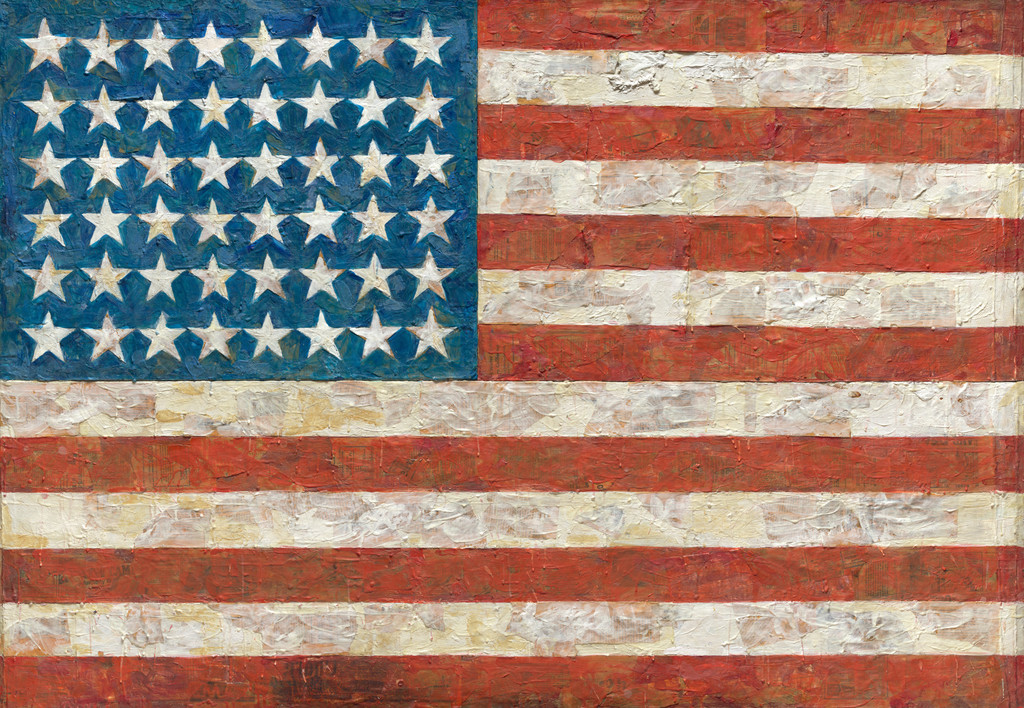
La prima personale di Johns alla Leo Castelli Gallery, all'inizio del 1958, fu ben accolta: tutte le diciotto opere esposte tranne due furono vendute. Alfred H. Barr Jr., direttore fondatore del Museum of Modern Art, acquistò tre dipinti, le prime opere di Johns a entrare in una collezione museale; i curatori temevano attacchi da parte di gruppi patriottici per Flag, così Barr fece in modo che lo acquistasse l'architetto Philip Johnson, che lo donò al museo nel 1973.
1960
Si dedica alla litografia alla ULAE di Tatyana Grosman
Nel 1960 Tatyana Grosman, fondatrice della Universal Limited Art Editions, invitò Johns nel suo studio di stampa a Long Island. Cominciando con litografie dei suoi motivi più familiari, come Target (1960), pubblicò con la ULAE oltre 180 edizioni in varie tecniche.
1961
Si separa da Rauschenberg
Nel 1961 la relazione sentimentale e la stretta collaborazione di Johns con Robert Rauschenberg, iniziate nel 1953, finirono; Rauschenberg aveva esercitato su di lui una profonda influenza artistica.