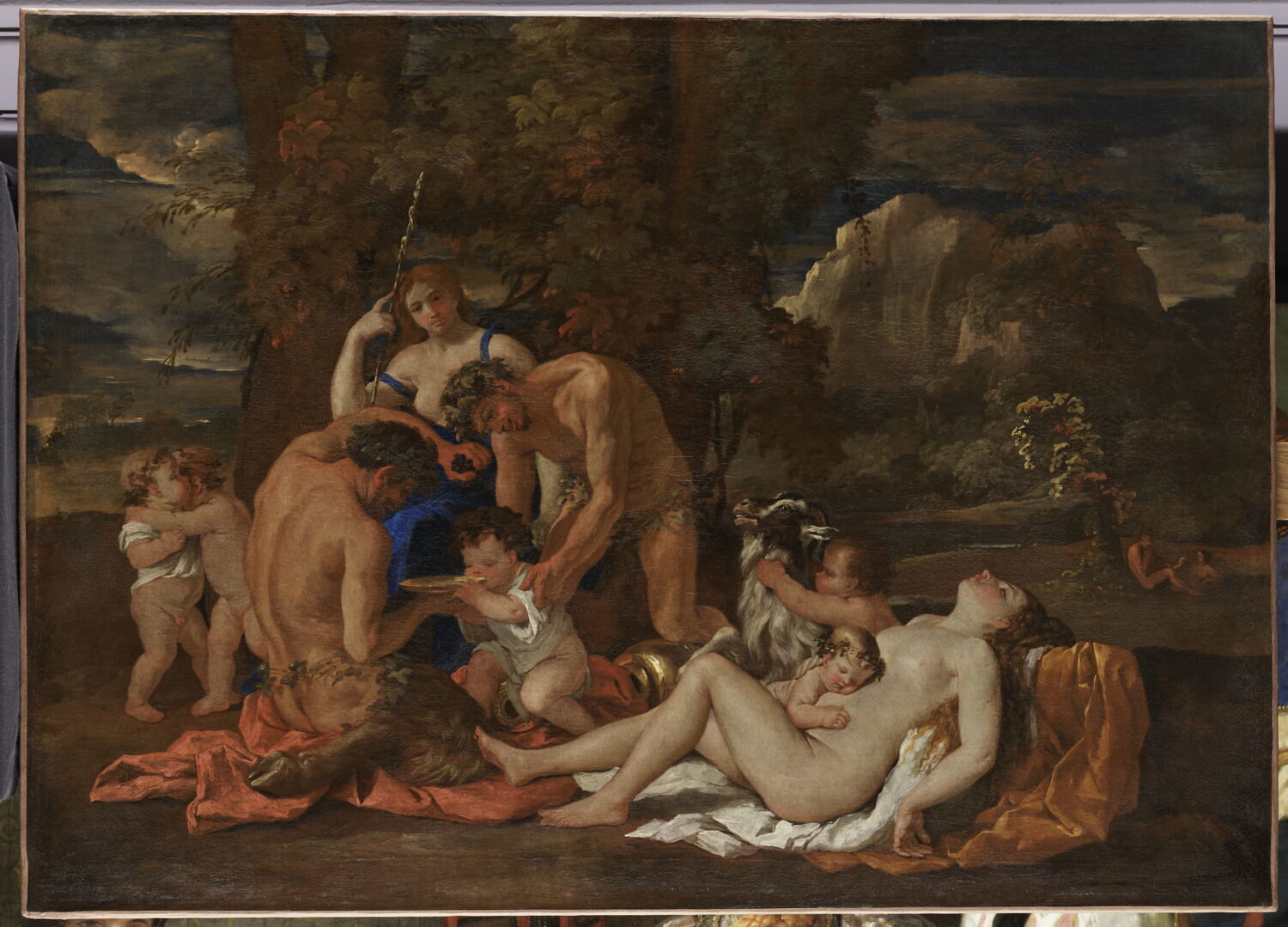
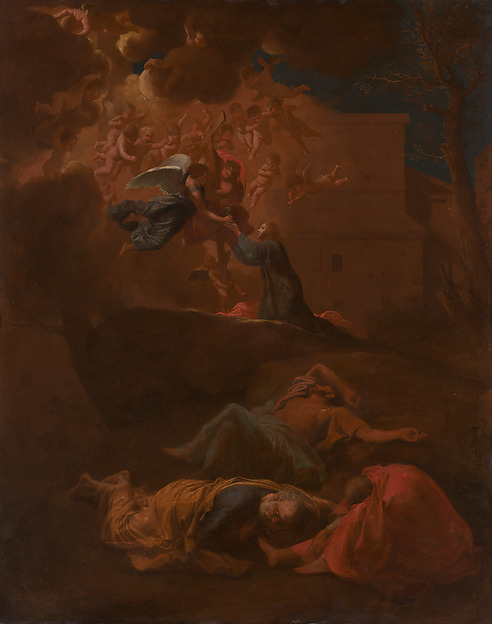
Nicolas PoussinFrancia, 1594–1665
Allegorie van Gerechtigheid
Si può ammirare?
Non si sa

Amsterdam, Paesi Bassi
Il proprietario è noto; non si sa se oggi sia esposta.
- Fonte
- Il museo
Sull’opera
Con le parole del museo — in olandese
Zittende vrouwenfiguur met staf, geflankeerd door twee staande vrouwen.
Rijksmuseum
Scheda
- Numero di inventario
- RP-T-1964-202
Che cosa raffigura
In catalogo
Fonti
- Rijksmuseum
- Immagine: Rijksmuseum — public domain
Nel frattempo, nella vita di Nicolas Poussin
Tutta la vita1630s
Cassiano dal Pozzo — his chief patron
Poussin’s flowering coincided with his complete abandonment of church commissions: he gathered a circle of patrons around him but strove for independence, accepting commissions from connoisseurs without binding himself to any of them permanently. The most important was Cassiano dal Pozzo; in the surviving correspondence the relationship comes close to servitude, although the painter did not live in his house.
1630s
Brother-in-law Gaspard Dughet — his first pupil
After the wedding Poussin went on living in the house on the Via Paolina; with him lived Anne-Marie’s brother Gaspard Dughet, the future well-known landscape painter, and from 1636 his younger brother Jean. Poussin became Gaspard’s first teacher, and Gaspard later took his surname; the marriage seems to have been a happy one, but childless.
1635
Richelieu commissions “Bacchanals” and “The Birth of Venus”
His first French commissions came from the envoy François de Créquy and then from Cardinal Richelieu — a series of “Bacchanals”; for Richelieu he also created “The Birth of Venus” (1635), an elaborate composition full of dynamic figures.
1640
December 1640: Poussin returns to Paris
François Sublet de Noyers, Superintendent of the King’s Buildings, whose invitations Poussin had declined, sent his cousins Roland and Paul Fréart to Rome, offering the title of First Painter to the King and a substantial residence at the Tuileries. Poussin yielded, and in December 1640 he was back in Paris.
1641
An avalanche of royal commissions
In Paris he was swamped with commissions: “The Institution of the Eucharist” for the chapel of the château of Saint-Germain-en-Laye, “The Miracle of St Francis Xavier” for the Jesuit novitiate, ceilings and vaults for the Grande Galerie of the Louvre, an allegory for Richelieu’s study, designs for tapestries and title pages for the royal printing house. For a man accustomed to working slowly and carefully it was too much.
1641–1665
Post: Premier peintre du Roi