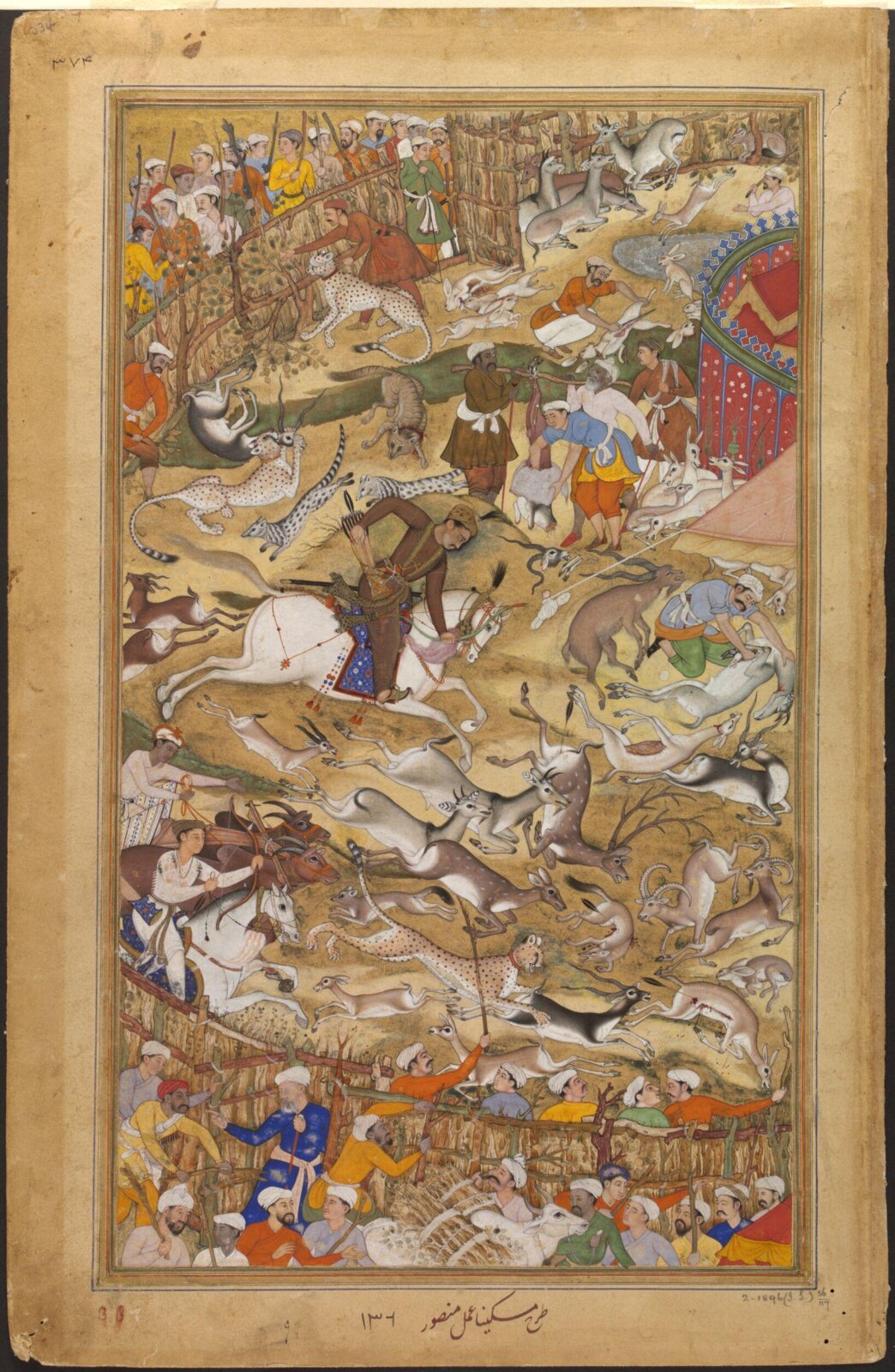
Akbar
Si può vedere?
Non esposta al momento
Dove si trova «Akbar» oggi? Collezione: Victoria and Albert Museum, Londra. Non esposta al momento. Verificato 25 settembre 2026.

Londra, Regno Unito
Appartiene alla collezione, ma al momento non è esposta.
- Verificato
- Ultimo cambio di stato
- Fonte
- Il museo
Sul dipinto
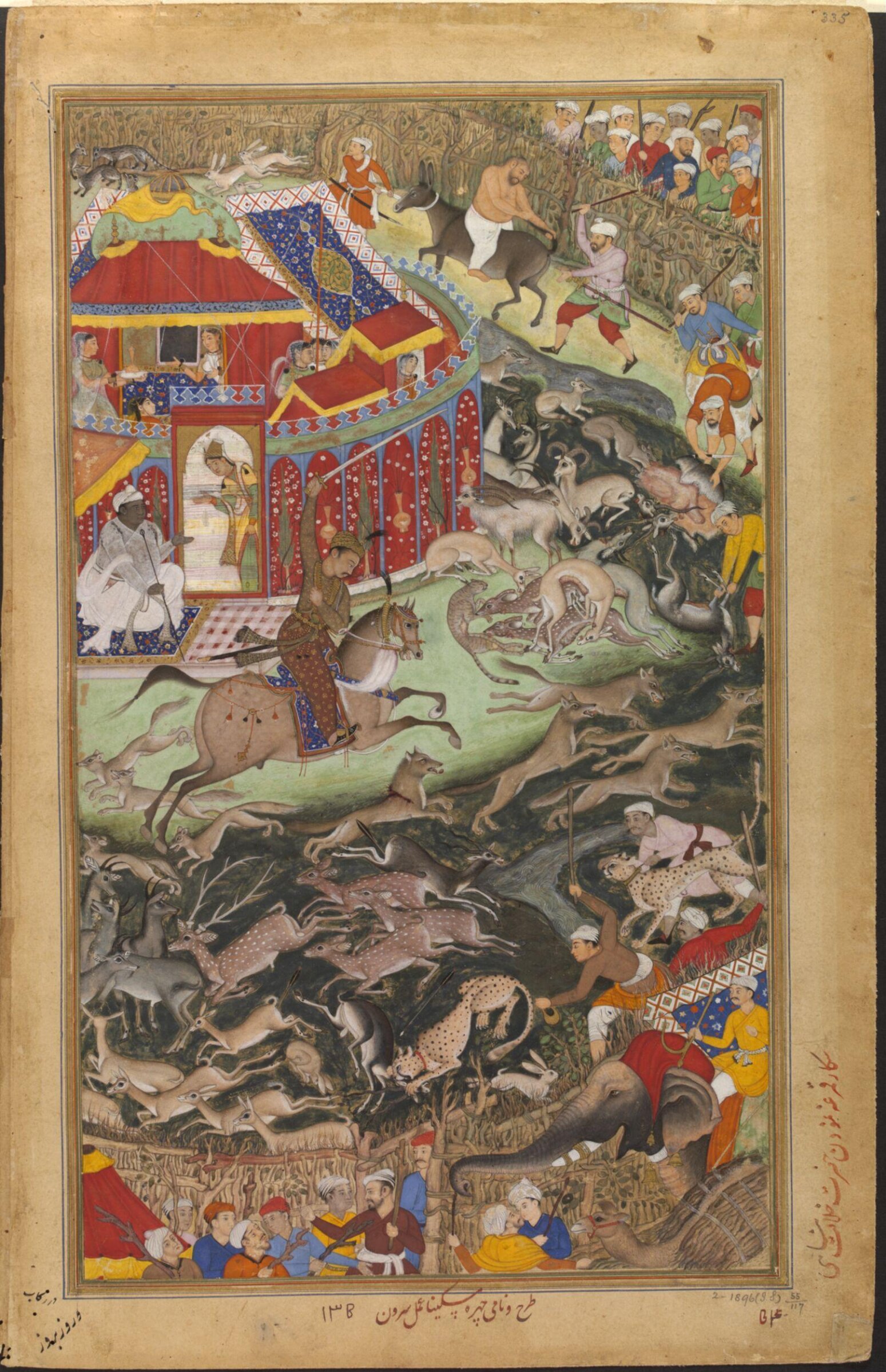
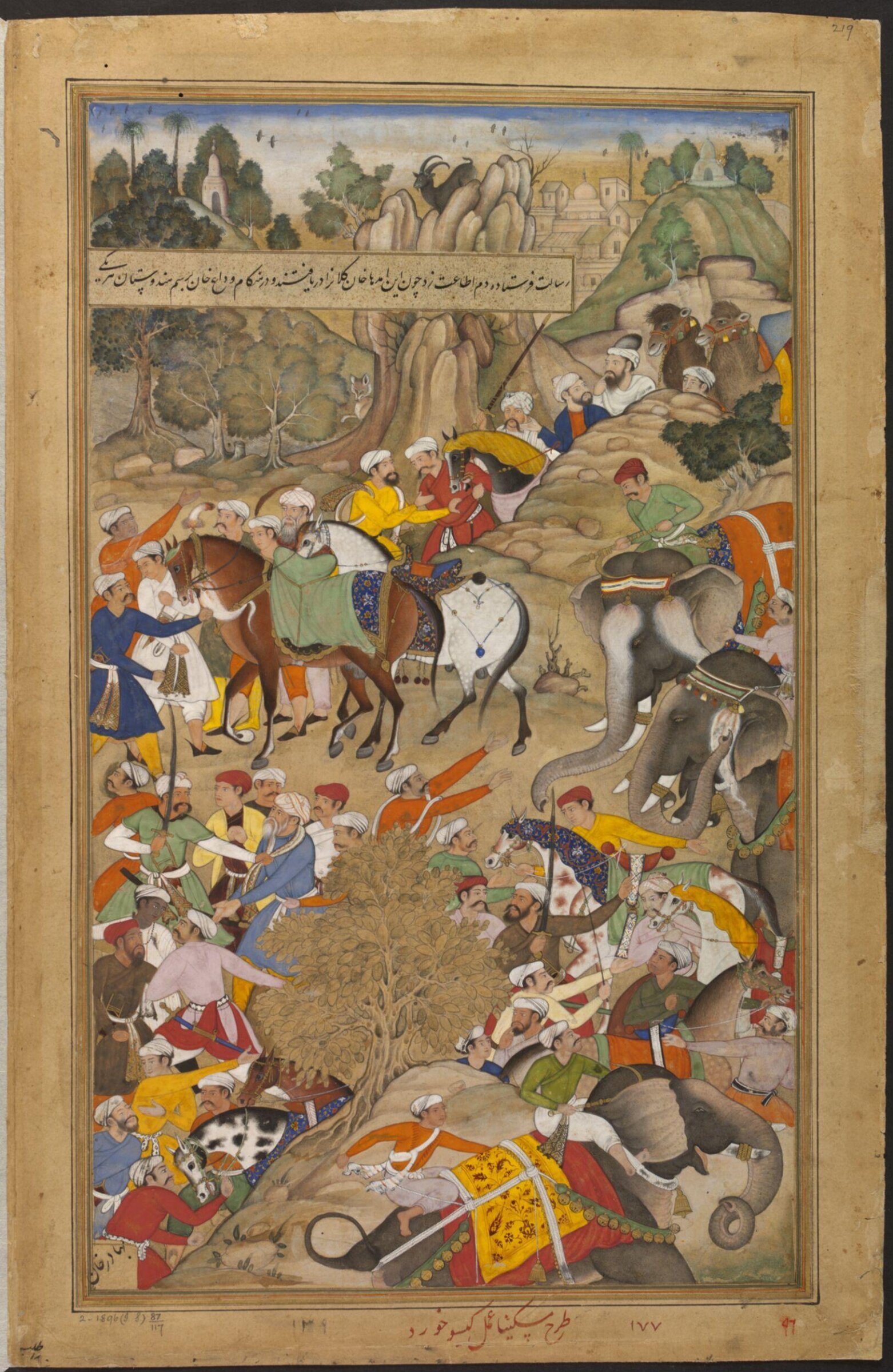
This illustration from the Akbarnama is the left-hand side of a double page composition (the other half is IS.2:55-1896) depicting Akbar taking part in a qamargah. This is a spectacular hunt whereby the game is driven towards the centre of a ten mile circular area so that the emperor and his entourage could hunt and kill the animals. It is one of the finest hunting scenes in the V&A Akbarnama paintings and features the early work of the artist Mansur, who became one of the greatest Mughal artists. The naturalist Divyabhanusinh notes that the painting sheds light on the fauna of the Lahore regino at the time of Akbar: there is a dead Pir Panjal markhor (Capra falconeri cashmiriensis) and several Punjab urial (Ovis orientalis punjabiensis).
Leggi
He notes that the presence of these animals is not surprising as Lahore is close to the Salt Range and urial are found there even today, while the markhor could have come down to the Muree Hills. A blackbuck is being skinned whole, and the carcass hung up. The severed head of a blackbuck with a symmetrically circular deformed right horn, lying on the ground, can only have been reproduced by an artist who had actually seen such deformities. Three cheetahs are all coursing after fully grown male blackbucks, as they were chained to do, with two unhooded cheetahs about to be released by their keepers. Among the prey species identified by Divyabhanusinh are nilgai, hare and chital, dead jackals (Canis aureus), many small Indian civets (Viverricula indica), possibly foxes (Vulpes bengalensis) and a dead hyena (Hyaena hyaena) as well as animals that are less naturalistically painted.
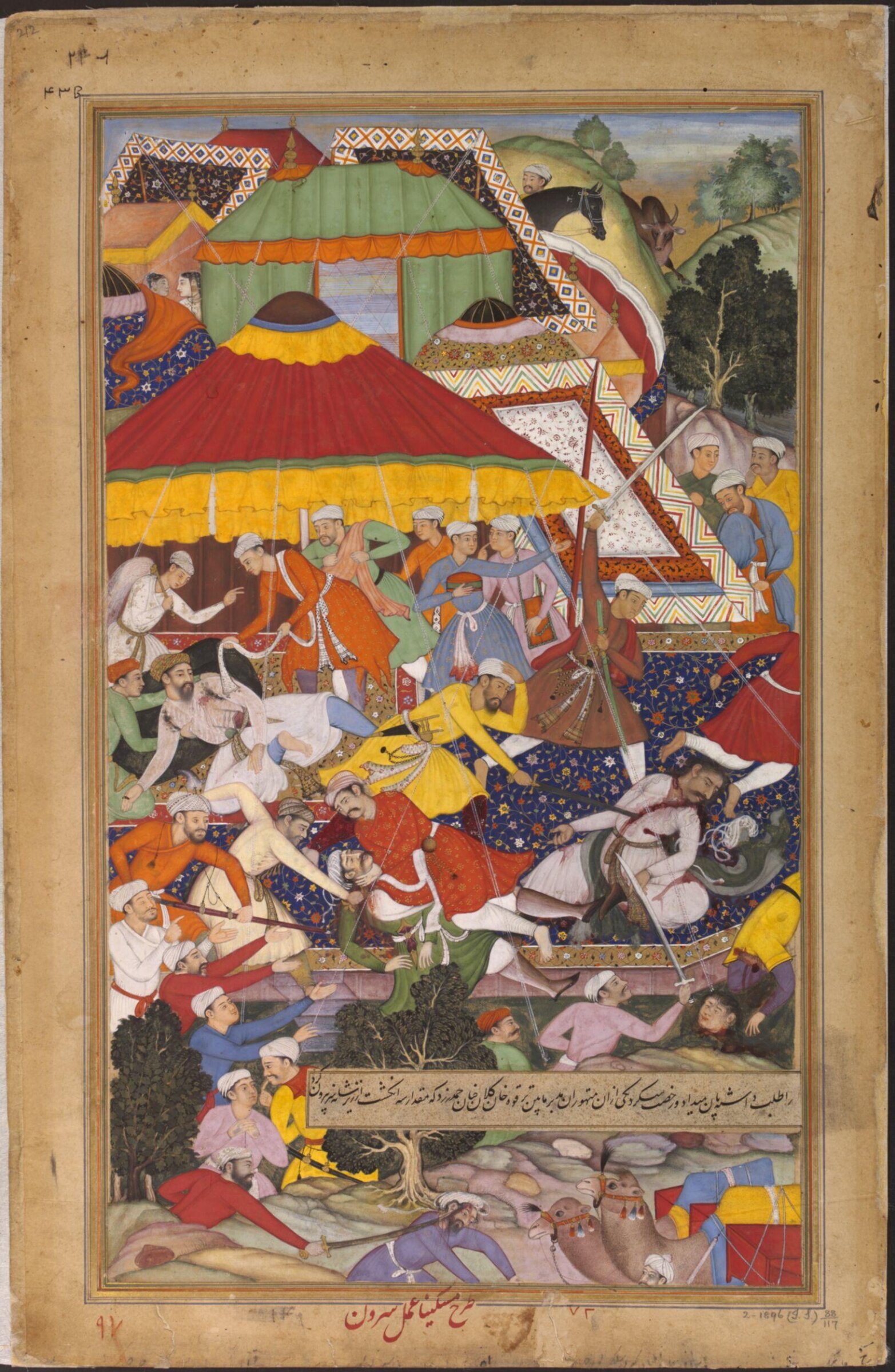
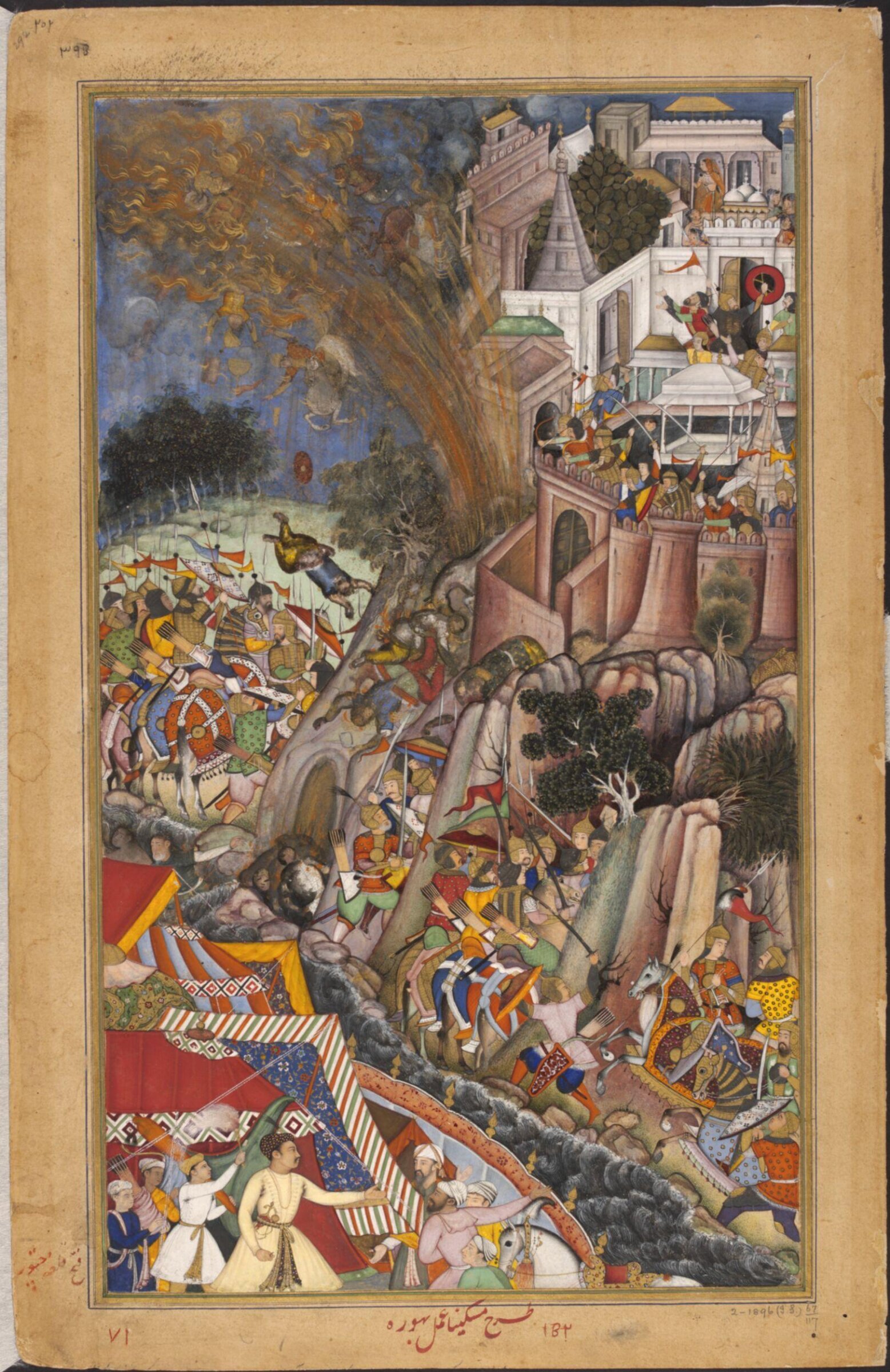
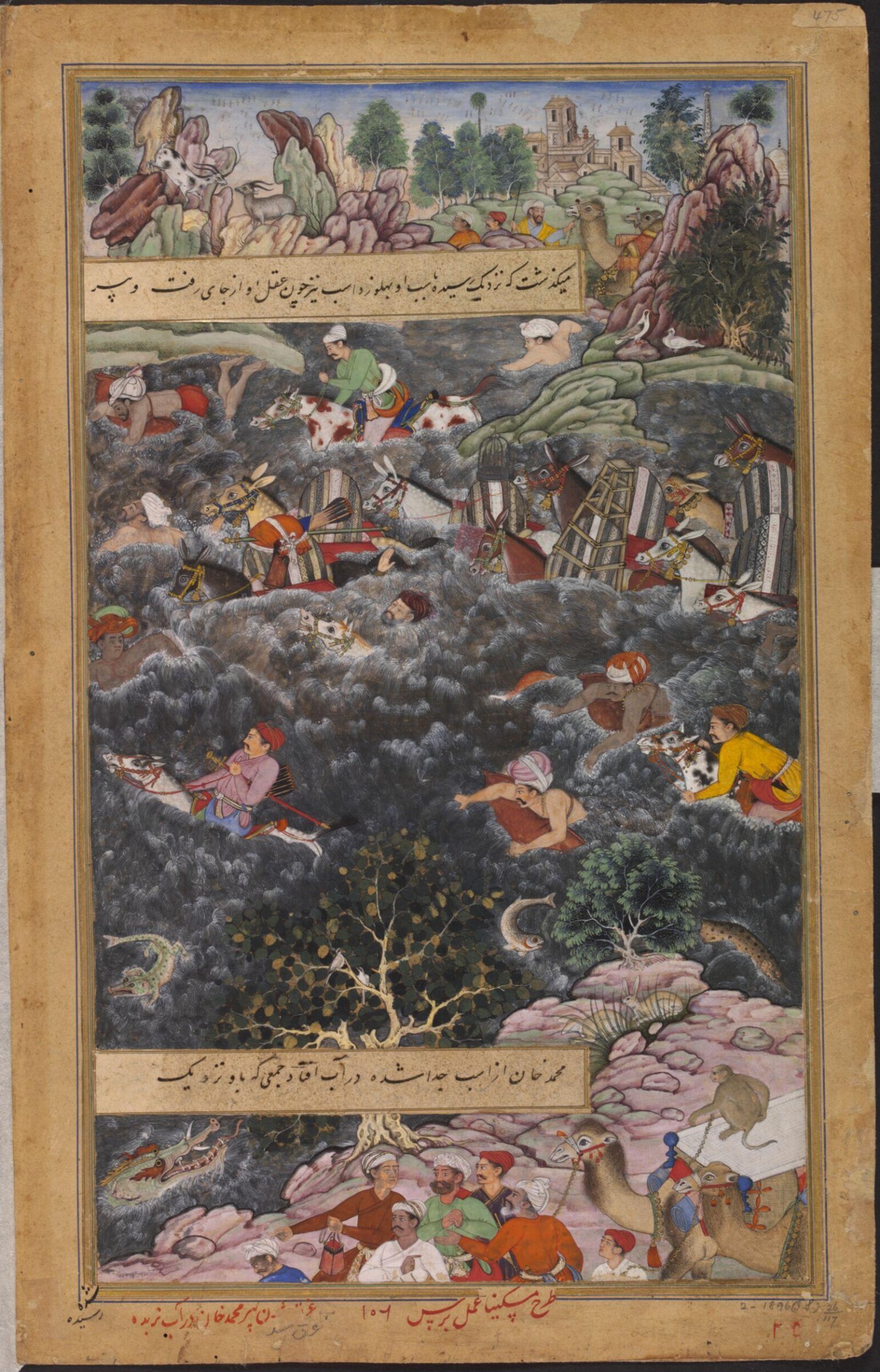
The Akbarnama (Book of Akbar) was commissioned by the emperor Akbar as the official chronicle of his reign. It was written by his court historian and biographer Abu'l Fazl between 1590 and 1596 and is thought to have been illustrated between about 1592 and 1594 by at least 49 different artists from Akbar's studio. After Akbar's death in 1605, the manuscript remained in the library of his son, Jahangir (r. 1605-1627) and later Shah Jahan (r.1628-1658). The Victoria and Albert Museum purchased it in 1896 from Mrs Frances Clarke, the widow of Major-General John Clarke, who bought it in India while serving as Commissioner of Oudh between 1858 and 1862.
Victoria and Albert Museum
Scheda
- Numero di inventario
- IS.2:56-1896
Che cosa raffigura
In catalogo
Fonti
- Victoria and Albert Museum
- Immagine: Victoria and Albert Museum — © Victoria and Albert Museum, London