Amar KanwarIndia
A Season Outside
Si può ammirare?
Al momento non riceve

Art Institute of Chicago
Chicago, Stati Uniti
Appartiene alla collezione, ma al momento non è esposta.
- Verificato
- Ultimo cambio di stato
- Fonte
- Il museo
Sull’opera
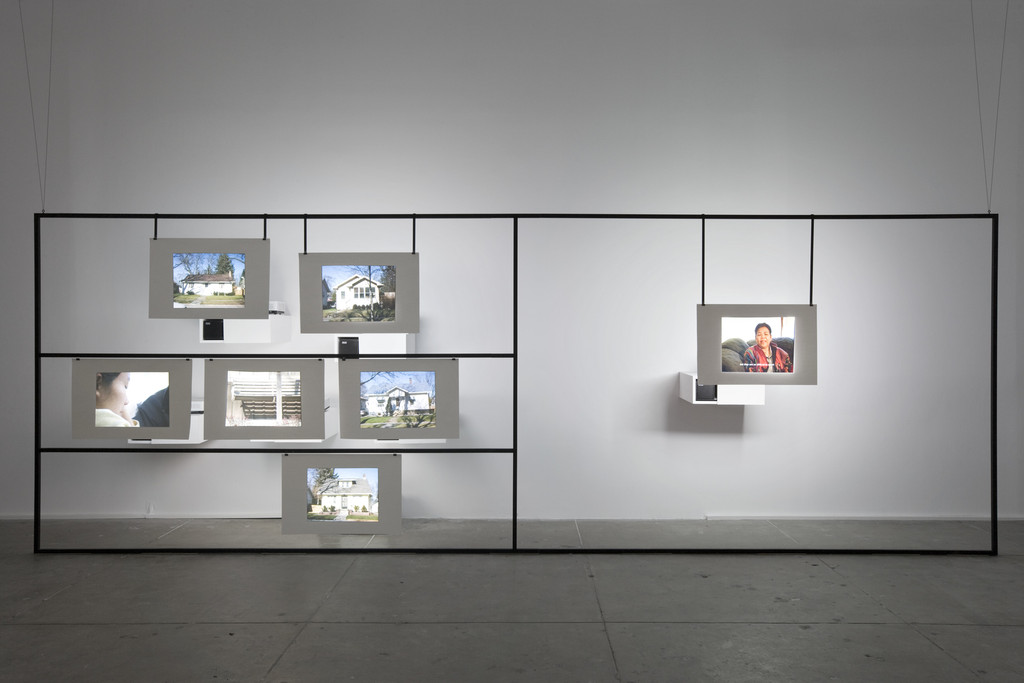
Amar Kanwar has made over forty films exploring a host of issues ranging from politics and economics to philosophy and art. His distinctive approach is equal parts documentary, transcendental rumination, and visual essay. A Season Outside, a subtle and poetic work written and narrated by the unseen artist, reveals the anxiety that surrounds the militarized border between India and Pakistan. Partition, the British government’s 1947 division of the Indian subcontinent into two nations—Hindu-majority India and Muslim-majority Pakistan—left millions of people on the wrong side of a border, causing violence that has since escalated into an arms race. Meanwhile, the legacy of Mahatma Gandhi, which was defined by nonviolent resistance to British rule and an attempt to reconcile distinct classes and religions, has been diminished by India’s Hindu nationalist movement.
Continua a leggere
Kanwar’s film opens with the sunset ritual of closing the gate on the border at Wagah-Atari, where military personnel engage in displays of nationalistic aggression before crowds of spectators on either side. This staged conflict, which is accompanied by a voiceover in which the artist quietly intimates that violence also occurred in his own family, shows how pervasively physical aggression may infect both cultures and individual human minds. While Kanwar engages in personal reflections, suggesting an evolution in his attitude toward Gandhi’s stance of pacifism as intervention, he juxtaposes these with images of enforced division, theatrical military posturing, and real violence: protesters are beaten by police; men cheer as two rams butt and lock horns; an older child pushes a younger one down; birds peck at a stray dog.
The artist has said, “There is perhaps no border outpost in the world quite like Wagah . . . an outpost where every evening people are drawn to a thin white line . . . and probably anyone in the eye of a conflict could find themselves here. A Season Outside is a personal and philosophical journey through the shadows of past generations, conflicting positions, borders and time zones—a nomad wandering through lines of separation, examining the scars of violence and dreams of hope scattered among communities and nations.”
While A Season Outside seems to be a documentary, it is presented in an abstract manner more conducive to an aesthetic or emotional effect than to exposé. The film’s soulful, elegiac audio track bears a direct but entirely nondidactic, nonjournalistic relationship to its imagery. Kanwar uses his voice to address unflinchingly, in the most personal terms, the human impulse for violence. Yet his visual approaches to the subject are mostly indirect, through metaphorical or reenacted conflict. The work’s title denotes a space or time removed from the brutality depicted within, perhaps suggesting the hope that, at some point, there might exist a possibility for peaceful cohabitation, if not reconciliation.
Art Institute of ChicagoCC BY 4.0
Scheda
- Numero di inventario
- 2004.481
In catalogo
Fonti
- Art Institute of Chicago
- Immagine: Art Institute of Chicago — © the artist or rights holder