 Salvator RosaOlaszország, 1615–1673
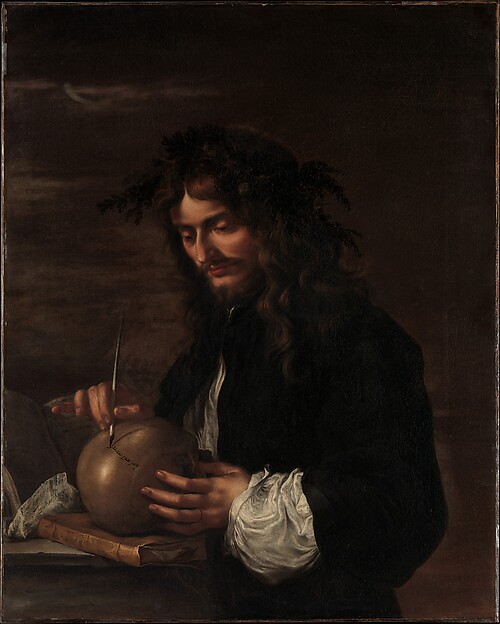
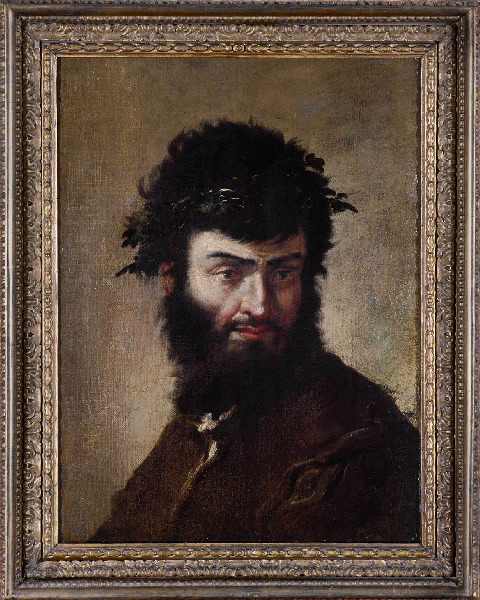
Autoportrait
Megnézhető?
Nem tudjuk
Hol van most a(z) „Autoportrait”? Gyűjtemény: Musée des Beaux-Arts de Strasbourg, Strasbourg. Nem tudjuk, hogy ma ki van-e állítva.
Strasbourg, Franciaország
A tulajdonos ismert; azt nem tudjuk, hogy ma ki van-e állítva.
- Ebben az állapotban ettől kezdve
- Forrás
- A múzeum
A festményről
Self-Portrait is an undated work by the Southern Italian artist from Naples, Salvator Rosa. It was most probably painted during Rosa's stay in Florence between 1640 and 1649, although a claim has been made that it was painted in the early 1660s. The self-portrait belongs to the Musée des Beaux-Arts of Strasbourg, France, to which it was presented in 1987 by the collectors Othon Kaufmann and François Schlageter, together with other Italian Baroque paintings such as Bononi's Saint Sebastian and the Angel. Its inventory number is 44.987.3.7.
The painting depicts Rosa not as a painter, but as a poet laureate. It had belonged to the collection of nobleman Filippo Niccolini of the Florentine Niccolini Family and was later purchased by Kaufmann and Schlageter through the Venetian art dealer Ettore Viancini.
Adatok
- Leltári szám
- 44.987.3.7 ; 44.R.116 (N° récolement)
Mit ábrázol?
A katalógusban
Források
- Musée des Beaux-Arts de Strasbourg
- Kép: Musée des Beaux-Arts de Strasbourg — © Service photographique des Musées de Strasbourg, © BACHER, © PLISSON; Ministère de la Culture (France), base Joconde
Salvator Rosa életében
A teljes életút1638
Move to Rome under the Protection of Cardinal Brancaccio
He settled in Rome under the patronage of the influential Cardinal Francesco Maria Brancaccio, a lover of the arts and theater who was close to the Barberini family.
1640
Meeting Lucrezia Paolini
In Florence he met Lucrezia Paolini, who had been abandoned by her husband; she became his lifelong companion and was probably the model for the allegory of Music (c. 1641).
1640–1649
Florentine Period at the Medici Court
After scandalous quarrels with Bernini and his failure to gain admission to the Accademia di San Luca, he moved to Florence at the invitation of Giovanni Carlo de' Medici, where he remained until 1649.
1647
Participation in Masaniello's Revolt
According to a widespread account, he took part in the popular uprising led by Masaniello in Naples; he painted a portrait of Masaniello and expressed sympathy for the revolt in one of his satires.
1650
Return to Rome, Seclusion
He returned to Rome, kept to himself, and accepted no commissions, devoting himself to battle scenes and enigmatic landscapes, which he sold through his friend, the banker Carlo de Rossi.
1650s
Scandal over the "Allegory of Fortune"
The painting Allegory of Fortune provoked a storm of indignation among the religious and secular authorities, who saw in it a satire on themselves; Rosa came close to arrest and published a text offering innocuous interpretations of its imagery.