 Kuzma Petrov-VodkinRussie, 1878–1939
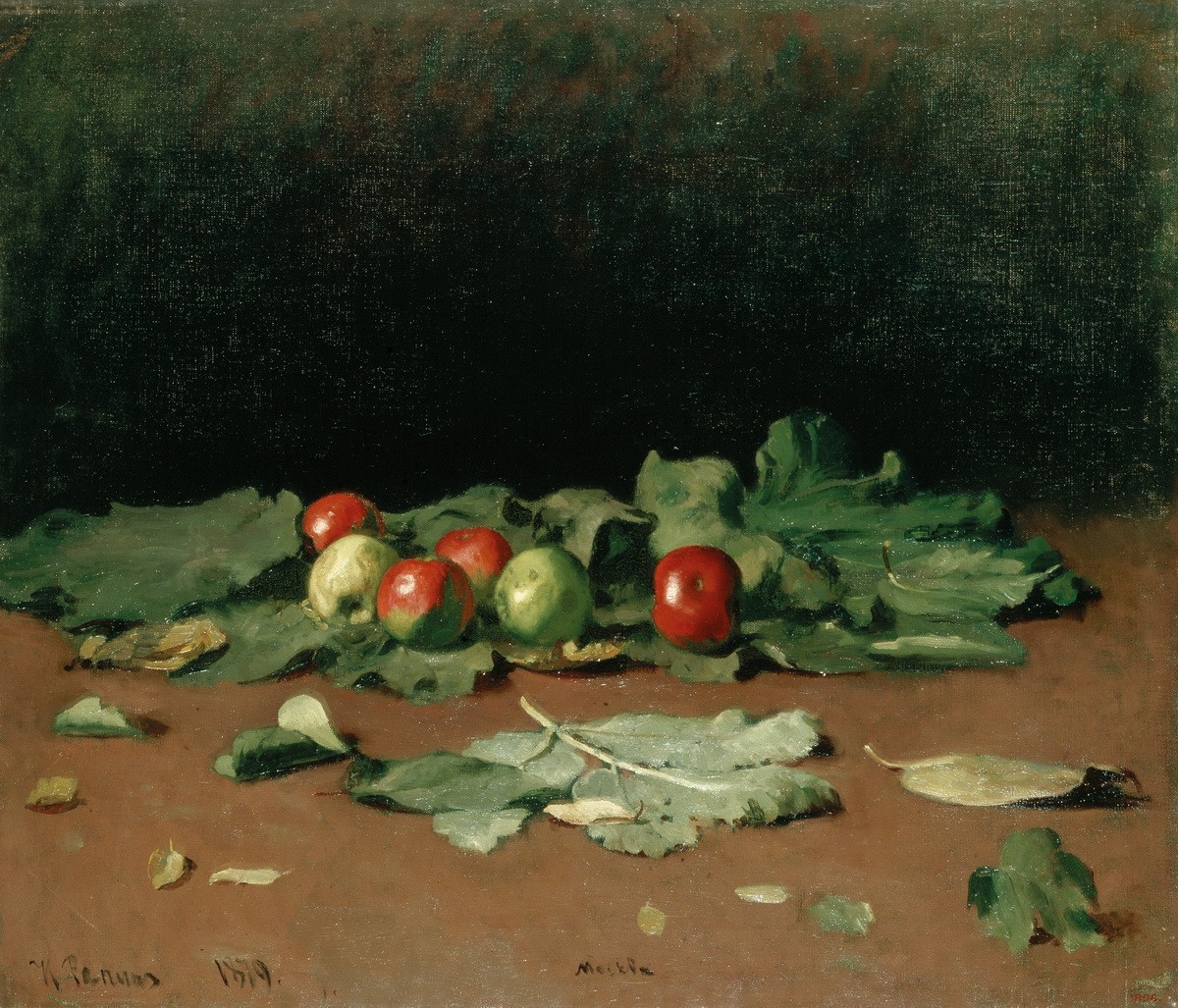
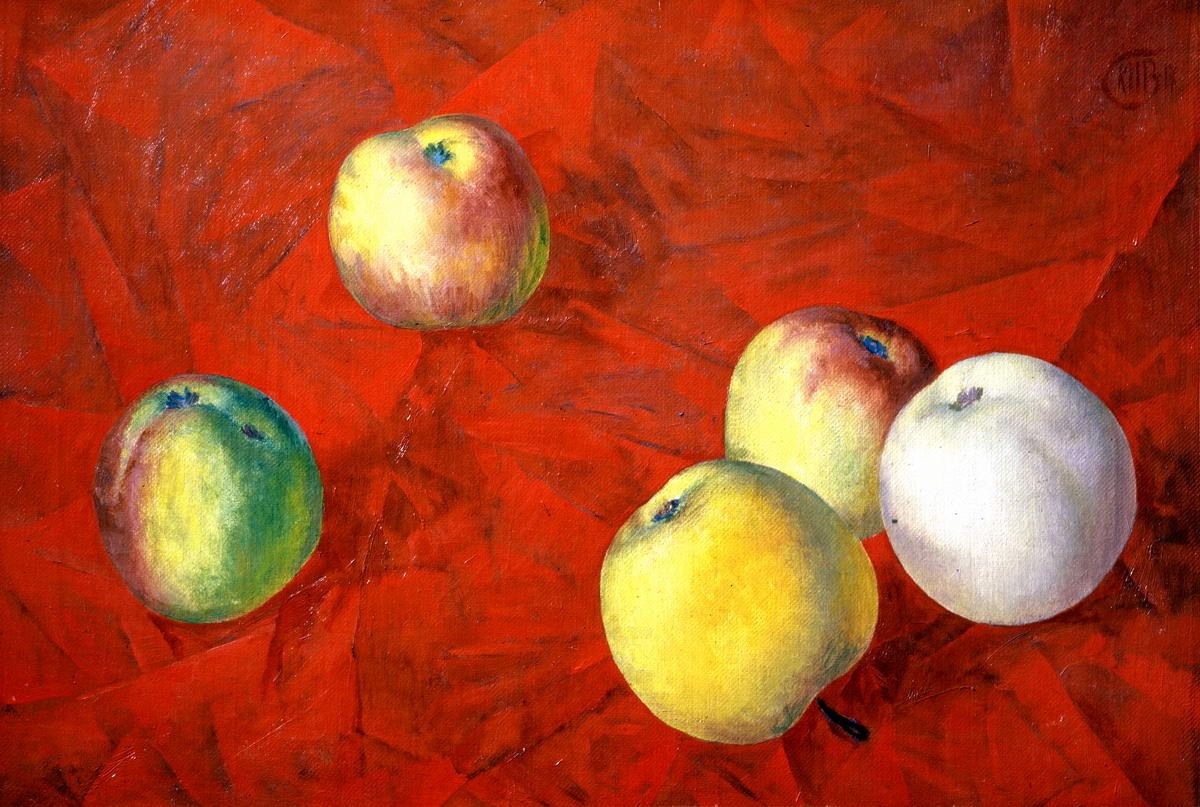
Яблоки
Peut-on la voir ?
Inconnu
Où est « Яблоки » aujourd’hui ? Collection: Musée russe, Saint-Pétersbourg. Inconnu.

Saint-Pétersbourg, Russie
Le propriétaire est connu ; on ignore si l’œuvre est exposée aujourd’hui.
- Dans cet état depuis
- Source
- Le musée
À propos du tableau
Selon le musée — en russe
Умение видеть мир в капле воды, выразить планетарные ощущения в округлой форме хвалынского яблока, передать единство мироздания в отражениях и пересечениях предметов — эта особенность присуща натюрмортам Петрова-Водкина. Заостренность проблемы формального решения — проработан каждый сантиметр живописной поверхности, демонстрируя мастерское владение оттенками основных цветов, умение достичь минимальными средствами пластической завершенности форм — придает им исключительную выразительность. В то же время в них нет схематизма и какой-либо отрешенности от реальной жизни, поэтому в самом «тихом» жанре художник находит способ выразить отклик на современность. Ольга Мусакова. Мгновения вечности // Кузьма Сергеевич Петров-Водкин. СПб. 2018. С. 14.
Lire plus
Петров-Водкин называл натюрморт «одной из острейших бесед живописца с натурой». Лишенные случайного и мимолетного, натюрморты мастера отмечены ярким своеобразием цветового и перспективного построения: предметы пишутся крупным планом, в «упор». Художник решает проблему пространственного и пластического взаимодействия предмета и среды, используя принципы разработанной им философско-художественной системы, элементами которой были сферическая перспектива и «трехцветка», «планетарность» видения. Натюрморты мастера полны внутренней значимости и как бы одухотворены. Художник приглашает пристально вглядеться в хорошо знакомые предметы и — вдруг — увидеть их по-новому.
Полотно «Яблоки» создано в 1917 году. В этот период, в первые послереволюционные годы Петров-Водкин много работает в области портрета и натюрморта. Именно с помощью этих жанров, и натюрморта в особенности, происходит в его творчестве некоторое «возвращение к реальности» от условно-аллегорических, плоскостно-декоративных полотен.
Musée russe
Notice
- Numéro d’inventaire
- Ж-8014
Ce qu’elle montre
Au catalogue
Sources
- Musée russe
- Image : Musée russe — © State Russian Museum
Dans la vie de Kuzma Petrov-Vodkin
La vie entière1916
Ferapontov Monastery: Dionysius’s frescoes
He visits the Ferapontov Monastery to study Dionysius’s frescoes for a church decoration in Bari, Italy, commissioned by the architect Alexey Shchusev. In autumn he makes a sketch for it, but the war prevents the commission from going ahead.
1916
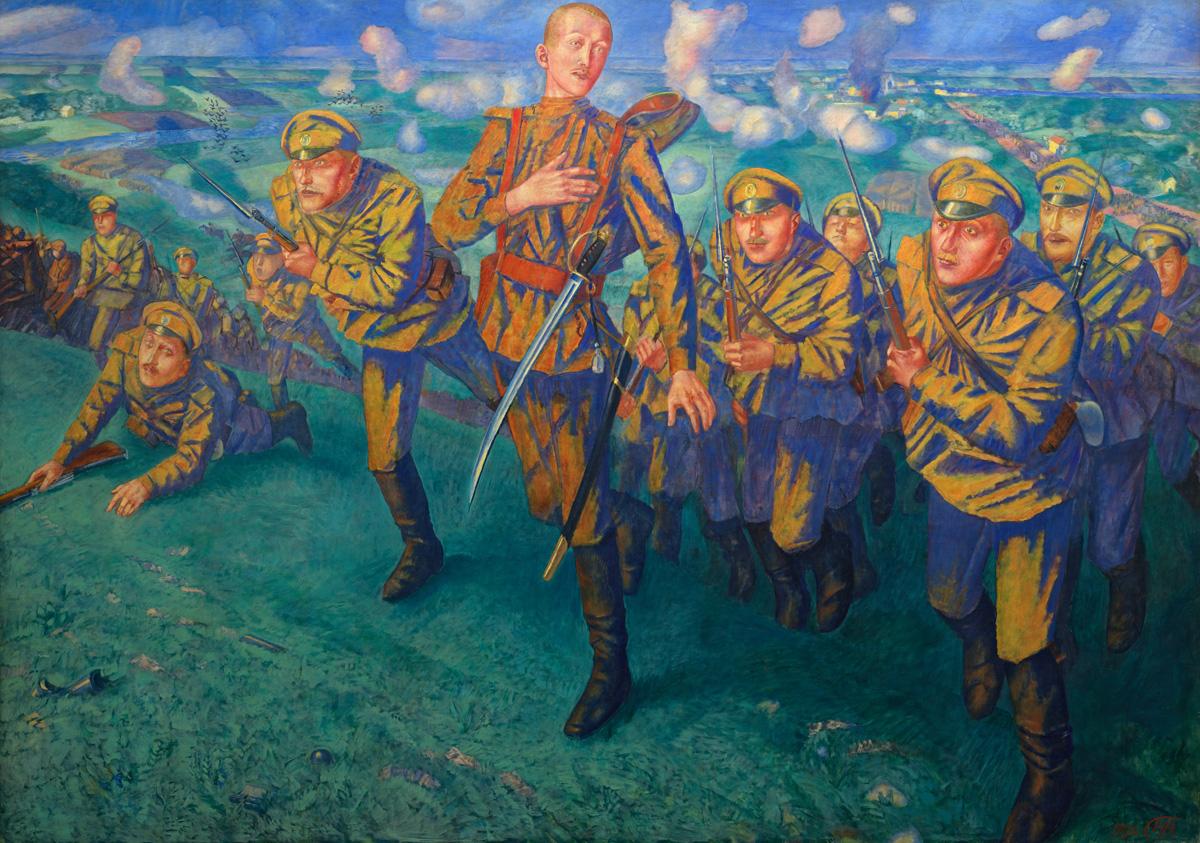
Called up to the Izmailovsky Regiment; “In the Line of Fire”
A military commission sends him from Khvalynsk to the Izmailovsky Life Guards Regiment in Petrograd. Living half in barracks and undergoing drill, he works on his “war picture”, “In the Line of Fire”.
by 1917
The theory of “spherical perspective”
By 1917 he has formed a philosophical and theoretical concept of the “science of seeing”, embodied in a symbolic pictorial space built on “spherical” (or “inclined”) perspective and in a theory of how the three primary colours, red, blue and yellow, interact.
1917
The February Revolution
He greets the days of the “Great Upheaval” with enthusiasm and hopes to return soon to Khvalynsk and Krasulinka; the Italian commission is left in limbo.
1917
Kept in Petrograd instead of the front
He is enrolled in a march company bound for the front, but the battalion committee cancels it: he holds a responsible post on the Petrograd Council for Art Affairs, headed by Maxim Gorky. By June he tells his mother that the endless councils and meetings have worn him out.
30 January 1918
Elected professor at the Academy of Arts
The Academy Council elects him professor of the painting department together with Konstantin Somov, Alexander Savinov and Vasily Shukhaev. On 13 April 1918 a decree of the Council of People’s Commissars abolishes the Academy; the school becomes the Petrograd State Free Art Studios, and he teaches there until 1932.