ART WIKI32 979 en salle
CarteCollectionArtistesMuséesExpositionsJournal
Connexion

ART WIKI

Où est accroché le chef-d’œuvre, et quand on vous laisse entrer.

Collections : Art Institute of Chicago, Cleveland Museum of Art, Galerie Tretiakov, Hirshhorn Museum and Sculpture Garden, J. Paul Getty Museum, Metropolitan Museum of Art, Minneapolis Institute of Art, Musée de l'Ermitage, Musée des Beaux-Arts Pouchkine, Musée du Louvre, musée national d'art asiatique, Musée russe, Musées d'Art de Harvard, Museum of Modern Art, National Gallery of Art, National Portrait Gallery, Rijksmuseum Amsterdam, Smithsonian American Art Museum, Statens Museum for Kunst, Victoria and Albert Museum, Villa Getty, Whitney Museum of American Art, Catalogue d’État du fonds muséal de Russie (274 musées), Europeana (19 musées), Wikidata (6 musées), Paris Musées (12 musées) et Joconde, la base des musées du ministère de la Culture (495 musées). Les images appartiennent à leurs ayants droit.

Rubriques

  • Carte
  • Recherche
  • Collection
  • Chefs-d’œuvre
  • Exposées en ce moment
  • Artistes

Et aussi

  • Musées et galeries
  • Expositions
  • Journal
  • D’où viennent les données
  • Confidentialité et cookies
AccueilCarteCatalogue
  1. Collection/
  2. Musée Herzog Anton Ulrich/
  3. Wildbach
Wildbach, Gustave Courbet, 1844–1872
Gustave Courbet, portraitGustave CourbetFrance, 1819–1877

Wildbach

1844–1872 · Drawing

Peut-on la contempler ?

Inconnu

Musée Herzog Anton Ulrich

Brunswick, Allemagne

Le propriétaire est connu ; on ignore si l’œuvre est exposée aujourd’hui.

Dans cet état depuis
27 sept. 2026
Source
Le musée
Sur la cartePage du musée

Notice

1844–1872
18191877

Ce qu’elle montre

LandscapePflanzeBachSteinGewässerUferLandschaftsstudie

Au catalogue

Dessins et aquarellesRomantismeRéalismeXIXe siècle

Sources

  • Musée Herzog Anton Ulrich
  • Image : Musée Herzog Anton Ulrich — CC BY-NC-SA 4.0

Pendant ce temps, chez Gustave Courbet

La vie entière
  1. 1849

    Gold medal at the Salon of 1849

    Courbet's first Salon success came with “After Dinner at Ornans”, reminiscent of Chardin and Le Nain; it earned him a gold medal and was purchased by the state. The medal exempted his works from jury approval at the Salon until 1857, when the rule changed.

  2. 1850–1851

    Salon of 1850–1851: “A Burial at Ornans”

    At the Salon of 1850–1851 Courbet showed “The Stone Breakers”, “The Peasants of Flagey” and “A Burial at Ornans”: the canvas, about 3 by 6.7 metres, drew both praise and fierce denunciation, with critics accusing him of a deliberate pursuit of ugliness. Courbet became a celebrity, spoken of as a genius, a “terrible socialist” and a “savage”.

  3. 1855

    Stages the “Pavilion of Realism”

    Refusing to accept the jury's decision, Courbet asked museums and private owners to lend his paintings, had a separate building erected and showed about forty canvases there, without state permission, under the Second Empire. The public was baffled and laughed at the “crude art”, and the critics mocked him; the paintings were appreciated by Delacroix and Baudelaire.

  4. 1855

    The “Realist Manifesto” in the exhibition catalogue

    The catalogue of the Pavilion of Realism opened with a manifesto in which Courbet claimed the right to artistic freedom and the right to show his works to the public on his own. He defined his aim as conveying the customs, ideas and appearance of his time, to be not only a painter but a man as well: to “create living art”.

  5. 16 May 1871

    The fall of the Vendôme Column

    On 16 May 1871, nine days before the fall of the Commune, the column whose removal Courbet had requested back in September 1870 was pulled down in a large ceremony with military bands and photographers and broke into pieces. Some witnesses said Courbet was there, others denied it.

  6. 1873

    Leaves for Switzerland to escape the debt for the column

    In 1873 the newly elected president of the Republic, Patrice de MacMahon, announced plans to rebuild the column at Courbet's expense. Unable to pay, he went into self-imposed exile in Switzerland to avoid bankruptcy and remained there until his death.

Autres œuvres : Gustave Courbet

Toutes les œuvres
Young Ladies of the Village, Gustave Courbet, 1851–52

Les Demoiselles de village

1851–52 · Metropolitan Museum of Art

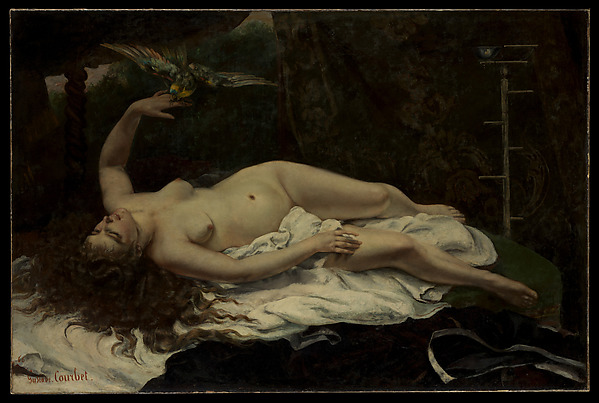
Woman with a Parrot, Gustave Courbet, 1866

La Femme au perroquet

1866 · Metropolitan Museum of Art

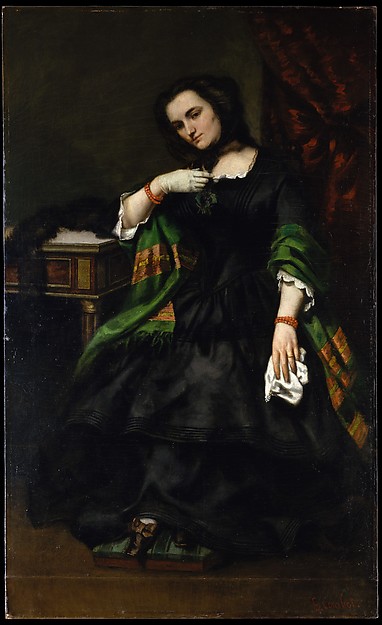
Madame Auguste Cuoq (Mathilde Desportes, 1827–1910), Gustave Courbet, ca. 1852–57

Madame Auguste Cuoq (Mathilde Desportes, 1827–1910)

ca. 1852–57 · Metropolitan Museum of Art

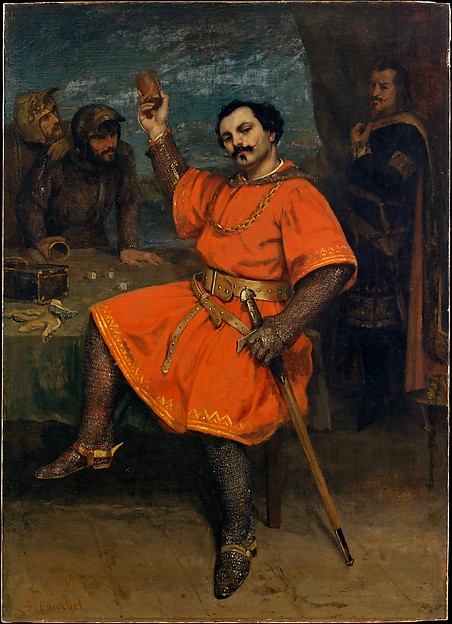
Louis Gueymard (1822–1880) as Robert le Diable, Gustave Courbet, 1857

Louis Gueymard (1822–1880) as Robert le Diable

1857 · Metropolitan Museum of Art

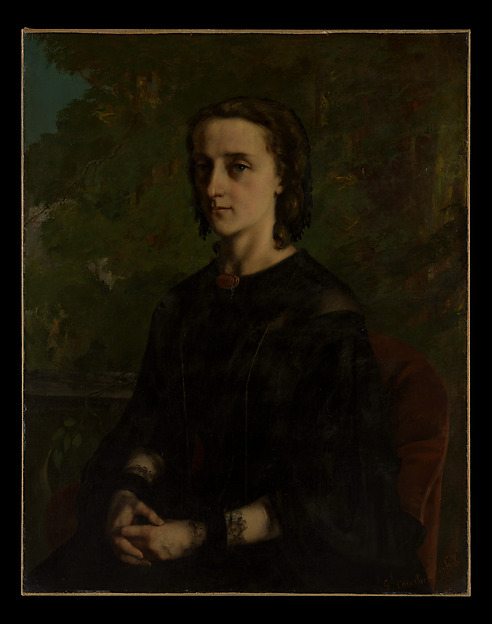
Madame Frederic Breyer (Fanny Hélène Van Bruyssel, 1830–1894), Gustave Courbet, 1858

Madame Frederic Breyer (Fanny Hélène Van Bruyssel, 1830–1894)

1858 · Metropolitan Museum of Art

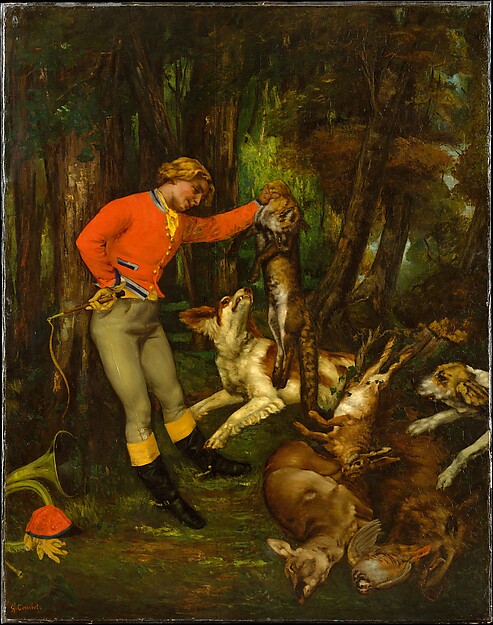
After the Hunt, Gustave Courbet, ca. 1859

After the Hunt

ca. 1859 · Metropolitan Museum of Art

The Source, Gustave Courbet, 1862

La Source

1862 · Metropolitan Museum of Art

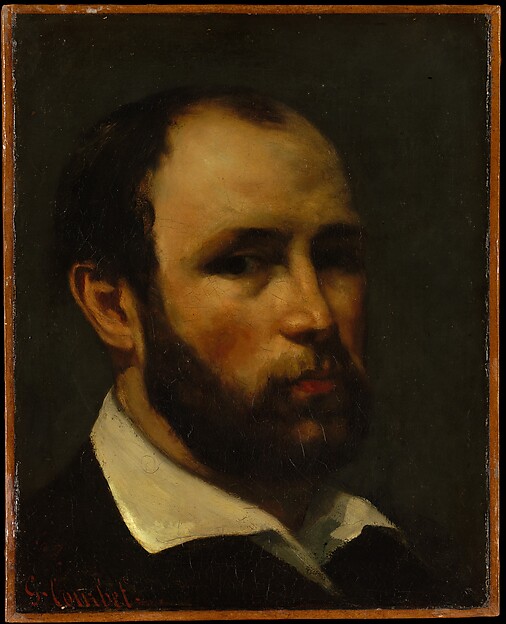
Portrait of a Man, Gustave Courbet, probably ca. 1862

Portrait of a Man

probably ca. 1862 · Metropolitan Museum of Art

De la collection : Musée Herzog Anton Ulrich

Page du musée
Portrait d'Adolphe de Vignacourt Grand Maître de Malthe, Caravaggio, 1704–1755

Caravaggio

Portrait d'Adolphe de Vignacourt Grand Maître de Malthe, 1704–1755

Ecce Homo, Caravaggio, 1674–1684

Caravaggio

Ecce Homo, 1674–1684

Heiliger Hieronymus, Caravaggio

Caravaggio

Heiliger Hieronymus

Bildnis eines Mannes, Rembrandt, 1839–1850

Rembrandt van Rijn

Bildnis eines Mannes, 1839–1850

Bildnis einer Frau, Rembrandt, 1839–1850

Rembrandt van Rijn

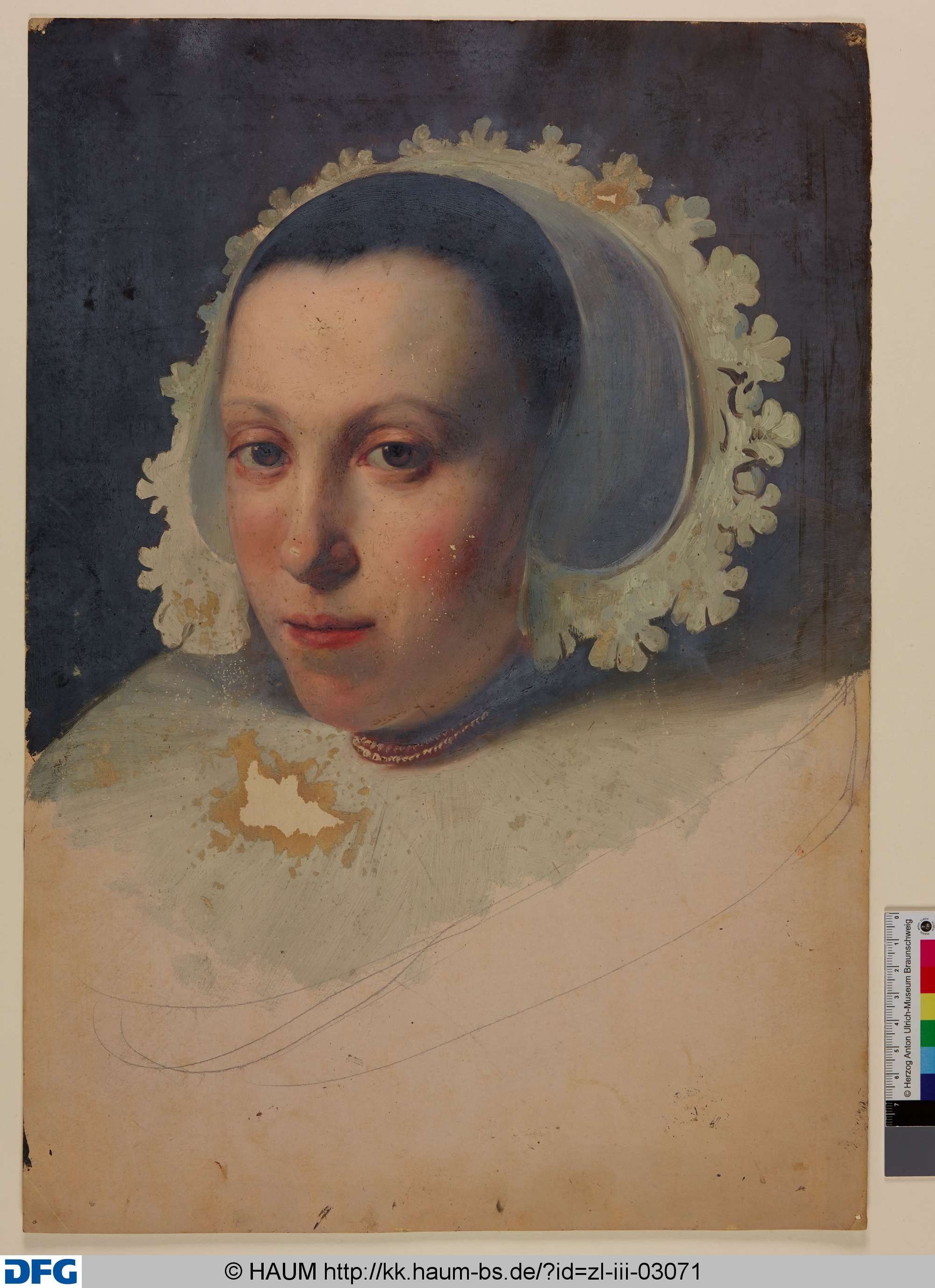
Bildnis einer Frau, 1839–1850

Tobias und seine Frau, Rembrandt, 1773

Rembrandt van Rijn

Tobias und seine Frau, 1773

Tobias und seine Frau, Rembrandt, 1773

Rembrandt van Rijn

Tobias und seine Frau, 1773

Lot mit seinen Töchtern, Rembrandt, 1771

Rembrandt van Rijn

Lot mit seinen Töchtern, 1771

Sur le même thème · Landscape

Toutes les œuvres sur ce thème
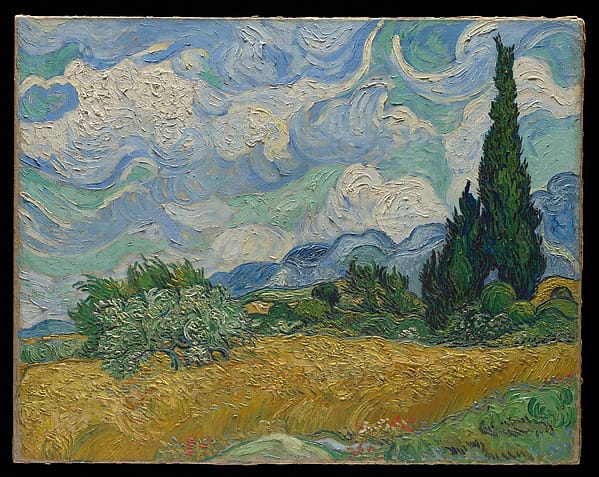
Wheat Field with Cypresses, Vincent van Gogh, 1889

Vincent van Gogh

Wheat Field with Cypresses, 1889

Metropolitan Museum of Art

Houses on the Achterzaan, Claude Monet, 1871

Claude Monet

Houses on the Achterzaan, 1871

Metropolitan Museum of Art

Landscape with a Stone Bridge, Rembrandt van Rijn, c. 1638

Rembrandt van Rijn

Paysage avec un pont de pierre, c. 1638

Rijksmuseum Amsterdam

Hiëronymus lezend in een Italiaans landschap, Rembrandt van Rijn, c. 1653

Rembrandt van Rijn

Hiëronymus lezend in een Italiaans landschap, c. 1653

Rijksmuseum Amsterdam

From Glacier Point, Ansel Adams, 1927

Ansel Adams

From Glacier Point, 1927

Non exposée · National Gallery of Art

Oak Tree, Snowstorm, Yosemite National Park, California, Ansel Adams, 1948, printed 1981

Ansel Adams

Oak Tree, Snowstorm, Yosemite National Park, California, 1948, printed 1981

Non exposée · National Gallery of Art

High Country Crags and Moon, Sunrise, Kings Canyon National Park, California, Ansel Adams, c. 1935, printed 1979

Ansel Adams

High Country Crags and Moon, Sunrise, Kings Canyon National Park, California, c. 1935, printed 1979

Non exposée · National Gallery of Art

Canyon de Chelly National Monument, Arizona, Ansel Adams, 1942, printed 1981

Ansel Adams

Canyon de Chelly National Monument, Arizona, 1942, printed 1981

Non exposée · National Gallery of Art