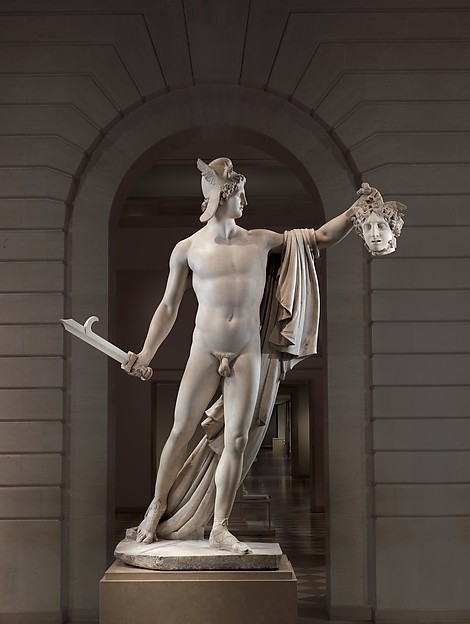
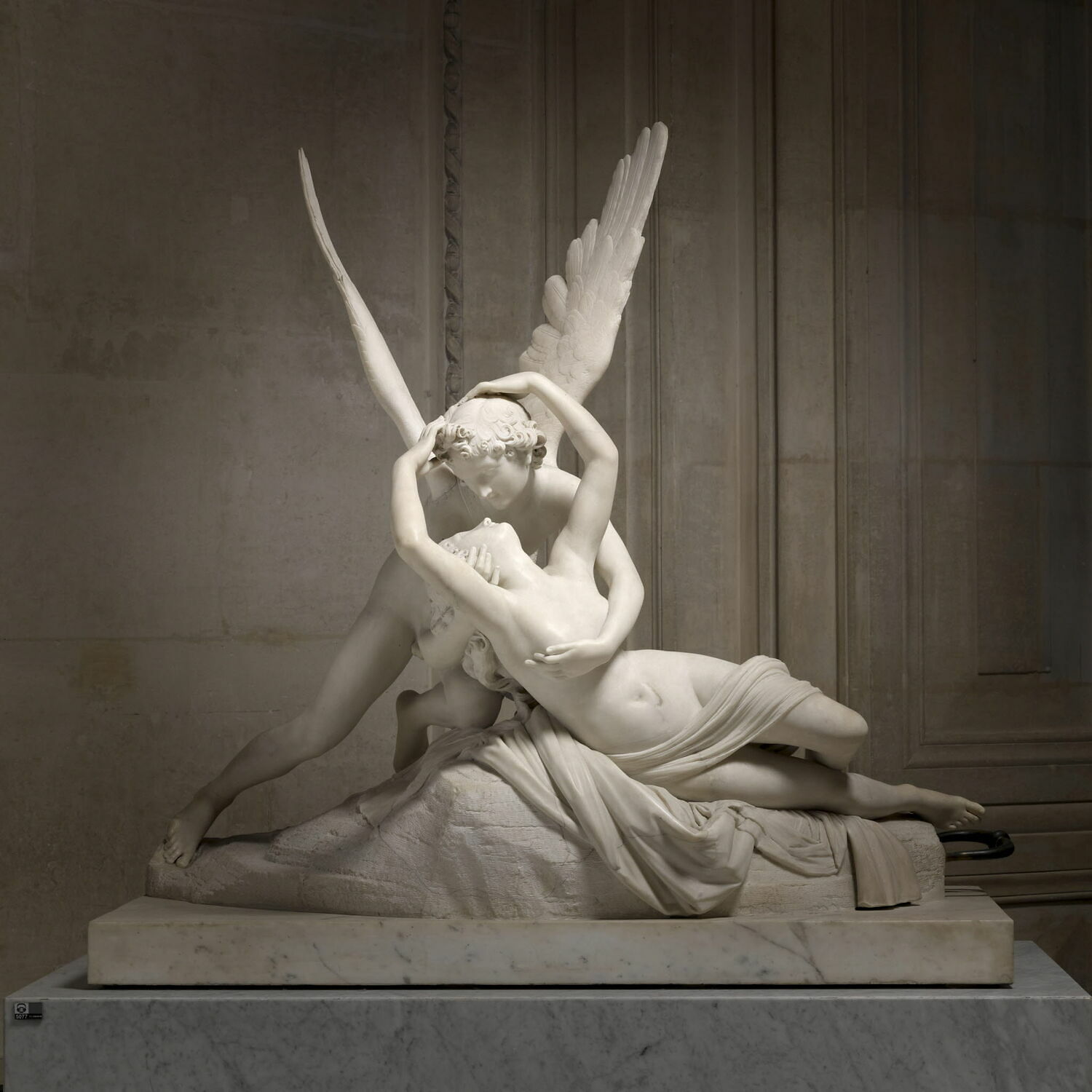
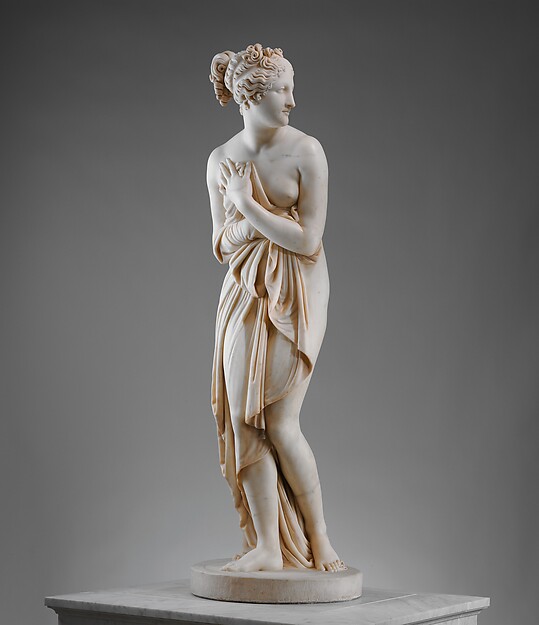
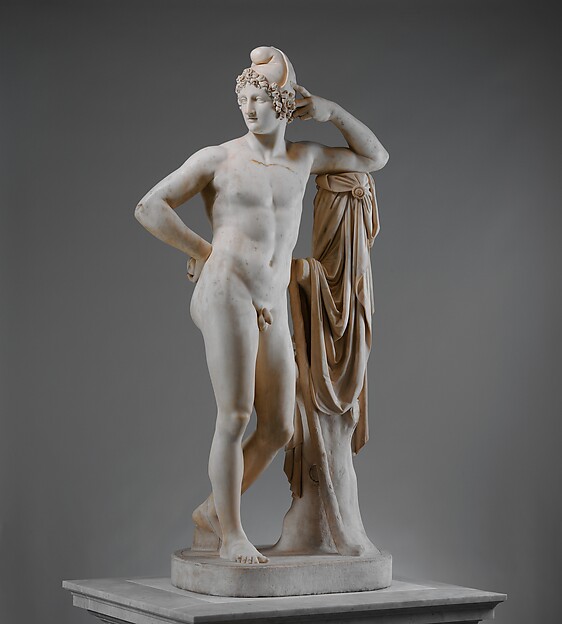
Antonio CanovaItalie, 1757–1822
Venus, Back View, from Oeuvre de Canova
Peut-on la voir ?
Pas exposée actuellement
Où est « Venus, Back View, from Oeuvre de Canova » aujourd’hui ? Collection: Art Institute of Chicago, Chicago. Pas exposée actuellement. Vérifié 12 octobre 2026.

Chicago, États-Unis
Elle appartient à la collection, mais n’est pas présentée en ce moment.
- Vérifié
- Dans cet état depuis
- Source
- Le musée
Notice
- Numéro d’inventaire
- 2021.40
Au catalogue
Sources
- Art Institute of Chicago
- Image : Art Institute of Chicago — CC0
Dans la vie de Antonio Canova
La vie entière1791–1818
Honorary member of many academies in Europe and America
Canova was elected an honorary member of many academies: Florence (1791), Stockholm (1796), Verona (1803), Venice (1804), Siena (1805), Lucca (1806), St Petersburg (1804), Geneva (1804), Denmark (1805), Graz (1812), Marseille (1813), Monaco (1814), New York (1817), Antwerp and Vilnius (1818), and also Philadelphia.
1815
Mission to Paris: bringing back the looted masterpieces
In 1815 Pope Pius VII named Canova his Minister Plenipotentiary and tasked him with recovering works of art that Napoleon had taken to Paris. At the Louvre he met resistance from its director Vivant Denon and, because of the works’ size or unclear whereabouts, was forced to leave major pieces behind, among them Veronese’s “The Wedding at Cana”.
1815
London: Haydon and the Elgin Marbles
In 1815 Canova visited London and met Benjamin Haydon; it was on Canova’s advice that the British Museum acquired the Elgin Marbles, with plaster copies sent to Florence at his request.
1816
Marquis of Ischia and the “Golden Book”
Returning to Rome in 1816 with some of the art Napoleon had taken, Canova was rewarded by the Pope with the title of Marquis of Ischia, inscription in the “Golden Book of Roman Nobles” (the Pope entered his name with his own hands) and an annual pension of 3,000 crowns.
1816
First president of the Pontifical Roman Archaeological Academy
In 1816 Canova was appointed the first president of the newly founded Pontifical Roman Archaeological Academy.
11 July 1819
Lays the foundation stone of his own temple in Possagno
After his 1814 proposal for a statue of Religion in St Peter’s was rejected, Canova resolved to build his own temple: he designed and financed the building himself and partly built it, combining the Parthenon and the Pantheon. On 11 July 1819 he laid the foundation stone, dressed in a red papal uniform and wearing all his medals, and afterwards visited Possagno every autumn to direct the workmen.