ART WIKI33 040 en salle
CarteCollectionArtistesMuséesExpositionsJournal
Connexion

ART WIKI

Où est accroché le chef-d’œuvre, et quand on vous laisse entrer.

Collections : Art Institute of Chicago, Cleveland Museum of Art, Galerie Tretiakov, Hirshhorn Museum and Sculpture Garden, J. Paul Getty Museum, Metropolitan Museum of Art, Minneapolis Institute of Art, Musée de l'Ermitage, Musée des Beaux-Arts Pouchkine, Musée du Louvre, musée national d'art asiatique, Musée russe, Musées d'Art de Harvard, Museum of Modern Art, National Gallery of Art, National Portrait Gallery, Rijksmuseum Amsterdam, Smithsonian American Art Museum, Statens Museum for Kunst, Victoria and Albert Museum, Villa Getty, Whitney Museum of American Art, Catalogue d’État du fonds muséal de Russie (274 musées), Europeana (19 musées), Wikidata (6 musées), Paris Musées (12 musées) et Joconde, la base des musées du ministère de la Culture (495 musées). Les images appartiennent à leurs ayants droit.

Rubriques

  • Carte
  • Recherche
  • Collection
  • Chefs-d’œuvre
  • Exposées en ce moment
  • Artistes

Et aussi

  • Musées et galeries
  • Expositions
  • Journal
  • D’où viennent les données
  • Confidentialité et cookies
AccueilCarteCatalogue
  1. Collection/
  2. Metropolitan Museum of Art/
  3. Cupid and Psyche
Cupid and Psyche, Antonio Canova, 1794
Antonio Canova, portraitAntonio CanovaItalie, 1757–1822

Cupid and Psyche

1794 · Sculpture

Notice

1794 · à 37 ans
17571822
Numéro d’inventaire
05.46

Pendant ce temps, chez Antonio Canova

La vie entière
  1. 1775–1800

    Shows his statues by candlelight

    In the last quarter of the eighteenth century it became fashionable to view galleries at night by torchlight, and Canova seized on the fad: he displayed his works in his studio by candlelight and finished the statues by candlelight with special tools, softening the transitions between the parts of the nude. He then rubbed the marble with pumice, sometimes for weeks or months, and if need be with tripoli and lead.

  2. 1790–1795

    The monument to Titian is never built

    In 1790 he began work on a pyramid-shaped tomb for Titian in the church of the Frari, but by 1795 the project was abandoned for lack of funds. Canova reused the idea for the tomb of Archduchess Maria Christina in the Augustinian church in Vienna.

  3. 1790s

    Declines Catherine the Great’s invitation

    News of Canova’s work reached Russia, and Empress Catherine II tried to summon the sculptor to her court; he politely declined the honourable invitation and, in thanks, made a second version of “Cupid and Psyche”, now in the Hermitage in St Petersburg.

  4. 1791–1818

    Honorary member of many academies in Europe and America

    Canova was elected an honorary member of many academies: Florence (1791), Stockholm (1796), Verona (1803), Venice (1804), Siena (1805), Lucca (1806), St Petersburg (1804), Geneva (1804), Denmark (1805), Graz (1812), Marseille (1813), Monaco (1814), New York (1817), Antwerp and Vilnius (1818), and also Philadelphia.

  5. 1792

Autres œuvres : Antonio Canova

Toutes les œuvres

Dans la même salle · Gallery 627, Metropolitan Museum of Art

Page du musée

Sur le même thème · Male Nudes

Toutes les œuvres sur ce thème

Returns to Possagno to recover his health

Strenuous work had weakened his health, and in May 1792 Canova decided to visit his family in Possagno; on his way back to Rome he stopped in Padua, Vicenza, Verona, Mantua, Parma, Modena and Bologna, winning general acclaim in every one of them.

  • 1794

    Makes an exception: restores sculptures for Zulian

    Canova disliked restoring ancient statues, but in 1794 he made an exception for his friend and early patron Zulian, restoring several sculptures that Zulian had moved from Rome to Venice.

  • Peut-on la contempler ?

    Oui, elle reçoit

    Metropolitan Museum of Art

    New York, États-Unis

    Salle627

    Présentée au public. Qui s’en porte garant est indiqué ci-dessous.

    Vérifié
    il y a 9 jours
    Dans cet état depuis
    27 sept. 2026
    Source
    Le musée
    Sur la cartePage du musée

    Ce qu’elle montre

    Male NudesCupidPsyche

    Au catalogue

    SculpturePlâtreNéoclassicismeXVIIIe siècle

    Sources

    • Metropolitan Museum of Art
    • Image : Metropolitan Museum of Art — Open Access (CC0)
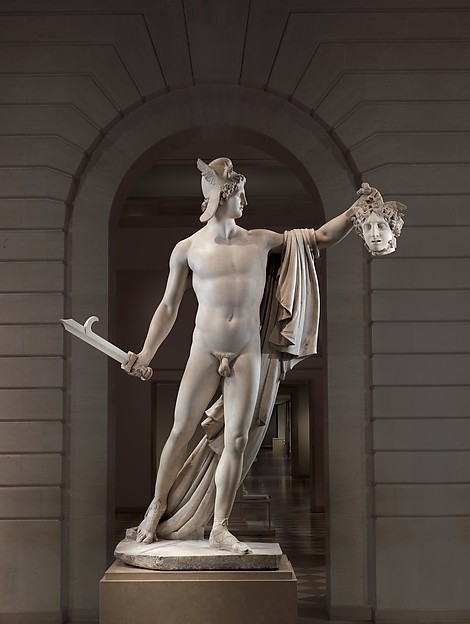
    Perseus with the Head of Medusa, Antonio Canova, 1804–6

    Perseus with the Head of Medusa

    1804–6 · Metropolitan Museum of Art

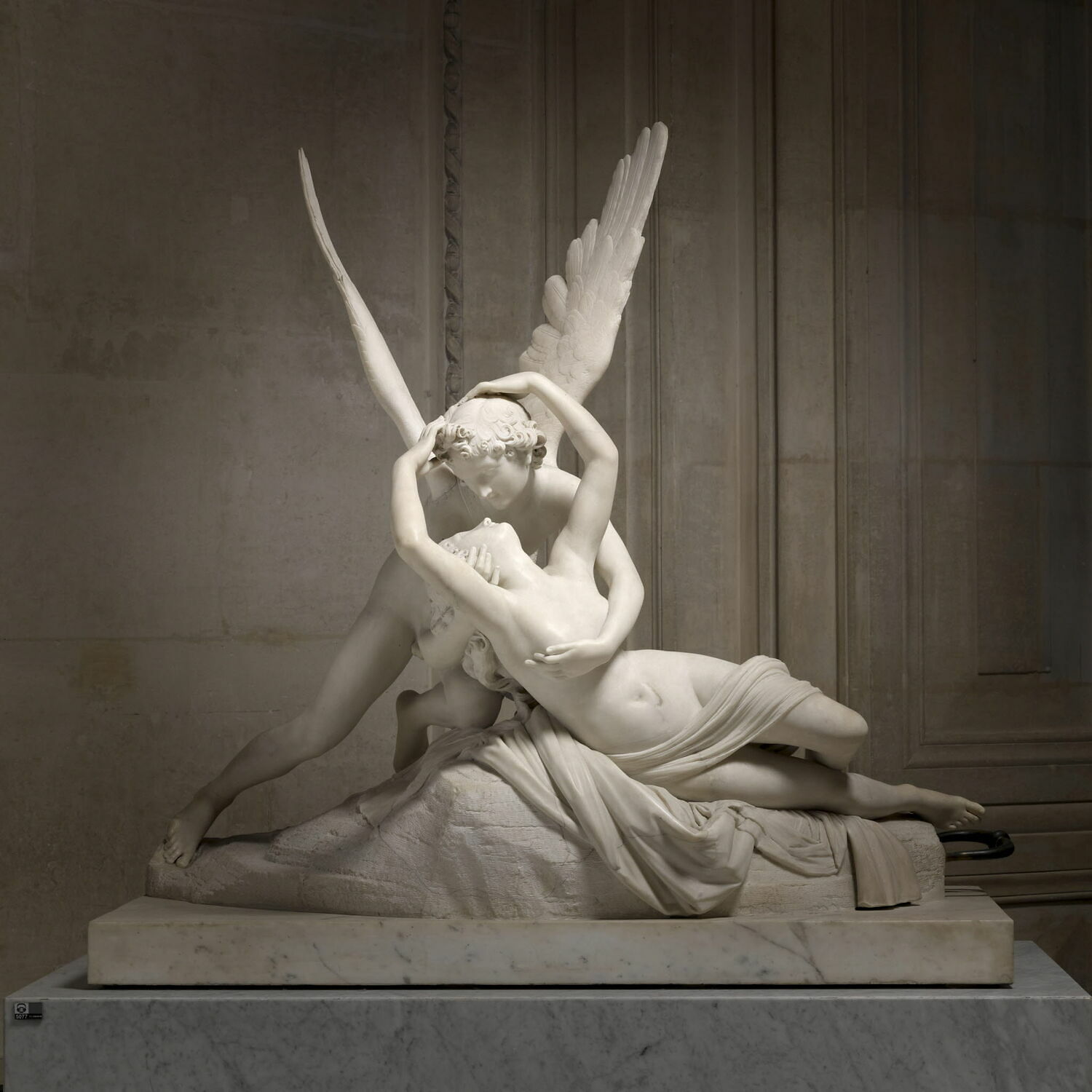
    L'Amour et Psyché à demi couchée, Canova, Antonio, 1787 - 1793

    Psyché ranimée par le baiser de l'Amour

    1787 - 1793 · Musée du Louvre

    Winged Victory, Antonio Canova, after the Antique, c. 1803/1806

    Winged Victory

    c. 1803/1806 · National Gallery of Art

    Dancer with Finger on Chin, Antonio Canova, model 1809/1814, carved 1819/1823

    Dancer with Finger on Chin

    model 1809/1814, carved 1819/1823 · National Gallery of Art

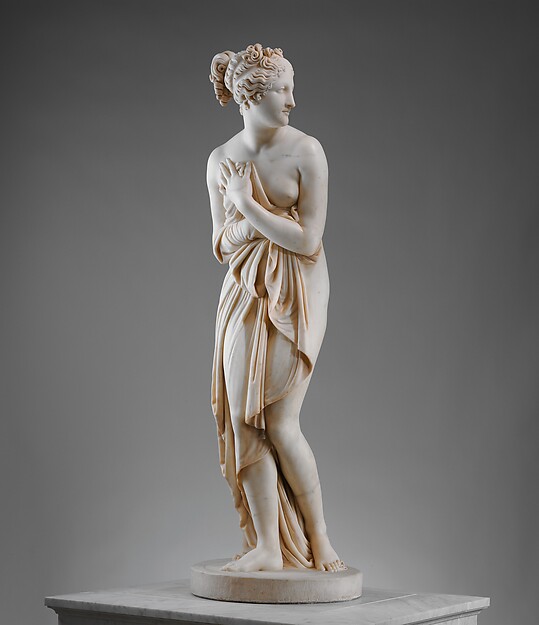
    Venus Italica, Antonio Canova, probably ca. 1822–23, variant of marble first executed 1810

    Venus Italica

    probably ca. 1822–23, variant of marble first executed 1810 · Metropolitan Museum of Art

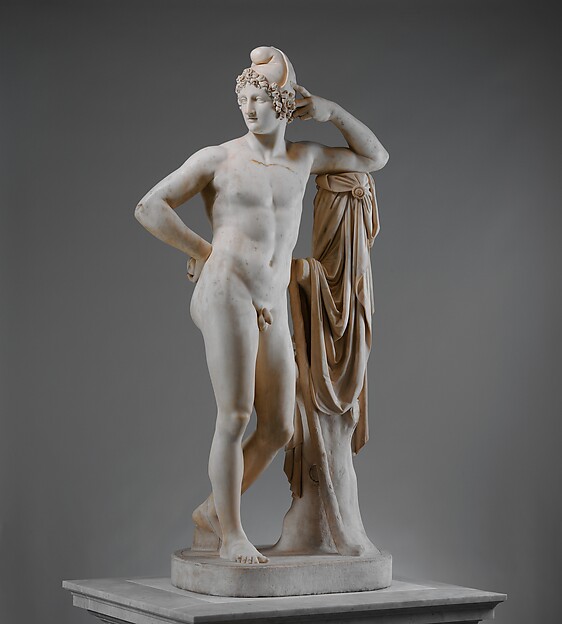
    Paris, Antonio Canova, ca. 1822–23, original marble version completed November 1812

    Paris

    ca. 1822–23, original marble version completed November 1812 · Metropolitan Museum of Art

    Naiad, Antonio Canova, model 1815/1817, carved 1820/1823

    Naiad

    model 1815/1817, carved 1820/1823 · National Gallery of Art

    Venus, after Antonio Canova, model 1817/1820, carved c. 1822/1823

    Venus

    model 1817/1820, carved c. 1822/1823 · National Gallery of Art

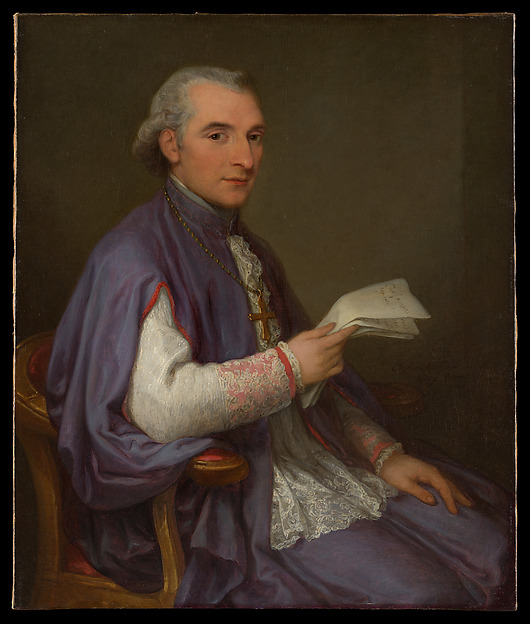
    Monsignor Giuseppe Spina (1756–1828), Angelica Kauffmann, 1798

    Angelica Kauffmann

    Monsignor Giuseppe Spina (1756–1828), 1798

    The Sorrow of Telemachus, Angelica Kauffmann, 1783

    Angelica Kauffmann

    The Sorrow of Telemachus, 1783

    Telemachus and the Nymphs of Calypso, Angelica Kauffmann, 1782

    Angelica Kauffmann

    Telemachus and the Nymphs of Calypso, 1782

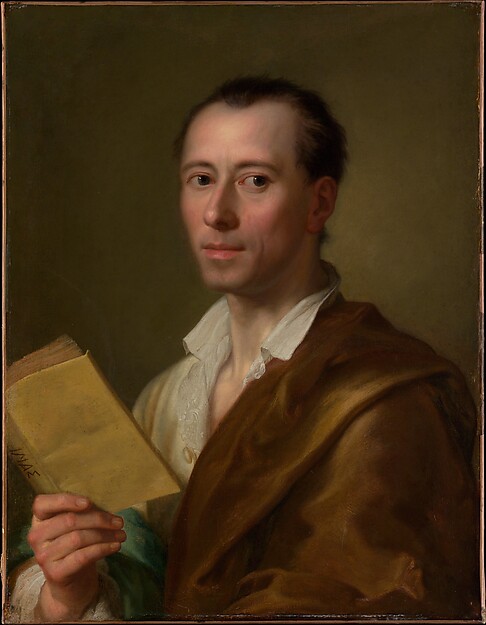
    Johann Joachim Winckelmann (1717–1768), Anton Raphael Mengs, ca. 1777

    Anton Raphael Mengs

    Johann Joachim Winckelmann (1717–1768), ca. 1777

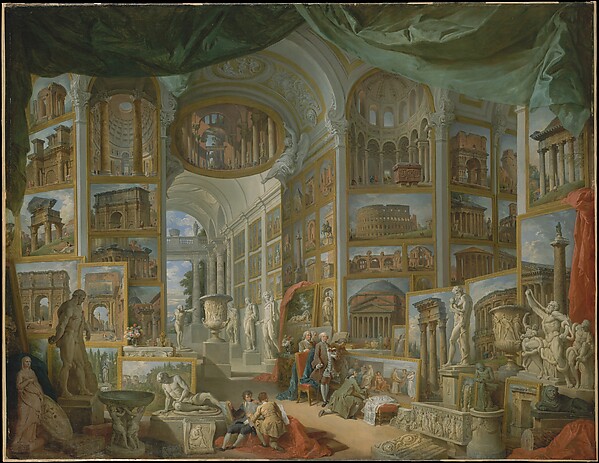
    Ancient Rome, Giovanni Paolo Panini, 1757

    Giovanni Paolo Panini

    Ancient Rome, 1757

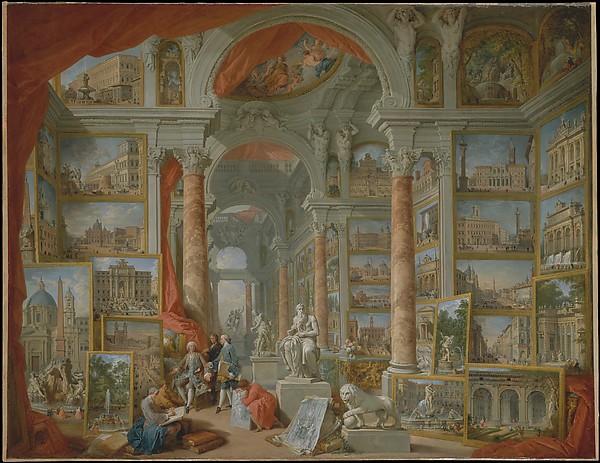
    Modern Rome, Giovanni Paolo Panini, 1757

    Giovanni Paolo Panini

    Modern Rome, 1757

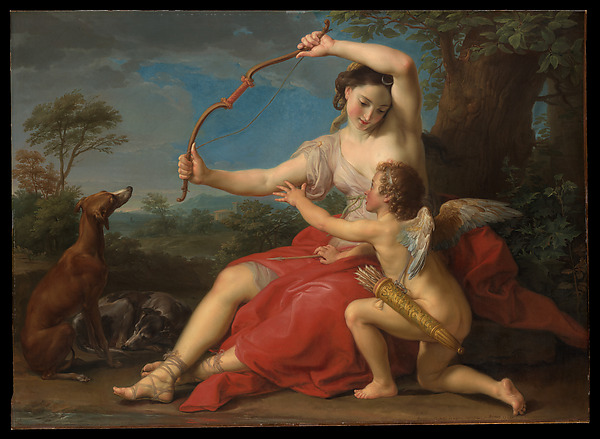
    Diana and Cupid, Pompeo Batoni, 1761

    Pompeo Batoni

    Diana and Cupid, 1761

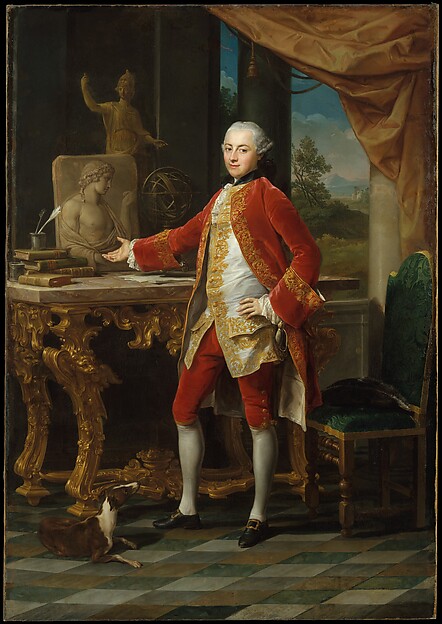
    Portrait of a Young Man, Pompeo Batoni, ca. 1760–65

    Pompeo Batoni

    Portrait of a Young Man, ca. 1760–65

    Adam, Auguste Rodin, modeled 1880 or 1881, cast 1910

    Auguste Rodin

    Adam, modeled 1880 or 1881, cast 1910

    Metropolitan Museum of Art

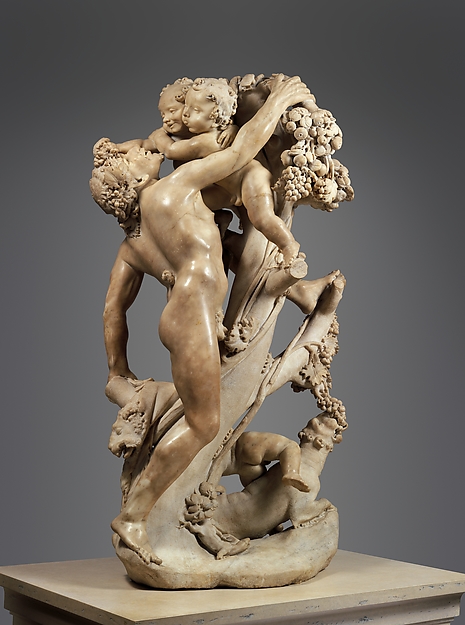
    Bacchanal: A Faun Teased by Children, Gian Lorenzo Bernini, ca. 1616–17

    Gian Lorenzo Bernini

    Faune émoustillé par des Amours, ca. 1616–17

    Metropolitan Museum of Art

    Perseus with the Head of Medusa, Antonio Canova, 1804–6

    Antonio Canova

    Perseus with the Head of Medusa, 1804–6

    Metropolitan Museum of Art

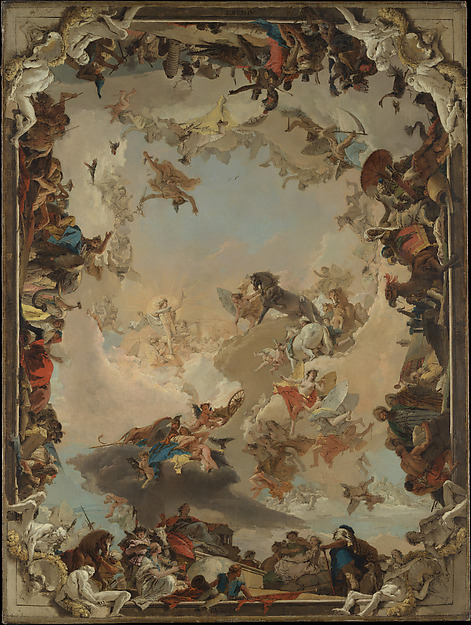
    Allegory of the Planets and Continents, Giovanni Battista Tiepolo, 1752

    Giovanni Battista Tiepolo

    Allegory of the Planets and Continents, 1752

    Metropolitan Museum of Art

    Fragments of a marble statue of the Diadoumenos (youth tying a fillet around his head), Polykleitos, ca. 69–96 CE

    Polykleitos

    Fragments of a marble statue of the Diadoumenos (youth tying a fillet around his head), ca. 69–96 CE

    Metropolitan Museum of Art

    The Feast of Acheloüs, Peter Paul Rubens, ca. 1615

    Peter Paul Rubens

    The Feast of Acheloüs, ca. 1615

    Metropolitan Museum of Art

    Torso, Auguste Rodin, modeled ca. 1877–78, cast 1979

    Auguste Rodin

    Torso, modeled ca. 1877–78, cast 1979

    Metropolitan Museum of Art

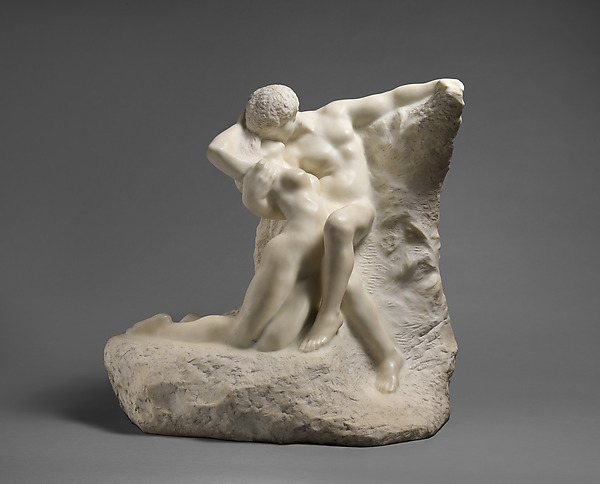
    Eternal Spring, Auguste Rodin, modeled ca. 1881, carved 1907

    Auguste Rodin

    Eternal Spring, modeled ca. 1881, carved 1907

    Metropolitan Museum of Art