ART WIKI32 963 en salle
CarteCollectionArtistesMuséesExpositionsJournal
Connexion

ART WIKI

Où est accroché le chef-d’œuvre, et quand on vous laisse entrer.

Collections : Art Institute of Chicago, Cleveland Museum of Art, Galerie Tretiakov, Hirshhorn Museum and Sculpture Garden, J. Paul Getty Museum, Metropolitan Museum of Art, Minneapolis Institute of Art, Musée de l'Ermitage, Musée des Beaux-Arts Pouchkine, Musée du Louvre, musée national d'art asiatique, Musée russe, Musées d'Art de Harvard, Museum of Modern Art, National Gallery of Art, National Portrait Gallery, Rijksmuseum Amsterdam, Smithsonian American Art Museum, Statens Museum for Kunst, Victoria and Albert Museum, Villa Getty, Whitney Museum of American Art, Catalogue d’État du fonds muséal de Russie (274 musées), Europeana (19 musées), Wikidata (6 musées), Paris Musées (12 musées) et Joconde, la base des musées du ministère de la Culture (495 musées). Les images appartiennent à leurs ayants droit.

Rubriques

  • Carte
  • Recherche
  • Collection
  • Chefs-d’œuvre
  • Exposées en ce moment
  • Artistes

Et aussi

  • Musées et galeries
  • Expositions
  • Journal
  • D’où viennent les données
  • Confidentialité et cookies
AccueilCarteCatalogue
  1. Collection/
  2. Minneapolis Institute of Art/
  3. Untitled
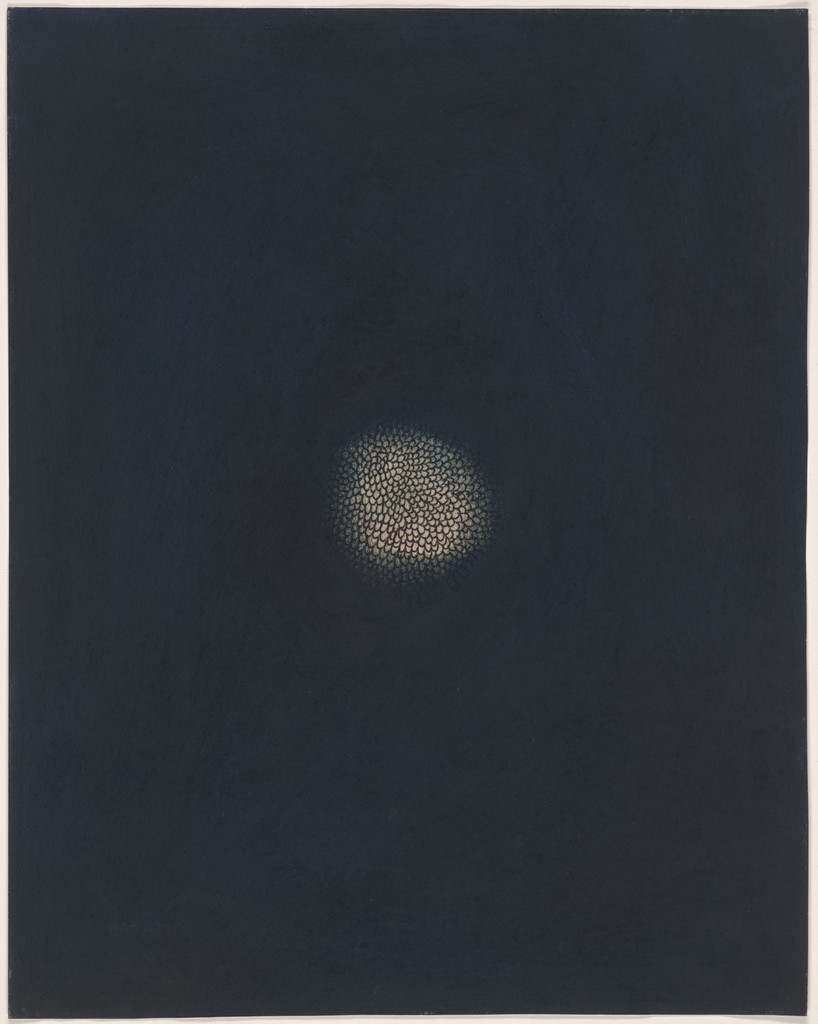
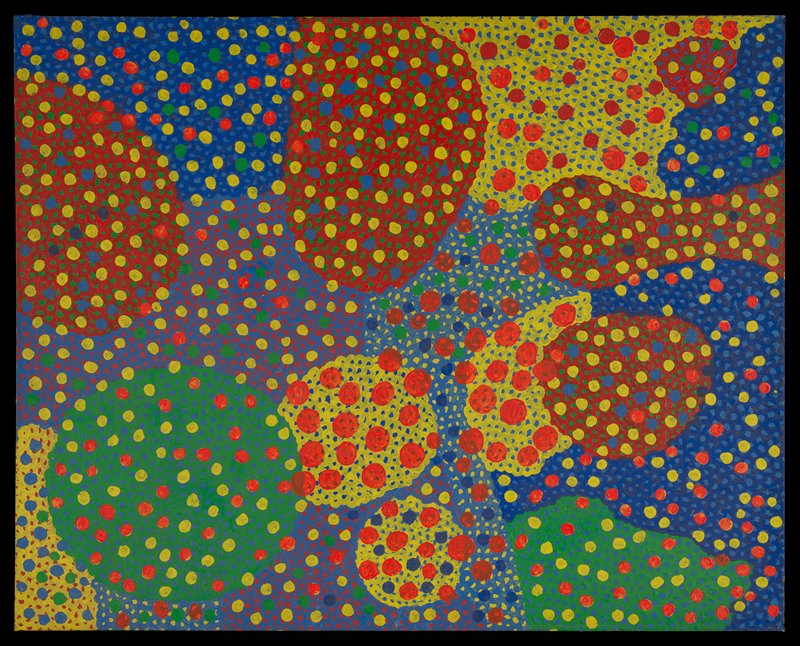
Untitled, Kusama Yayoi, 1967
Yayoi Kusama, portraitYayoi KusamaJapon, 1929–2026

Untitled

1967 · Painting · 101.6 × 127 cm

Peut-on la contempler ?

Elle ne reçoit pas en ce moment

Minneapolis Institute of Art

Minneapolis, États-Unis

Elle appartient à la collection, mais n’est pas présentée en ce moment.

Vérifié
il y a 3 jours
Dans cet état depuis
25 sept. 2026
Source
Le musée
Sur la cartePage du musée

À propos du tableau

Japanese artist Yayoi Kusama's work is widely diverse in theory and practice, including painting, drawing, sculpture, assemblage, performance, video, and installation. At one point, she ventured into the fashion world with her own clothing line. During the decade she lived in New York-1958 to 1968-she was especially known for her exuberant abstract paintings, which used a signature motif known as an infinity net-interlocking shapes painted with netlike patterns.

In Untitled, Kusama added her characteristic polka dots over the infinity nets, creating yet another dimension. This work was made shortly before she returned to Japan to seek treatment for the hallucinations and obsessive thoughts that had troubled her since childhood. Kusama has often said making art is the way she manages her obsessions.

Minneapolis Institute of Art

Notice

1967 · à 38 ans
19292026
Numéro d’inventaire
2010.7

Au catalogue

PeinturesHuilePeinture japonaiseArt d’après-guerreXXe siècleJapon

Sources

  • Minneapolis Institute of Art
  • Image : Minneapolis Institute of Art — © Yayoi Kusama

Pendant ce temps, chez Yayoi Kusama

La vie entière
  1. 1959–1972

    A passionate platonic bond with Joseph Cornell

    In New York Kusama had a brief relationship with Judd and then a passionate but platonic one with Joseph Cornell, twenty-six years her senior: they phoned each other daily, sketched each other, and he sent her personalised collages. The bond lasted until Cornell’s death in 1972.

  2. 1960–1975

    Travel: United States

  3. 1967

    Travel: Netherlands

  4. 1968

    An anti-war performance on the Brooklyn Bridge

    In 1968 Kusama staged an anti-war performance on the Brooklyn Bridge, “Self-Obliteration. Anatomic Explosion — Anti-War”, inviting LGBT participants: she decorated the naked bodies of the protesters with her signature pattern, the young men raised a banner with the title of the action while the young women stood in the middle of the bridge and kissed. The action caused an international scandal; in Japan Kusama was called “shameless”, and the Kyoto school where she had studied demanded that her name be struck from the list of distinguished graduates.

  5. 1968

    “Homosexual Wedding” and the Fillmore East

    In 1968 Kusama presided over the happening “Homosexual Wedding” at the “Church of Self-Obliteration” at 33 Walker Street, performed alongside Fleetwood Mac and Country Joe and the Fish at the Fillmore East, and opened naked painting studios and a gay social club, the Kusama ’Omophile Kompany. The nudity in her art and protests was a severe shame for her family, and she felt alone.

  6. 1969

    “Grand Orgy to Awaken the Dead” at MoMA

    In 1969 the sculpture garden of the Museum of Modern Art in New York saw the performance “Grand Orgy to Awaken the Dead”: at Kusama’s direction eight performers undressed, stepped into a fountain and struck poses mimicking nearby sculptures by Picasso, Giacometti and Maillol. The event was unannounced.
Autres œuvres : Yayoi Kusama

Toutes les œuvres
No. F, Yayoi Kusama, 1959

No. F

1959 · Museum of Modern Art

Infinity Nets Yellow, Yayoi Kusama, 1960

Infinity Nets Yellow

1960 · National Gallery of Art

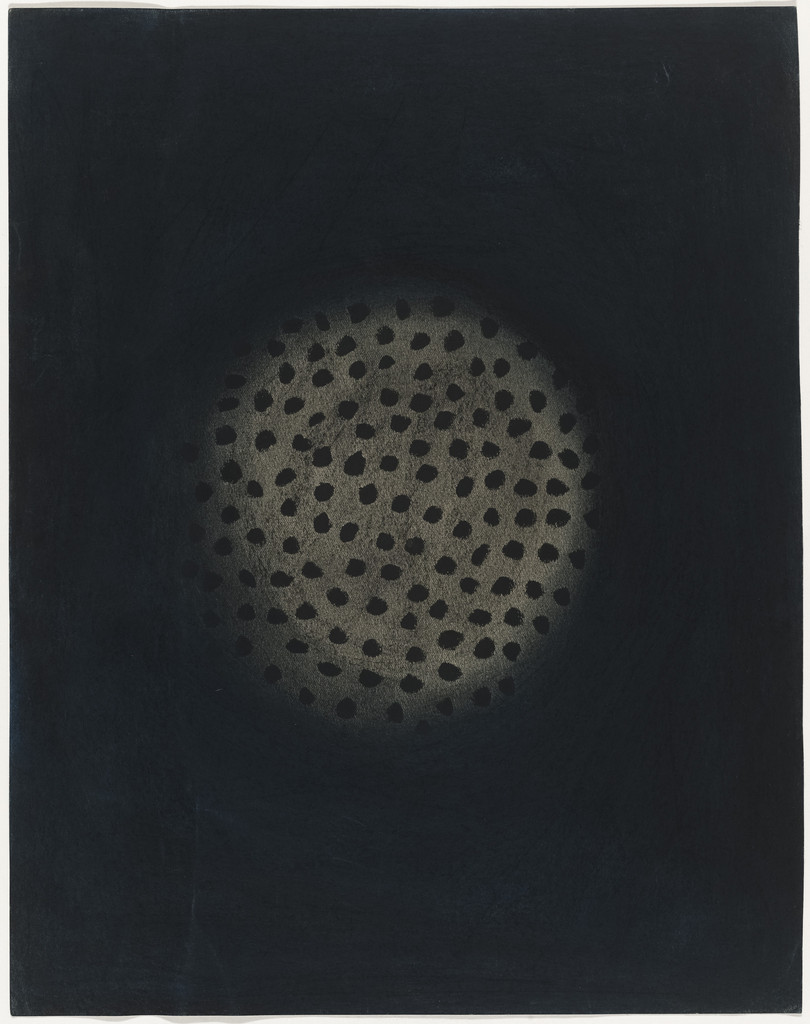
Sun Spot, Yayoi Kusama, 1953

Sun Spot

1953 · Art Institute of Chicago

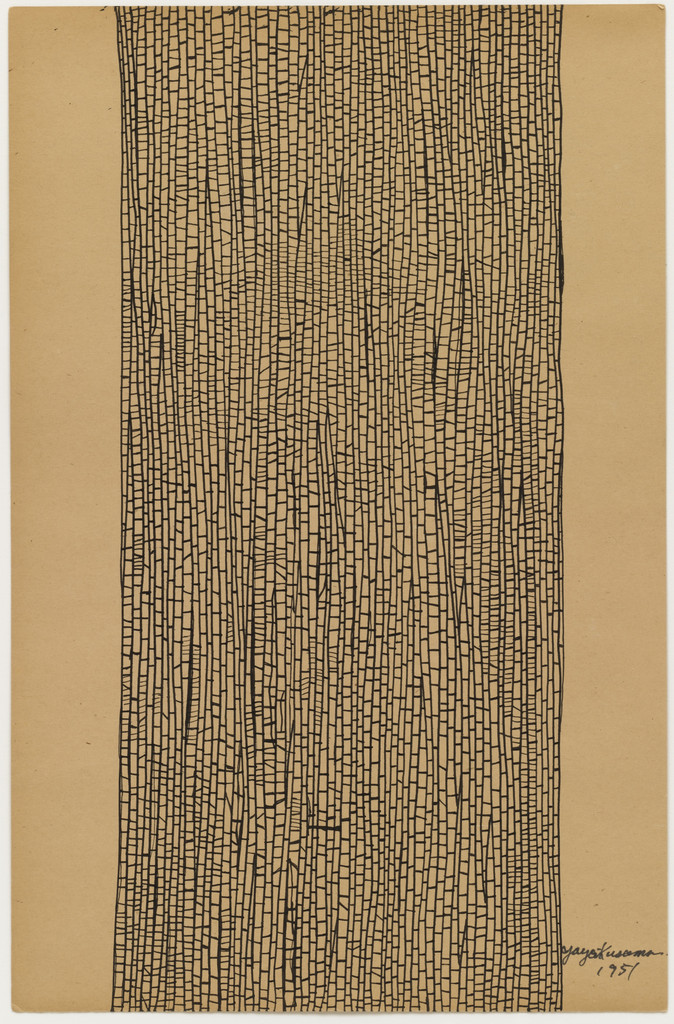
Infinity Nets, Yayoi Kusama, 1951

Infinity Nets

1951 · Non exposée · Museum of Modern Art

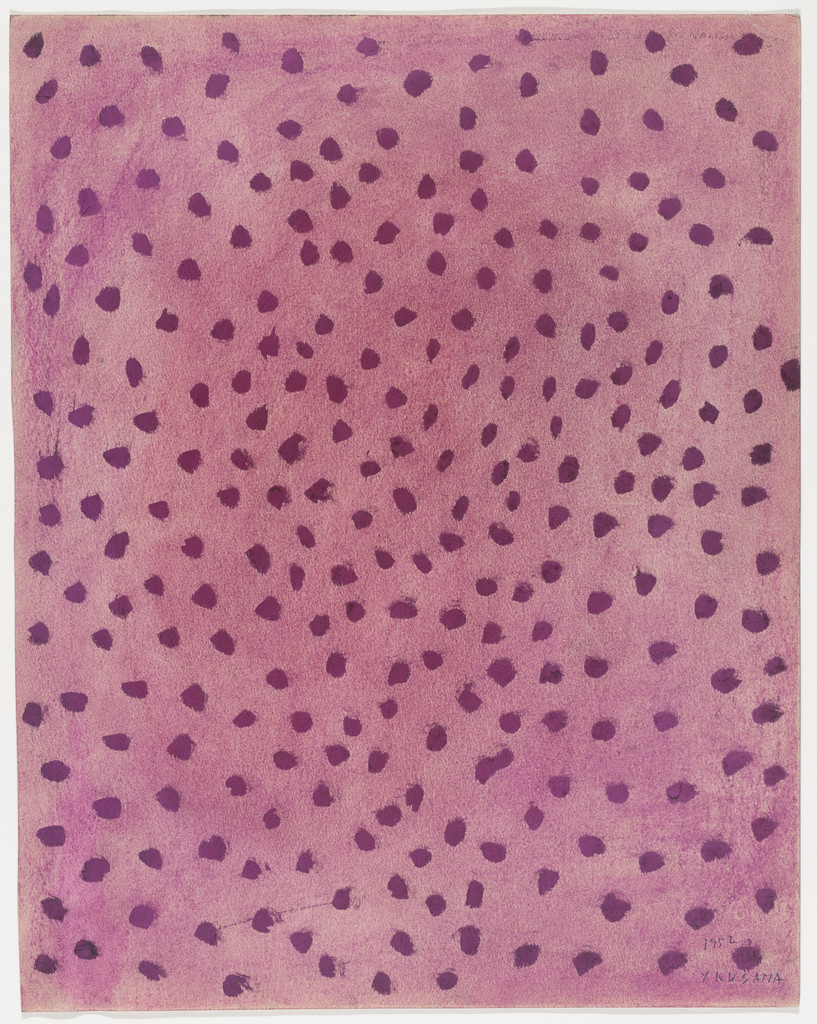
Untitled, Yayoi Kusama, 1952

Untitled

1952 · Non exposée · Museum of Modern Art

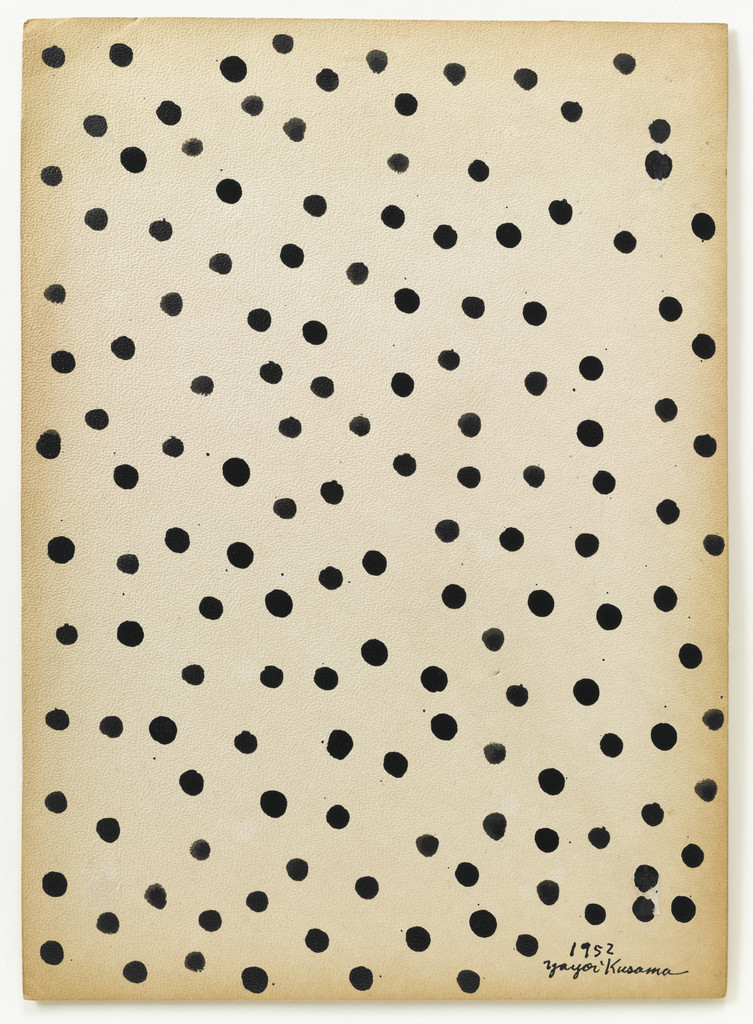
Untitled, Yayoi Kusama, 1952

Untitled

1952 · Non exposée · Museum of Modern Art

Accumulation, Yayoi Kusama, 1952

Accumulation

1952 · Non exposée · Museum of Modern Art

Untitled, Yayoi Kusama, 1952

Untitled

1952 · Non exposée · Museum of Modern Art

Sous le même toit : Minneapolis Institute of Art

Page du musée
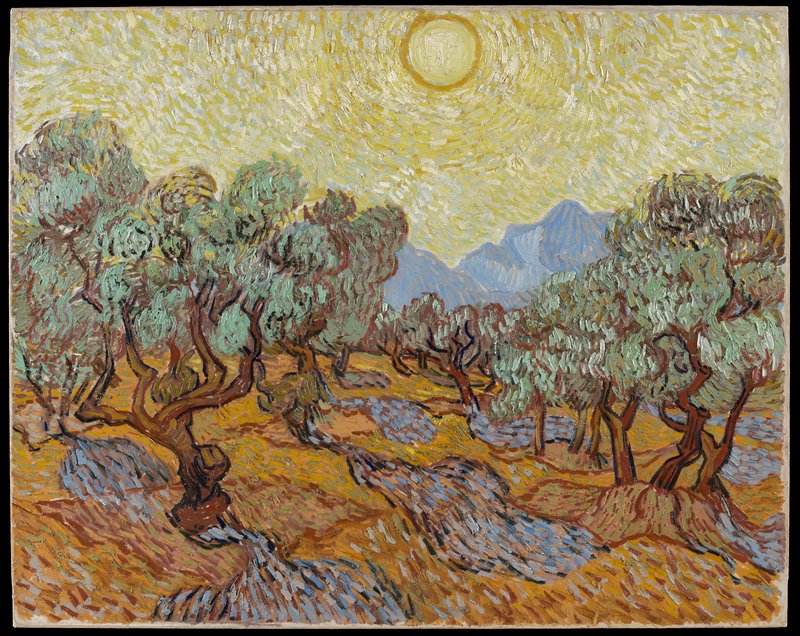
Olive Trees, Vincent van Gogh, 1889

Vincent van Gogh

Olive Trees, 1889

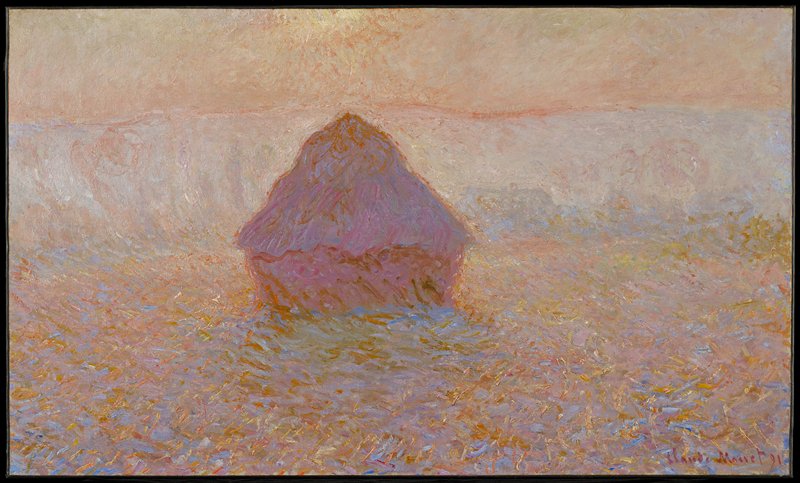
Grainstack, Sun in the Mist, Claude Monet, 1891

Claude Monet

Grainstack, Sun in the Mist, 1891

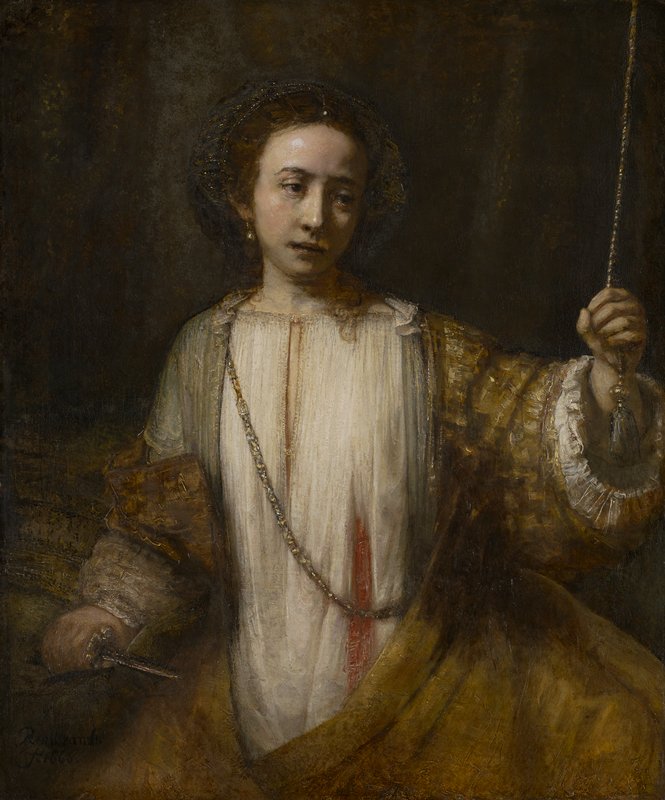
Lucretia, Rembrandt van Rijn, 1666

Rembrandt van Rijn

Lucretia, 1666

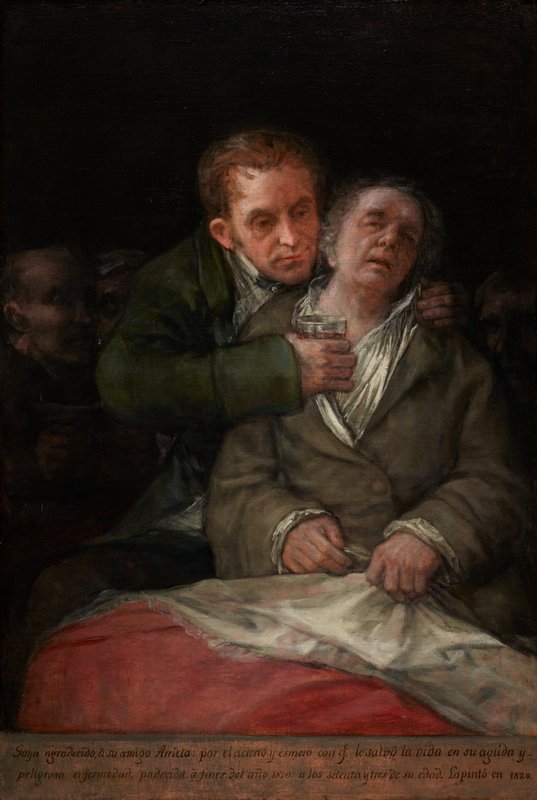
Self-Portrait with Dr. Arrieta, Francisco José de Goya y Lucientes, 1820

Francisco de Goya

Goya et son médecin, 1820

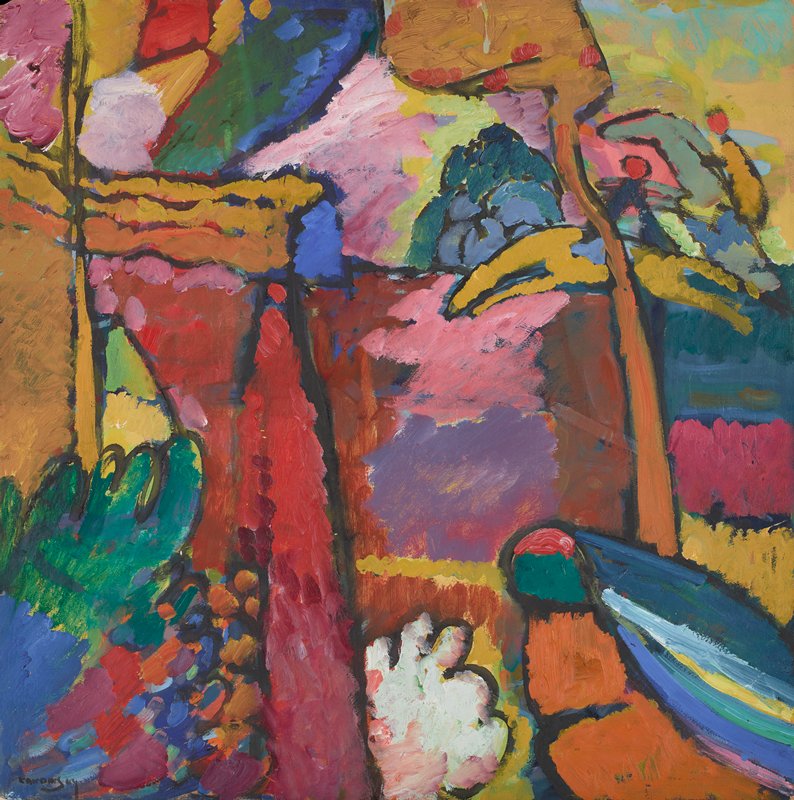
Study for Improvisation V, Vassily Kandinsky, 1910

Vasily Kandinsky

Study for Improvisation V, 1910

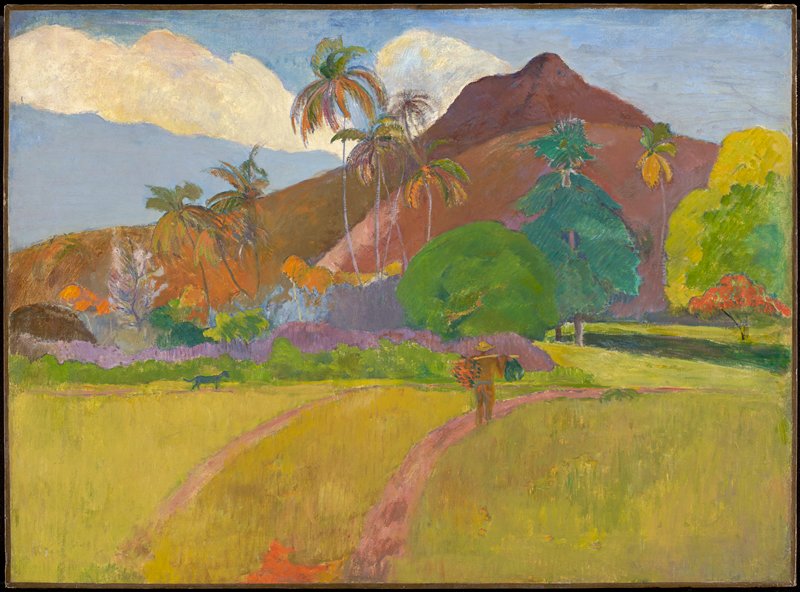
Tahitian Landscape, Paul Gauguin, 1891

Paul Gauguin

Tahitian Landscape, 1891

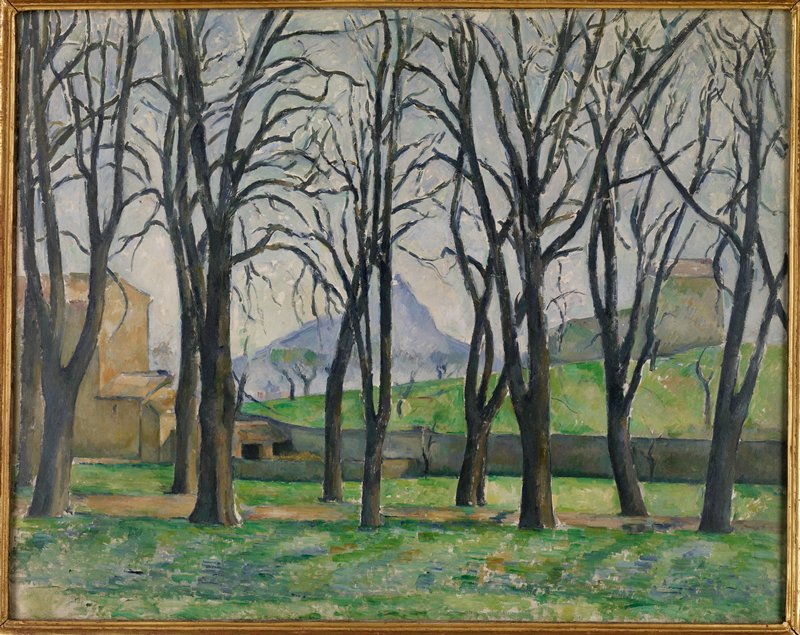
Chestnut Trees at Jas de Bouffan, Paul Cézanne, c. 1885–86

Paul Cézanne

Chestnut Trees at Jas de Bouffan, c. 1885–86

The Union of England and Scotland (Charles I as the Prince of Wales), Peter Paul Rubens, 1633–34

Peter Paul Rubens

The Union of England and Scotland (Charles I as the Prince of Wales), 1633–34