 Paul CézanneFrance, 1839–1906
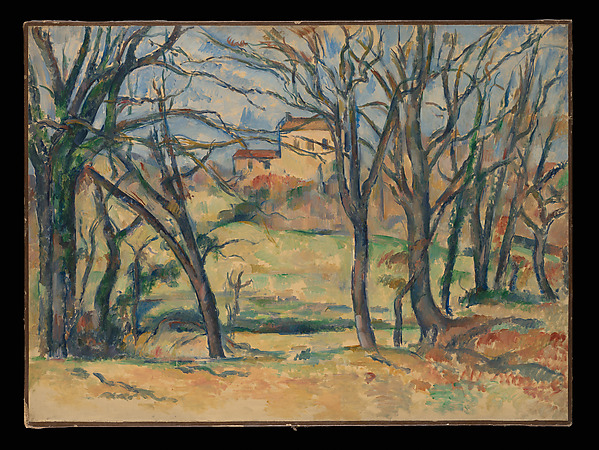
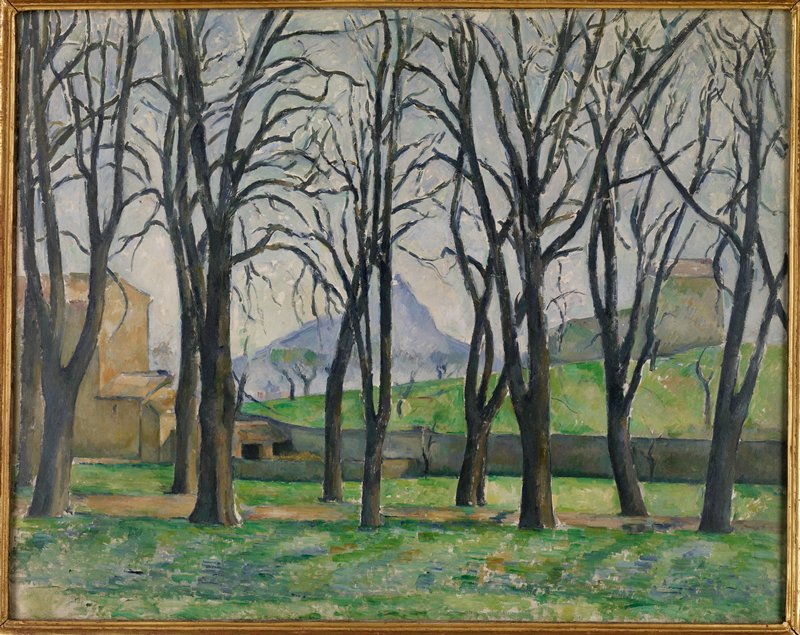
Chestnut Trees at Jas de Bouffan
Peut-on la voir ?
Oui, exposée actuellement
Où est « Chestnut Trees at Jas de Bouffan » aujourd’hui ? Minneapolis Institute of Art, G355, Minneapolis. Oui, exposée actuellement. Vérifié 29 septembre 2026.

Minneapolis, États-Unis
Ouvert· jusqu’à 21:00
Présentée au public.
- Vérifié
- Dans cet état depuis
- Source
- Le musée
À propos du tableau
This painting represents an avenue on the grounds of Paul Cézanne's family estate in southern France in Aix-en-Provence. In this view, he carefully recorded the color and light of the wintry scene, with its tracery of bare branches against the sky. To create an ordered pictorial design, he selected this particular view, emphasizing its rigorous horizontal and vertical structures. In depicting the chestnut trees, he employed multiple viewpoints; this collapses depth, meshing the two parallel rows of trees into a web that seems to exist in one plane. This characteristic innovation produced a rhythmic synthesis of form in both two and three dimensions.
Minneapolis Institute of Art
Notice
- Numéro d’inventaire
- 49.9
Au catalogue
Sources
- Minneapolis Institute of Art
- Image : Minneapolis Institute of Art — public domain
Dans la vie de Paul Cézanne
La vie entièreMarch 1886
Zola's Novel "The Masterpiece" and the Crisis of a Friendship
Zola published "The Masterpiece" (L'Œuvre), a novel about a failed painter, Claude Lantier, in whom Cézanne recognized himself. It was long believed that the friendship ended forever, but a rediscovered letter of 1887 shows that relations continued for some time.
28 avril 1886
Married: Marie-Hortense Fiquet
28 April 1886
Marriage to Hortense Fiquet
He married Hortense Fiquet in Aix in the presence of his parents. The marriage was concluded not out of love but to secure the rights of their fourteen-year-old son Paul as a legitimate heir.
1886
Death of His Father and Inheritance
After the death of Louis-Auguste, Cézanne, together with his mother and sisters, inherited his fortune, including the Jas de Bouffan; the artist's financial situation eased considerably ("he left me an income of 25,000 francs").
1888–1890 · Résidence
quai d'Anjou