Vasily KandinskyFrance, 1866–1944
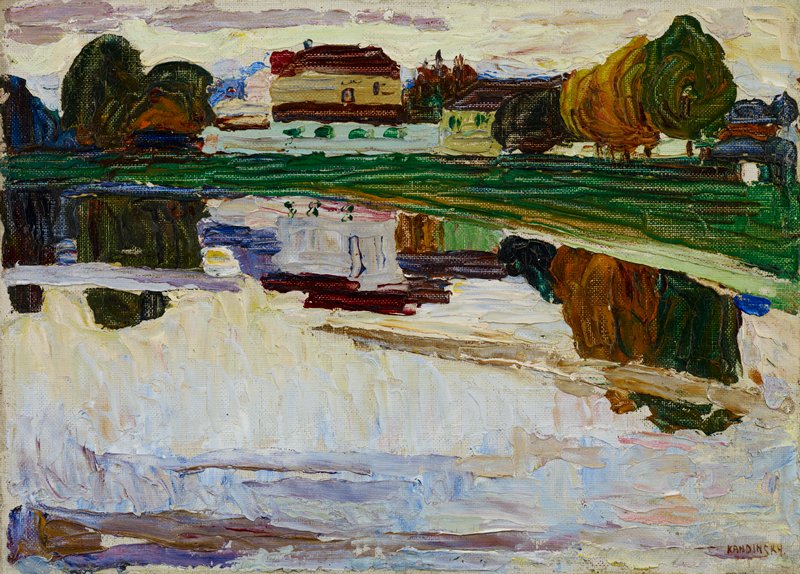
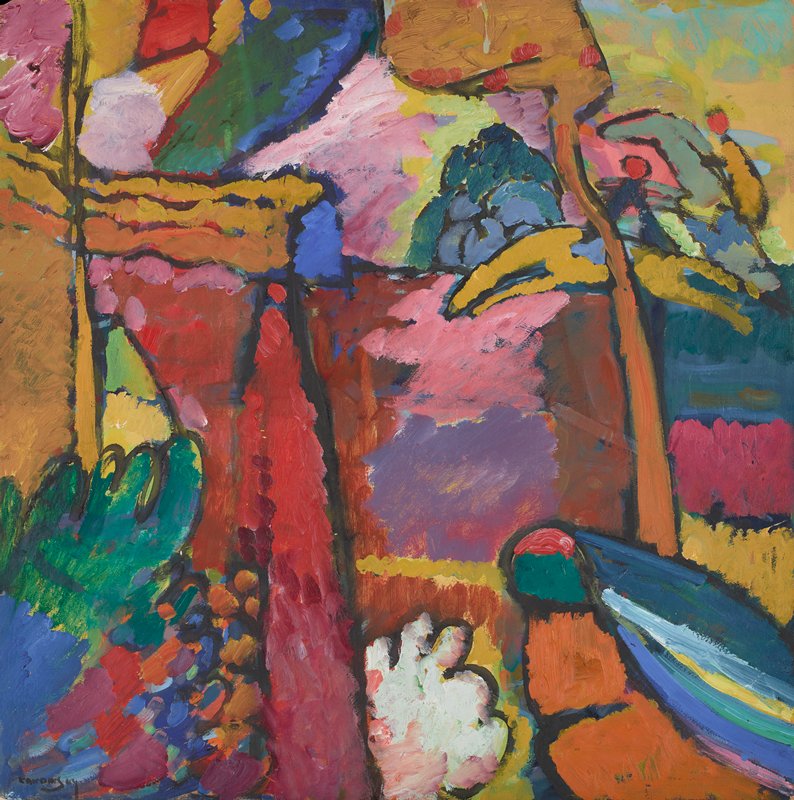
Untitled (Komposition) (Composition)
Peut-on la contempler ?
Nous l’ignorons : le musée garde le silence

Rijksmuseum Amsterdam
Amsterdam, Pays-Bas
Le propriétaire est connu. Si elle est exposée aujourd’hui, le musée ne le dit pas, et l’on ne nous a pas appris à deviner.
- Source
- Les données de collection du musée lui-même
À propos de l’œuvre
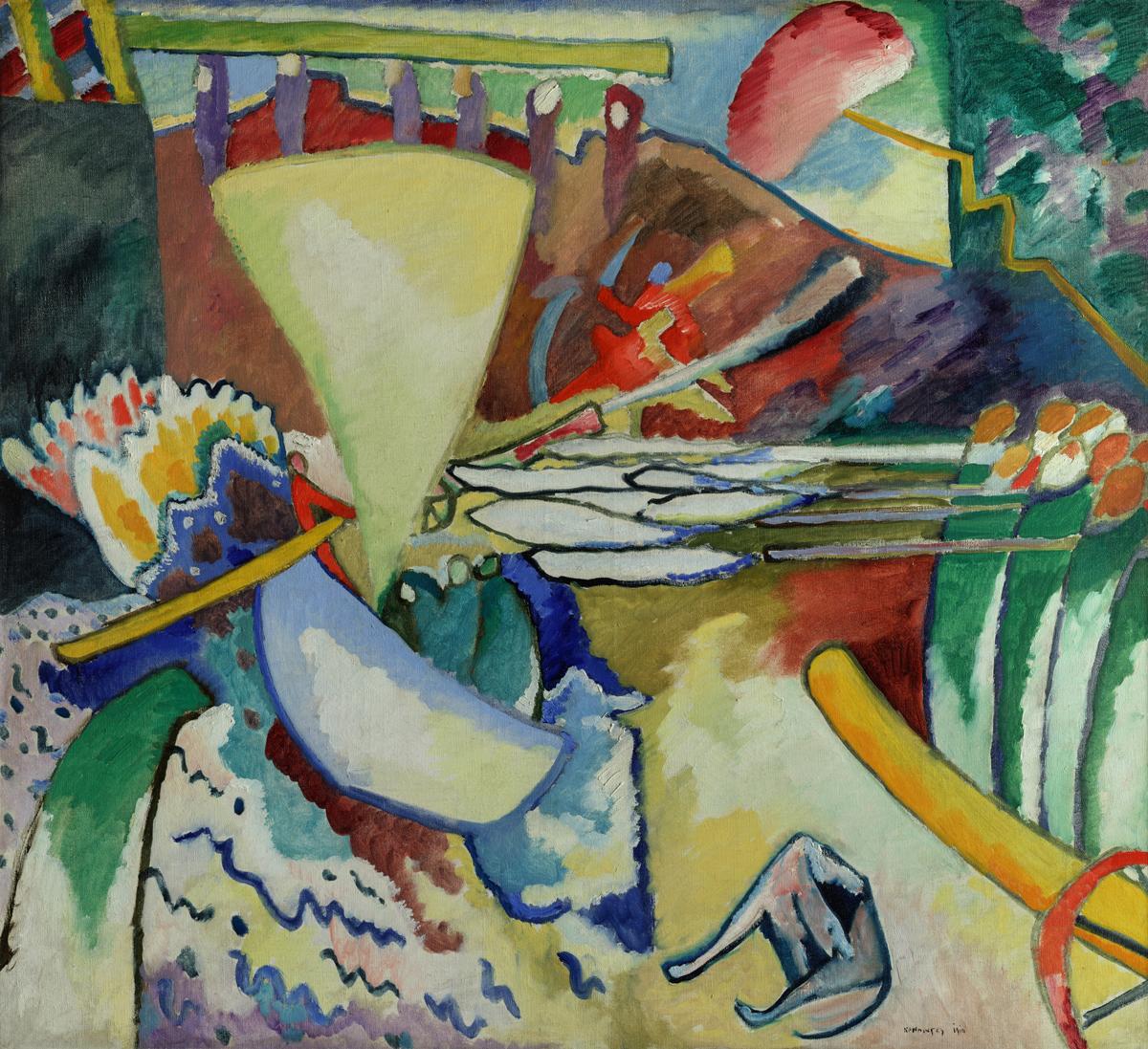
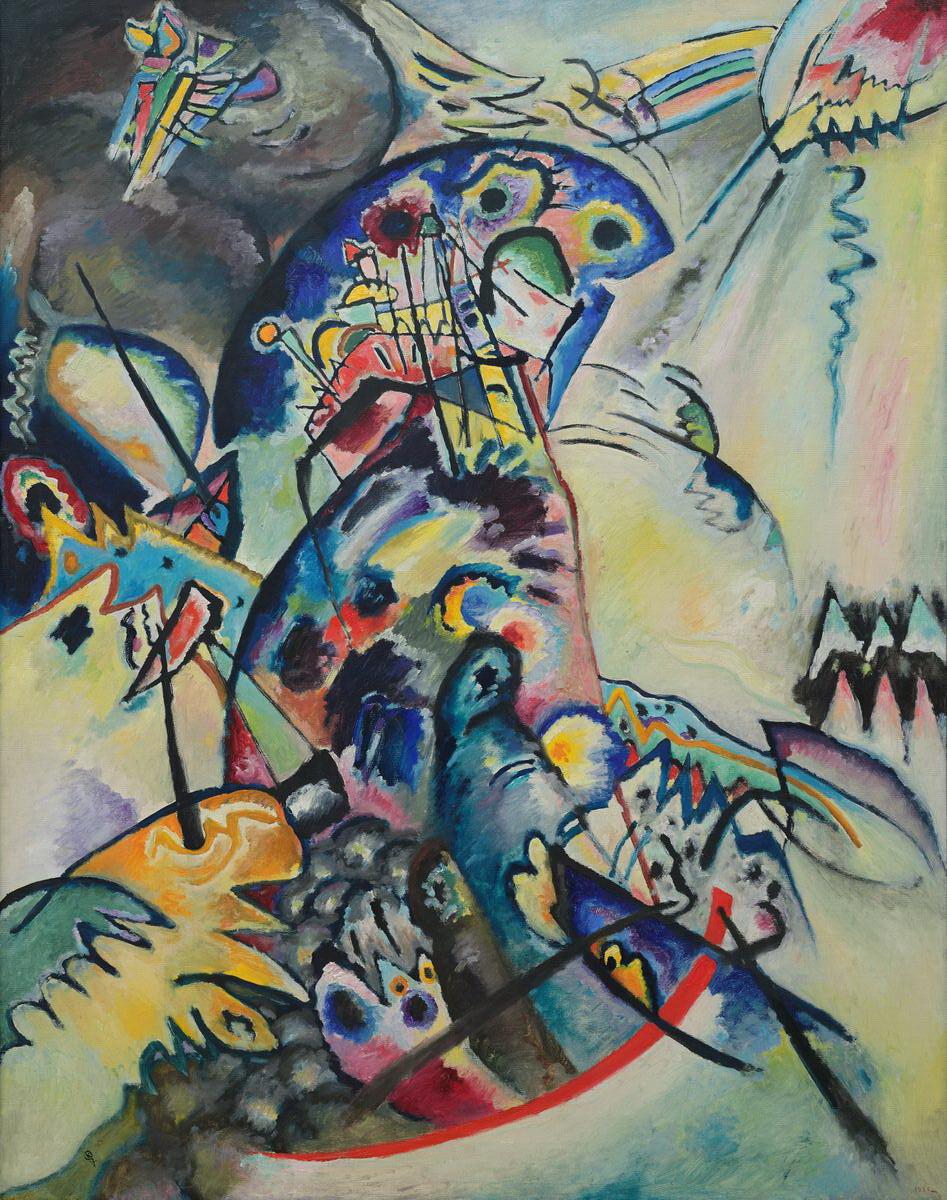
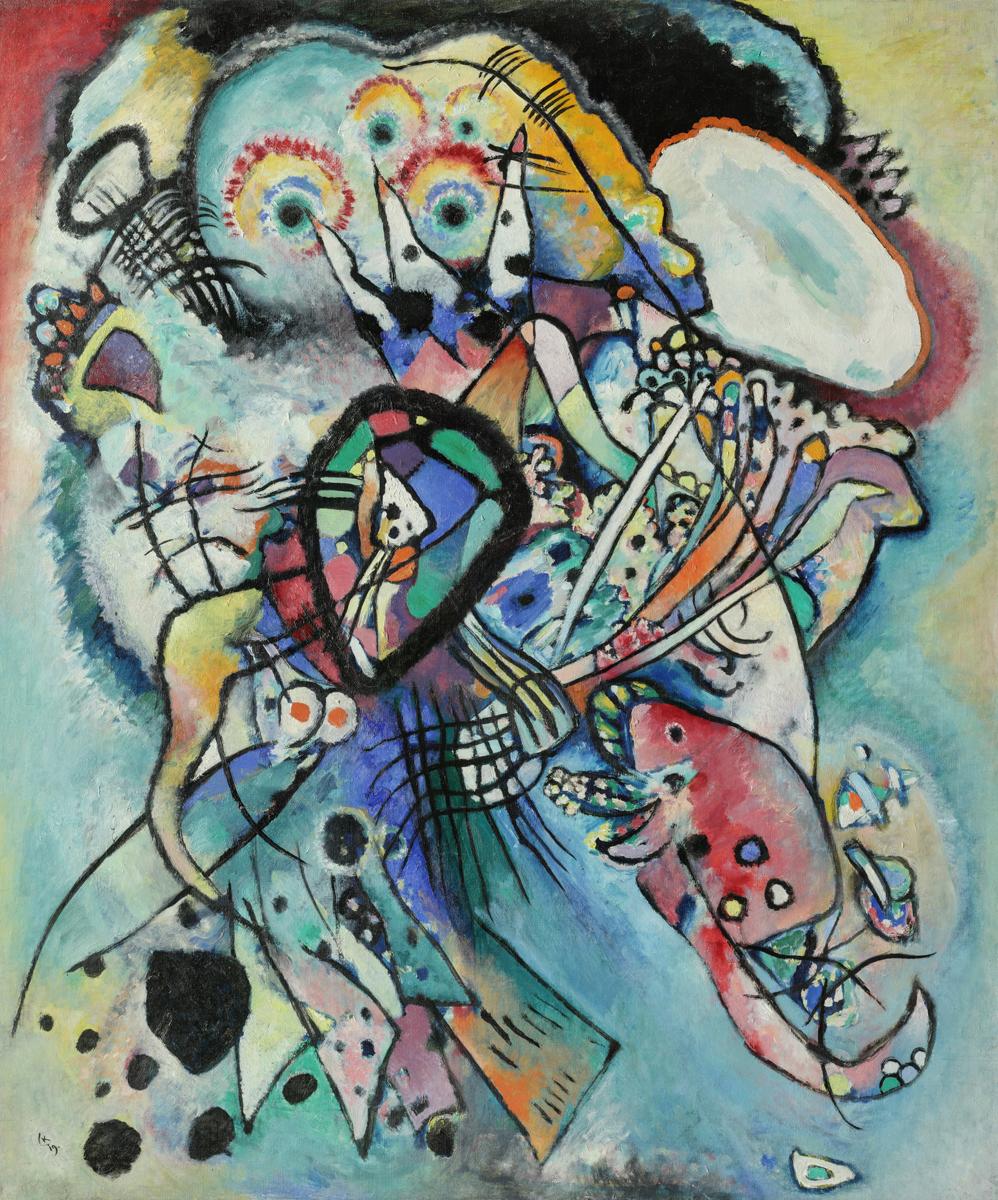
In Munich in the years 1906-1911, the Russian artist Kandinsky formed a group of like-minded artists called Der Blaue Reiter; initially with Jawlensky and then with Franz Marc. Around 1908 he painted his first abstract canvas. He propagated his conviction that one could render harmony with colour as well as with sound in his writings, and his teaching at the Bauhaus from 1922.
Rijksmuseum Amsterdam
Notice
- Numéro d’inventaire
- RP-P-1952-76
What it shows
Sources
- Rijksmuseum Amsterdam: the museum's own open data · obtenue il y a 6 jours
- Image : Rijksmuseum Amsterdam — public domain
Pendant ce temps, chez Vasily Kandinsky
La vie entière1917–1921
Cultural politics in revolutionary Moscow
After the revolution Kandinsky worked actively in public life: he helped protect monuments, founded the Museum of Painterly Culture and the Russian Academy of Artistic Sciences, taught at the Vkhutemas, sat on the fine arts collegium of the People's Commissariat for Education and chaired the All-Russian purchasing commission. He also became vice-president of the RAKhN.
1918–1921
The Institute of Artistic Culture: rejected by the radicals
Kandinsky became the first director of the Institute of Artistic Culture in Moscow, but the institute's radical members judged his spiritual, expressionist view of art too individualistic and bourgeois. He painted little in these years but taught a great deal, using a programme of form and colour analysis.
June 1920
Death of his son Vsevolod
Kandinsky's son Vsevolod died in June 1920; the couple had no more children.
December 1921
Leaves for Berlin
In December 1921 Kandinsky left for Berlin to set up a branch of the RAKhN there. He took part in the First Russian Art Exhibition in Germany and began teaching painting.
summer 1922
Teacher at the Bauhaus
From the summer of 1922 Kandinsky worked at the Bauhaus and became a leading theorist of the school. In the interwar years he gained worldwide recognition as one of the leaders of abstract art.
1923
The Blue Four
At the instigation of Galka Scheyer, Kandinsky, Paul Klee, Lyonel Feininger and Alexej von Jawlensky formed the group the Blue Four; from 1924 Scheyer promoted their work in the United States.
_MET_DP236124.jpg?width=1280)