ART WIKI32 963 en salle
CarteCollectionArtistesMuséesExpositionsJournal
Connexion

ART WIKI

Où est accroché le chef-d’œuvre, et quand on vous laisse entrer.

Collections : Art Institute of Chicago, Cleveland Museum of Art, Galerie Tretiakov, Hirshhorn Museum and Sculpture Garden, J. Paul Getty Museum, Metropolitan Museum of Art, Minneapolis Institute of Art, Musée de l'Ermitage, Musée des Beaux-Arts Pouchkine, Musée du Louvre, musée national d'art asiatique, Musée russe, Musées d'Art de Harvard, Museum of Modern Art, National Gallery of Art, National Portrait Gallery, Rijksmuseum Amsterdam, Smithsonian American Art Museum, Statens Museum for Kunst, Victoria and Albert Museum, Villa Getty, Whitney Museum of American Art, Catalogue d’État du fonds muséal de Russie (274 musées), Europeana (19 musées), Wikidata (6 musées), Paris Musées (12 musées) et Joconde, la base des musées du ministère de la Culture (495 musées). Les images appartiennent à leurs ayants droit.

Rubriques

  • Carte
  • Recherche
  • Collection
  • Chefs-d’œuvre
  • Exposées en ce moment
  • Artistes

Et aussi

  • Musées et galeries
  • Expositions
  • Journal
  • D’où viennent les données
  • Confidentialité et cookies
AccueilCarteCatalogue
  1. Collection/
  2. Art Institute of Chicago/
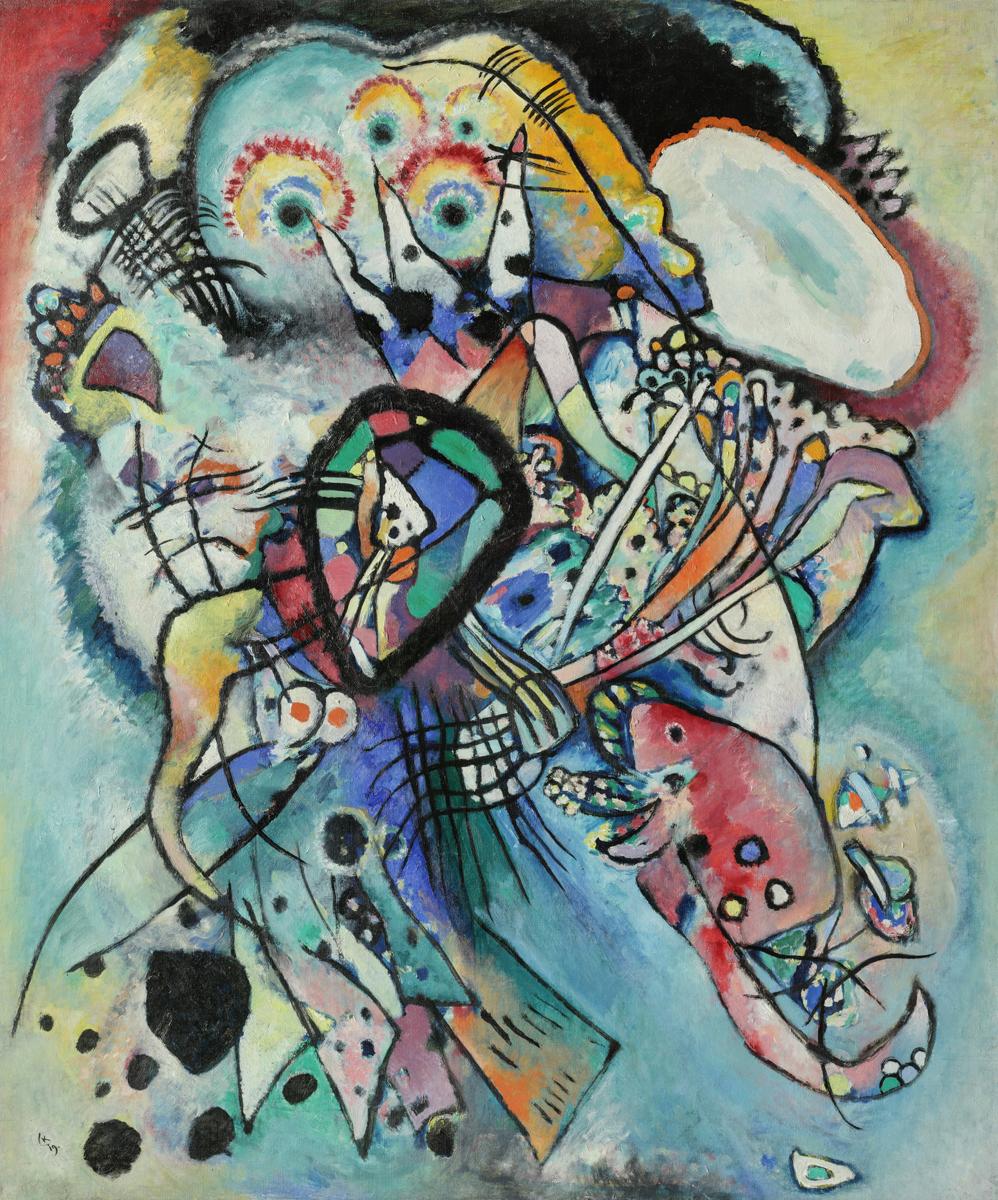
  3. Improvisation No. 30 (Cannons)
Improvisation No. 30 (Cannons), Vasily Kandinsky, 1913

Improvisation No. 30 (Cannons)

1913 · Painting

À propos du tableau

In his 1912 book Concerning the Spiritual in Art, Vasily Kandinsky made an analogy between music and painting as two means of abstraction, a radical mode of artmaking that freed color and line from their traditionally representational functions. Between 1910 and 1914 he produced “improvisations,” works he described as unconscious, spontaneous expressions. Kandinsky commented on Improvisation No. 30 (Cannons) in a letter to Arthur Jerome Eddy, a friend and collector from Chicago: “The cannons . . . could probably be explained by the constant war talk going on through the year [but] the true contents are what the spectator experiences while under the effect of the forms and color combinations of the picture.”

Art Institute of Chicago · CC BY 4.0

Notice

1913 · à 47 ans
18661944

Pendant ce temps, chez Vasily Kandinsky

La vie entière
  1. 1910–1911

    The treatise “Concerning the Spiritual in Art”

    The treatise defended and promoted abstract art and affirmed that all forms of art are equally capable of reaching spirituality; colour in a painting can be autonomous, apart from the depiction of an object. Kandinsky distinguished three kinds of painting: impressions, improvisations and compositions.

  2. 1910–1912

    The Izdebsky Salons and the Knave of Diamonds

    With the Neue Künstlervereinigung Kandinsky took part in two international Izdebsky Salons in Russian cities, from December 1910 to May 1911; in 1910 and 1912 he also exhibited with the Knave of Diamonds.

  3. 1911

    The birth of the Blue Rider

    After the earlier association dissolved Kandinsky formed the Blue Rider with August Macke, Franz Marc, Albert Bloch and Gabriele Münter. The group issued an almanac and held two exhibitions; the war ended further plans.

  4. 1911

    His first solo exhibition

    His first solo exhibition took place in the same years, when the Blue Rider was being born.

  5. 1911

    Divorce from his first wife

    Kandinsky was divorced from Anna Chemyakina; his relationship with Münter was nevertheless never formalized.

  6. 1914

Autres œuvres : Vasily Kandinsky

Toutes les œuvres

Dans la même salle · Gallery 392, Art Institute of Chicago

Page du musée

Sur le même thème · Century of Progress

Toutes les œuvres sur ce thème
Numéro d’inventaire
1931.511

Sources

  • Art Institute of Chicago
  • Image : Art Institute of Chicago — CC0

The war: back to Russia via Switzerland and Sweden

The outbreak of World War I ended the Blue Rider's plans for further almanacs and exhibitions and sent Kandinsky back to Russia via Switzerland and Sweden; he returned to Moscow in 1914.

Vasily Kandinsky, portraitVasily KandinskyFrance, 1866–1944

Peut-on la contempler ?

Oui, elle reçoit

Art Institute of Chicago

Chicago, États-Unis

Salle392

Présentée au public. Qui s’en porte garant est indiqué ci-dessous.

Vérifié
il y a 3 jours
Dans cet état depuis
19 août 2026
Source
Le musée
Sur la cartePage du musée
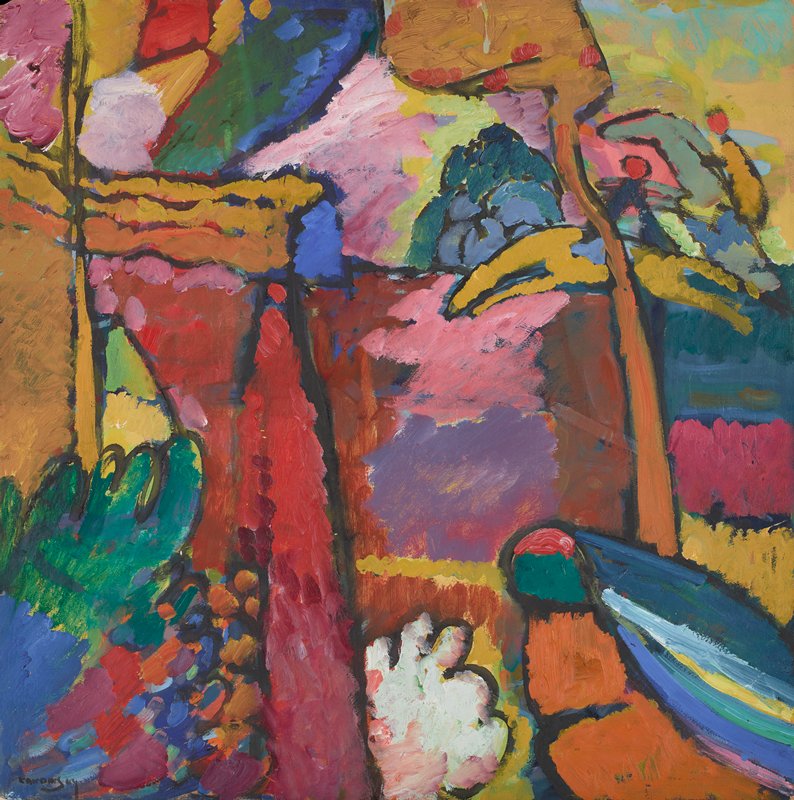
Study for Improvisation V, Vassily Kandinsky, 1910

Study for Improvisation V

1910 · Minneapolis Institute of Art

Improvisation 27 (Garden of Love II), Vasily Kandinsky, 1912

Improvisation 27 (Garden of Love II)

1912 · Metropolitan Museum of Art

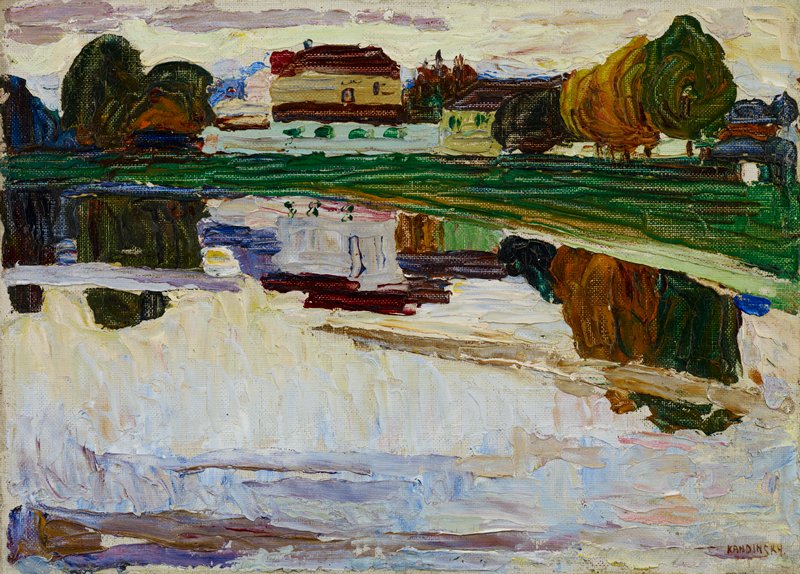
Nymphenburg, Vassily Kandinsky, 1904

Nymphenburg

1904 · Minneapolis Institute of Art

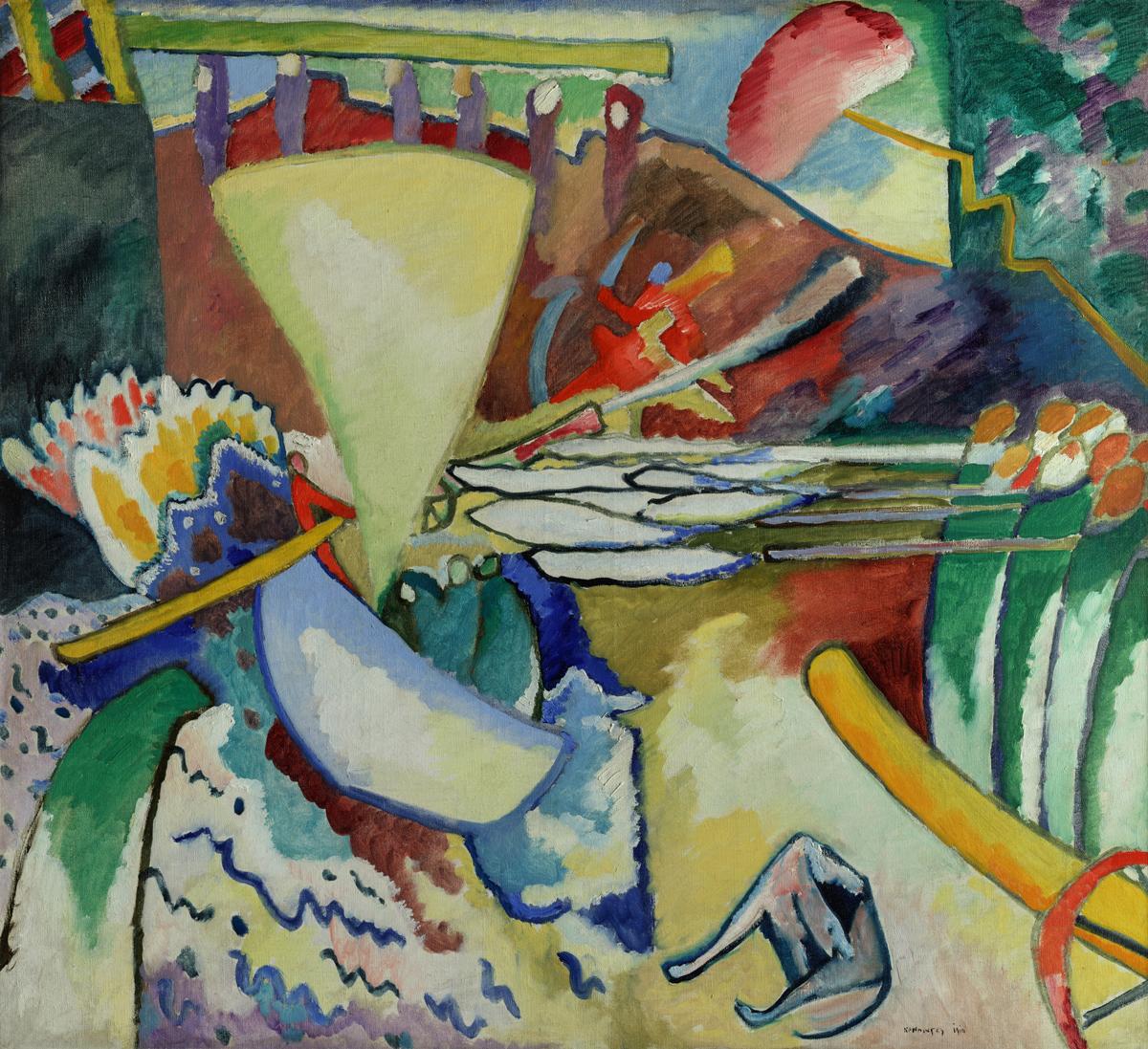
Импровизация 11, Vasily Kandinsky, 1910

Импровизация 11

1910 · Musée russe

Improvisation 31 (Sea Battle), Wassily Kandinsky, 1913

Improvisation 31 (Sea Battle)

1913 · National Gallery of Art

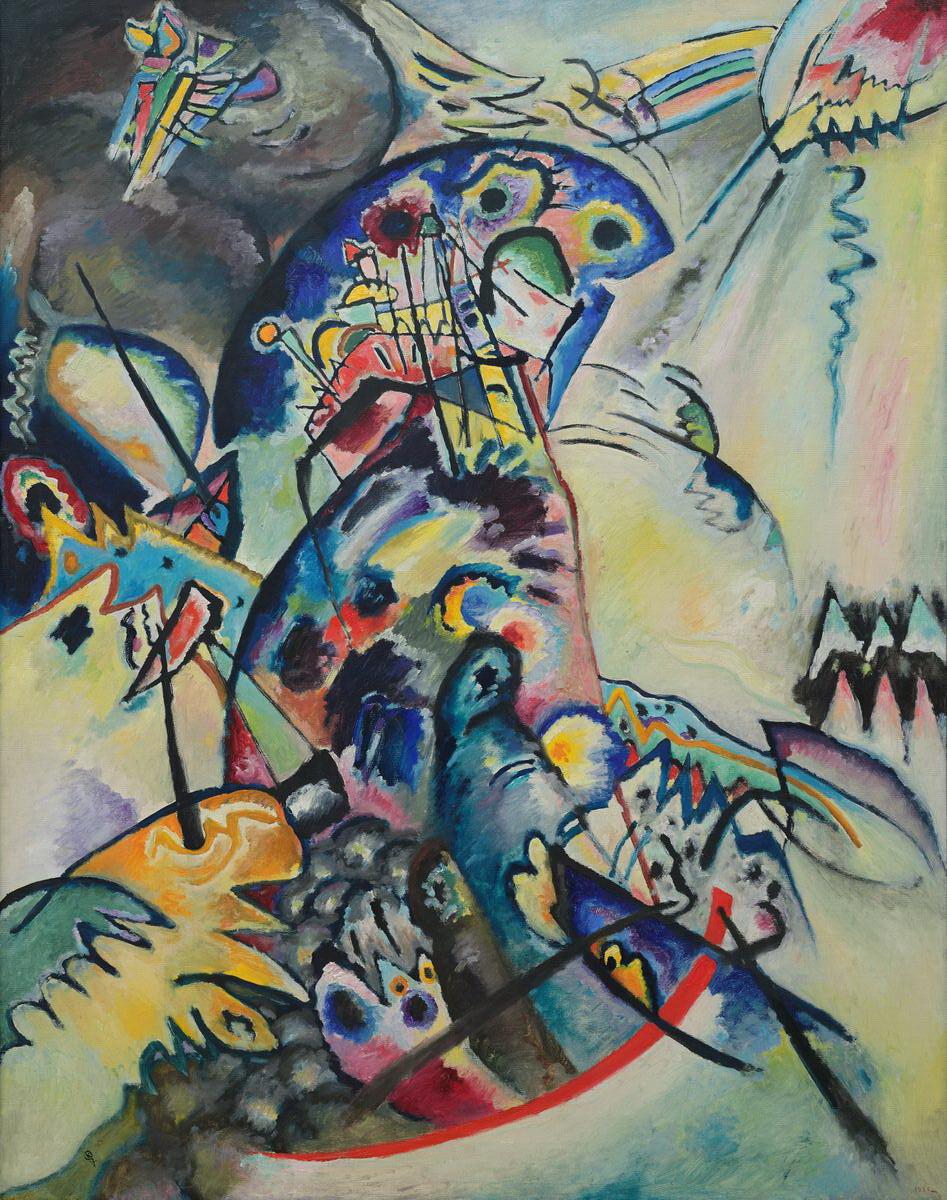
Синий гребень, Vasily Kandinsky, 1917

Синий гребень

1917 · Musée russe

Два овала, Vasily Kandinsky, 1919

Два овала

1919 · Musée russe

Painting with Green Center, Vasily Kandinsky, 1913

Painting with Green Center

1913 · Art Institute of Chicago

Painting with Green Center, Vasily Kandinsky, 1913

Vasily Kandinsky

Painting with Green Center, 1913

Landscape with Two Poplars, Vasily Kandinsky, 1912

Vasily Kandinsky

Landscape with Two Poplars, 1912

Painting with Troika, Vasily Kandinsky, January 18, 1911

Vasily Kandinsky

Painting with Troika, January 18, 1911

Self-Portrait, Max Beckmann, 1937

Max Beckmann

Self-Portrait, 1937

Small Town by Day (Badische Kleinstadt bei Tage), Georg Scholz, 1922–23

Georg Scholz

Small Town by Day (Badische Kleinstadt bei Tage), 1922–23

Movements, Marsden Hartley, 1913

Marsden Hartley

Movements, 1913

Champs de Mars: The Red Tower, Robert Delaunay, 1911/23

Robert Delaunay

Champs de Mars: The Red Tower, 1911/23

Carnival in Arcueil, Lyonel Feininger, 1911

Lyonel Feininger

Carnival in Arcueil, 1911

American Gothic, Grant Wood, 1930

Grant Wood

American Gothic, 1930

Art Institute of Chicago

A Sunday on La Grande Jatte — 1884, Georges Seurat, 1884–86, border added 1888–89

Georges Seurat

Un dimanche après-midi à l'Île de la Grande Jatte, 1884–86, border added 1888–89

Art Institute of Chicago

The Old Guitarist, Pablo Picasso, late 1903–early 1904

Pablo Picasso

Le Vieux Guitariste aveugle, late 1903–early 1904

Non exposée · Art Institute of Chicago

At the Moulin Rouge, Henri de Toulouse-Lautrec, 1892/95

Henri de Toulouse-Lautrec

Au Moulin-Rouge, 1892/95

Art Institute of Chicago

Two Sisters (On the Terrace), Pierre-Auguste Renoir, 1881

Pierre-Auguste Renoir

Les Deux Sœurs, 1881

Art Institute of Chicago

The Basket of Apples, Paul Cézanne, c. 1893

Paul Cézanne

La Corbeille de pommes, c. 1893

Art Institute of Chicago

The Assumption of the Virgin, Domenico Theotokópoulos, called El Greco, 1577–79

Domenico Theotokópoulos, called El Greco

The Assumption of the Virgin, 1577–79

Art Institute of Chicago

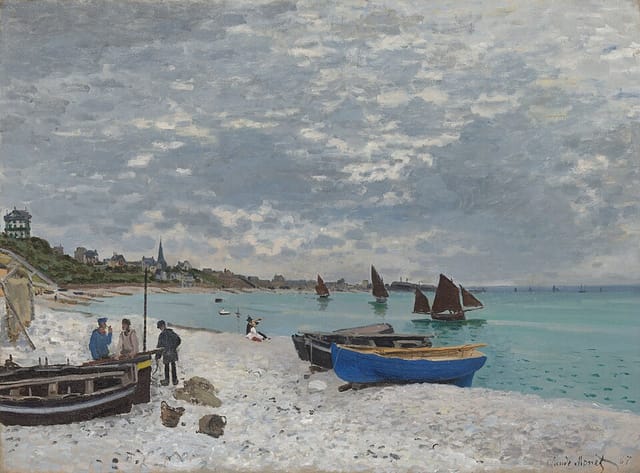
The Beach at Sainte-Adresse, Claude Monet, 1867

Claude Monet

The Beach at Sainte-Adresse, 1867

Art Institute of Chicago

Ce qu’elle montre

Century of ProgressWorld's fairsChicago World's FairsBlue (color)Purple (color)Yellow (color)Red (color)WeaponsCannons

Au catalogue

PeinturesHuile
Peinture russe
Peinture soviétique
Peinture française
Peinture allemande
Modernisme
XXe siècle
Allemagne