ART WIKI32 963 en salle
CarteCollectionArtistesMuséesExpositionsJournal
Connexion

ART WIKI

Où est accroché le chef-d’œuvre, et quand on vous laisse entrer.

Collections : Art Institute of Chicago, Cleveland Museum of Art, Galerie Tretiakov, Hirshhorn Museum and Sculpture Garden, J. Paul Getty Museum, Metropolitan Museum of Art, Minneapolis Institute of Art, Musée de l'Ermitage, Musée des Beaux-Arts Pouchkine, Musée du Louvre, musée national d'art asiatique, Musée russe, Musées d'Art de Harvard, Museum of Modern Art, National Gallery of Art, National Portrait Gallery, Rijksmuseum Amsterdam, Smithsonian American Art Museum, Statens Museum for Kunst, Victoria and Albert Museum, Villa Getty, Whitney Museum of American Art, Catalogue d’État du fonds muséal de Russie (274 musées), Europeana (19 musées), Wikidata (6 musées), Paris Musées (12 musées) et Joconde, la base des musées du ministère de la Culture (495 musées). Les images appartiennent à leurs ayants droit.

Rubriques

  • Carte
  • Recherche
  • Collection
  • Chefs-d’œuvre
  • Exposées en ce moment
  • Artistes

Et aussi

  • Musées et galeries
  • Expositions
  • Journal
  • D’où viennent les données
  • Confidentialité et cookies
AccueilCarteCatalogue
  1. Collection/
  2. Art Institute of Chicago/
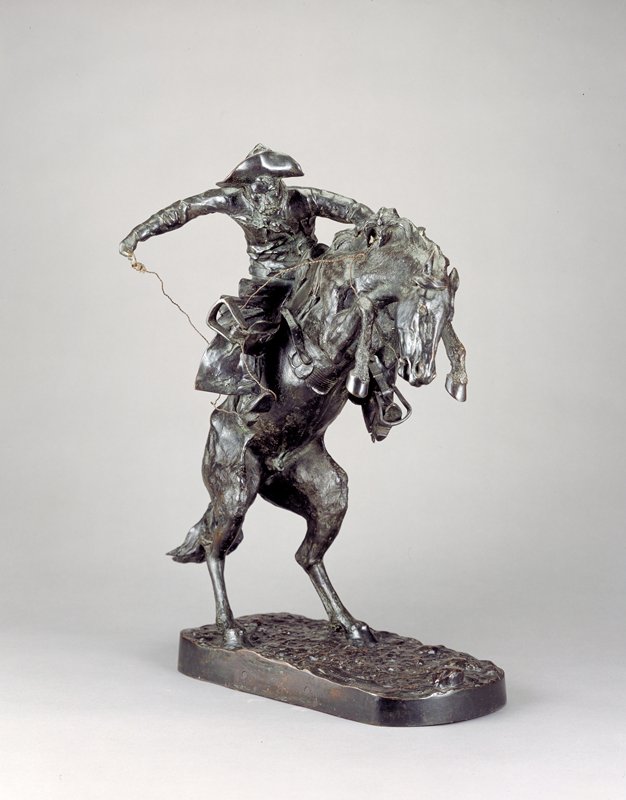
  3. The Scalp
The Scalp, Frederic Remington, Modeled 1898, cast after 1916
Frederic Remington, portraitFrederic RemingtonÉtats-Unis, 1861–1909

The Scalp

Modeled 1898, cast after 1916 · Sculpture

Peut-on la contempler ?

Elle ne reçoit pas en ce moment

Art Institute of Chicago

Chicago, États-Unis

Elle appartient à la collection, mais n’est pas présentée en ce moment.

Vérifié
il y a 3 jours
Dans cet état depuis
19 août 2026
Source
Le musée
Sur la cartePage du musée

Notice

Numéro d’inventaire
1982.815

Ce qu’elle montre

ChevalNative americanWarriors

Au catalogue

SculptureBronzeImpressionnismeXIXe siècleXXIe siècleAmerican westWestern artÉtat de New York

Sources

  • Art Institute of Chicago
  • Image : Art Institute of Chicago — © the artist or rights holder

Pendant ce temps, chez Frederic Remington

La vie entière
  1. January 1897

    To Cuba as a correspondent for Hearst's paper

    His association with Roosevelt, then New York City Police Commissioner, pays off: the artist is hired as a war correspondent and illustrator for William Randolph Hearst's New York Journal and sent to Cuba with the celebrity journalist Richard Harding Davis. Cuba's apparent peacefulness leaves them nothing to report; in a famous but probably apocryphal exchange of telegrams, Remington says there will be no war and he wishes to return, and Hearst replies that the artist should furnish the pictures and he will furnish the war. Remington returns to New Rochelle while Davis remains.

  2. 1898

    At war in Cuba: a heroic image shattered

    As the Spanish–American War takes shape, he returns to Cuba to see military action for the first time and goes through the most wrenching, disillusioning experience of his life. Witnessing the assault on San Juan Hill by American forces, including those led by Roosevelt, he sees his heroic conception of war shattered by the actual horror of jungle fighting and the deprivations of camp. His reports and illustrations on his return focus not on heroic generals but on the troops.

  3. 1900

    Harper's drops him; he writes a novel

    As an economy move, Harper's drops Remington as its star artist. To compensate for the lost work he writes and illustrates a full-length novel, The Way of an Indian, intended for serialization by a Hearst publication; his protagonist, a Cheyenne named Fire Eater, is a prototype Native American as viewed by Remington and many of his time.

  4. after 1902

    Decides to give up writing and illustration

    After “John Ermine” Remington decides he will soon quit writing and illustrating — he has drawn over 2,700 illustrations — to focus on sculpture and painting.

  5. 26 December 1909

    Dies after an emergency appendectomy

    Remington dies after an emergency appendectomy leads to peritonitis. His extreme obesity — nearly 300 lbs, about 136 kg — had complicated the anesthesia and the surgery, and the postmortem examination cited chronic appendicitis as an underlying factor in his death.

  6. 26 décembre 1909

    Died

Autres œuvres : Frederic Remington

Toutes les œuvres
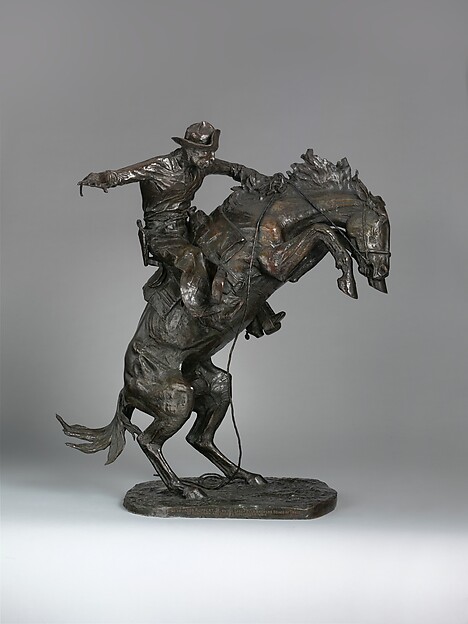
The Broncho Buster, Frederic Remington, 1895, revised 1909, cast by November 1910

The Broncho Buster

1895, revised 1909, cast by November 1910 · Metropolitan Museum of Art

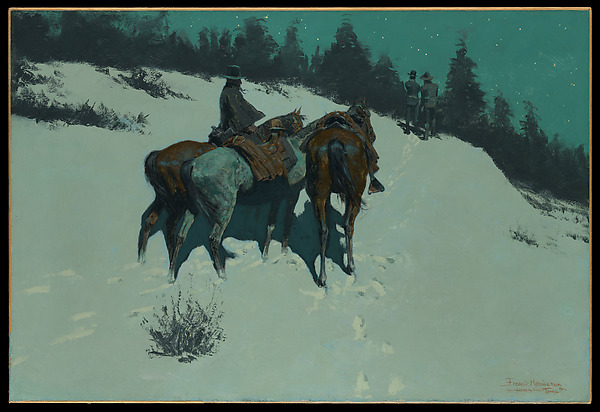
A Reconnaissance, Frederic Remington, 1902

A Reconnaissance

1902 · Metropolitan Museum of Art

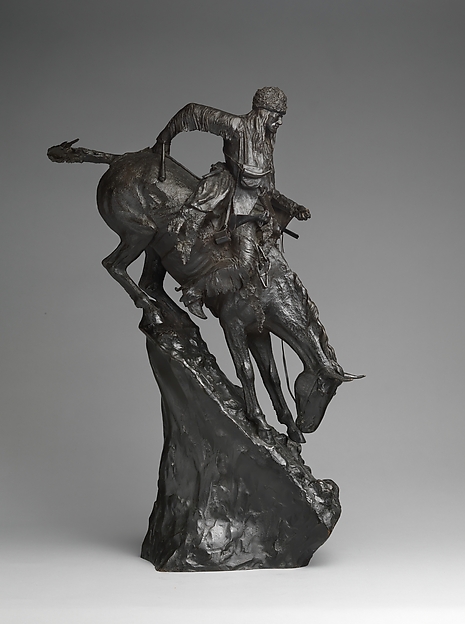
The Mountain Man, Frederic Remington, 1903, cast by March 1907

The Mountain Man

1903, cast by March 1907 · Metropolitan Museum of Art

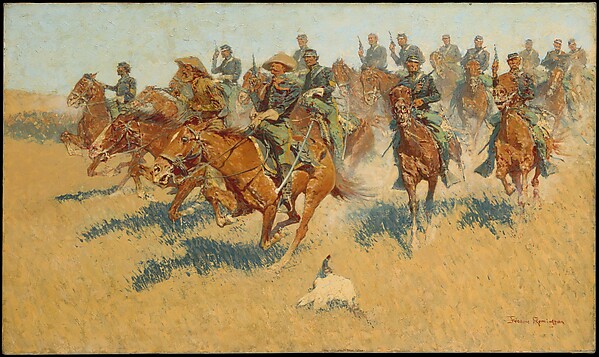
On the Southern Plains, Frederic Remington, 1907

On the Southern Plains

1907 · Metropolitan Museum of Art

The Bronco Buster, Frederic Remington, Modeled 1895, cast 1899

The Bronco Buster

Modeled 1895, cast 1899 · Art Institute of Chicago

Bronco Buster, Frederic Remington, 1895 (cast 1918 or later)

Bronco Buster

1895 (cast 1918 or later) · Minneapolis Institute of Art

On the Bridle Path, Central Park, New York, Frederic Remington, 1889

On the Bridle Path, Central Park, New York

1889 · Non exposée · National Gallery of Art

Off the Range (Coming Through the Rye), Frederic Remington, model 1902, cast 1903

Off the Range (Coming Through the Rye)

model 1902, cast 1903 · Non exposée · National Gallery of Art

Sous le même toit : Art Institute of Chicago

Page du musée
The Bedroom, Vincent van Gogh, 1889

Vincent van Gogh

The Bedroom, 1889

A Sunday on La Grande Jatte — 1884, Georges Seurat, 1884–86, border added 1888–89

Georges Seurat

Un dimanche après-midi à l'Île de la Grande Jatte, 1884–86, border added 1888–89

Paris Street; Rainy Day, Gustave Caillebotte, 1877

Gustave Caillebotte

Rue de Paris, temps de pluie, 1877

Two Sisters (On the Terrace), Pierre-Auguste Renoir, 1881

Pierre-Auguste Renoir

Les Deux Sœurs, 1881

The Basket of Apples, Paul Cézanne, c. 1893

Paul Cézanne

La Corbeille de pommes, c. 1893

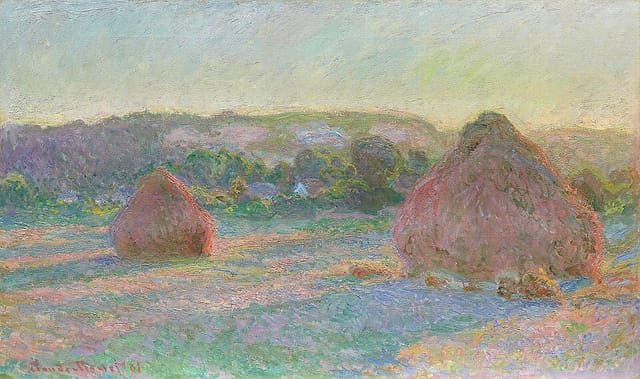
Stacks of Wheat (End of Summer), Claude Monet, 1890–91

Claude Monet

Stacks of Wheat (End of Summer), 1890–91

American Gothic, Grant Wood, 1930

Grant Wood

American Gothic, 1930

Nighthawks, Edward Hopper, 1942

Edward Hopper

Nighthawks, 1942

Sur le même thème · Cheval

Toutes les œuvres sur ce thème
Cavalier allant au galop, tête de cheval de profil, cheval vu par la croupe, Léonard de Vinci, Vers 1481/1493

Leonardo da Vinci

Cavalier allant au galop, tête de cheval de profil, cheval vu par la croupe, Vers 1481/1493

Musée du Louvre

Deux cavaliers combattant un dragon, deux chevaux, un cavalier, un chien et un cheval, Léonard de Vinci, Vers 1481/1483

Leonardo da Vinci

Deux cavaliers combattant un dragon, deux chevaux, un cavalier, un chien et un cheval, Vers 1481/1483

Musée du Louvre

Horse, Vincent van Gogh, 1886

Vincent van Gogh

Horse, 1886

Musée Van-Gogh

Horse Chestnut Tree in Blossom, Vincent van Gogh, 1887

Vincent van Gogh

Horse Chestnut Tree in Blossom, 1887

Musée Van-Gogh

Dream and Lie of Franco II, Pablo Picasso, 1937

Pablo Picasso

Dream and Lie of Franco II, 1937

Non exposée · National Gallery of Art

The Watering Place (Horses Bathing) [L'abreuvoir (chevaux au bain)], Pablo Picasso, 1906

Pablo Picasso

The Watering Place (Horses Bathing) [L'abreuvoir (chevaux au bain)], 1906

Non exposée · National Gallery of Art

Sculptor and Model with a Sculpture Representing a Bull Attacking Horses (Sculpteur et son modèle avec un groupe sculpté représentant un taureau attaquant des chevaux), Pablo Picasso, 1933

Pablo Picasso

Sculptor and Model with a Sculpture Representing a Bull Attacking Horses (Sculpteur et son modèle avec un groupe sculpté représentant un taureau attaquant des chevaux), 1933

Non exposée · National Gallery of Art

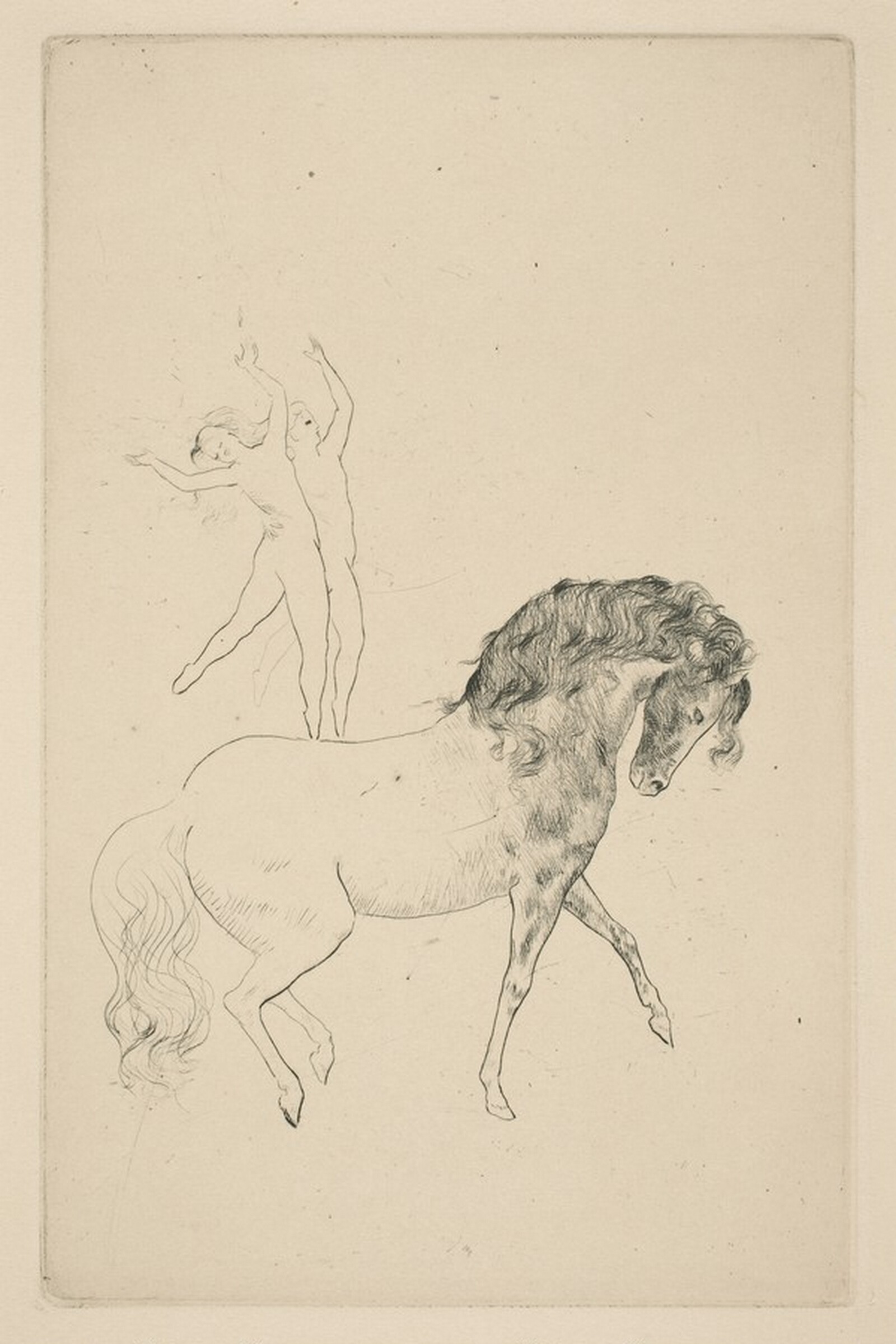
At the Circus (Au cirque), Pablo Picasso, 1905, published 1913

Pablo Picasso

At the Circus (Au cirque), 1905, published 1913

Non exposée · National Gallery of Art