ART WIKI32 963 en salle
CarteCollectionArtistesMuséesExpositionsJournal
Connexion

ART WIKI

Où est accroché le chef-d’œuvre, et quand on vous laisse entrer.

Collections : Art Institute of Chicago, Cleveland Museum of Art, Galerie Tretiakov, Hirshhorn Museum and Sculpture Garden, J. Paul Getty Museum, Metropolitan Museum of Art, Minneapolis Institute of Art, Musée de l'Ermitage, Musée des Beaux-Arts Pouchkine, Musée du Louvre, musée national d'art asiatique, Musée russe, Musées d'Art de Harvard, Museum of Modern Art, National Gallery of Art, National Portrait Gallery, Rijksmuseum Amsterdam, Smithsonian American Art Museum, Statens Museum for Kunst, Victoria and Albert Museum, Villa Getty, Whitney Museum of American Art, Catalogue d’État du fonds muséal de Russie (274 musées), Europeana (19 musées), Wikidata (6 musées), Paris Musées (12 musées) et Joconde, la base des musées du ministère de la Culture (495 musées). Les images appartiennent à leurs ayants droit.

Rubriques

  • Carte
  • Recherche
  • Collection
  • Chefs-d’œuvre
  • Exposées en ce moment
  • Artistes

Et aussi

  • Musées et galeries
  • Expositions
  • Journal
  • D’où viennent les données
  • Confidentialité et cookies
AccueilCarteCatalogue
  1. Collection/
  2. Minneapolis Institute of Art/
  3. Bronco Buster
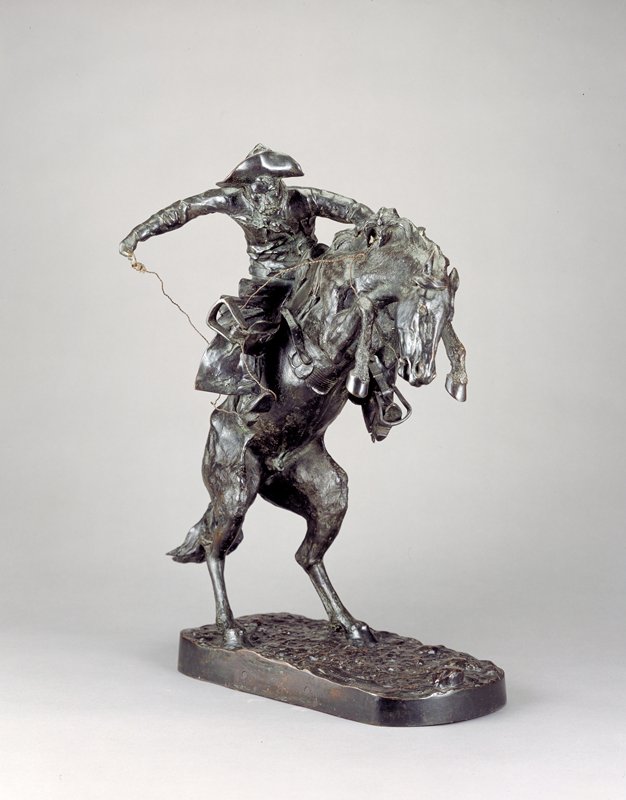
Bronco Buster, Frederic Remington, 1895 (cast 1918 or later)

Bronco Buster

1895 (cast 1918 or later) · Sculpture · 60.96 × 48.26 cm

À propos de la sculpture

Remington’s sculpture of a bronco buster (a cowboy who “breaks” horses so they can be ridden) is a metaphor for the conflict inherent in the idea of an American West. The horse struggling under the cowboy’s power represents the wild, untamed land that was home to Native Americans and wildlife. The cowboy stands for the pioneers and explorers who kept pushing west.

Minneapolis Institute of Art

Notice

Numéro d’inventaire
91.120.2

Pendant ce temps, chez Frederic Remington

La vie entière
  1. September 1893

    “The Evolution of the Cowpuncher” with Owen Wister

    In September 1893 Harper’s Monthly publishes “The Evolution of the Cowpuncher”, Remington’s collaboration with Owen Wister — the first statement of the mythical cowboy in American literature, which spawned the whole genre of Western fiction, films and theatre that followed. Remington supplied the concept, the factual content and the illustrations; Wister supplied the stories, sometimes altering Remington’s ideas.

  2. January 1897

    To Cuba as a correspondent for Hearst's paper

    His association with Roosevelt, then New York City Police Commissioner, pays off: the artist is hired as a war correspondent and illustrator for William Randolph Hearst's New York Journal and sent to Cuba with the celebrity journalist Richard Harding Davis. Cuba's apparent peacefulness leaves them nothing to report; in a famous but probably apocryphal exchange of telegrams, Remington says there will be no war and he wishes to return, and Hearst replies that the artist should furnish the pictures and he will furnish the war. Remington returns to New Rochelle while Davis remains.

  3. 1898

    At war in Cuba: a heroic image shattered

    As the Spanish–American War takes shape, he returns to Cuba to see military action for the first time and goes through the most wrenching, disillusioning experience of his life. Witnessing the assault on San Juan Hill by American forces, including those led by Roosevelt, he sees his heroic conception of war shattered by the actual horror of jungle fighting and the deprivations of camp. His reports and illustrations on his return focus not on heroic generals but on the troops.

  4. 1900

    Harper's drops him; he writes a novel

Autres œuvres : Frederic Remington

Toutes les œuvres

Dans la même salle · G301, Minneapolis Institute of Art

Page du musée

As an economy move, Harper's drops Remington as its star artist. To compensate for the lost work he writes and illustrates a full-length novel, The Way of an Indian, intended for serialization by a Hearst publication; his protagonist, a Cheyenne named Fire Eater, is a prototype Native American as viewed by Remington and many of his time.

  • after 1902

    Decides to give up writing and illustration

    After “John Ermine” Remington decides he will soon quit writing and illustrating — he has drawn over 2,700 illustrations — to focus on sculpture and painting.

  • 26 décembre 1909

    Died

  • Frederic Remington, portraitFrederic RemingtonÉtats-Unis, 1861–1909

    Peut-on la contempler ?

    Oui, elle reçoit

    Minneapolis Institute of Art

    Minneapolis, États-Unis

    SalleG301

    Présentée au public. Qui s’en porte garant est indiqué ci-dessous.

    Vérifié
    il y a 3 jours
    Dans cet état depuis
    25 sept. 2026
    Source
    Le musée
    Sur la cartePage du musée

    Au catalogue

    SculptureBronzeImpressionnismeXIXe siècleÉtats-Unis

    Sources

    • Minneapolis Institute of Art
    • Image : Minneapolis Institute of Art — public domain
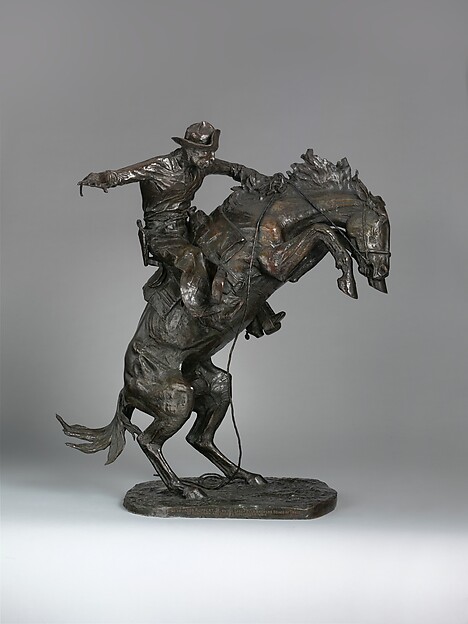
    The Broncho Buster, Frederic Remington, 1895, revised 1909, cast by November 1910

    The Broncho Buster

    1895, revised 1909, cast by November 1910 · Metropolitan Museum of Art

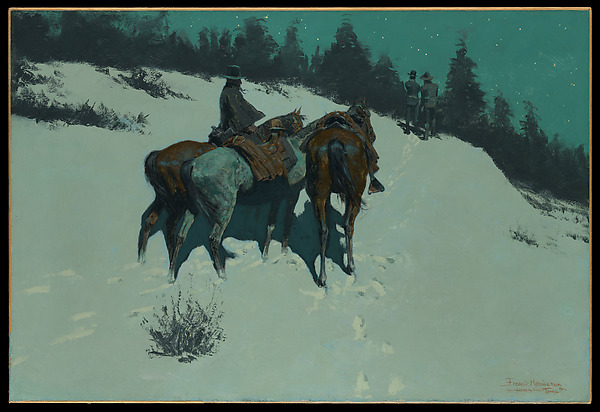
    A Reconnaissance, Frederic Remington, 1902

    A Reconnaissance

    1902 · Metropolitan Museum of Art

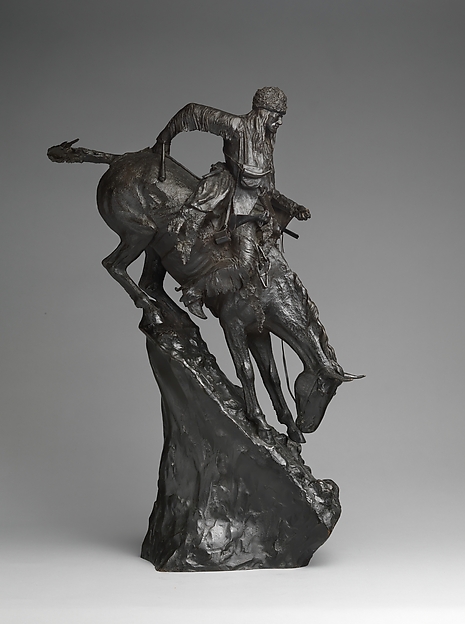
    The Mountain Man, Frederic Remington, 1903, cast by March 1907

    The Mountain Man

    1903, cast by March 1907 · Metropolitan Museum of Art

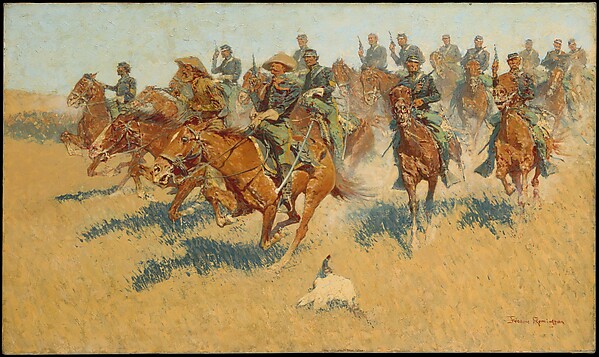
    On the Southern Plains, Frederic Remington, 1907

    On the Southern Plains

    1907 · Metropolitan Museum of Art

    The Bronco Buster, Frederic Remington, Modeled 1895, cast 1899

    The Bronco Buster

    Modeled 1895, cast 1899 · Art Institute of Chicago

    On the Bridle Path, Central Park, New York, Frederic Remington, 1889

    On the Bridle Path, Central Park, New York

    1889 · Non exposée · National Gallery of Art

    Off the Range (Coming Through the Rye), Frederic Remington, model 1902, cast 1903

    Off the Range (Coming Through the Rye)

    model 1902, cast 1903 · Non exposée · National Gallery of Art

    The Mountain Man, Frederic Remington, model 1903, cast 1904

    The Mountain Man

    model 1903, cast 1904 · Non exposée · National Gallery of Art

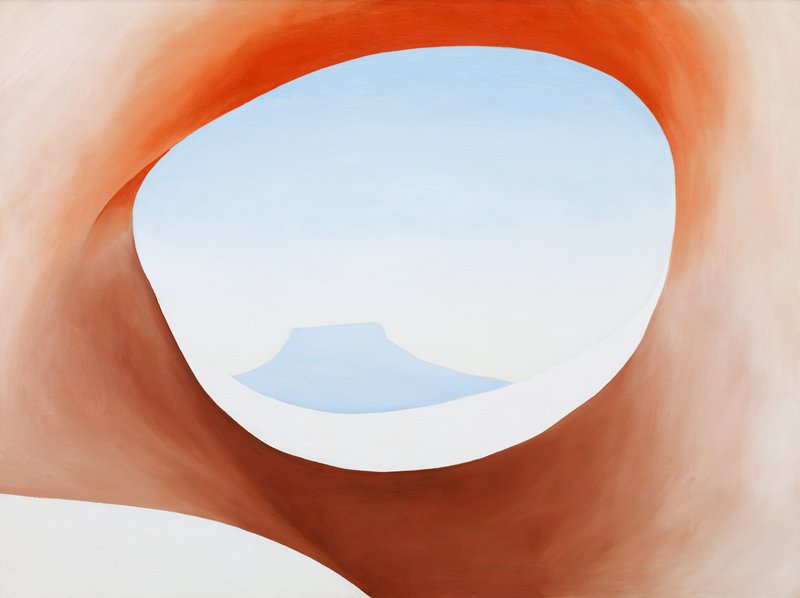
    Pedernal -- From the Ranch #1, Georgia O'Keeffe, 1956

    Georgia O'Keeffe

    Pedernal -- From the Ranch #1, 1956

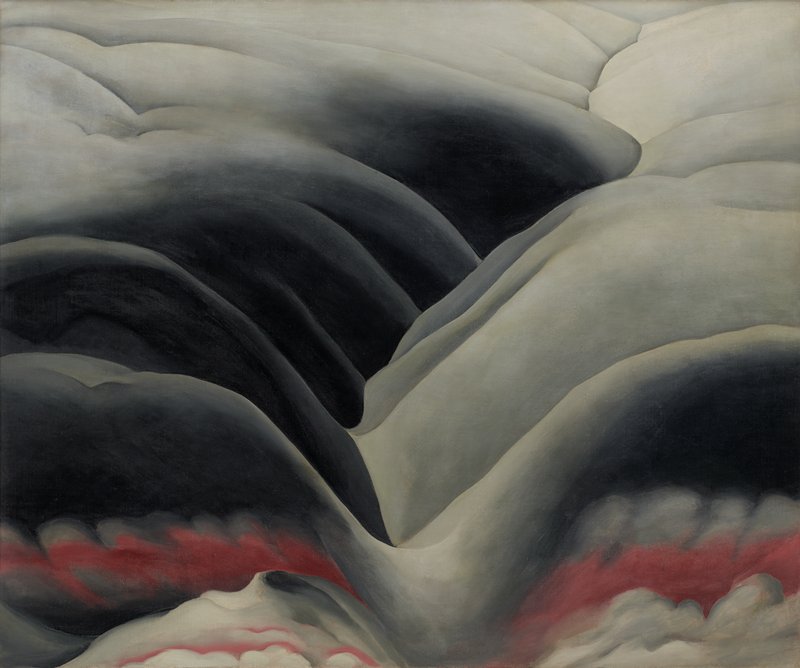
    Black Place I, Georgia O'Keeffe, 1945

    Georgia O'Keeffe

    Black Place I, 1945

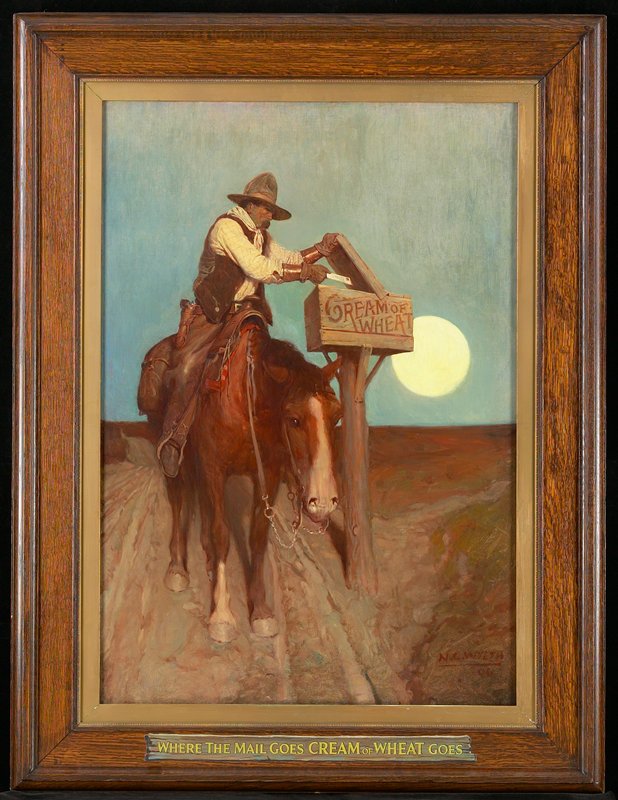
    Rural Delivery (Where the Mail Goes, Cream of Wheat Goes), Newell Convers Wyeth, 1906

    Newell Convers Wyeth

    Rural Delivery (Where the Mail Goes, Cream of Wheat Goes), 1906

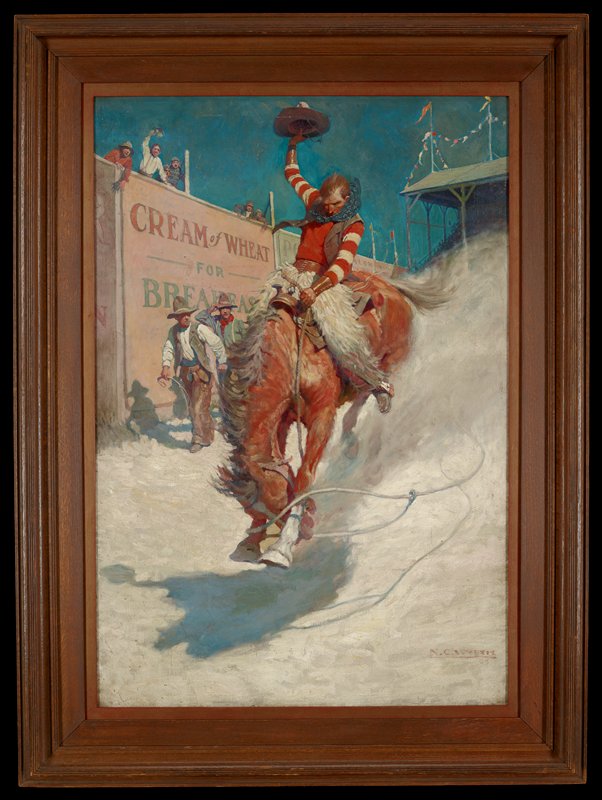
    Bronco Buster, Newell Convers Wyeth, 1906

    Newell Convers Wyeth

    Bronco Buster, 1906

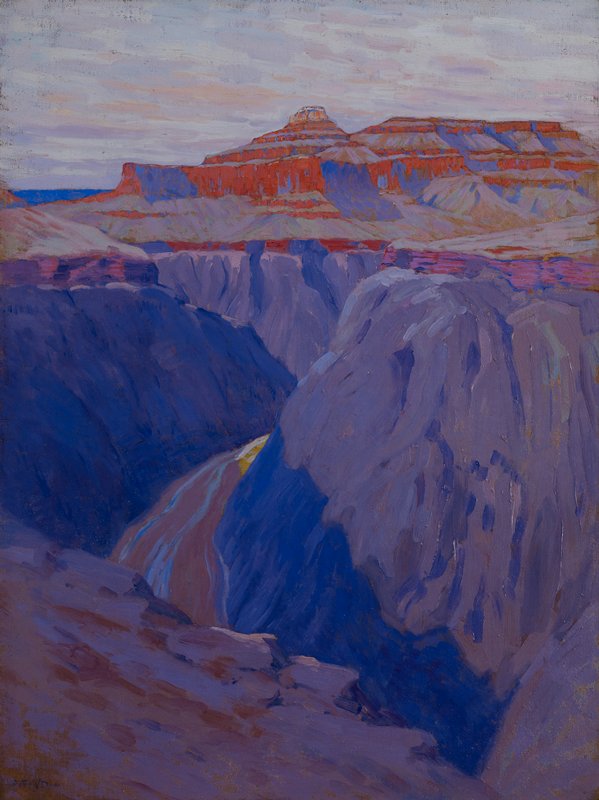
    The Destroyer, Arthur Wesley Dow, c. 1911–13

    Arthur Wesley Dow

    The Destroyer, c. 1911–13

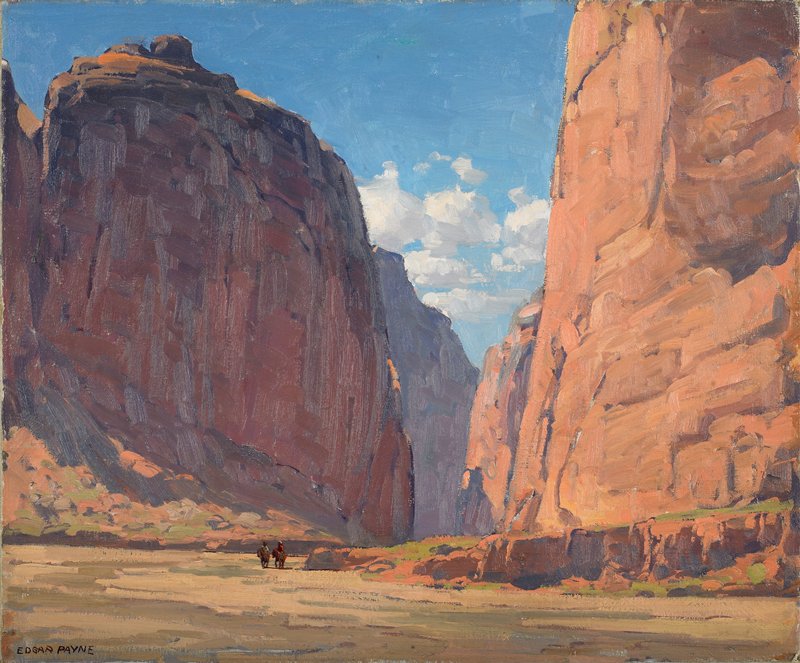
    Canyon Portal, Edgar Payne, c. 1935

    Edgar Payne

    Canyon Portal, c. 1935

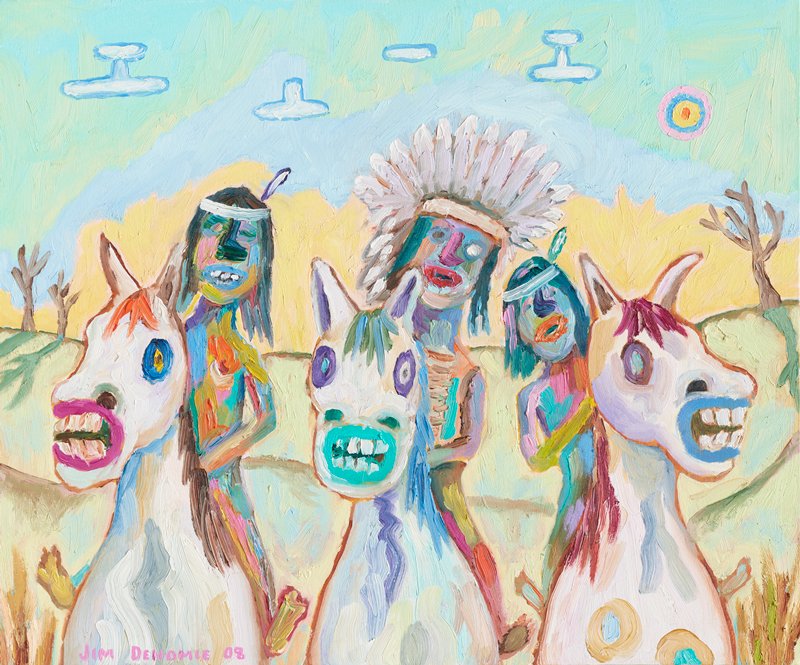
    The Delegation, Jim Denomie, 2008

    Jim Denomie

    The Delegation, 2008

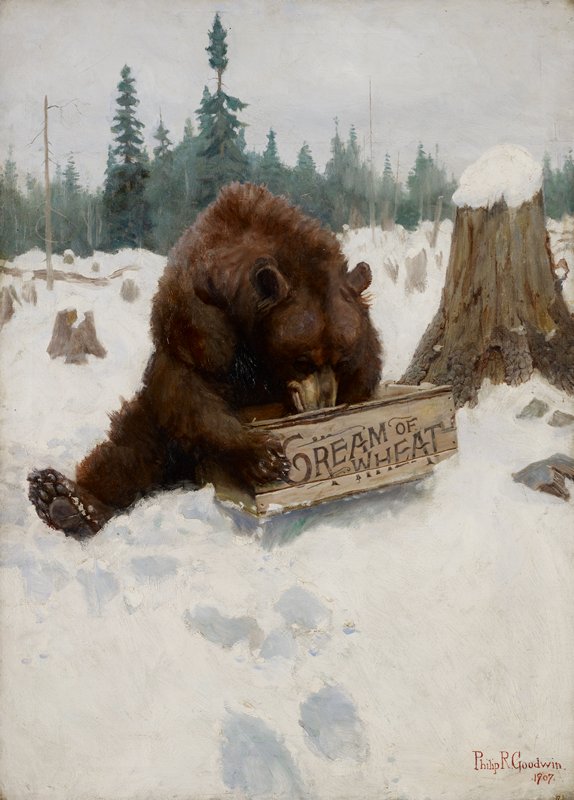
    A Bear Chance, Philip R. Goodwin, 1907

    Philip R. Goodwin

    A Bear Chance, 1907