ART WIKI32 963 en salle
CarteCollectionArtistesMuséesExpositionsJournal
Connexion

ART WIKI

Où est accroché le chef-d’œuvre, et quand on vous laisse entrer.

Collections : Art Institute of Chicago, Cleveland Museum of Art, Galerie Tretiakov, Hirshhorn Museum and Sculpture Garden, J. Paul Getty Museum, Metropolitan Museum of Art, Minneapolis Institute of Art, Musée de l'Ermitage, Musée des Beaux-Arts Pouchkine, Musée du Louvre, musée national d'art asiatique, Musée russe, Musées d'Art de Harvard, Museum of Modern Art, National Gallery of Art, National Portrait Gallery, Rijksmuseum Amsterdam, Smithsonian American Art Museum, Statens Museum for Kunst, Victoria and Albert Museum, Villa Getty, Whitney Museum of American Art, Catalogue d’État du fonds muséal de Russie (274 musées), Europeana (19 musées), Wikidata (6 musées), Paris Musées (12 musées) et Joconde, la base des musées du ministère de la Culture (495 musées). Les images appartiennent à leurs ayants droit.

Rubriques

  • Carte
  • Recherche
  • Collection
  • Chefs-d’œuvre
  • Exposées en ce moment
  • Artistes

Et aussi

  • Musées et galeries
  • Expositions
  • Journal
  • D’où viennent les données
  • Confidentialité et cookies
AccueilCarteCatalogue
  1. Collection/
  2. National Gallery of Art/
  3. The Infant Bacchus
The Infant Bacchus, Giovanni Bellini, probably 1505/1510

The Infant Bacchus

probably 1505/1510 · Painting

À propos du tableau

The Infant Bacchus or Young Bacchus is a ca. 1505–1510 painting of the Roman god Bacchus as a boy by the Italian Renaissance master Giovanni Bellini. Originally painted on panel, it was later transferred to canvas.

It was probably the Little Bacchus with a vase in his hand seen in Bartolo Delfino's house in Venice by Carlo Ridolfi in the mid-16th century and misidentified as a Giorgione. Shipley (1979) believes the subject is a metaphor for the winter solstice, based on a letter in Macrobius's Saturnalia, known during the Renaissance – the new year started as a baby and ended as an old man. It may be drawn from the same studies as the figure of Bacchus in The Feast of the Gods, which is very similar.

Lire la suite

By the 19th century it was in Frederick Richards Leyland's collection in London, where it was thought to be by Marco Basaiti. It passed through several further collections before being acquired by the Duveen Brothers in 1927, who took it to the United States. There it was acquired by Samuel H. Kress, who in 1961 gave it to the National Gallery of Art in Washington, D.C., where it still hangs.

Wikipédia · CC BY-SA

Notice

Pendant ce temps, chez Giovanni Bellini

La vie entière
  1. 1501–1505

    Isabella Gonzaga and commissions without paintings

    In 1501–04 the Marchioness of Mantua, Isabella Gonzaga (also known as Isabella d'Este), has great difficulty obtaining from Bellini a painting of the Madonna and Saints, for which she has already paid in advance (it is now lost). In 1505 she tries through Pietro Bembo to commission another, of secular or mythological content; its subject and fate are unknown.

  2. 1506

    Meeting Dürer in Venice

    On Albrecht Dürer's second visit to Venice he calls Bellini very old but still the best in painting, and full of courtesy toward foreign fellow painters. In a letter to Pirckheimer Dürer reports that Bellini praised him before many gentlemen and came himself to ask for a work, promising to pay well.

  3. 1507

    The death of his brother Gentile

    After Gentile's death Giovanni inherits their father Jacopo's sketchbook, on condition that he finish a picture his brother left incomplete. Marin Sanudo notes that Gentile's brother Zuan Belin remains, the most excellent painter in Italy.

Autres œuvres : Giovanni Bellini

Toutes les œuvres

Dans la même salle · M-013, National Gallery of Art

Page du musée

Sur le même thème · Classical

Toutes les œuvres sur ce thème
probably 1505/1510
14301516
Numéro d’inventaire
1961.9.5

Sources

  • National Gallery of Art
  • Image : National Gallery of Art — Museum open access
Giovanni Bellini, portraitGiovanni BelliniItalie, 1430–1516

Peut-on la contempler ?

Oui, elle reçoit

National Gallery of Art

Washington, États-Unis

Salle13 · Bâtiment ouest, étage principal

Présentée au public. Qui s’en porte garant est indiqué ci-dessous.

Vérifié
il y a 3 jours
Dans cet état depuis
19 août 2026
Source
Le musée
Sur la cartePage du musée
Madonna and Child, Giovanni Bellini, late 1480s

Madonna and Child

late 1480s · Metropolitan Museum of Art

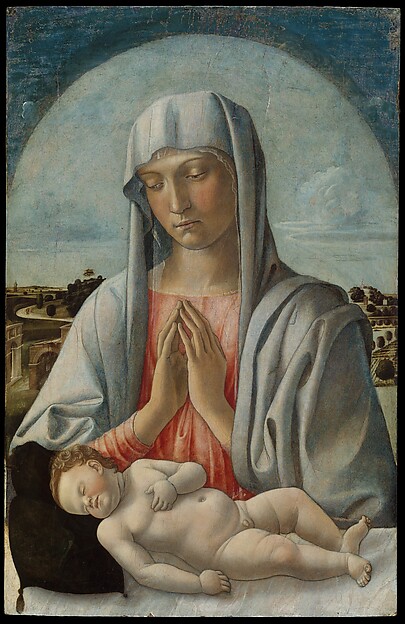
Madonna Adoring the Sleeping Child, Giovanni Bellini, early 1460s

Madonna Adoring the Sleeping Child

early 1460s · Metropolitan Museum of Art

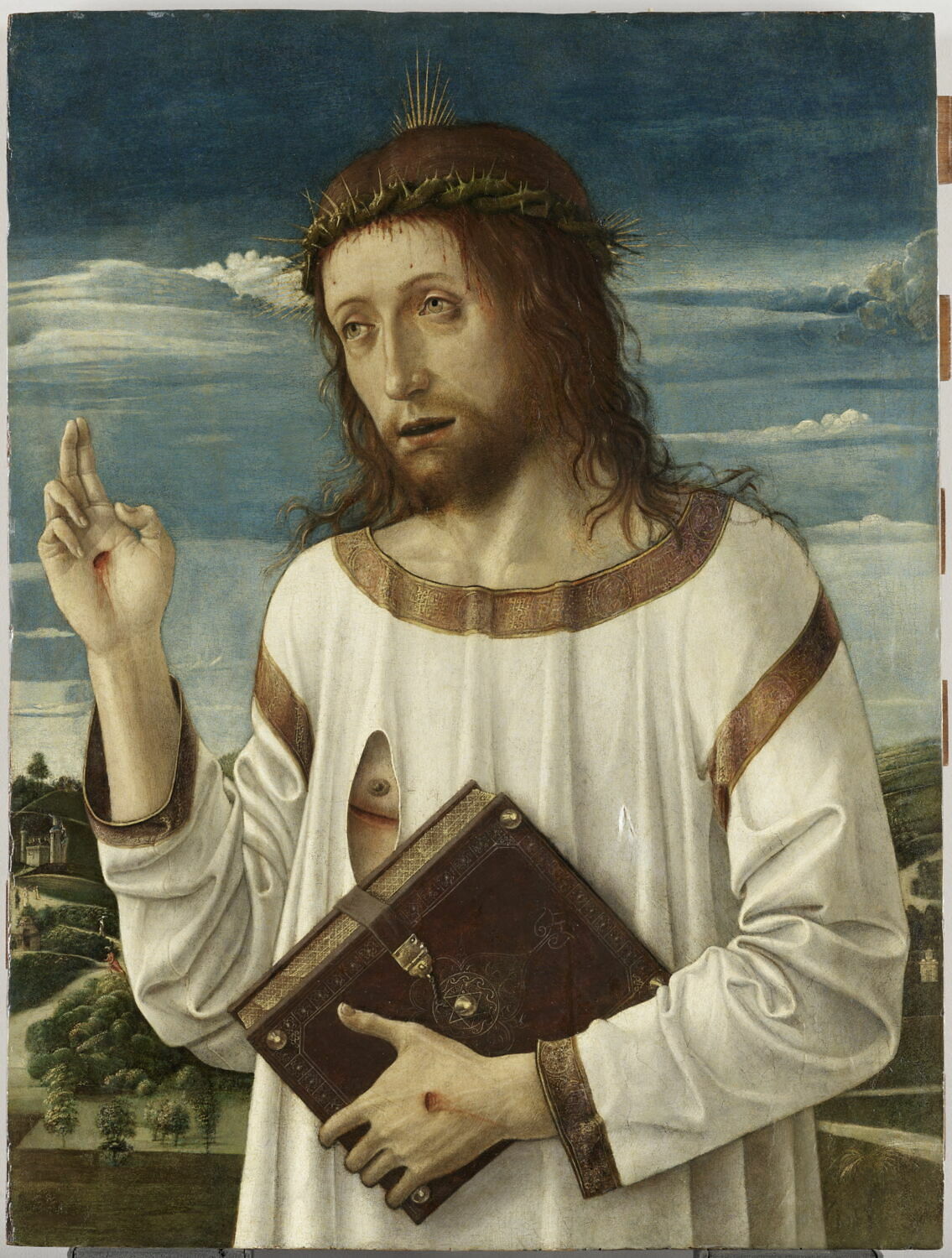
Le Christ rédempteur bénissant, Bellini, Giovanni, 3e quart du XVe siècle (1450 - 1475)

Le Christ rédempteur bénissant

3e quart du XVe siècle (1450 - 1475) · Musée du Louvre

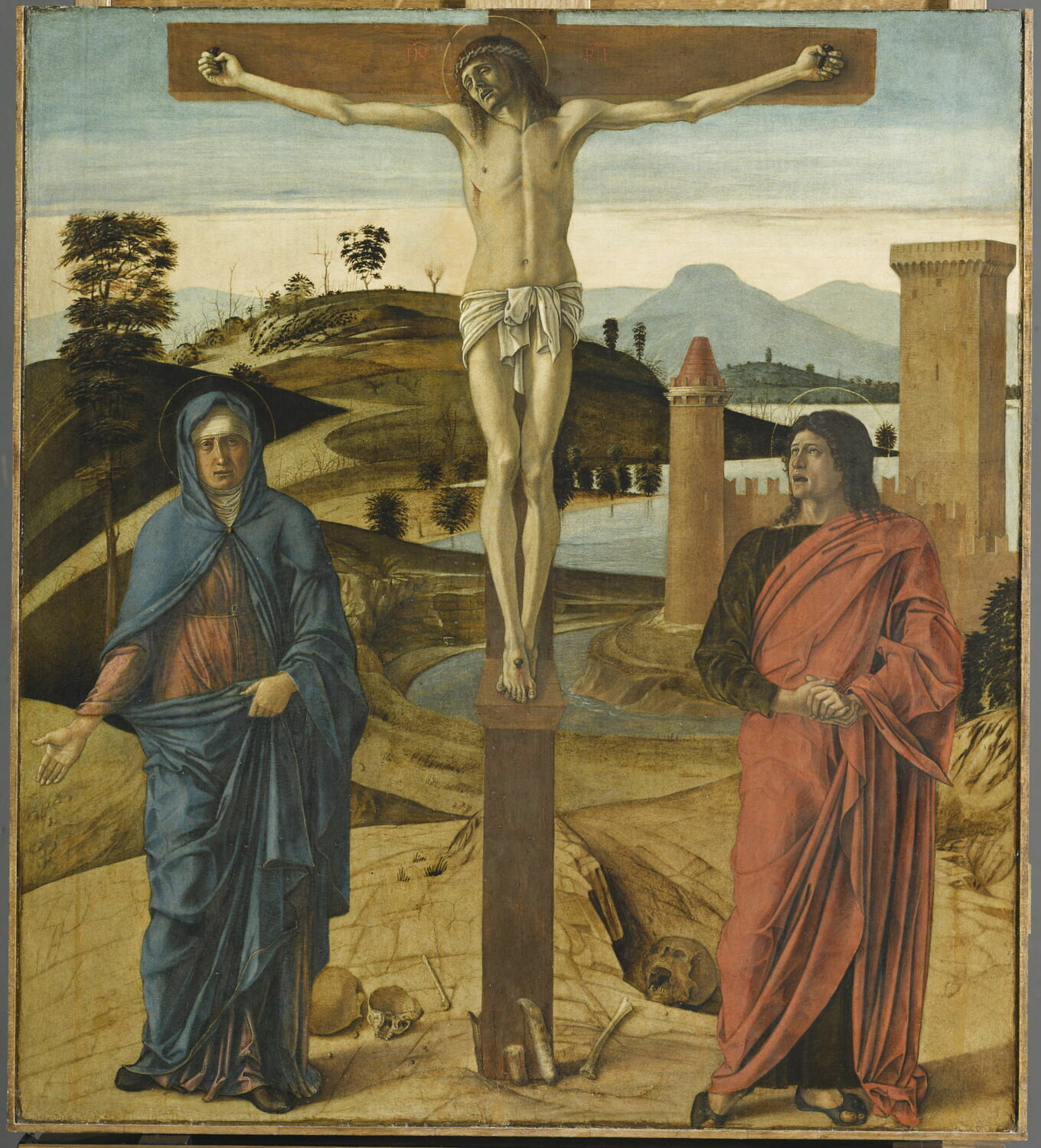
Le Calvaire, Bellini, Giovanni, 3e quart du XVe siècle (1450 - 1475)

Le Calvaire

3e quart du XVe siècle (1450 - 1475) · Musée du Louvre

Giovanni Emo, Attributed to Giovanni Bellini, c. 1475/1480

Giovanni Emo

c. 1475/1480 · National Gallery of Art

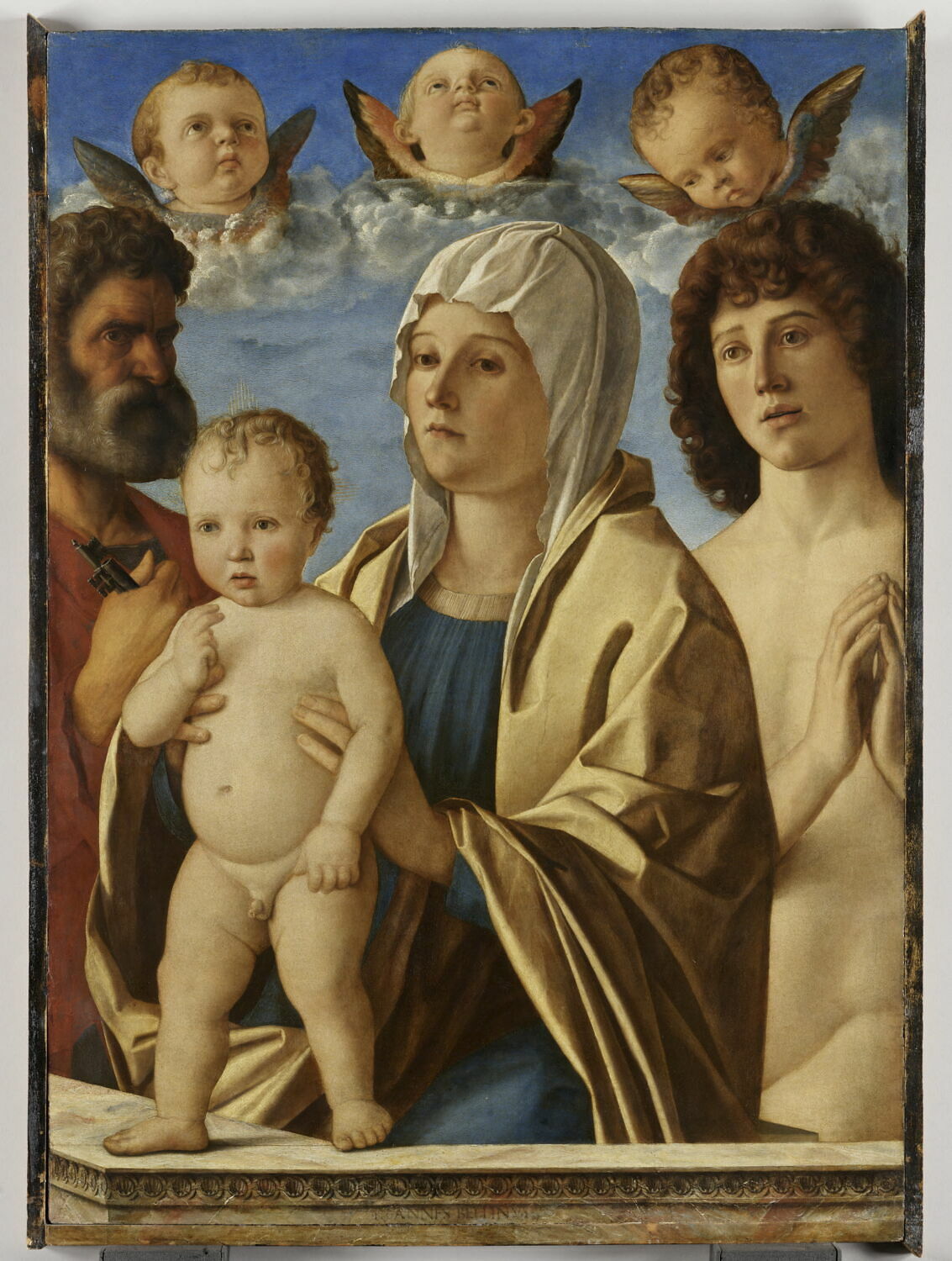
La Vierge et l'Enfant entre saint Pierre et saint Sébastien, Bellini, Giovanni, 4e quart du XVe siècle (1475 - 1500)

La Vierge et l'Enfant entre saint Pierre et saint Sébastien

4e quart du XVe siècle (1475 - 1500) · Musée du Louvre

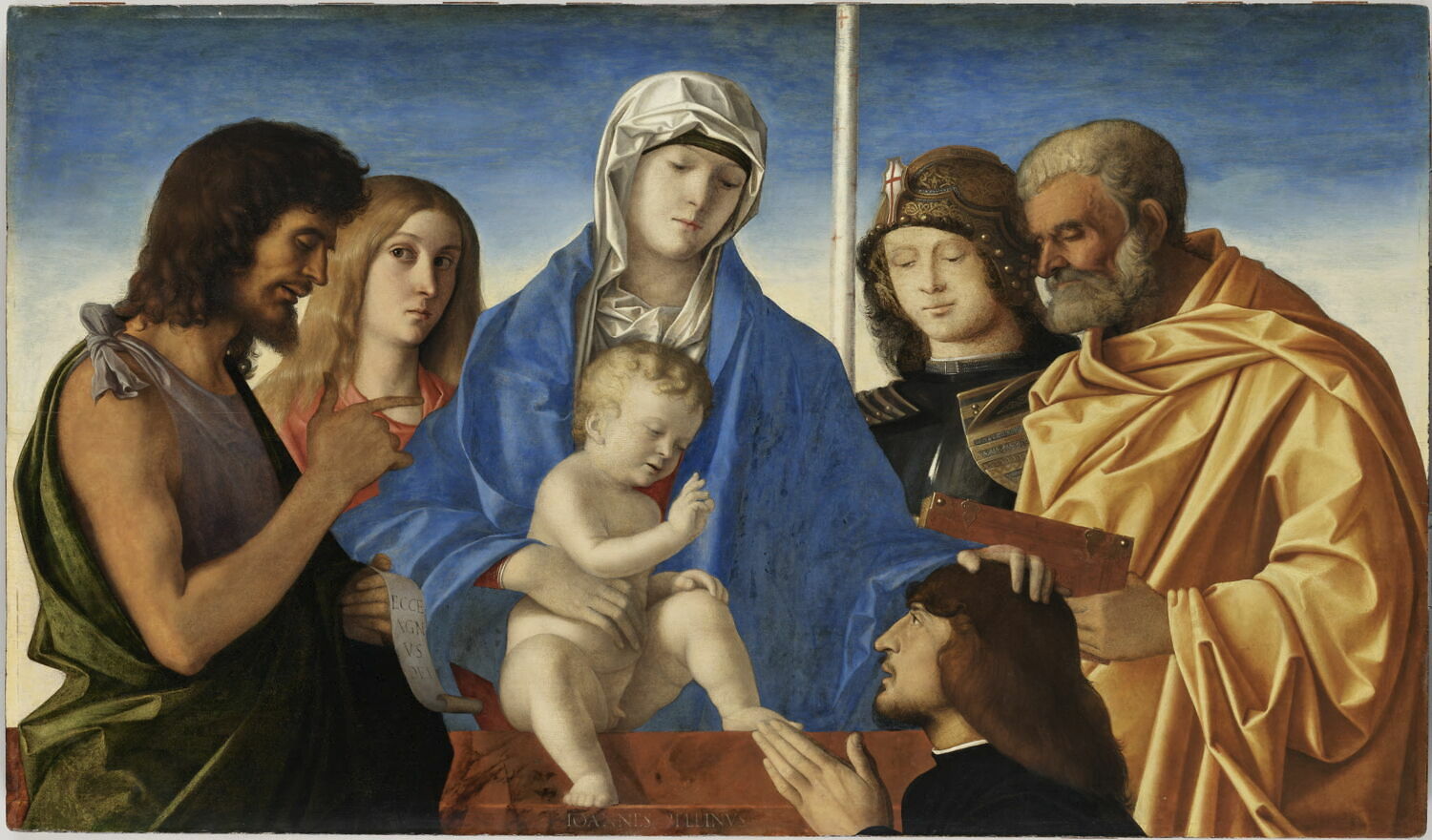
La Vierge et l'Enfant entourés de saint Jean Baptiste, sainte Marie-Madeleine, saint Georges, saint Pierre et un donateur, Bellini, Giovanni, 4e quart du XVe siècle (1475 - 1500)

La Vierge et l'Enfant entourés de saint Jean Baptiste, sainte Marie-Madeleine, saint Georges, saint Pierre et un donateur

4e quart du XVe siècle (1475 - 1500) · Musée du Louvre

Madonna and Child, Giovanni Bellini, c. 1480/1485

Madonna and Child

c. 1480/1485 · National Gallery of Art

Portrait of a Man, Andrea Mantegna, c. 1470

Andrea Mantegna

Portrait of a Man, c. 1470

The Infant Savior, Andrea Mantegna, c. 1460

Andrea Mantegna

The Infant Savior, c. 1460

Madonna and Child, Carlo Crivelli, c. 1490

Carlo Crivelli

Madonna and Child, c. 1490

Madonna and Child Enthroned with Donor, Carlo Crivelli, 1470

Carlo Crivelli

Madonna and Child Enthroned with Donor, 1470

Madonna and Child, Marco Zoppo or Imitator, c. 1467/1468

anonymous

Madonna and Child, c. 1467/1468

Saint Louis of Toulouse, Cosmè Tura, c. 1470/1480

Cosmè Tura

Saint Louis of Toulouse, c. 1470/1480

The Annunciation with Saint Francis and Saint Louis of Toulouse [four panels], Cosmè Tura, c. 1470/1480

Cosmè Tura

The Annunciation with Saint Francis and Saint Louis of Toulouse [four panels], c. 1470/1480

The Archangel Gabriel [middle left panel], Cosmè Tura, c. 1470/1480

Cosmè Tura

The Archangel Gabriel [middle left panel], c. 1470/1480

Blind Minotaur Led by Marie-Thérèse with a Dove in a Starry Night (Minotaure aveugle guidé par Marie-Thérèse au pigeon dans une nuit étoilée), Pablo Picasso, 1934

Pablo Picasso

Blind Minotaur Led by Marie-Thérèse with a Dove in a Starry Night (Minotaure aveugle guidé par Marie-Thérèse au pigeon dans une nuit étoilée), 1934

Non exposée · National Gallery of Art

Blind Minotaur Led by Marie-Thérèse with a Dove in a Starry Night (Minotaure aveugle guidé par Marie-Thérèse au pigeon dans une nuit étoilée), Pablo Picasso, 1934

Pablo Picasso

Blind Minotaur Led by Marie-Thérèse with a Dove in a Starry Night (Minotaure aveugle guidé par Marie-Thérèse au pigeon dans une nuit étoilée), 1934

Non exposée · National Gallery of Art

Blind Minotaur Led by Marie-Thérèse with a Dove in a Starry Night (Minotaure aveugle guidé par Marie-Thérèse au pigeon dans une nuit étoilée), Pablo Picasso, 1934

Pablo Picasso

Blind Minotaur Led by Marie-Thérèse with a Dove in a Starry Night (Minotaure aveugle guidé par Marie-Thérèse au pigeon dans une nuit étoilée), 1934

Non exposée · National Gallery of Art

Blind Minotaur Led by Marie-Thérèse with a Dove in a Starry Night (Minotaure aveugle guidé par Marie-Thérèse au pigeon dans une nuit étoilée), Pablo Picasso, 1934

Pablo Picasso

Blind Minotaur Led by Marie-Thérèse with a Dove in a Starry Night (Minotaure aveugle guidé par Marie-Thérèse au pigeon dans une nuit étoilée), 1934

Non exposée · National Gallery of Art

The Eritrean Sibyl, Giorgio Ghisi after Michelangelo, early 1570s

Michelangelo

The Eritrean Sibyl, early 1570s

Non exposée · National Gallery of Art

Wooden Falsework Supporting a Vault, Jacob Bos, after Antonio da Sangallo, published by Antonio Lafreri, 1561

Michelangelo

Wooden Falsework Supporting a Vault, 1561

Non exposée · National Gallery of Art

Forma Partis Templi Divi Petri [Exterior Section of Saint Peter's Basilica], Italian 16th Century, after Michelangelo, published by Vincenzo Luchino, 1564

Michelangelo

Forma Partis Templi Divi Petri [Exterior Section of Saint Peter's Basilica], 1564

Non exposée · National Gallery of Art

Orthographia Partis Exterioris Templi Divi Petri [Exterior View of Saint Peter's Basilica], Étienne Dupérac, after Michelangelo, 1544/1572

Michelangelo

Orthographia Partis Exterioris Templi Divi Petri [Exterior View of Saint Peter's Basilica], 1544/1572

Non exposée · National Gallery of Art

Ce qu’elle montre

ClassicalBacchus

Au catalogue

PeinturesHuilePeinture italiennePeinture vénitienneRenaissanceXVIe siècleVenetianPeinture mythologique