 Albrecht DürerAllemagne, 1471–1528
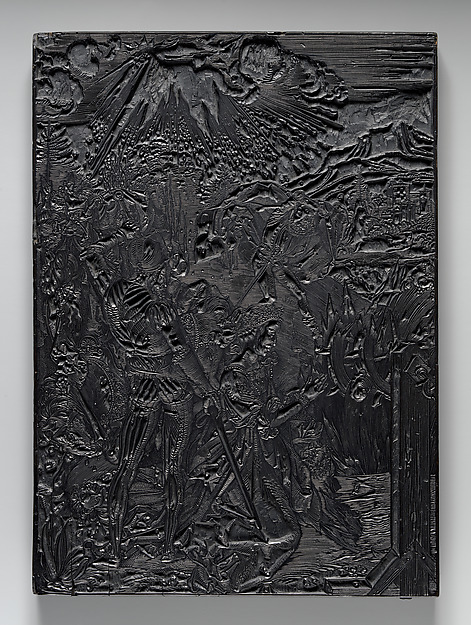
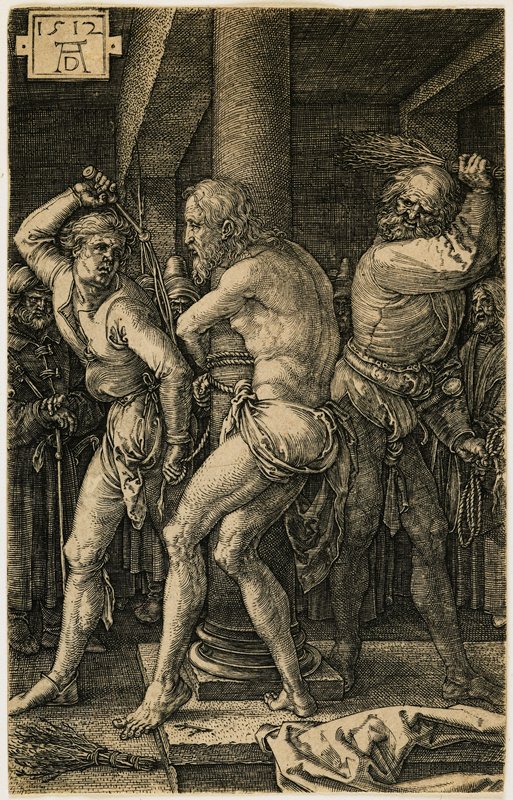
The Flagellation
Peut-on la contempler ?
Elle ne reçoit pas en ce moment

Minneapolis Institute of Art
Minneapolis, États-Unis
Elle appartient à la collection, mais n’est pas présentée en ce moment.
- Vérifié
- Dans cet état depuis
- Source
- Les données de collection du musée lui-même
À propos de l’œuvre
Much of the gory non-Gospel detail in the Passion literature was connected to Old Testament prophesies. For example, Isaiah 1:6 (From the sole of the foot unto the top of the head, there is no soundness therein) inspired horrific Flagellation episodes. One tract said Christ was whipped from bottom to top, so his blood would not hide any bit of flesh from his torturers. Such gruesome imagery--and Christ's defenselessness--helped viewers visualize the depth of pain Christ endured on their behalf.
Minneapolis Institute of Art
Notice
- Numéro d’inventaire
- P.127
Au catalogue
Sources
- Minneapolis Institute of Art : les données ouvertes du musée · obtenue il y a 8 jours
- Image : Minneapolis Institute of Art — public domain
Pendant ce temps, chez Albrecht Dürer
La vie entière1507–1528 · Lieu de travail
Nuremberg
1511
Publishes the Great Passion and the Life of the Virgin
Dürer published two woodcut series as books, the Great Passion and the Life of the Virgin, with a second edition of the Apocalypse and the 37 woodcuts of the Little Passion. His post-Venetian woodcuts developed chiaroscuro modelling.
1512
Emperor Maximilian I becomes his chief patron
From 1512 Emperor Maximilian I was Dürer's chief patron. For him Dürer and his workshop produced the Triumphal Arch, a giant woodcut 295 × 357 cm printed from 192 blocks and modelled on the triumphal arches of ancient Rome.
3 January 1512
Nuremberg's privilege against forgeries
Nuremberg's city council granted Dürer a privilege for the sale of his prints, with penalties for anyone who forged them.
1513–1516
Three years without painting
Complaining that painting did not pay enough to justify the time compared with his prints, Dürer produced no paintings from 1513 to 1516.
1514
Death of his mother
In the year of Melencolia I and St Jerome in His Study, the artist's mother, Barbara Holper, died.
![Madonna and Child [obverse], Albrecht Dürer, c. 1496/1499](https://api.nga.gov/iiif/878db7e6-10ae-4cae-ba5d-6d6f5c413ae8/full/!2400,2400/0/default.jpg)
![Lot and His Daughters [reverse], Albrecht Dürer, c. 1496/1499](https://api.nga.gov/iiif/7565a449-f82a-414b-9bda-c93f55a51b4d/full/!2400,2400/0/default.jpg)