ART WIKI32 963 en salle
CarteCollectionArtistesMuséesExpositionsJournal
Connexion

ART WIKI

Où est accroché le chef-d’œuvre, et quand on vous laisse entrer.

Collections : Art Institute of Chicago, Cleveland Museum of Art, Galerie Tretiakov, Hirshhorn Museum and Sculpture Garden, J. Paul Getty Museum, Metropolitan Museum of Art, Minneapolis Institute of Art, Musée de l'Ermitage, Musée des Beaux-Arts Pouchkine, Musée du Louvre, musée national d'art asiatique, Musée russe, Musées d'Art de Harvard, Museum of Modern Art, National Gallery of Art, National Portrait Gallery, Rijksmuseum Amsterdam, Smithsonian American Art Museum, Statens Museum for Kunst, Victoria and Albert Museum, Villa Getty, Whitney Museum of American Art, Catalogue d’État du fonds muséal de Russie (274 musées), Europeana (19 musées), Wikidata (6 musées), Paris Musées (12 musées) et Joconde, la base des musées du ministère de la Culture (495 musées). Les images appartiennent à leurs ayants droit.

Rubriques

  • Carte
  • Recherche
  • Collection
  • Chefs-d’œuvre
  • Exposées en ce moment
  • Artistes

Et aussi

  • Musées et galeries
  • Expositions
  • Journal
  • D’où viennent les données
  • Confidentialité et cookies
AccueilCarteCatalogue
  1. Collection/
  2. National Gallery of Art/
  3. The Ascension
The Ascension, Jacques Callot, 1608/1611
Jacques Callot, portraitJacques CallotFrance, 1592–1635

The Ascension

1608/1611 · Print

Peut-on la contempler ?

Elle ne reçoit pas en ce moment

National Gallery of Art

Washington, États-Unis

Elle appartient à la collection, mais n’est pas présentée en ce moment.

Vérifié
il y a 3 jours
Dans cet état depuis
19 août 2026
Source
Le musée
Sur la cartePage du musée

Notice

1608/1611
15921635
Numéro d’inventaire
1969.15.263

Ce qu’elle montre

AngelSeated figureChristFigures

Au catalogue

EstampesGravure au burinBaroqueXVIIe siècleFrench

Sources

  • National Gallery of Art
  • Image : National Gallery of Art — Museum open access

Pendant ce temps, chez Jacques Callot

La vie entière
  1. 1608

    Runs away from home to Rome

    Secretly from his parents Jacques sets out on foot for Rome — according to legend, with wandering Romani; by one account he ran away twice and twice came back at his father’s demand, until his father finally consented to his studying in Italy.

  2. 1608 · Lieu de travail

    Nancy

  3. 1608–1611 · Lieu de travail

    Rome

  4. 1611

    Studies etching with Tempesta in Florence

    Having studied burin engraving in Rome with Philippe Thomassin, Callot moves to Florence, where he works with Antonio Tempesta, who teaches him the technique of line etching (by other accounts, he lived in Florence from 1612).

  5. 1611–1621 · Lieu de travail

    Florence

  6. 1612

    Joins the workshop of Giulio Parigi

    In Florence Callot also studies with the painter and engraver Remigio Cantagallina, and in 1612 joins the workshop of Giulio Parigi; he later often collaborates with both, coming under Parigi’s influence.

Autres œuvres : Jacques Callot

Toutes les œuvres
Lust, Jacques Callot, 17th century

Lust

17th century · Musées d'Art de Harvard

Temptation of Saint Anthony, Jacques Callot, 17th century

Temptation of Saint Anthony

17th century · Musées d'Art de Harvard

Envy, Jacques Callot, 17th century

Envy

17th century · Musées d'Art de Harvard

Pardon des Rochelois, Jacques Callot, 17th century

Pardon des Rochelois

17th century · Musées d'Art de Harvard

Pride, Jacques Callot, 17th century

Pride

17th century · Musées d'Art de Harvard

Anger, Jacques Callot, 17th century

Anger

17th century · Musées d'Art de Harvard

Descente dans l'île de Ré, Jacques Callot, 17th century

Descente dans l'île de Ré

17th century · Musées d'Art de Harvard

Gluttony, Jacques Callot, 17th century

Gluttony

17th century · Musées d'Art de Harvard

Sous le même toit : National Gallery of Art

Page du musée
Ginevra de' Benci [obverse], Leonardo da Vinci, c. 1474/1478

Leonardo da Vinci

Portrait de Ginevra de' Benci, c. 1474/1478

Wreath of Laurel, Palm, and Juniper with a Scroll inscribed Virtutem Forma Decorat [reverse], Leonardo da Vinci, c. 1474/1478

Leonardo da Vinci

Wreath of Laurel, Palm, and Juniper with a Scroll inscribed Virtutem Forma Decorat [reverse], c. 1474/1478

Green Wheat Fields, Auvers, Vincent van Gogh, 1890

Vincent van Gogh

Green Wheat Fields, Auvers, 1890

Girl in White, Vincent van Gogh, 1890

Vincent van Gogh

Jeune Fille en blanc, 1890

Roses, Vincent van Gogh, 1890

Vincent van Gogh

Roses, 1890

Self-Portrait, Vincent van Gogh, 1889

Vincent van Gogh

Self-Portrait, 1889

Farmhouse in Provence, Vincent van Gogh, 1888

Vincent van Gogh

Ferme en Provence, 1888

La Mousmé, Vincent van Gogh, 1888

Vincent van Gogh

La Mousmé, 1888

Sur le même thème · Angel

Toutes les œuvres sur ce thème
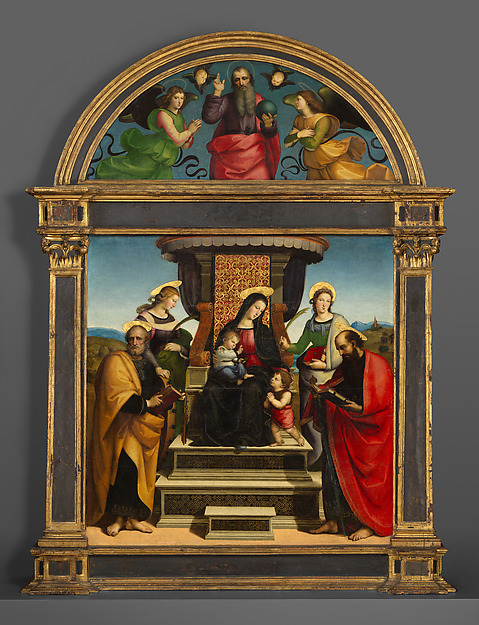
Madonna and Child Enthroned with Saints, Raphael, ca. 1504

Raphael

Retable Colonna, ca. 1504

Metropolitan Museum of Art

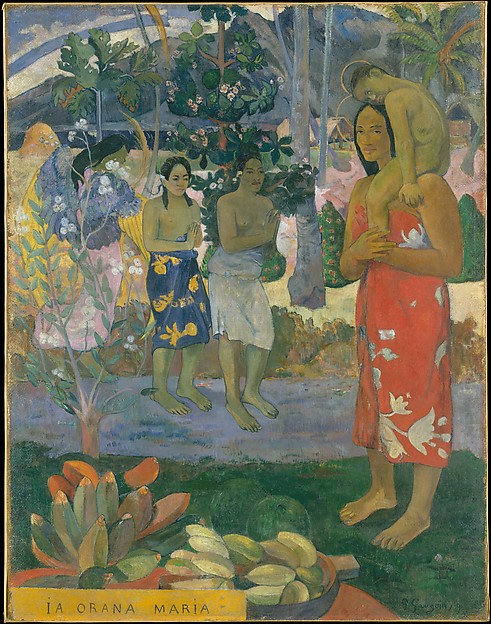
Ia Orana Maria (Hail Mary), Paul Gauguin, 1891

Paul Gauguin

Ia Orana Maria (Hail Mary), 1891

Metropolitan Museum of Art

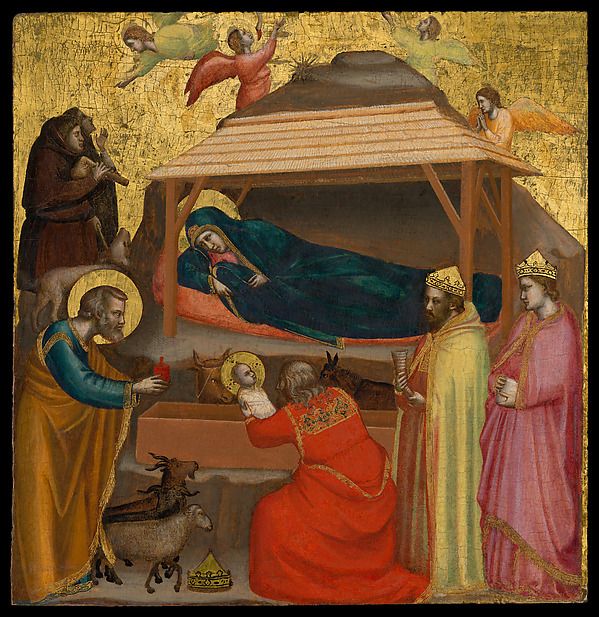
The Adoration of the Magi, Giotto di Bondone, possibly ca. 1320

Giotto

The Adoration of the Magi, possibly ca. 1320

Metropolitan Museum of Art

Diptyque de la Crucifixion et du Jugement dernier, Jan van Eyck, ca. 1436–38

Jan van Eyck

Diptyque de la Crucifixion et du Jugement dernier, ca. 1436–38

Metropolitan Museum of Art

Heiliger Hieronymus, Caravaggio

Caravaggio

Heiliger Hieronymus

Musée Herzog Anton Ulrich

The Holy Family, Elisha Kirkall after Raphael, early 18th century

Raphael

The Holy Family, early 18th century

Non exposée · National Gallery of Art

The Vision of Saint Helena, Marcantonio Raimondi possibly after Raphael, 1515-1520

Raphael

The Vision of Saint Helena, 1515-1520

Non exposée · National Gallery of Art

Two Sibyls and an Angel, Giovanni Antonio da Brescia, after Raphael, c. 1520s

Raphael

Two Sibyls and an Angel, c. 1520s

Non exposée · National Gallery of Art