ART WIKI32 963 en salle
CarteCollectionArtistesMuséesExpositionsJournal
Connexion

ART WIKI

Où est accroché le chef-d’œuvre, et quand on vous laisse entrer.

Collections : Art Institute of Chicago, Cleveland Museum of Art, Galerie Tretiakov, Hirshhorn Museum and Sculpture Garden, J. Paul Getty Museum, Metropolitan Museum of Art, Minneapolis Institute of Art, Musée de l'Ermitage, Musée des Beaux-Arts Pouchkine, Musée du Louvre, musée national d'art asiatique, Musée russe, Musées d'Art de Harvard, Museum of Modern Art, National Gallery of Art, National Portrait Gallery, Rijksmuseum Amsterdam, Smithsonian American Art Museum, Statens Museum for Kunst, Victoria and Albert Museum, Villa Getty, Whitney Museum of American Art, Catalogue d’État du fonds muséal de Russie (274 musées), Europeana (19 musées), Wikidata (6 musées), Paris Musées (12 musées) et Joconde, la base des musées du ministère de la Culture (495 musées). Les images appartiennent à leurs ayants droit.

Rubriques

  • Carte
  • Recherche
  • Collection
  • Chefs-d’œuvre
  • Exposées en ce moment
  • Artistes

Et aussi

  • Musées et galeries
  • Expositions
  • Journal
  • D’où viennent les données
  • Confidentialité et cookies
AccueilCarteCatalogue
  1. Collection/
  2. Victoria and Albert Museum/
  3. La Cathédrale de Salisbury vues des jardins de l'évêque
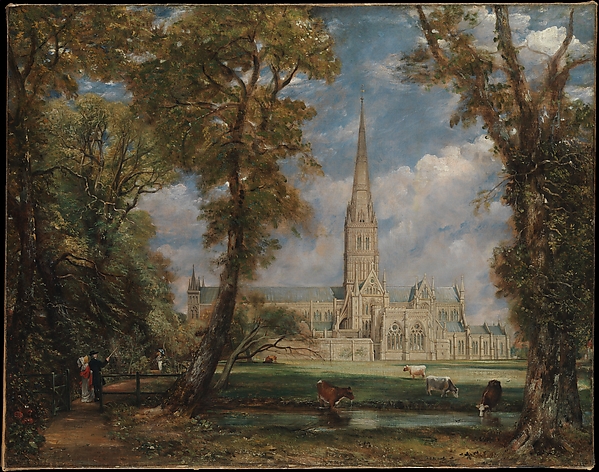
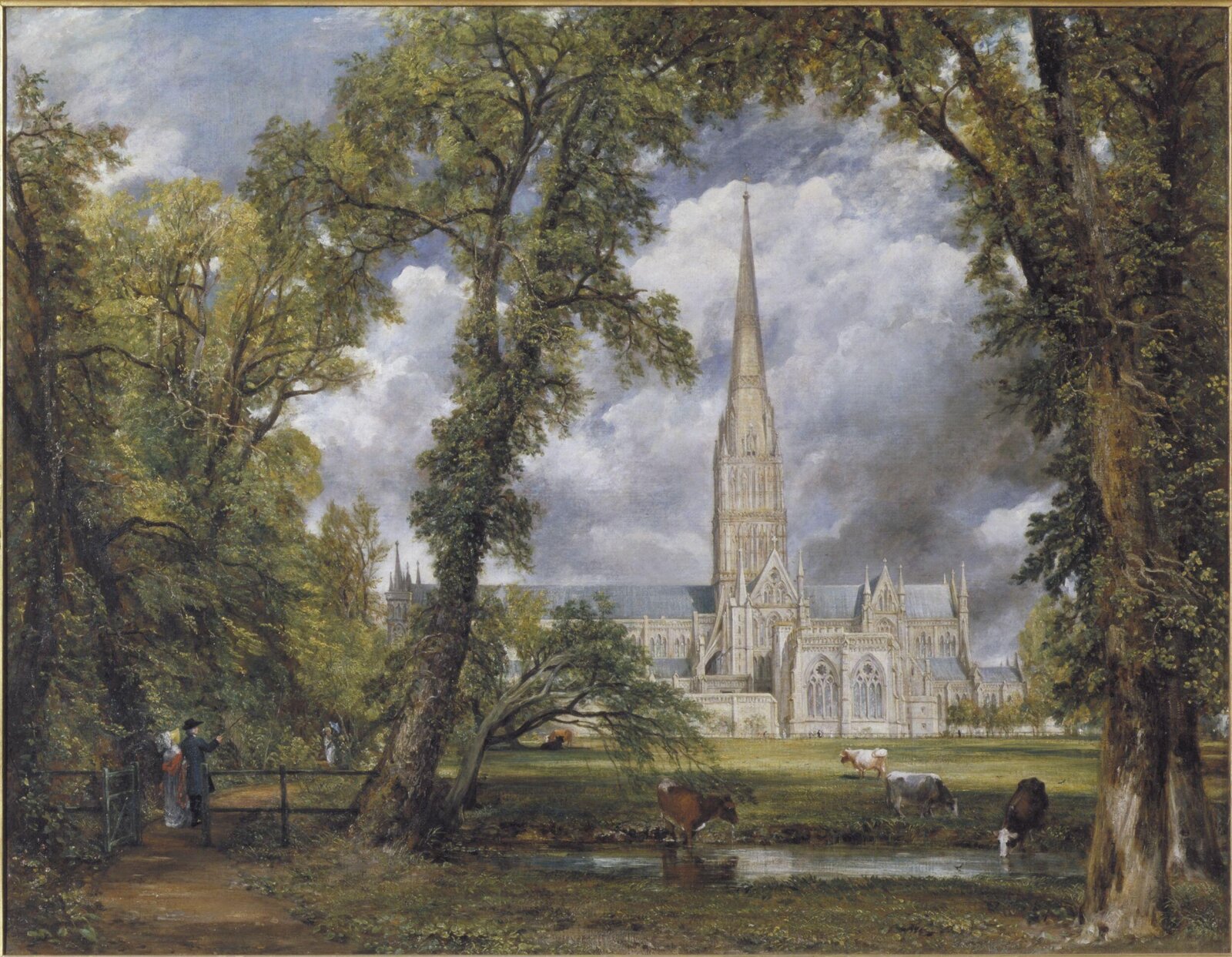
La Cathédrale de Salisbury vues des jardins de l'évêque, John Constable, 1823
John Constable, portraitJohn ConstableRoyaume-Uni, 1776–1837

La Cathédrale de Salisbury vues des jardins de l'évêque

Salisbury Cathedral from the Bishop's Ground

1823 · Oil painting · 87.6 × 111.8 cm

Peut-on la contempler ?

Elle ne reçoit pas en ce moment

Victoria and Albert Museum

Londres, Royaume-Uni

Elle appartient à la collection, mais n’est pas présentée en ce moment.

Vérifié
il y a 12 jours
Dans cet état depuis
25 sept. 2026
Source
Le musée
Sur la cartePage du musée

À propos du tableau

La Cathédrale de Salisbury vue des jardins de l'évêque est un tableau peint en 1823 par John Constable. Il mesure 87,6 cm de hauteur sur 111,8 cm de longueur. Il est conservé au Victoria and Albert Museum à Londres.

Wikipédia · CC BY-SA

Selon le musée

Object Type

Landscape painting in oils steadily became more popular during the 19th century. John Constable and his contemporary J.M.W. Turner take credit for establishing landscape as a significant subject. Until then, history paintings had been considered more important, but increasingly naturalistic paintings of picturesque views of the British landscape appealed to a wider section of the art-buying public.

People

Lire la suite

Dr John Fisher, Bishop of Salisbury, commissioned this painting in 1820. He and his family were some of Constable's closest friends and the artist taught one of his daughters. There has been some confusion over the identities of the figures in the painting but they are now thought to be the Bishop and his wife at the gate, and the figure a little further down the path, one of their daughters, probably Dolly. Constable had made a series of sketches before starting work on the canvas, and after it had been exhibited at the Royal Academy in 1823, he was asked to make a smaller version and a full-scale replica.

Subjects Depicted

The painting embodies the full range of qualities of a quintessentially British landscape painting - the clouds, trees, a water meadow, cattle drinking at the edge of the pasture and the glorious architecture of a medieval cathedral - but all on a human scale. Paintings like this one have so conditioned our view of rural Britain that it is now difficult to imagine a time when the countryside and country life were not held in such high regard.

Victoria and Albert Museum

Notice

1823 · à 47 ans
17761837
Numéro d’inventaire
FA.33[O]

Ce qu’elle montre

ArbrePondCattleFiguresCathedralBuildingsCloudsLandscapes (representations)Salisbury Cathedral

Au catalogue

PeinturesHuilePeinture britanniqueNéoclassicismeRomantismeXIXe siècleBritish SchoolGrande-Bretagne

Sources

  • Victoria and Albert Museum
  • Image : Victoria and Albert Museum — © Victoria and Albert Museum, London

Pendant ce temps, chez John Constable

La vie entière
  1. 1821

    “The Hay Wain” at the Royal Academy

    The picture, shown as “Landscape: Noon”, found no buyer, but it was seen by the painter Théodore Géricault and the writer Charles Nodier. According to Delacroix, Géricault went back to France quite stunned and invited Constable to Paris, while Nodier urged French artists to look to nature rather than to trips to Rome.

  2. 1821

    “I should paint my own places best”

    In a letter to his friend John Fisher in 1821 Constable wrote that he should paint his own places best, and that painting is but another word for feeling. The Dedham Vale around his home came to be known as “Constable Country”.

  3. 1824

    The Paris Salon: a gold medal

    The Anglo-French dealer John Arrowsmith bought The Hay Wain and other works, and in 1824 they were shown at the Paris Salon, where they caused a sensation. The Hay Wain was awarded a gold medal by Charles X.

  4. 1824

    Delacroix repaints the background of “The Massacre at Chios”

    After seeing Constable’s pictures at Arrowsmith’s gallery, Delacroix repainted the background of his Massacre at Chios, saying the paintings had done him a great deal of good. In his journal he noted that Constable’s meadow greens are a combination of many different shades.

  5. 1824–1828

    The family in Brighton for Maria’s health

    When Maria began to show symptoms of tuberculosis, Constable took lodgings for the family in Brighton in the hope that sea air would restore her health, dividing his time between Brighton and Charlotte Street in London. He was unsure at first that Brighton suited painting, and complained to Fisher that the beach was only Piccadilly by the sea.

  6. 1825

    A quarrel with Arrowsmith: the French market is lost

    In 1825 Constable quarrelled with Arrowsmith and lost his French outlet, perhaps partly from worry over his wife’s health, the uncongenial life at Brighton and the pressure of outstanding commissions. In a few years he had sold more than twenty pictures in France, more than he sold at home.
Autres œuvres : John Constable

Toutes les œuvres
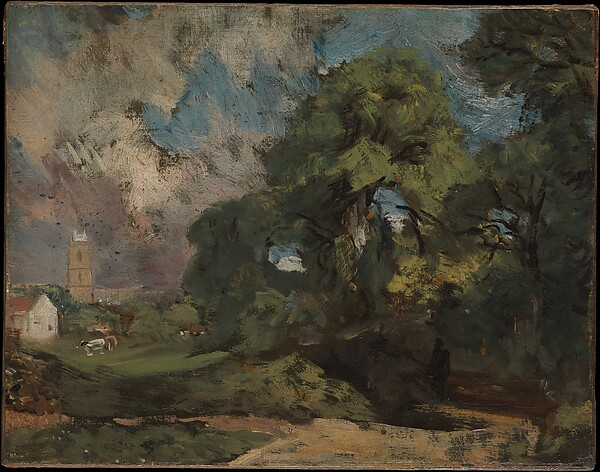
Stoke-by-Nayland, John Constable, ca. 1810–11

Stoke-by-Nayland

ca. 1810–11 · Metropolitan Museum of Art

Wivenhoe Park, Essex, John Constable, 1816

Wivenhoe Park, Essex

1816 · National Gallery of Art

The White Horse, John Constable, 1818-1819

The White Horse

1818-1819 · National Gallery of Art

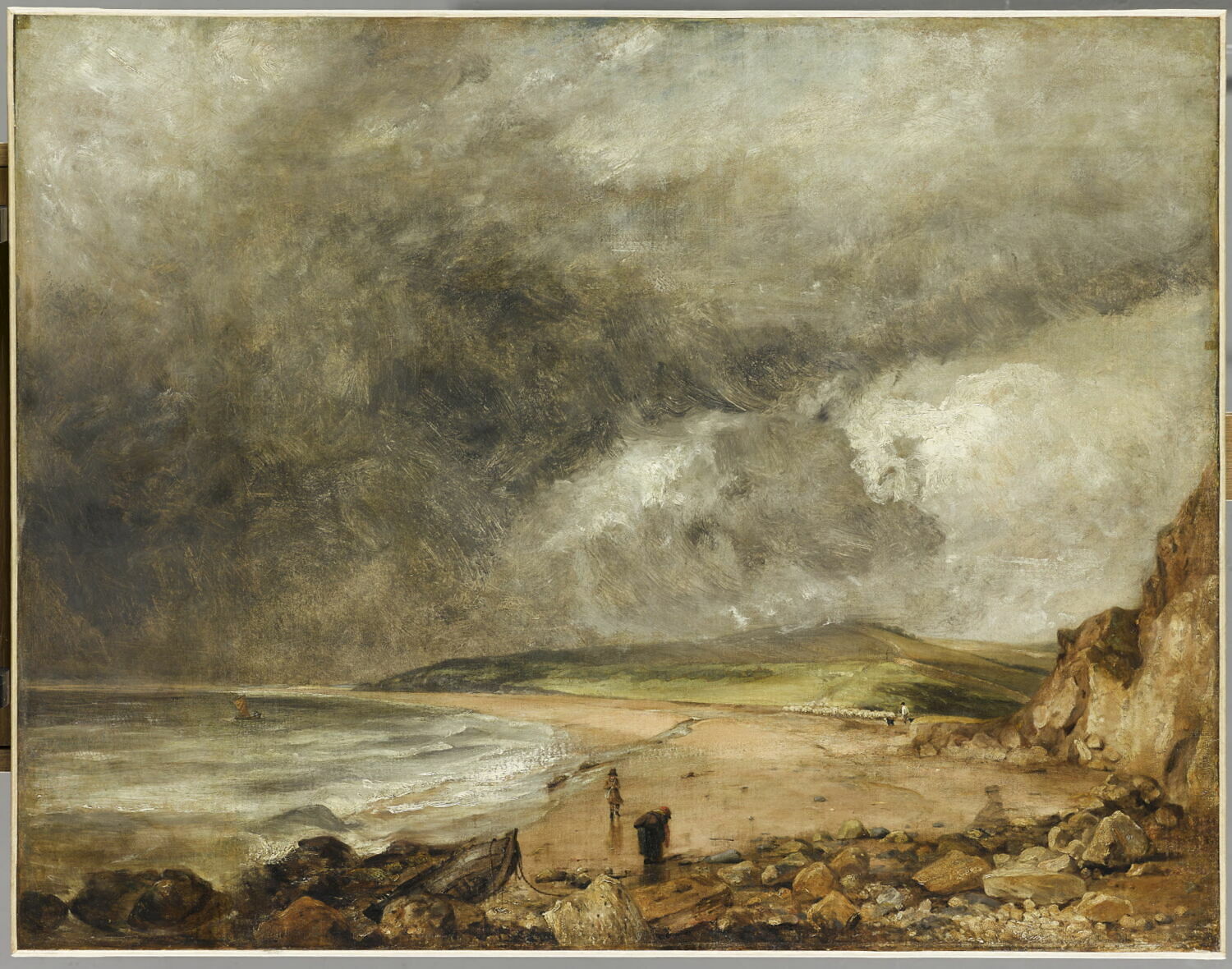
La baie de Weymouth à l'approche de l'orage, Constable, John, 1e quart du XIXe siècle (1818 - 1819)

La baie de Weymouth à l'approche de l'orage

1e quart du XIXe siècle (1818 - 1819) · Musée du Louvre

Salisbury Cathedral from Lower Marsh Close, John Constable, 1820

Salisbury Cathedral from Lower Marsh Close

1820 · National Gallery of Art

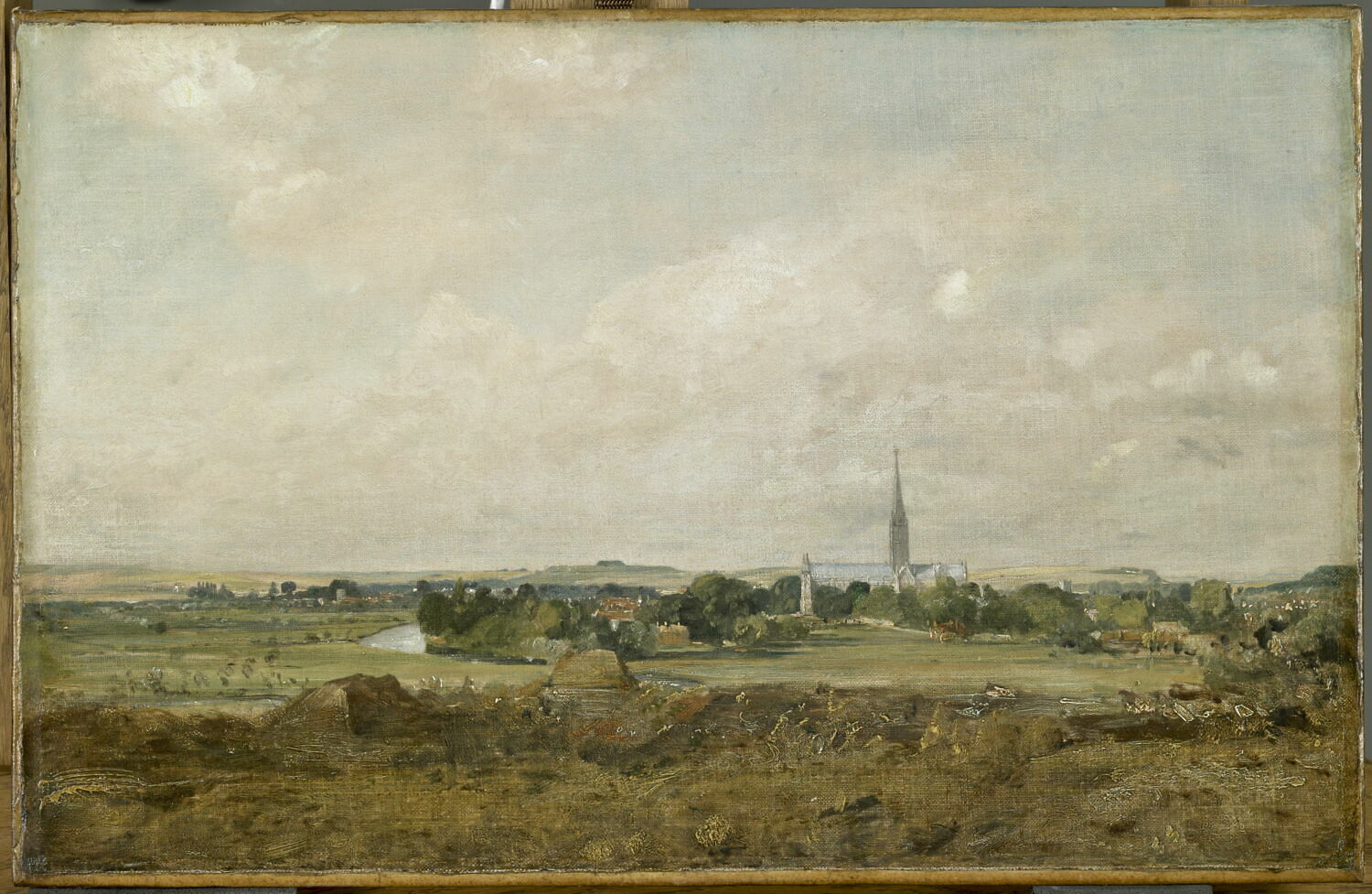
Vue de Salisbury, Constable, John, 1e quart du XIXe siècle (1820)

Vue de Salisbury

1e quart du XIXe siècle (1820) · Musée du Louvre

Vallon à Helmingham [Helmingham Dell], Constable, John, 1e quart du XIXe siècle (peint à l'été 1823 (selon Beckett)) (1823)

Vallon à Helmingham [Helmingham Dell]

1e quart du XIXe siècle (peint à l'été 1823 (selon Beckett)) (1823) · Musée du Louvre

Salisbury Cathedral from the Bishop's Grounds, John Constable, ca. 1825

Salisbury Cathedral from the Bishop's Grounds

ca. 1825 · Metropolitan Museum of Art

Sous le même toit : Victoria and Albert Museum

Page du musée
Bird of Paradise, Hashimoto Chitaka, 2026

Hashimoto Chitaka

Bird of Paradise, 2026

Torsion 2, Taruma Shoko, 2025

Taruma Shoko

Torsion 2, 2025

Fu, Someya Satoshi, 2025

Someya Satoshi

Fu, 2025

Bow Before the Curtain Falls, 2024

Bow Before the Curtain Falls, 2024

Summer, 2024

Summer, 2024

Red Flow, Ishizuka Genta, 2024

Ishizuka Genta

Red Flow, 2024

3D replica of Michelangelo's Prisoner (4117-1854), Factum Arte, 2024

Factum Arte

3D replica of Michelangelo's Prisoner (4117-1854), 2024

Sculpture, ‘Co-Existence – the Man and the Monkey’, Zhao Lin, 2024

Zhao Lin

Sculpture, ‘Co-Existence – the Man and the Monkey’, 2024

Sur le même thème · Arbre

Toutes les œuvres sur ce thème
From Glacier Point, Ansel Adams, 1927

Ansel Adams

From Glacier Point, 1927

Non exposée · National Gallery of Art

Young Oaks, Winter, Yosemite National Park, California, Ansel Adams, 1938, printed later

Ansel Adams

Young Oaks, Winter, Yosemite National Park, California, 1938, printed later

Non exposée · National Gallery of Art

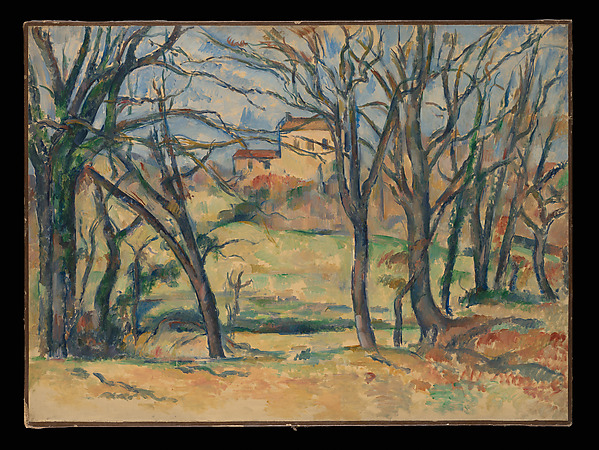
Trees and Houses Near the Jas de Bouffan, Paul Cézanne, 1885–86

Paul Cézanne

Trees and Houses Near the Jas de Bouffan, 1885–86

Metropolitan Museum of Art

A Sunday on La Grande Jatte — 1884, Georges Seurat, 1884–86, border added 1888–89

Georges Seurat

Un dimanche après-midi à l'Île de la Grande Jatte, 1884–86, border added 1888–89

Art Institute of Chicago

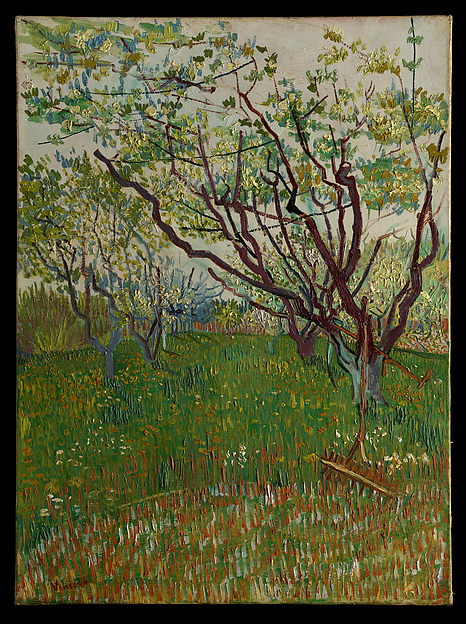
The Flowering Orchard, Vincent van Gogh, 1888

Vincent van Gogh

The Flowering Orchard, 1888

Metropolitan Museum of Art

The Acrobats (Les saltimbanques), Pablo Picasso, 1905, published 1913

Pablo Picasso

The Acrobats (Les saltimbanques), 1905, published 1913

Non exposée · National Gallery of Art

L'atelier de Cannes (The Studio in Cannes), Pablo Picasso, 1955

Pablo Picasso

L'atelier de Cannes (The Studio in Cannes), 1955

Non exposée · National Gallery of Art

The Acrobats (Les saltimbanques), Pablo Picasso, 1905, published 1913

Pablo Picasso

The Acrobats (Les saltimbanques), 1905, published 1913

Non exposée · National Gallery of Art