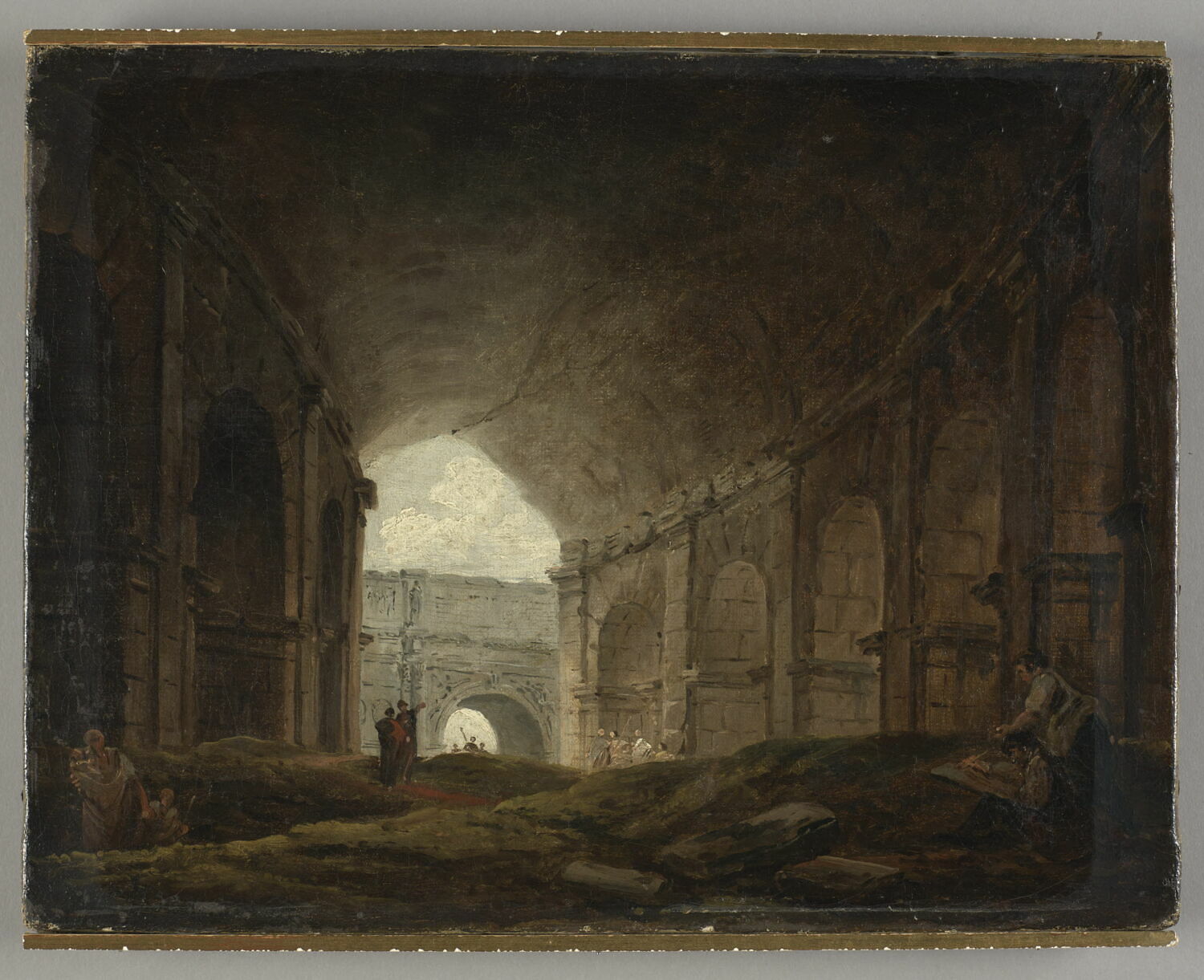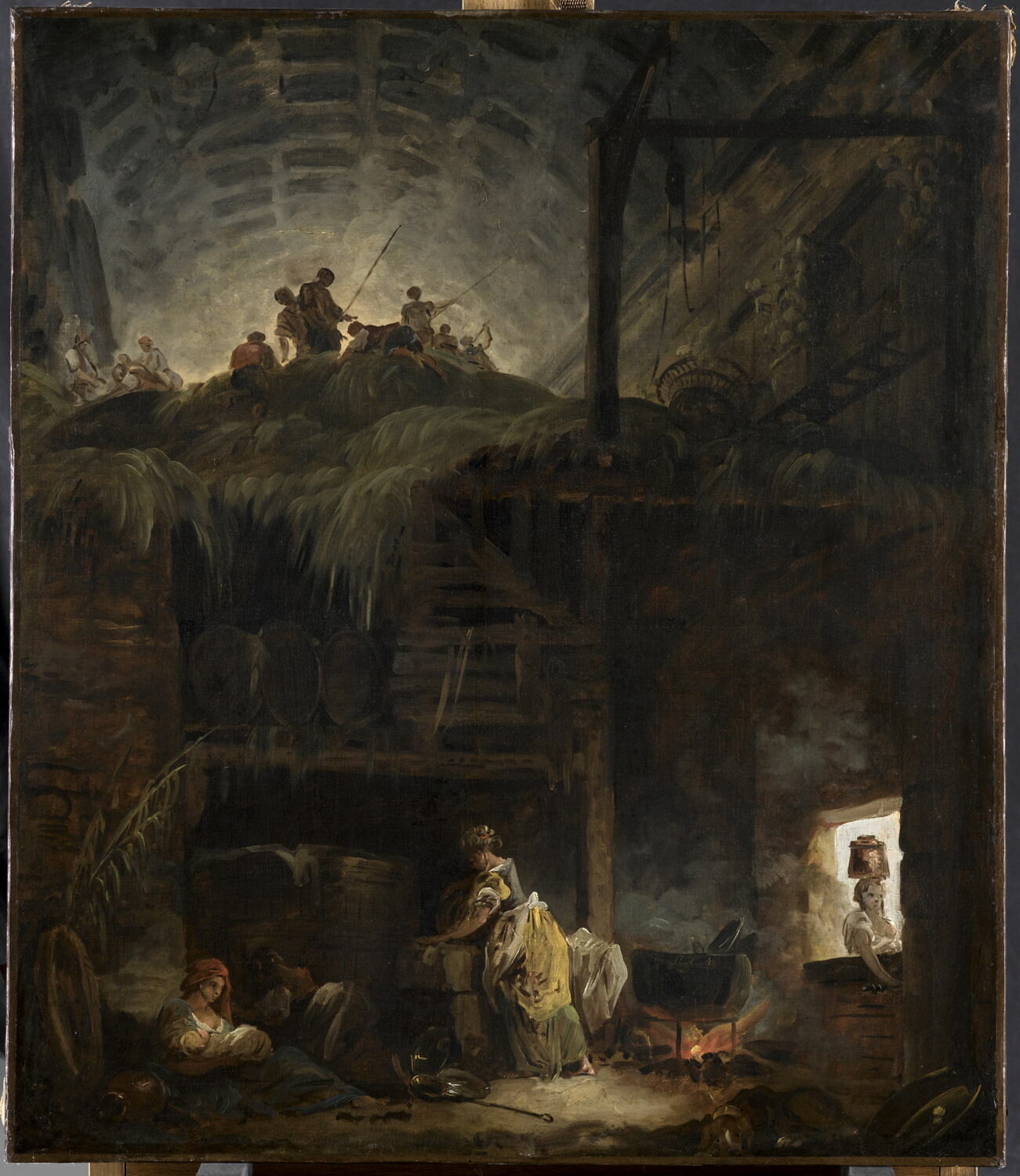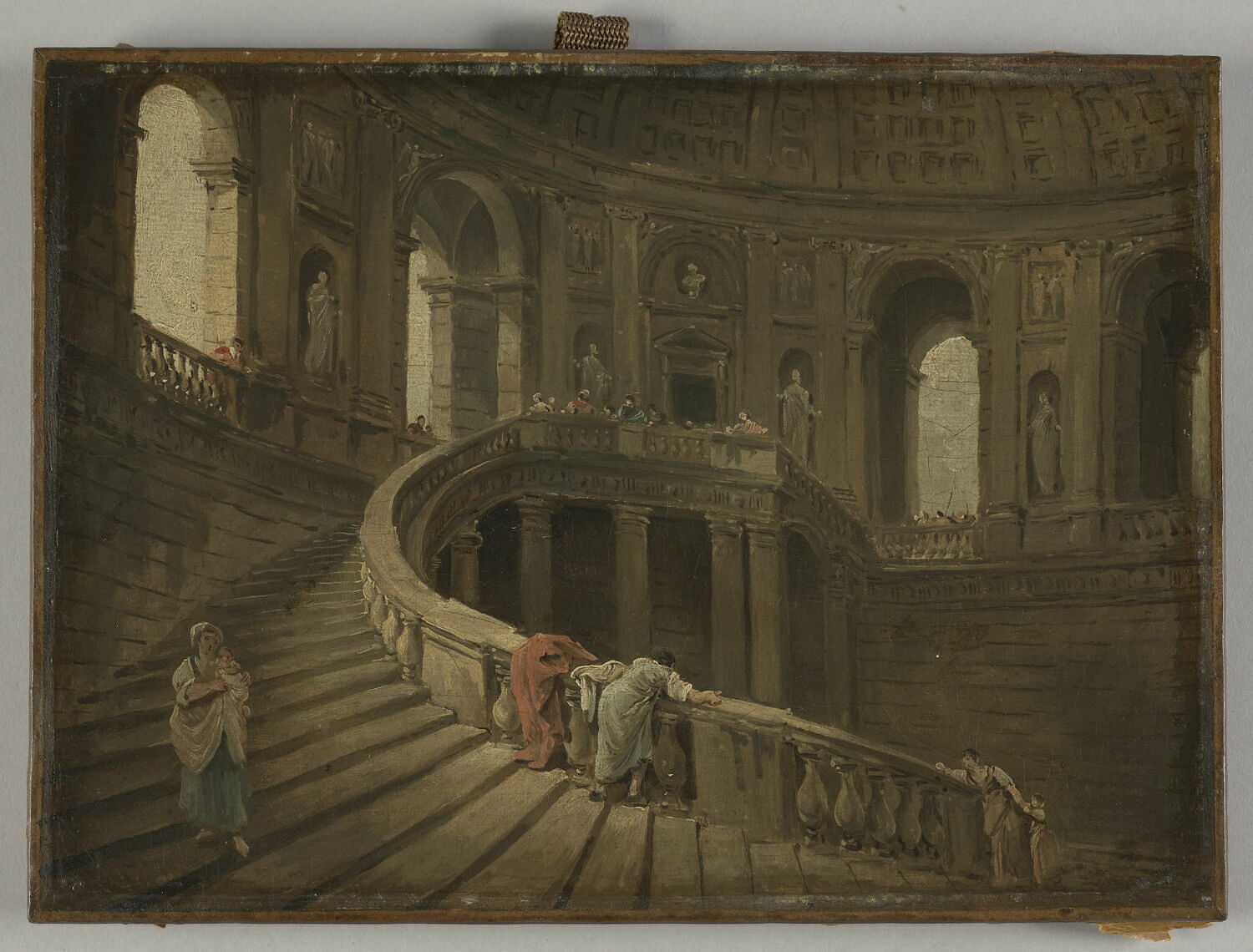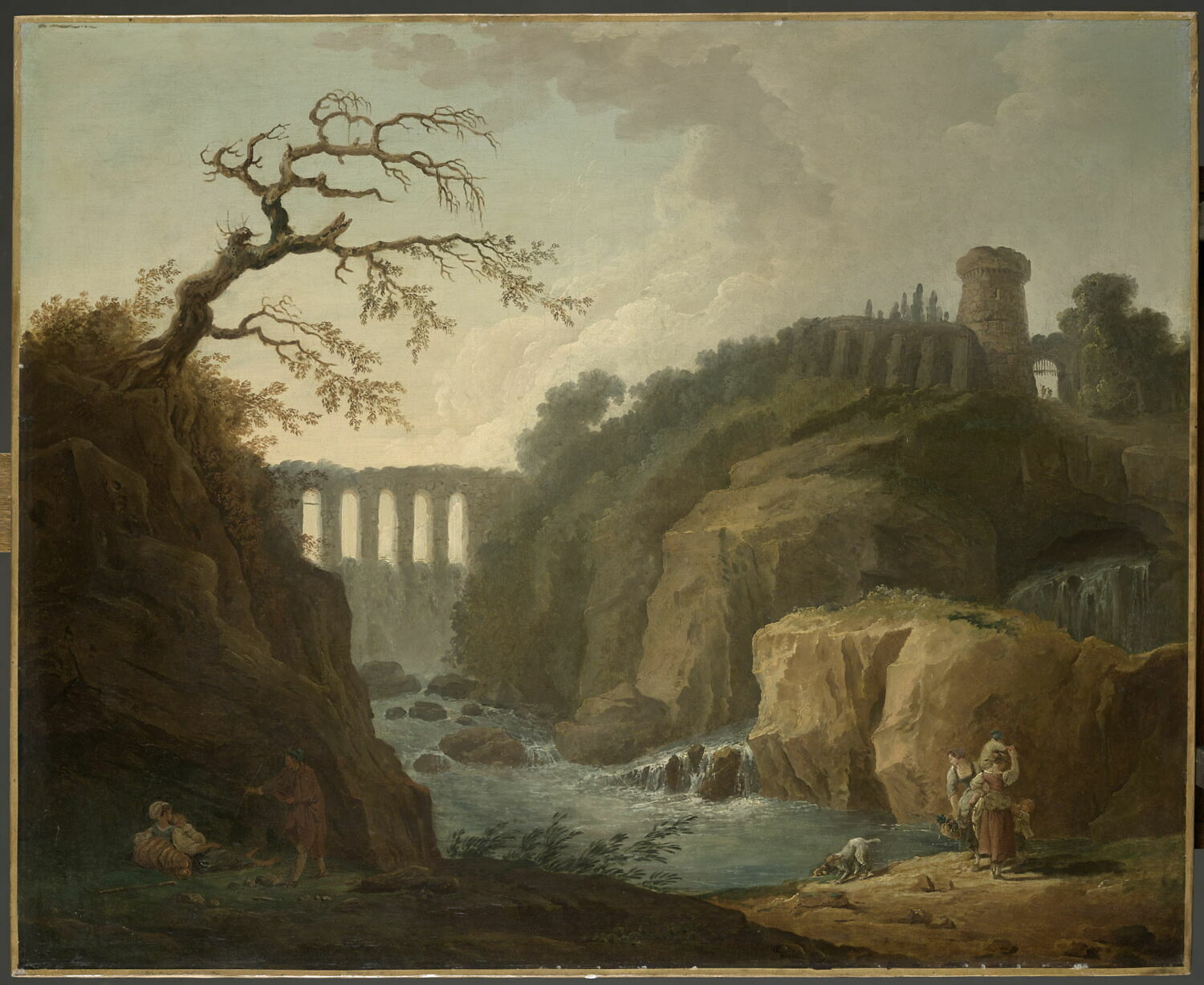
 Hubert RobertFrance, 1733–1808
Paysage avec aqueduc et torrent
Peut-on la voir ?
Pas exposée actuellement
Où est « Paysage avec aqueduc et torrent » aujourd’hui ? Collection: Musée du Louvre, Paris. Pas exposée actuellement. Vérifié 26 septembre 2026.

Paris, France
Elle appartient à la collection, mais n’est pas présentée en ce moment.
- Vérifié
- Dans cet état depuis
- Source
- Le musée
Notice
- Numéro d’inventaire
- MNR 898
Au catalogue
Sources
- Musée du Louvre
- Image : Musée du Louvre — © 2017 GrandPalaisRmn (musée du Louvre) / Tony Querrec
Dans la vie de Hubert Robert
La vie entière22 mai 1733
Born
1745–1751 · Formation
Collège de Navarre
4 November 1754
Arrival in Rome
Under the patronage of the future Duc de Choiseul, appointed French ambassador in Rome, Robert set off for Italy and arrived in Rome on 4 November 1754, spending eleven years there.
1767
Debut at the Paris Salon
Robert presented thirteen paintings and numerous drawings of ruined classical architecture at the Salon, winning critical acclaim; Diderot wrote: "The ideas that ruins awaken in me are grand." He continued to take part in the Salons regularly until 1798.
1778
Keeper of the Royal Museum
When the decision was made to open a museum in the Louvre, Robert was appointed keeper of the Royal Museum, charged with preparing the masterpieces of the royal collection for exhibition. Until 1793 he lived in the Grande Galerie of the Louvre.
29 October 1793
Arrest during the Revolution
The revolutionary surveillance committee arrested Robert on suspicion of disloyalty and imprisoned him in Sainte-Pélagie; on 31 January 1794 he was transferred to Saint-Lazare. In prison he drew a great deal, painted scenes of prison life, and decorated plates for sale.