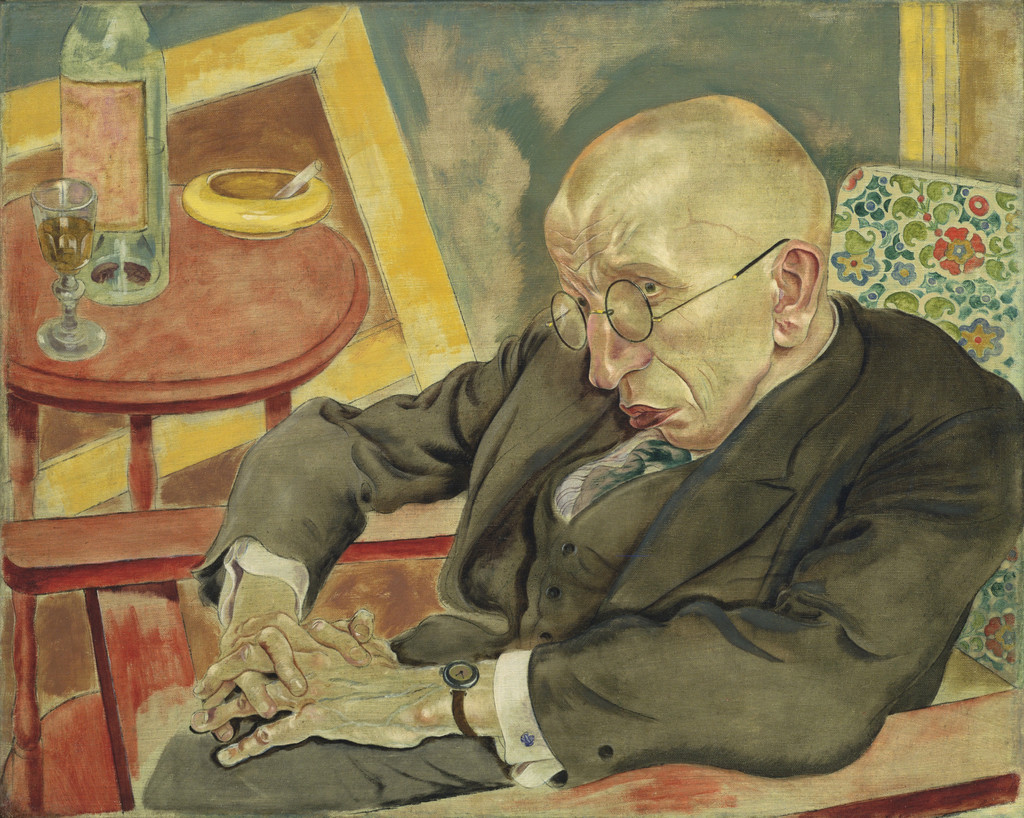
Grosz, GeorgeAllemagne, 1893–1959
Murder
Peut-on la contempler ?
Elle ne reçoit pas en ce moment

Art Institute of Chicago
Chicago, États-Unis
Elle appartient à la collection, mais n’est pas présentée en ce moment.
- Vérifié
- il y a 9 heures
- Dans cet état depuis
- 19 août 2026
- Source
- Les données de collection du musée lui-même
Notice
- Numéro d’inventaire
- 1967.262
Au catalogue
Sources
- Art Institute of Chicago: the museum's own open data · obtenue il y a 6 jours
- Image : Art Institute of Chicago — © the artist or rights holder
Pendant ce temps, chez Grosz, George
La vie entière1912–1913
Paris: Daumier and Toulouse-Lautrec
In Paris Grosz becomes acquainted with the newest art and discovers the graphic work of Daumier and Toulouse-Lautrec.
1912–1916
The Berlin College of Arts and Crafts, Orlik's class
From 1912 Grosz studies at the Berlin College of Arts and Crafts under Emil Orlik, until 1916 or, by other accounts, 1917.
November 1914
Volunteering to avoid the front
In November 1914 Grosz volunteers for military service, hoping that by pre-empting conscription he will avoid being sent to the front.
1915–1917 · Résidence
Steglitz
1916
A new name: Georg Groß becomes George Grosz
To 'de-Germanise' and internationalise his name, Grosz changes its spelling: Georg becomes the English 'George' and the German 'ß' in his surname is replaced by 'sz'. It is a protest against German nationalism and a romantic enthusiasm for America, drawn from the books of James Fenimore Cooper, Bret Harte and Karl May; his friend and collaborator Helmut Herzfeld likewise becomes John Heartfield at the same time.
1916
Drawings in the Berlin magazine “The New Youth”
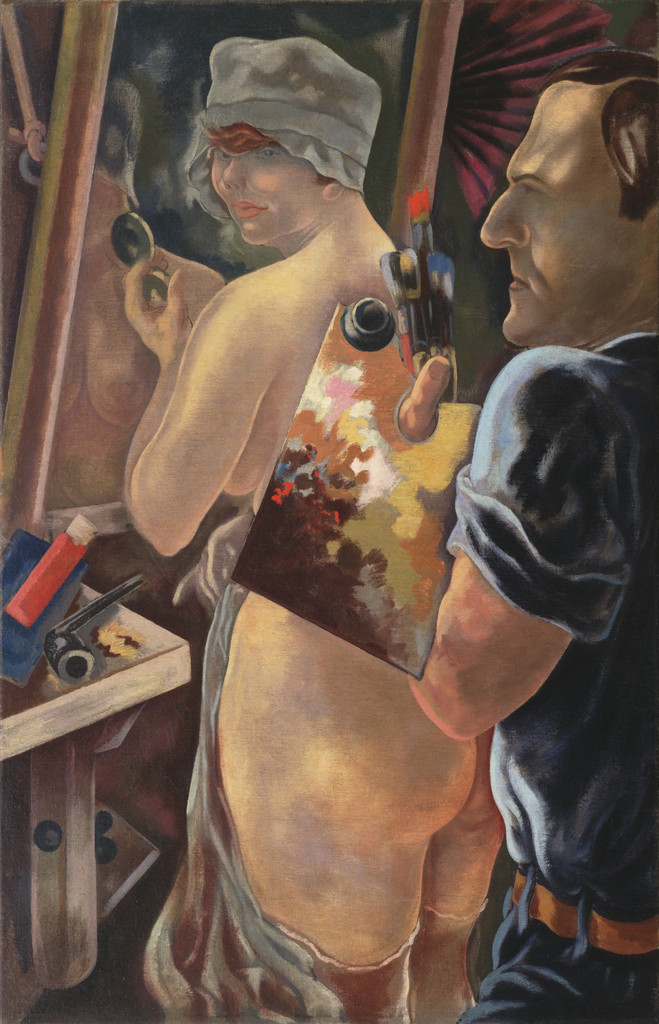
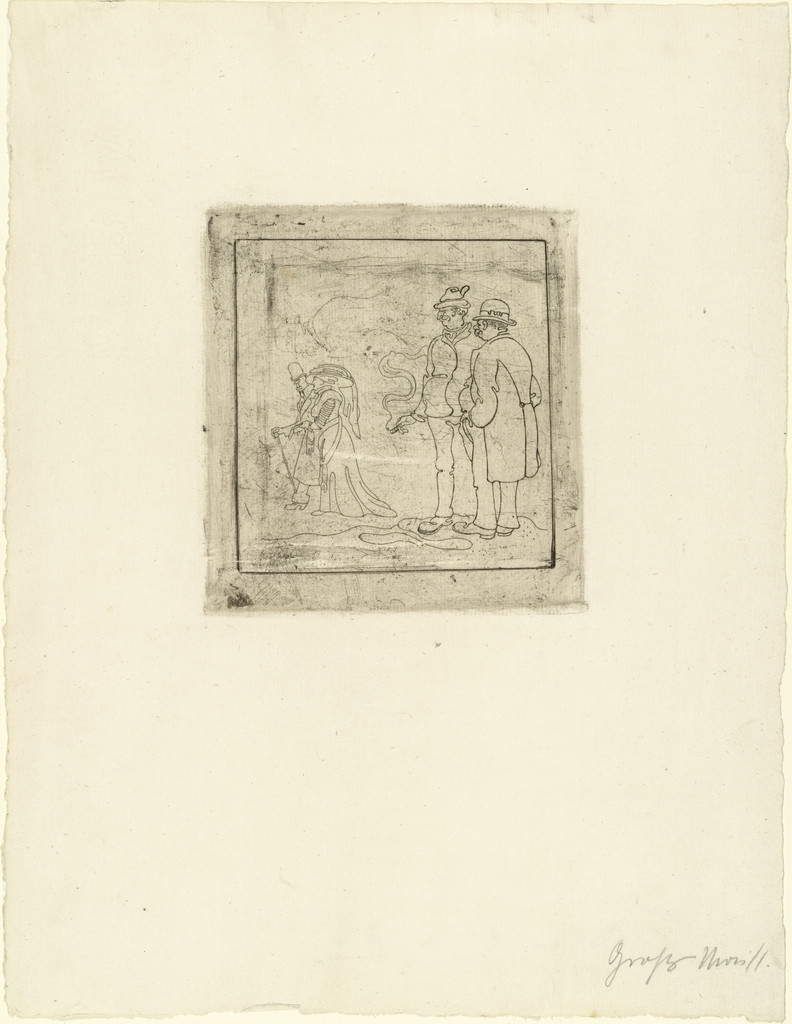
In mid-1916 Grosz's drawings appear in the Berlin magazine The New Youth; he soon attracts attention, several well-known critics and publicists write about him, and editions of his drawings are published. The main subject he chooses is the life of Berlin, with its immorality and whirl of entertainments and vices.

![In The Drawing Room [The Art Critics], George Grosz, late 1920s](https://api.nga.gov/iiif/4ab386b6-bf31-4ce2-8d4f-dffa98ae7480/full/!2400,2400/0/default.jpg)

![The End of the Road (Out of Fear of Starvation) [Das Ende des Weges (Aus Nahrungssorgen)], George Grosz, 1913](https://www.moma.org/media/W1siZiIsIjEyMTkwNyJdLFsicCIsImNvbnZlcnQiLCItcmVzaXplIDEwMjR4MTAyNFx1MDAzZSJdXQ.jpg?sha=864379f3ce59af36)