 Karl Schmidt-RottluffAllemagne, 1884–1976
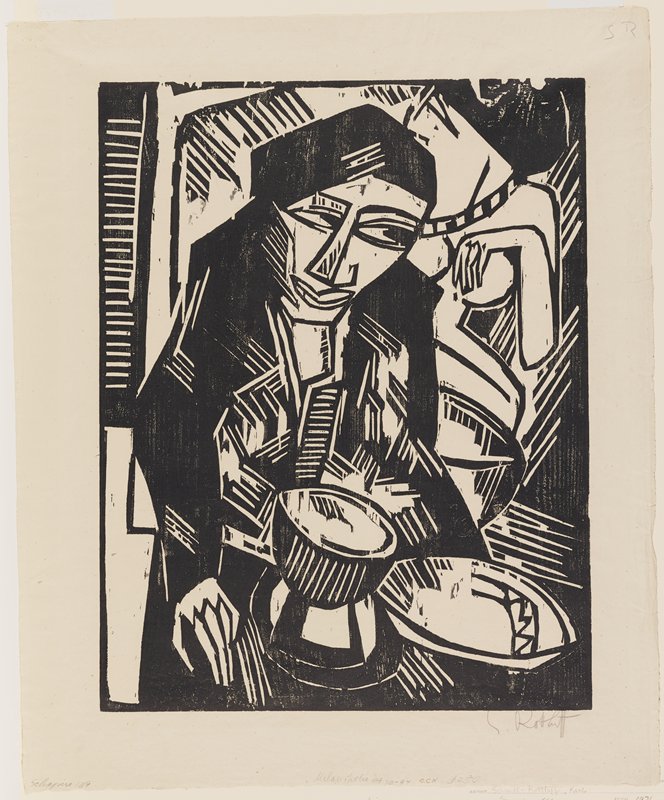
Melancholie
Peut-on la contempler ?
Elle ne reçoit pas en ce moment

Minneapolis, États-Unis
Elle appartient à la collection, mais n’est pas présentée en ce moment.
- Vérifié
- Dans cet état depuis
- Source
- Le musée
À propos de l’œuvre
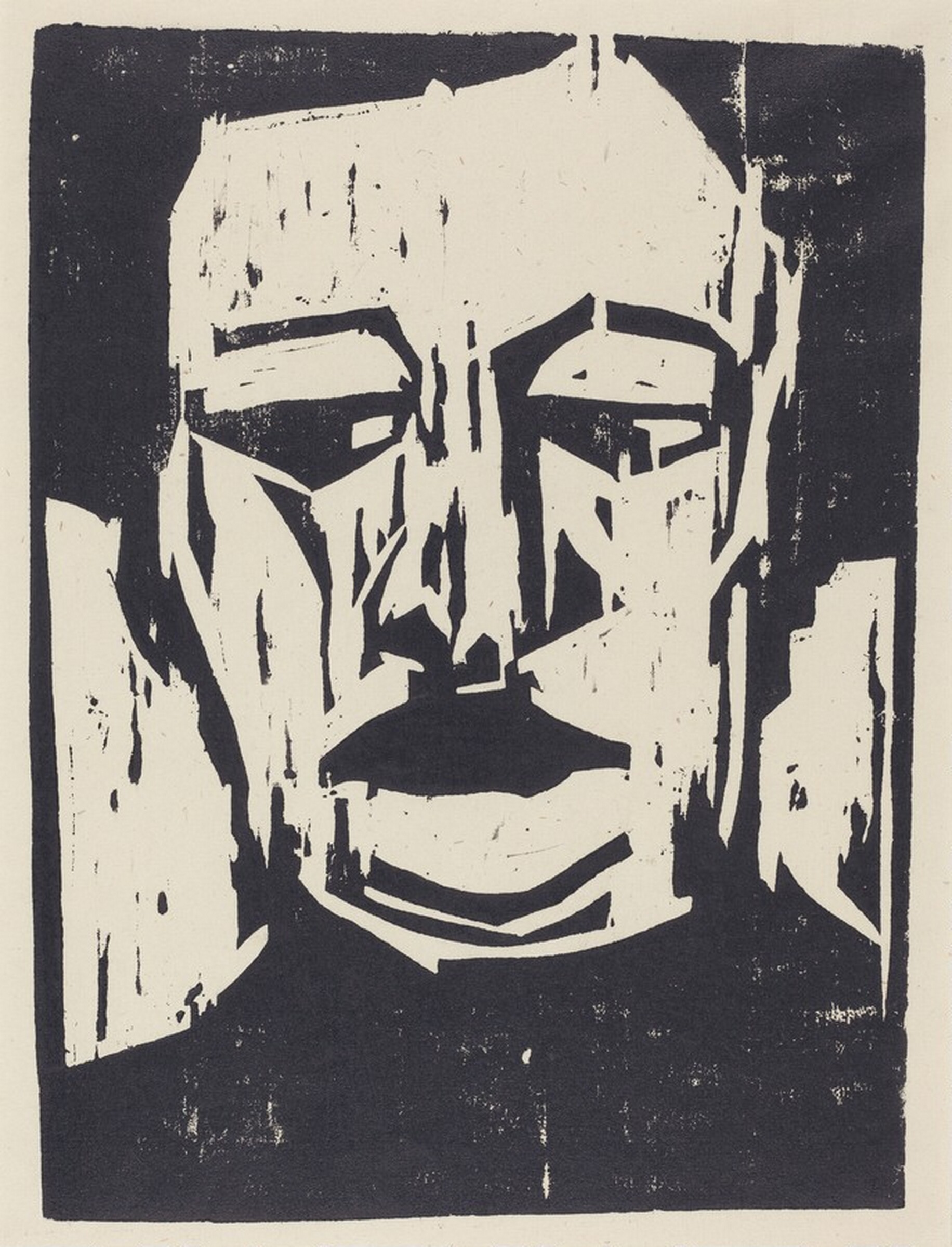
Melancholy depicts a woman seated behind a table, a bowl and platter set before her. A female nude, perhaps one of the artist's models, stands behind her. As one of the original members of the Expressionist group known as Die Brücke (The Bridge), Schmidt-Rottluff mastered the powerful vocabulary of hatchings and gouges that made for the strongest of Brücke woodcuts. After the breakup of the group in 1913, his subject matter became increasingly introspective, as in this heartfelt image of mute sadness.
Minneapolis Institute of Art
Notice
- Numéro d’inventaire
- P.12, 831
Au catalogue
Sources
- Minneapolis Institute of Art
- Image : Minneapolis Institute of Art — © Minneapolis Institute of Art
Pendant ce temps, chez Karl Schmidt-Rottluff
La vie entière1907–1912
Summers at Dangast
From 1907 to 1912 he spends the summers on the coast at Dangast, near Bremen, drawing a great deal; within the group he is regarded as a loner.
1911–1912
Journeys to Norway, Italy, Paris and Dalmatia
In 1911 he travels to Norway, and in 1912 he makes trips to Italy, Paris and Dalmatia.
1912
Friendship with Lyonel Feininger
In Berlin he meets Lyonel Feininger, and a friendship begins.
1912
The Sonderbund exhibition in Cologne
He takes part in the Sonderbund exhibition in Cologne.
1913
The dissolution of Die Brücke
The group dissolves, largely because of its members' independent moves to Berlin and a shift in each one's artistic direction. Schmidt-Rottluff adopts more subdued colouring and places greater emphasis on draughtsmanship: dark, contrasting lines between shapes instead of the juxtaposed colours that had been the norm.
1915–1918
A soldier on the Eastern Front
From 1915 to 1918 he serves as a soldier on the Eastern Front, in Russia and Lithuania; the experience hardly shows in his art, but while serving in Lithuania he turns increasingly to religious subjects.