ART WIKI32 963 en salle
CarteCollectionArtistesMuséesExpositionsJournal
Connexion

ART WIKI

Où est accroché le chef-d’œuvre, et quand on vous laisse entrer.

Collections : Art Institute of Chicago, Cleveland Museum of Art, Galerie Tretiakov, Hirshhorn Museum and Sculpture Garden, J. Paul Getty Museum, Metropolitan Museum of Art, Minneapolis Institute of Art, Musée de l'Ermitage, Musée des Beaux-Arts Pouchkine, Musée du Louvre, musée national d'art asiatique, Musée russe, Musées d'Art de Harvard, Museum of Modern Art, National Gallery of Art, National Portrait Gallery, Rijksmuseum Amsterdam, Smithsonian American Art Museum, Statens Museum for Kunst, Victoria and Albert Museum, Villa Getty, Whitney Museum of American Art, Catalogue d’État du fonds muséal de Russie (274 musées), Europeana (19 musées), Wikidata (6 musées), Paris Musées (12 musées) et Joconde, la base des musées du ministère de la Culture (495 musées). Les images appartiennent à leurs ayants droit.

Rubriques

  • Carte
  • Recherche
  • Collection
  • Chefs-d’œuvre
  • Exposées en ce moment
  • Artistes

Et aussi

  • Musées et galeries
  • Expositions
  • Journal
  • D’où viennent les données
  • Confidentialité et cookies
AccueilCarteCatalogue
  1. Collection/
  2. Musée du Louvre/
  3. Le Triomphe de Silène
Le Triomphe de Silène, Honthorst, Gerrit van, XVIIe siècle (1600 - 1700)
Gerard van Honthorst, portraitGerard van HonthorstPays-Bas, 1592–1656

Le Triomphe de Silène

XVIIe siècle (1600 - 1700) · Peintures

Peut-on la contempler ?

Inconnu

Musée du Louvre

Paris, France

Le propriétaire est connu ; on ignore si l’œuvre est exposée aujourd’hui.

Dans cet état depuis
26 sept. 2026
Source
Le musée
Sur la cartePage du musée

À propos du tableau

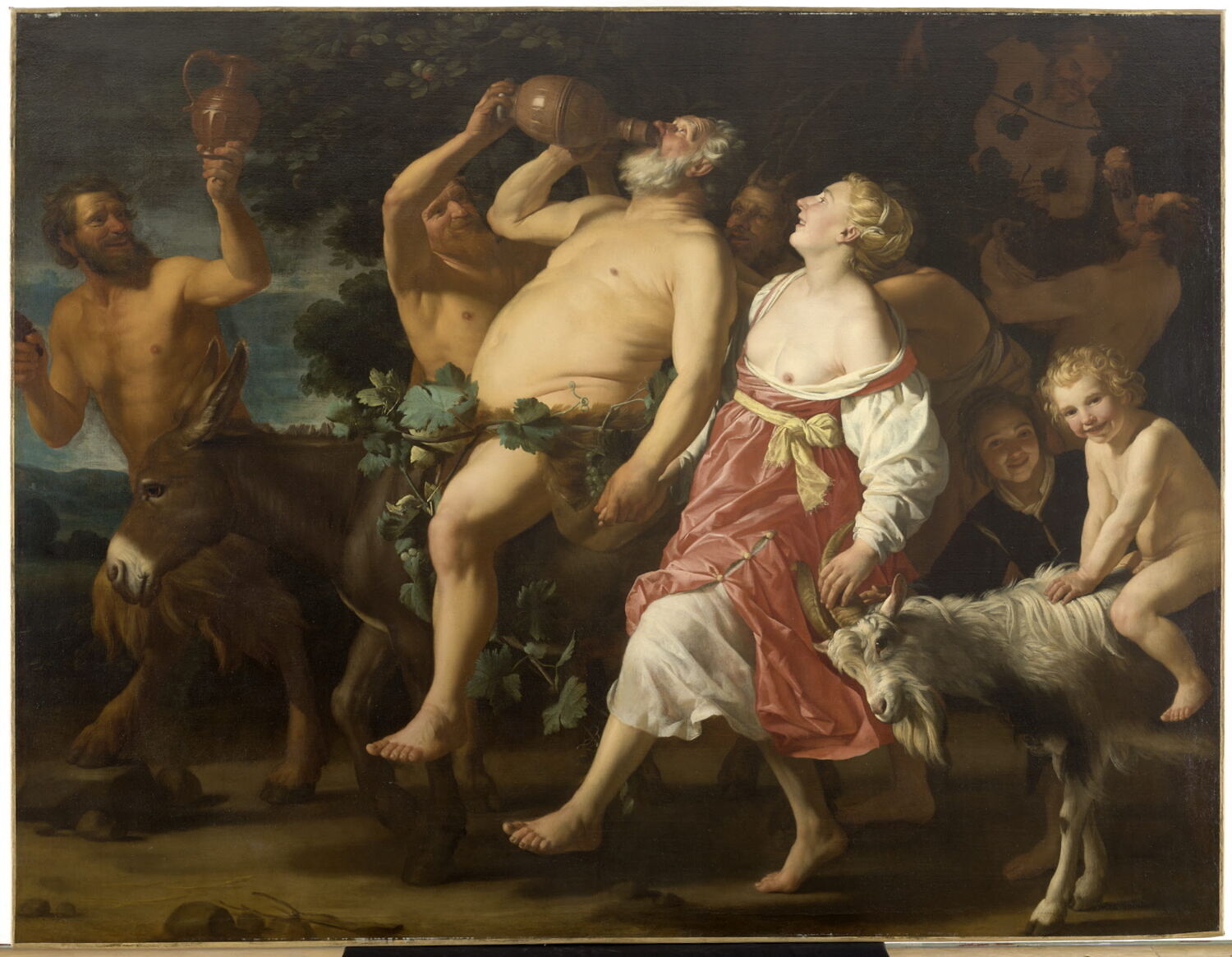
Le Triomphe de Silène est un tableau réalisé par le peintre néerlandais Gerrit van Honthorst vers 1623-1630. De format horizontal, cette huile sur toile est une peinture mythologique qui représente une bacchanale célébrant Silène.

Aperçu par son profil gauche, il figure presque nu au centre de la composition, où il boit au goulot d'une jarre, monté sur un âne. Il est entouré d'autres satyres, d'une Ménade et de quelques enfants. Parmi ces derniers, l'un chevauche un bouc en regardant vers l'observateur, comme le fait d'ailleurs l'animal.

L'œuvre fait partie depuis 1827 des collections du musée du Louvre, à Paris, en France. Elle se trouve depuis 1873 en dépôt au palais des Beaux-Arts de Lille, à Lille, dans le Nord.

Wikipédia · CC BY-SA

Notice

Numéro d’inventaire
INV 1365

Au catalogue

PeinturesPeinture néerlandaiseBaroqueXVIIe siècle

Sources

  • Musée du Louvre
  • Image : Musée du Louvre — © 2015 GrandPalaisRmn (musée du Louvre) / Stéphane Maréchalle

Pendant ce temps, chez Gerard van Honthorst

La vie entière
  1. c. 1610

    Leaves for Italy

    The son of the decorative painter Herman Gerritsz van Honthorst, trained by his father and then by Abraham Bloemaert, Honthorst probably left for Italy in 1610. He is first recorded in Rome in 1616; other Utrecht artists, later to be known as the Utrecht Caravaggisti, went there around the same time.

  2. c. 1610 – 1620

    At the palace of Marquis Giustiniani in Rome

    In Rome Honthorst lodged at the palace of Marquis Vincenzo Giustiniani, where he painted “Christ Before the High Priest” (now in the National Gallery, London), and under Caravaggio's influence took up night scenes lit by a hidden artificial source. Italian documents of his day call him “Gherardo Fiammingo” or “Gherardo Hollandese”: the nickname “Gherardo delle Notti” came into use only in the 18th century.

  3. 1620

    Returns to Utrecht

    Back in Utrecht, Honthorst built a considerable reputation at home and abroad: Sir Dudley Carleton, the English envoy at The Hague, recommended his work to the Earl of Arundel, and his work impressed the young Rembrandt and Frans Hals.

  4. 1623

    Marries and heads the Guild of St. Luke

    In the year of his marriage Honthorst was president of the Guild of St. Luke in Utrecht.

  5. 1628

    Invited to England by Charles I

    Elizabeth, Queen of Bohemia, sister of Charles I of England, then in exile in the Netherlands, commissioned paintings from Honthorst and engaged him as drawing master to her children; through her the king came to know him and invited him to England. In London he painted allegories and portraits of courtiers.

  6. 27 avril 1656

    Died

Autres œuvres : Gerard van Honthorst

Toutes les œuvres
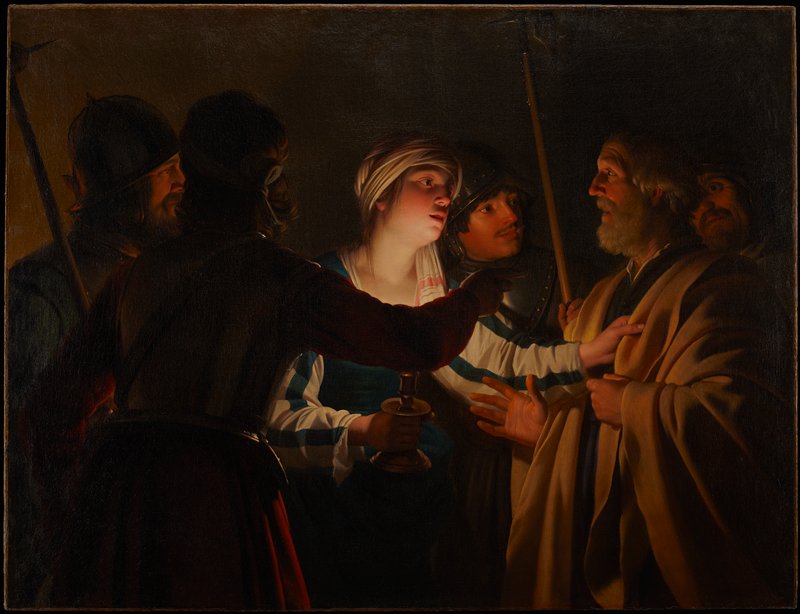
The Denial of St. Peter, Gerrit van Honthorst, c. 1623

The Denial of St. Peter

c. 1623 · Minneapolis Institute of Art

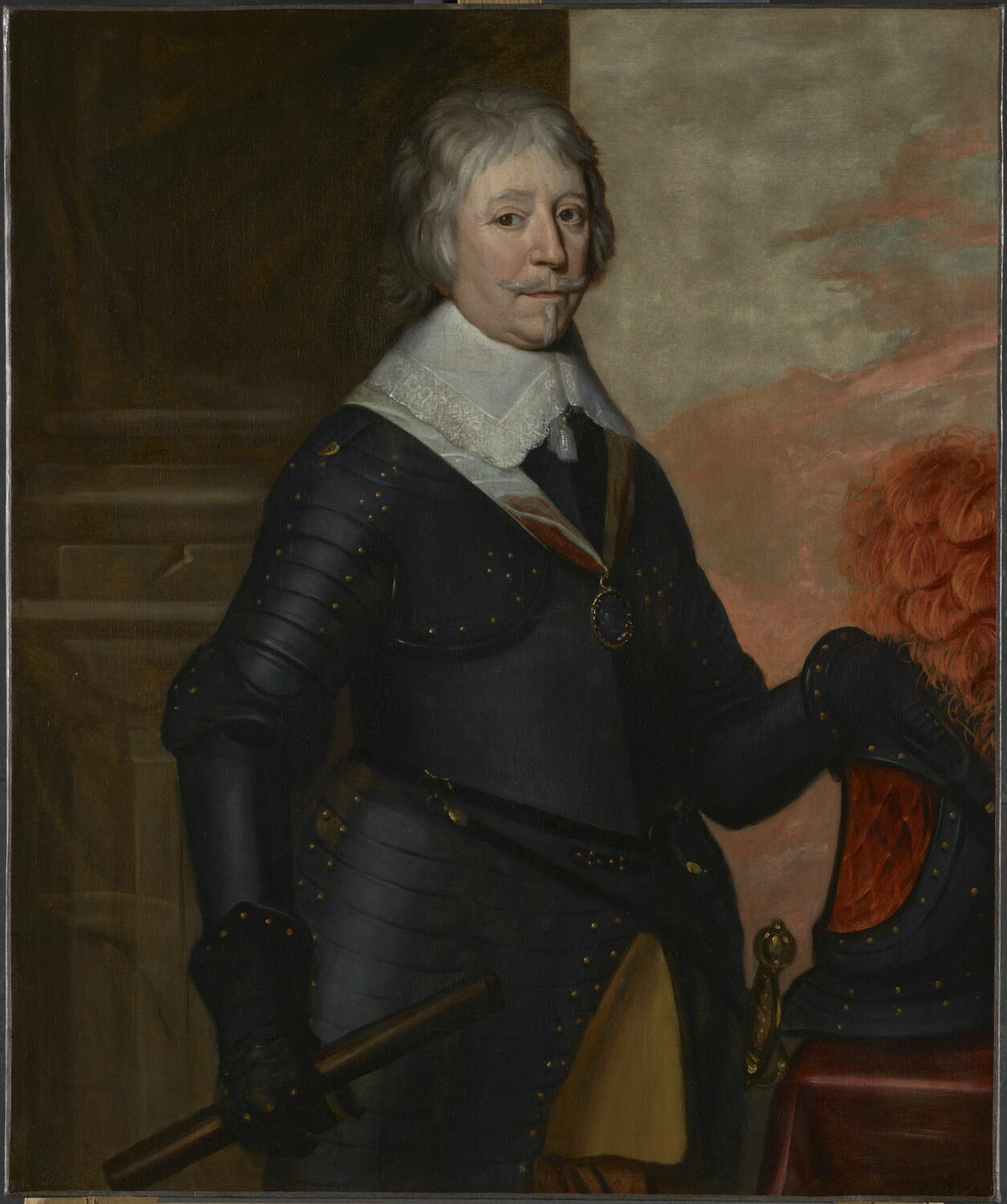
Portrait de Frédéric-Henri, prince d'Orange, Stadhouder (1584-1647), Honthorst, Gerrit van, 1e moitié du XVIIe siècle (1600 - 1650)

Portrait de Frédéric-Henri, prince d'Orange, Stadhouder (1584-1647)

1e moitié du XVIIe siècle (1600 - 1650) · Musée du Louvre

Christ Crowned with Thorns, Gerrit van Honthorst, about 1620

Christ Crowned with Thorns

about 1620 · J. Paul Getty Museum

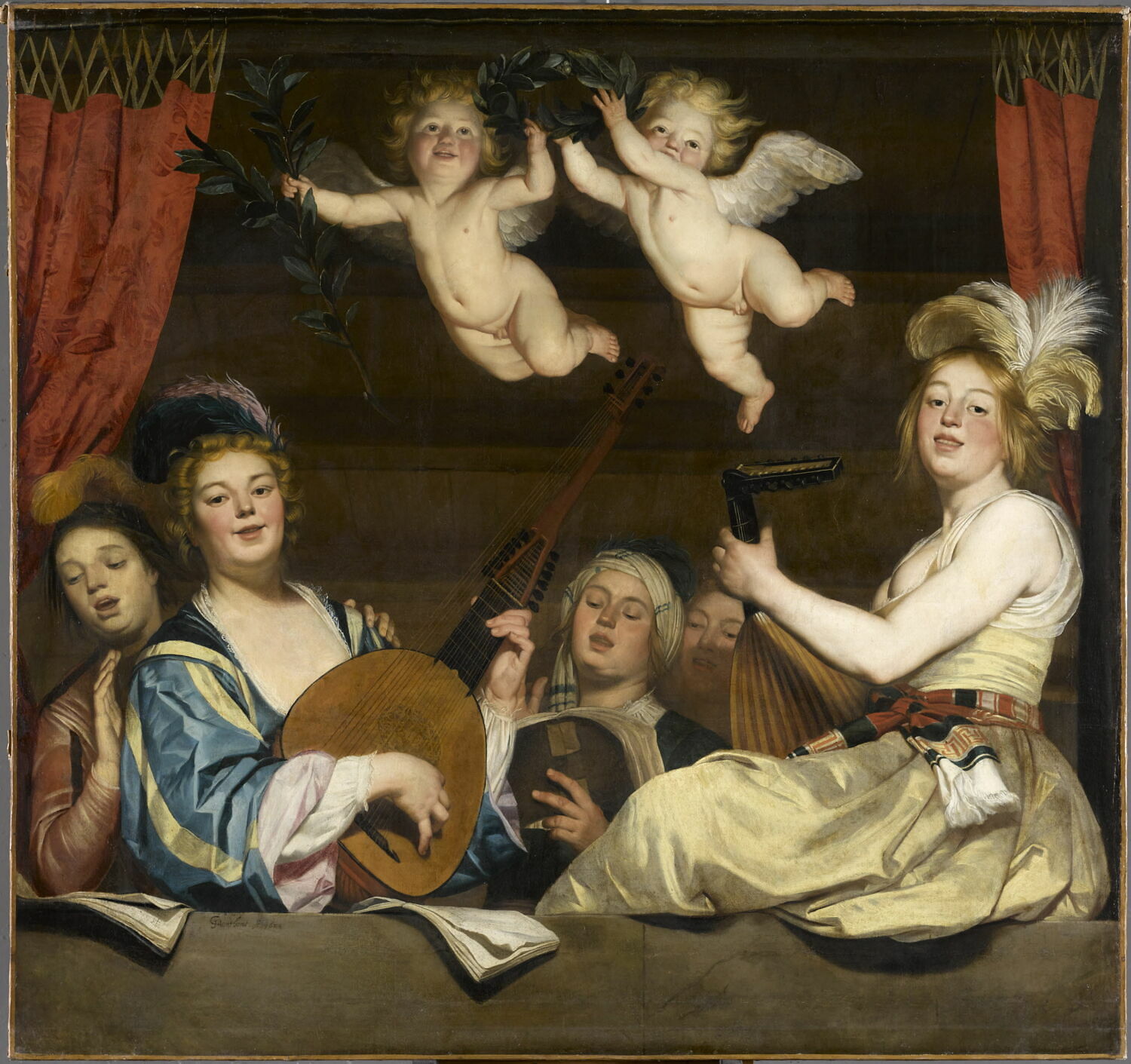
Musical Group on a Balcony, Gerrit van Honthorst, 1622

Musical Group on a Balcony

1622 · J. Paul Getty Museum

The Concert, Gerrit van Honthorst, 1623

The Concert

1623 · National Gallery of Art

Sater en nimf, Gerard van Honthorst, 1623

Sater en nimf

1623 · Rijksmuseum Amsterdam

Le Concert, Honthorst, Gerrit van, 1e quart du XVIIe siècle (1624)

Le Concert

1e quart du XVIIe siècle (1624) · Musée du Louvre

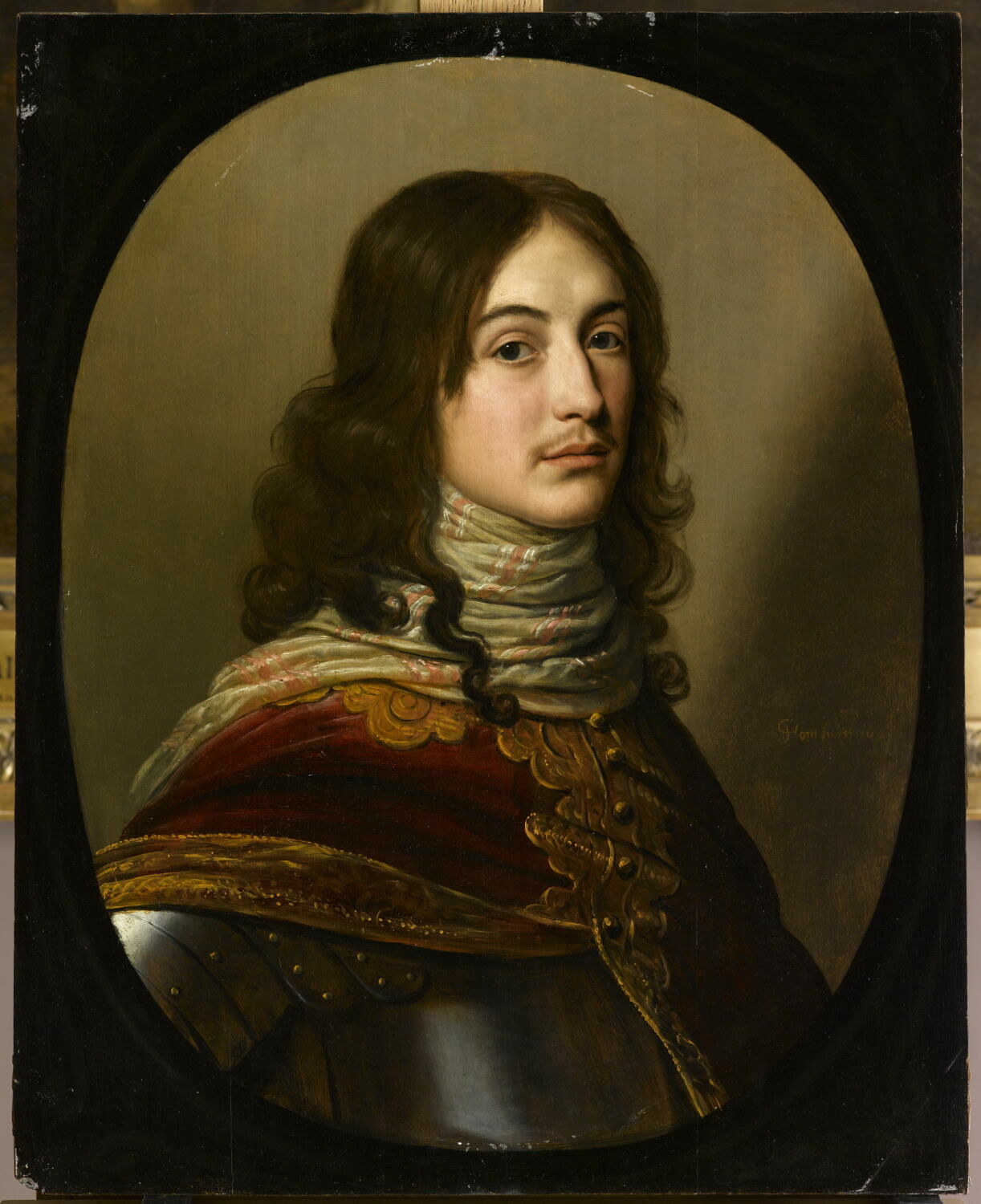
Portrait de Maurice de Bavière (1621-1652), prince palatin, Honthorst, Gerrit van, 2e quart du XVIIe siècle (1640)

Portrait de Maurice de Bavière (1621-1652), prince palatin

2e quart du XVIIe siècle (1640) · Musée du Louvre

Sous le même toit : Musée du Louvre

Page du musée
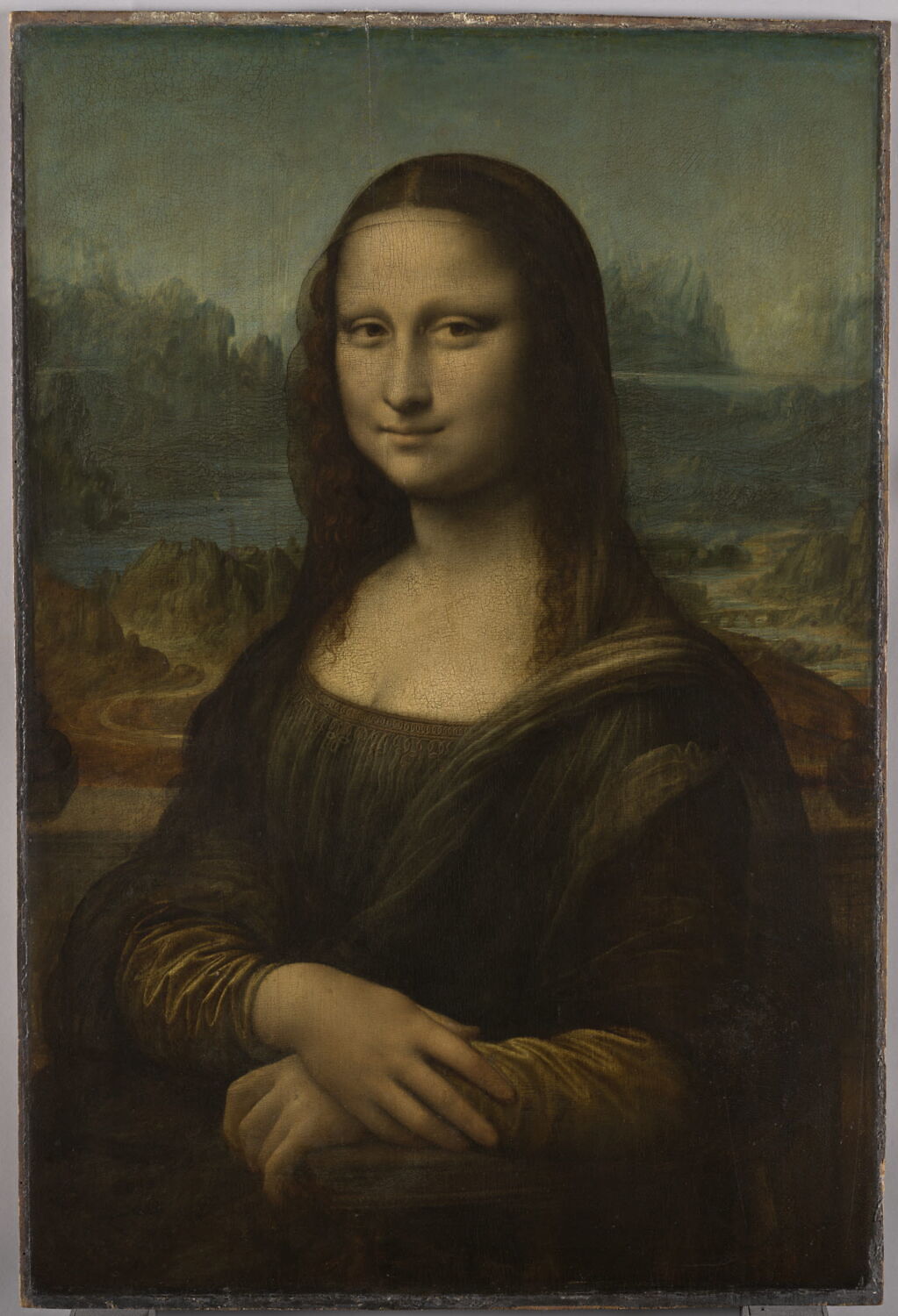
Portrait de Lisa Gherardini, épouse de Francesco del Giocondo, dit La Joconde ou Monna Lisa, Léonard de Vinci, 1e quart du XVIe siècle (1503 - 1519)

Leonardo da Vinci

La Joconde, 1e quart du XVIe siècle (1503 - 1519)

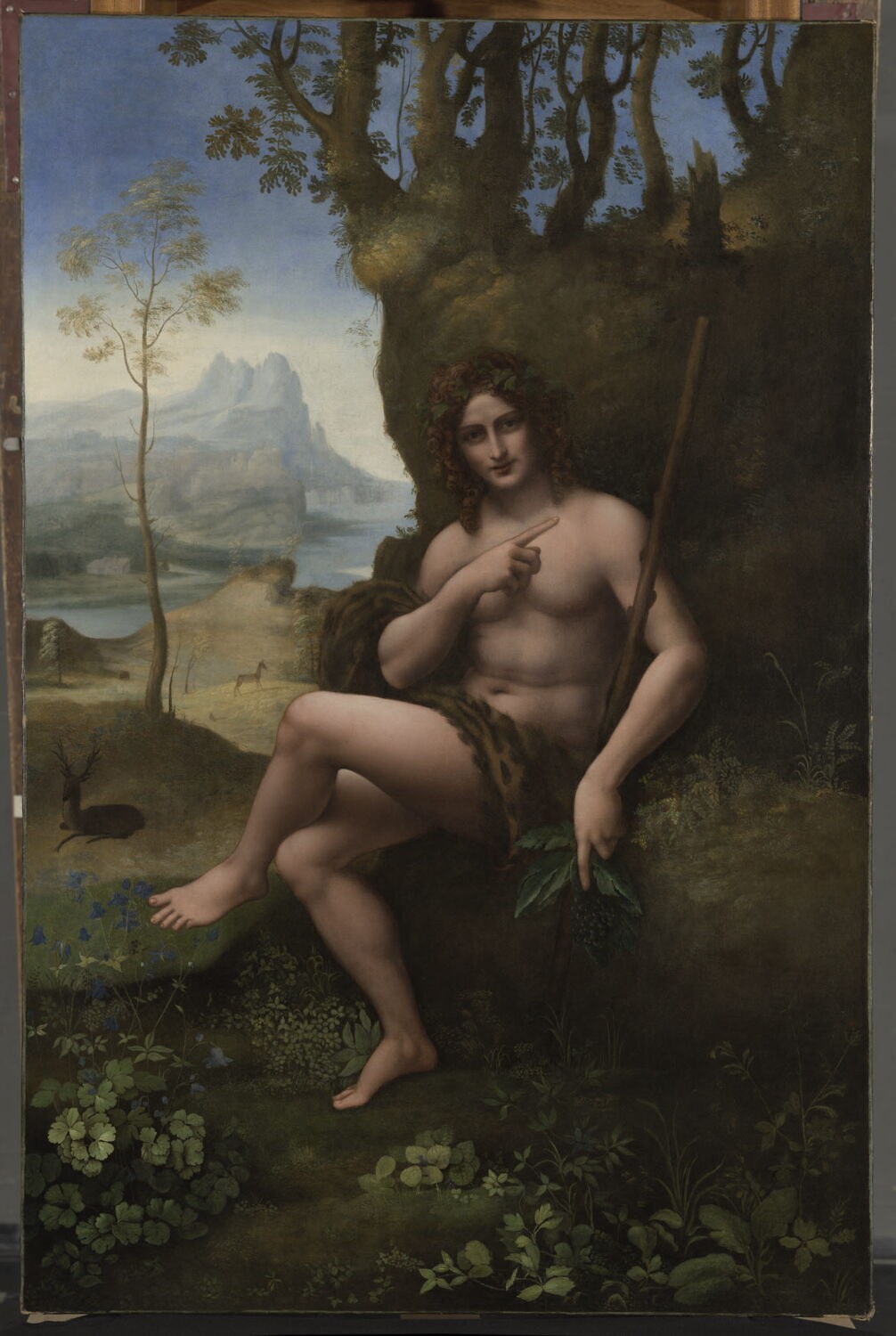
Saint Jean Baptiste, Léonard de Vinci, 1e quart du XVIe siècle (vers 1517 - 1520)

Leonardo da Vinci

Bacchus, 1e quart du XVIe siècle (vers 1517 - 1520)

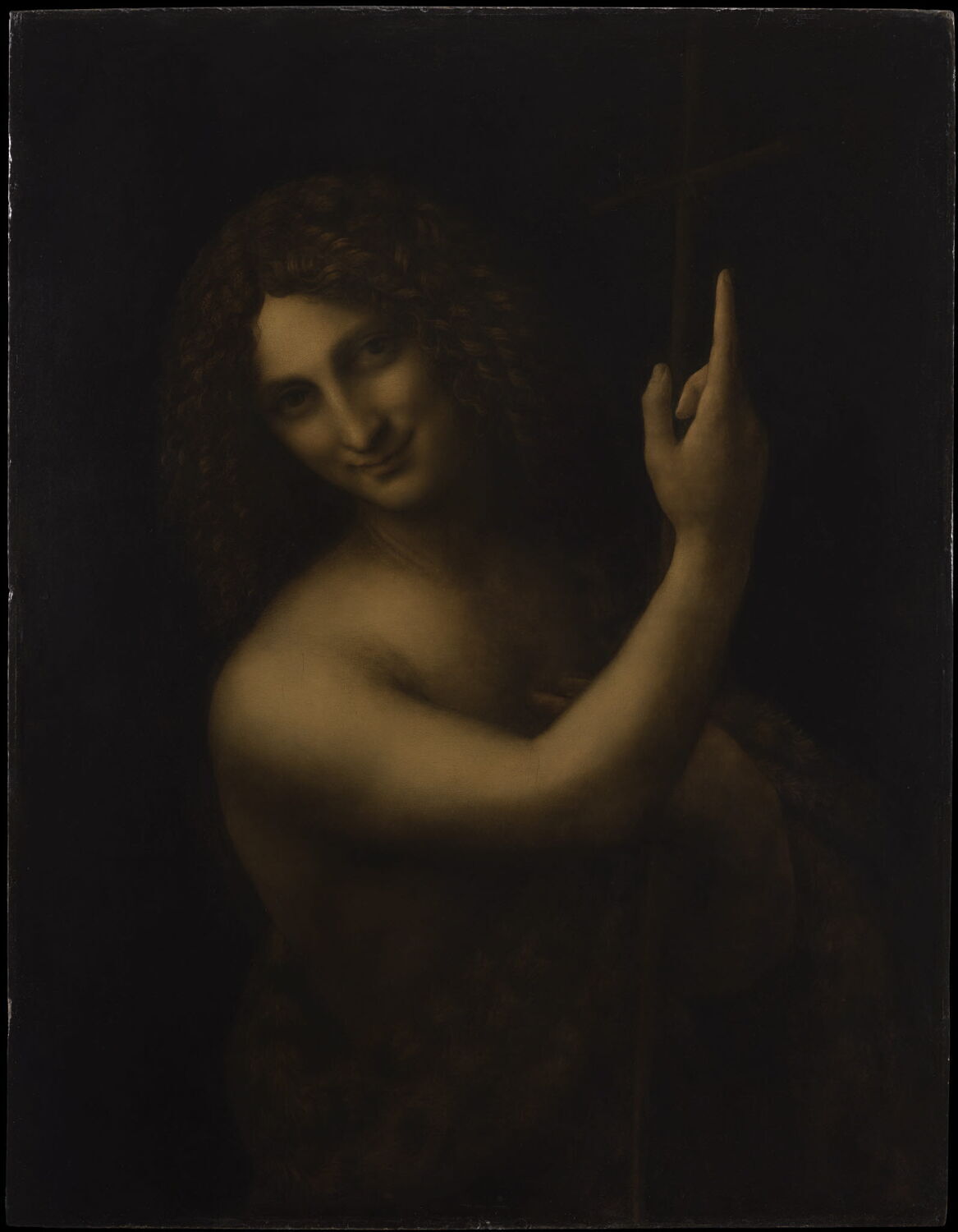
Saint Jean Baptiste, Léonard de Vinci, 1e quart du XVIe siècle (vers 1508 - 1519)

Leonardo da Vinci

Saint Jean Baptiste, 1e quart du XVIe siècle (vers 1508 - 1519)

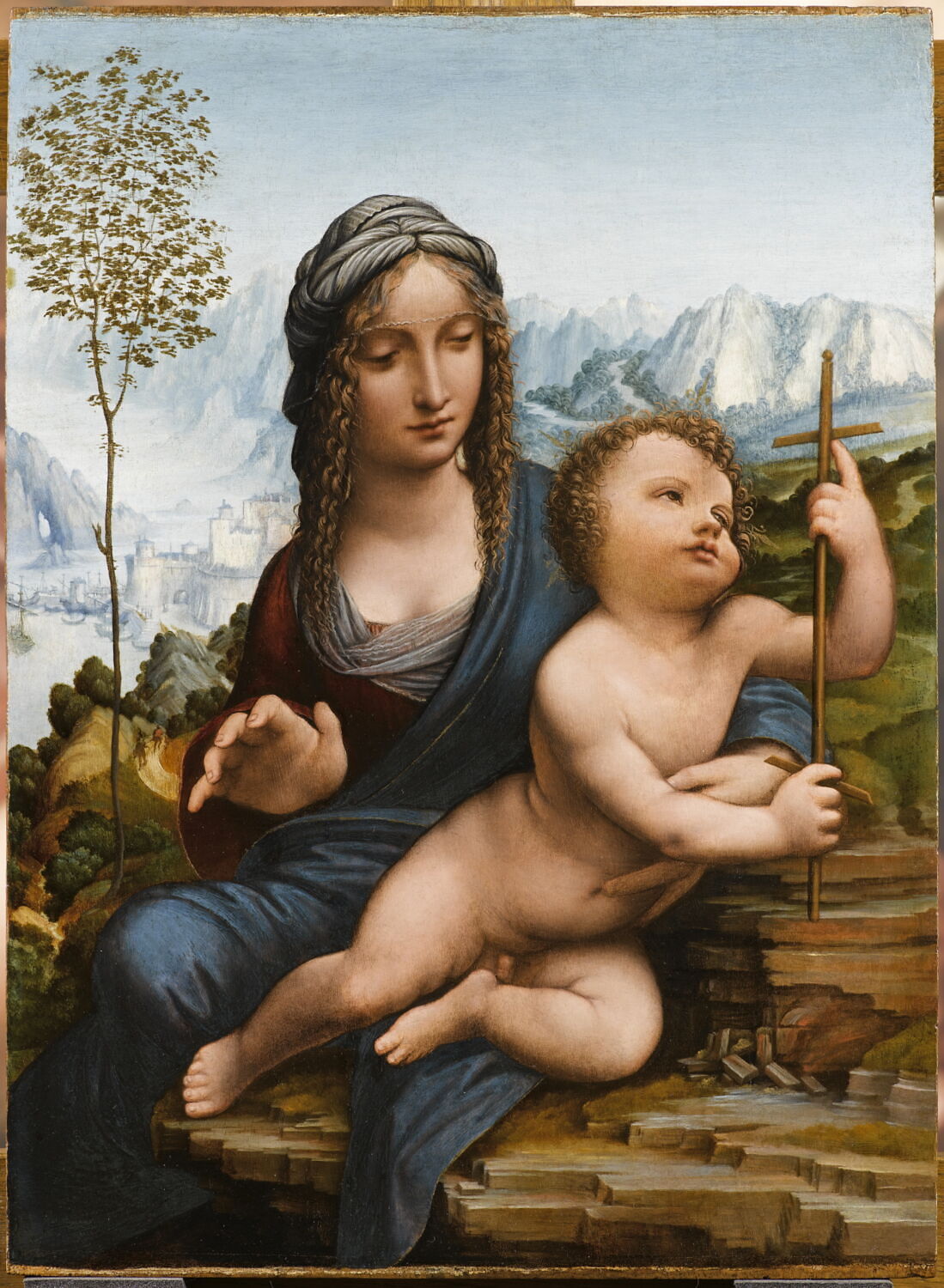
La Vierge et l'Enfant Jésus, dite Vierge au dévidoir ou Vierge aux fuseaux, Léonard de Vinci, XVIe siècle (vers 1505 - 1520)

Leonardo da Vinci

La Vierge et l'Enfant Jésus, dite Vierge au dévidoir ou Vierge aux fuseaux, XVIe siècle (vers 1505 - 1520)

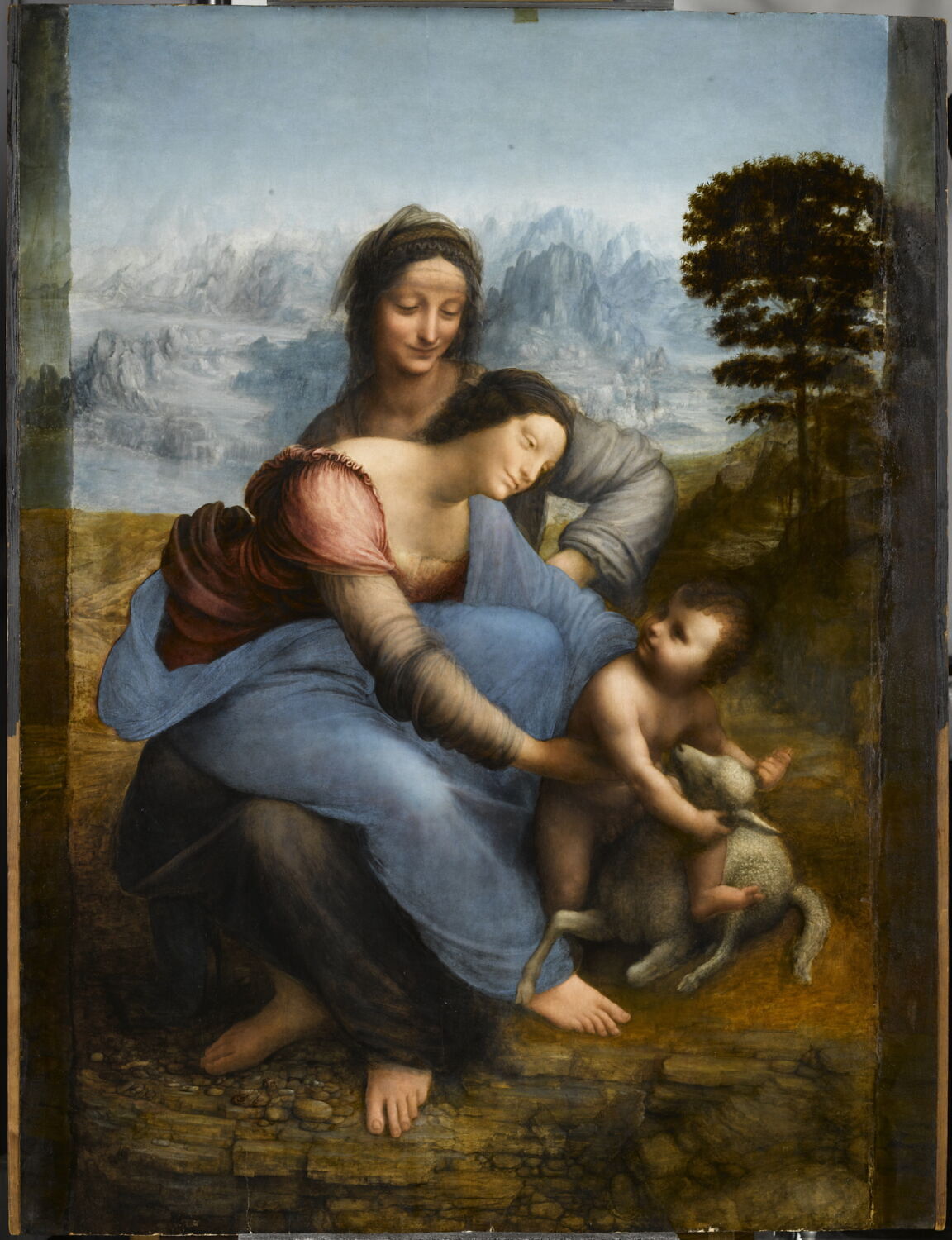
La Vierge, l'Enfant Jésus et sainte Anne, dit La Sainte Anne, Léonard de Vinci, 1e quart du XVIe siècle (vers 1503 - 1519)

Leonardo da Vinci

La Vierge, l'Enfant Jésus et sainte Anne, dit La Sainte Anne, 1e quart du XVIe siècle (vers 1503 - 1519)

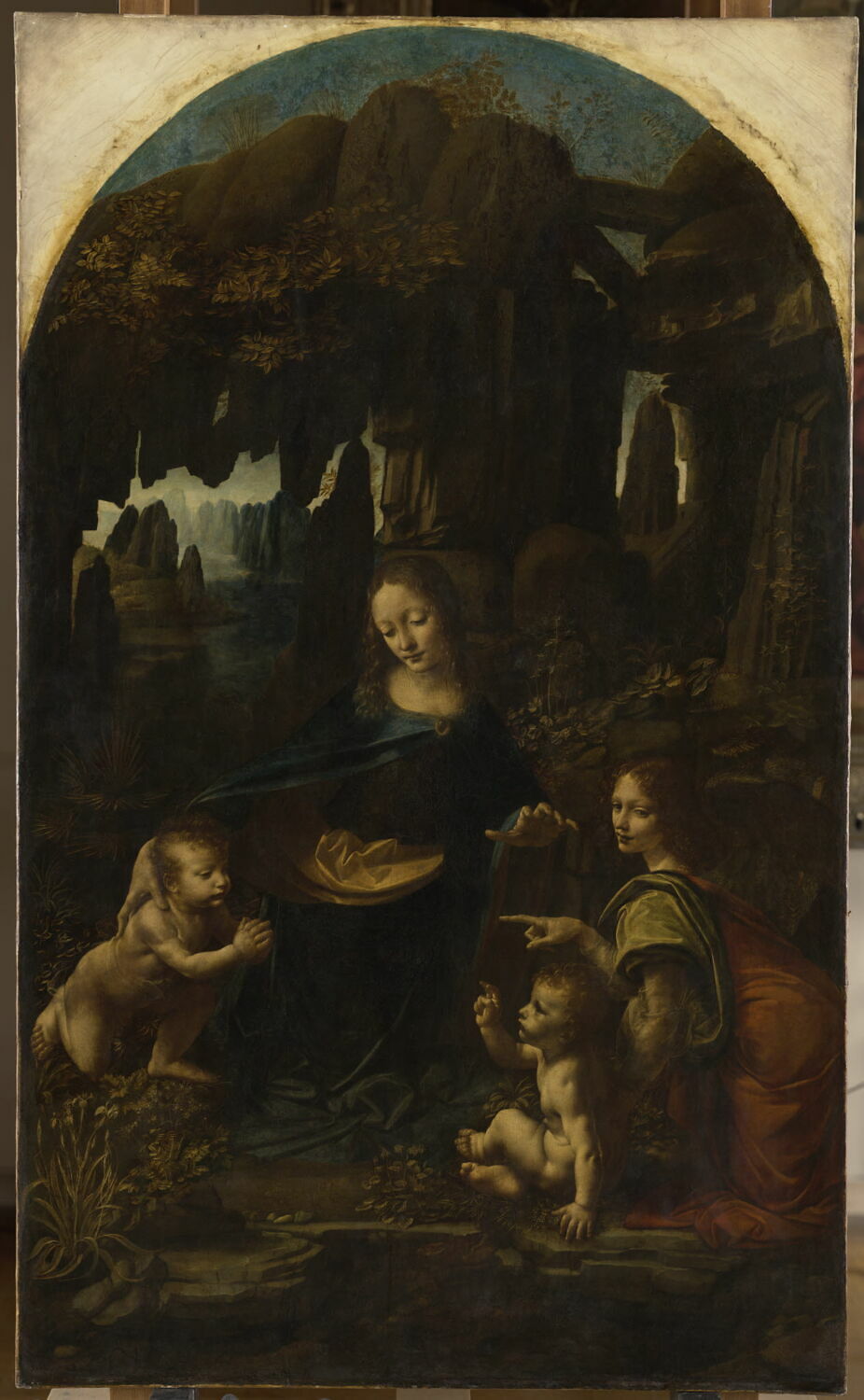
La Vierge, l'Enfant Jésus, saint Jean Baptiste et un ange, dit La Vierge aux rochers, Léonard de Vinci, 4e quart du XVe siècle (vers 1483 - 1494)

Leonardo da Vinci

La Vierge, l'Enfant Jésus, saint Jean Baptiste et un ange, dit La Vierge aux rochers, 4e quart du XVe siècle (vers 1483 - 1494)

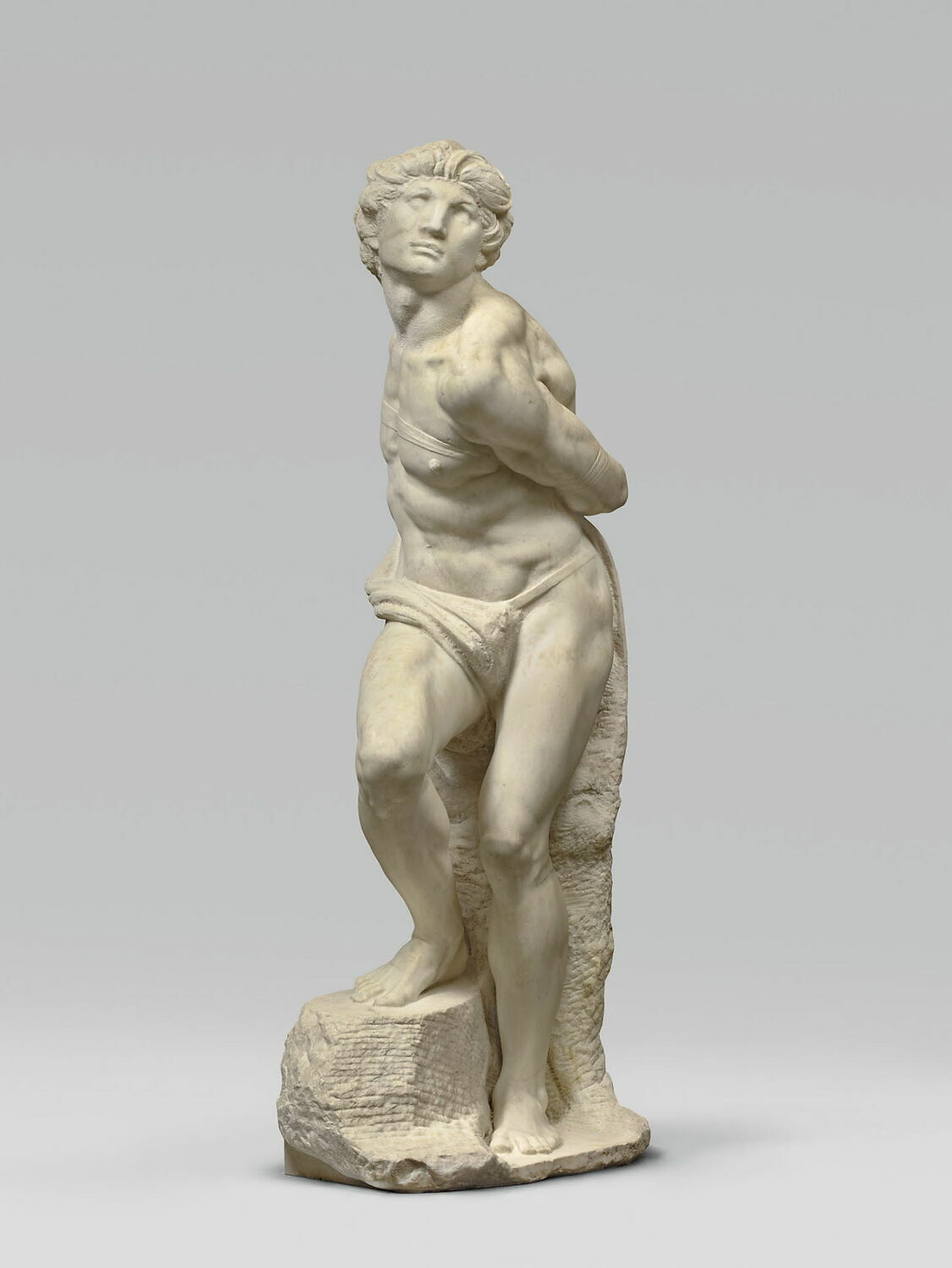
Esclave rebelle, Buonarroti, Michelangelo dit Michel-Ange, 1513 - 1515

Michelangelo

L'Esclave rebelle, 1513 - 1515

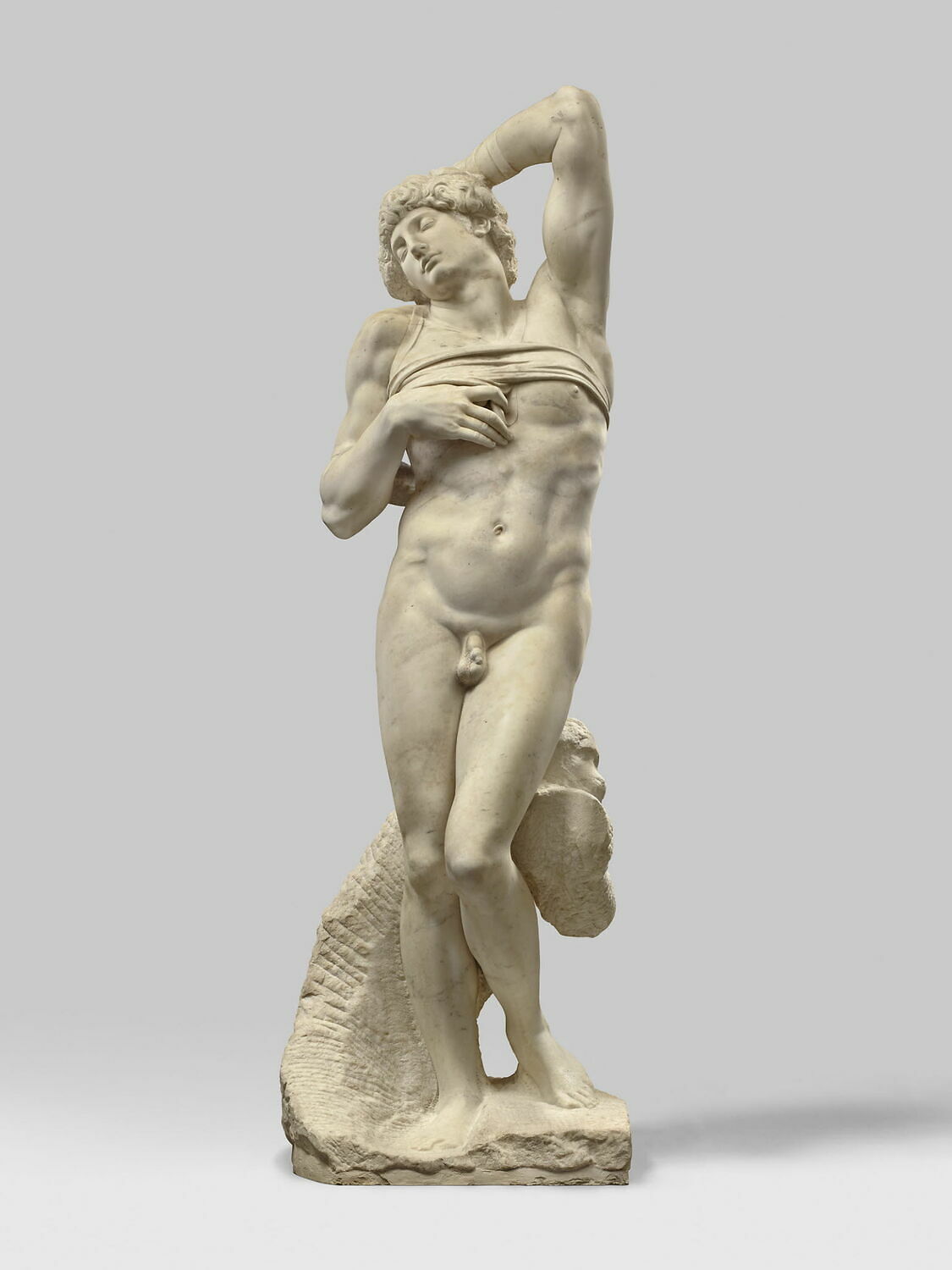
Esclave mourant, Buonarroti, Michelangelo dit Michel-Ange, 1513 - 1515

Michelangelo

L'Esclave mourant, 1513 - 1515