Eugène DelacroixFrance, 1798–1863
Le Picador
Peut-on la contempler ?
Nous l’ignorons : le musée garde le silence

Musée du Louvre
Paris, France
Le propriétaire est connu. Si elle est exposée aujourd’hui, le musée ne le dit pas, et l’on ne nous a pas appris à deviner.
- Dans cet état depuis
- Source
- Les données de collection du musée lui-même
À propos de l’œuvre
Le Picador est une aquarelle peinte par Eugène Delacroix en 1832, représentant le tercio de pique d'une corrida. Il est conservé au cabinet des estampes du musée du Louvre avec d'autres dessins tauromachiques de Delacroix, notamment Picador et Chuletillo (1832), mine de plomb 18,1 × 22,4 cm.
Notice
- Numéro d’inventaire
- RF 36804, Recto
Au catalogue
Sources
- Musée du Louvre: the museum's own open data · obtenue il y a 6 jours
- Image : Musée du Louvre — dist. GrandPalaisRmn / Martine Beck-Coppola
Pendant ce temps, chez Eugène Delacroix
La vie entière1831
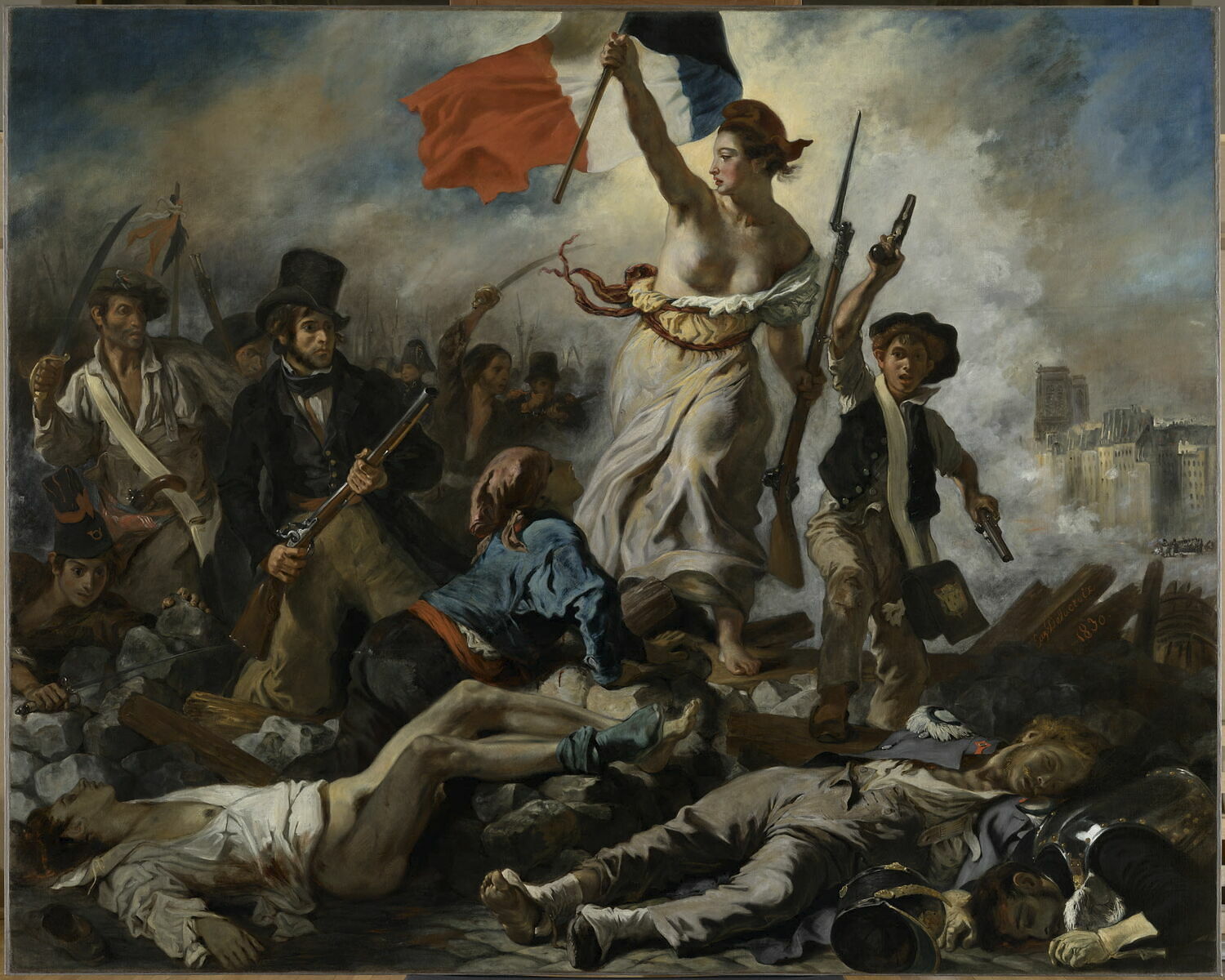
"Liberty" at the Salon of 1831
Liberty Leading the People was enthusiastically received by the public at the Salon of 1831 and immediately acquired by the state for 3,000 francs for the throne room of the Luxembourg Palace.
14 mars 1831 · Distinction
Knight of the Legion of Honour
1832
Journey to Spain and North Africa
As part of the diplomatic mission of Charles-Edgar de Mornay, Delacroix traveled to Morocco shortly after the French conquest of Algeria. The journey proved a turning point: he made dozens of sketches, and his impressions of North Africa nourished his art for the rest of his life.
1832
"Liberty" Removed from Public Display
By 1832 officials had deemed the painting's glorification of liberty too provocative and removed it from public display; nevertheless Delacroix continued to receive state commissions.
1833
Beginning of the Friendship with Marie-Élisabeth Blavot-Boulanger
In 1833 Delacroix formed a friendship with the painter Marie-Élisabeth Blavot-Boulanger that lasted the rest of his life.
1833–1837
Decoration of the Salon du Roi in the Palais Bourbon
From 1833 Delacroix received numerous commissions to decorate the public buildings of Paris; the first was his work on the Salon du Roi in the Chamber of Deputies at the Palais Bourbon, completed in 1837.