 Annibale CarracciItalie, 1560–1609
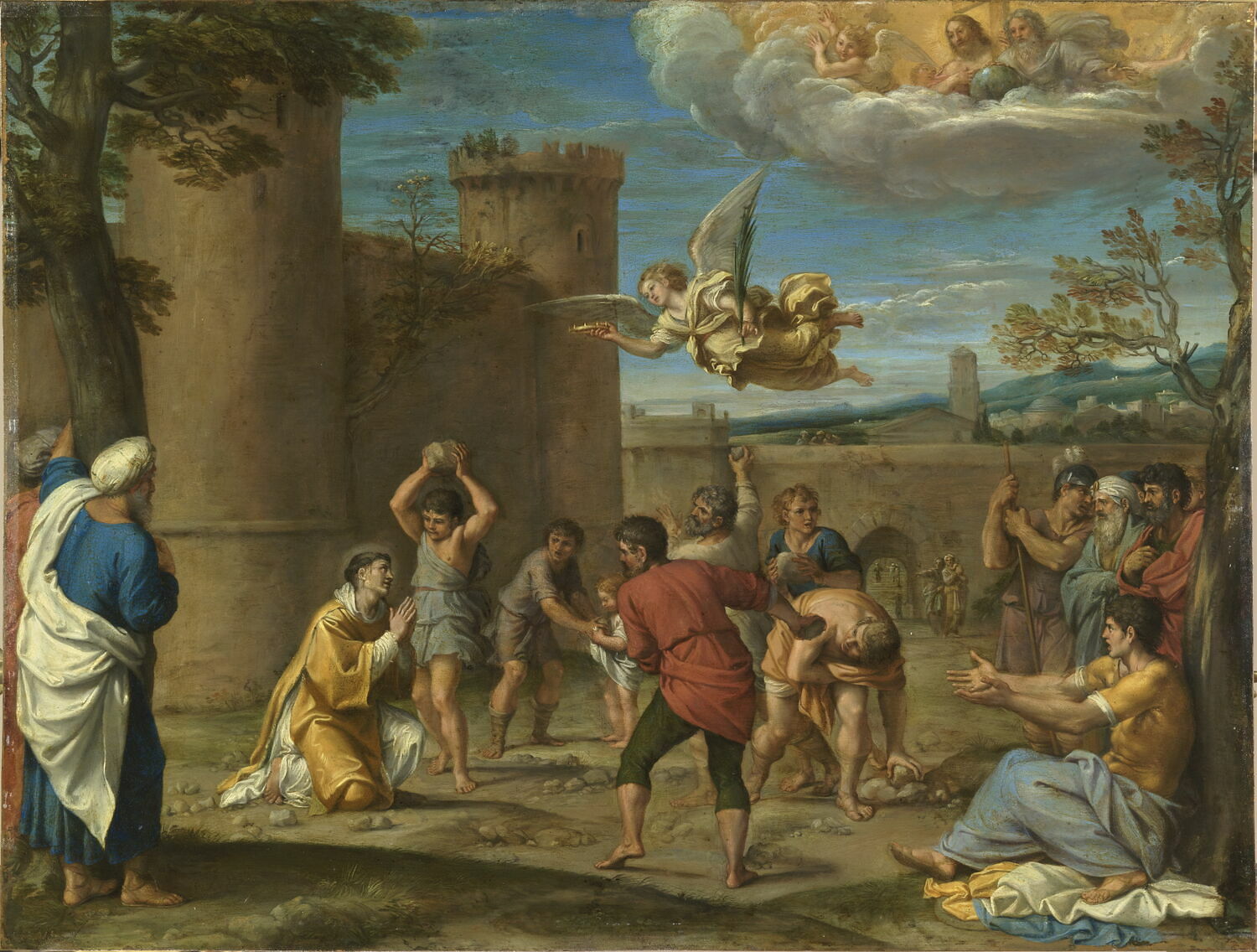
La Lapidation de saint Étienne
Peut-on la contempler ?
Oui, elle reçoit

Présentée au public. Qui s’en porte garant est indiqué ci-dessous.
- Vérifié
- Dans cet état depuis
- Source
- Le musée
À propos du tableau
La Lapidation de saint Étienne est un tableau réalisé en 1603-1604 par le peintre italien Annibale Carracci. De format horizontal, cette huile sur cuivre est une peinture chrétienne qui représente Étienne pendant son martyre. À genoux au pied d'un rempart de Jérusalem, le prédicateur y figure à l'instant où il est lapidé par un groupe, en présence de témoins. Un ange vole dans sa direction en portant une couronne et la palme des martyrs, sous le regard de Jésus-Christ et Dieu le Père depuis le Ciel, dans l'angle supérieur droit de la composition.
Longtemps demeurée au château de Versailles, à Versailles, l'œuvre est conservée au musée du Louvre, à Paris. Cet établissement détient par ailleurs dans ses collections une toile de Carrache sur le même sujet et portant le même titre.
Notice
- Numéro d’inventaire
- INV 204
Au catalogue
Sources
- Musée du Louvre
- Image : Musée du Louvre — © 2010 GrandPalaisRmn (musée du Louvre) / Hervé Lewandowski
Pendant ce temps, chez Annibale Carracci
La vie entière1595–1609 · Lieu de travail
Rome
1602
A trip to Emilia-Romagna, probably for Agostino’s funeral
After 1595 Annibale left Rome only twice; the first time was briefly in 1602, to Emilia-Romagna, probably for the funeral of his brother Agostino.
1602
The commission for the Herrera Chapel
In 1602 Annibale received the commission to decorate the Herrera Chapel in the Roman church of San Giacomo degli Spagnoli. The surviving parts of the frescoes were later transferred to the National Art Museum of Catalonia in Barcelona and some to the Prado Museum in Madrid.
c. 1605
A mental breakdown after a meagre fee
Carracci was a melancholic, and around 1605 he suffered a mental breakdown which, biographers explain, was caused by the unexpectedly low fee of 500 scudi for the frescoes of the Farnese gallery.
March 1605
Serious illness: rheumatism keeps him from painting
In March 1605 Annibale fell seriously ill and apparently never recovered enough to resume work. From 1605 severe rheumatic pains deprived him of the ability to paint.
1606
Leaves the Palazzo Farnese
In 1606 Annibale left the Palazzo Farnese and lived in the Roman parish of San Lorenzo in Lucina.