Anthony van DyckFlandre, 1599–1641
Isabella Brant
Peut-on la voir ?
Oui, exposée actuellement
Où est « Isabella Brant » aujourd’hui ? National Gallery of Art, Salle 42 · Bâtiment ouest, étage principal, Washington. Oui, exposée actuellement. Vérifié 29 septembre 2026.

Ferme bientôt· jusqu’à 17:00
Présentée au public.
- Vérifié
- Dans cet état depuis
- Source
- Le musée
À propos du tableau
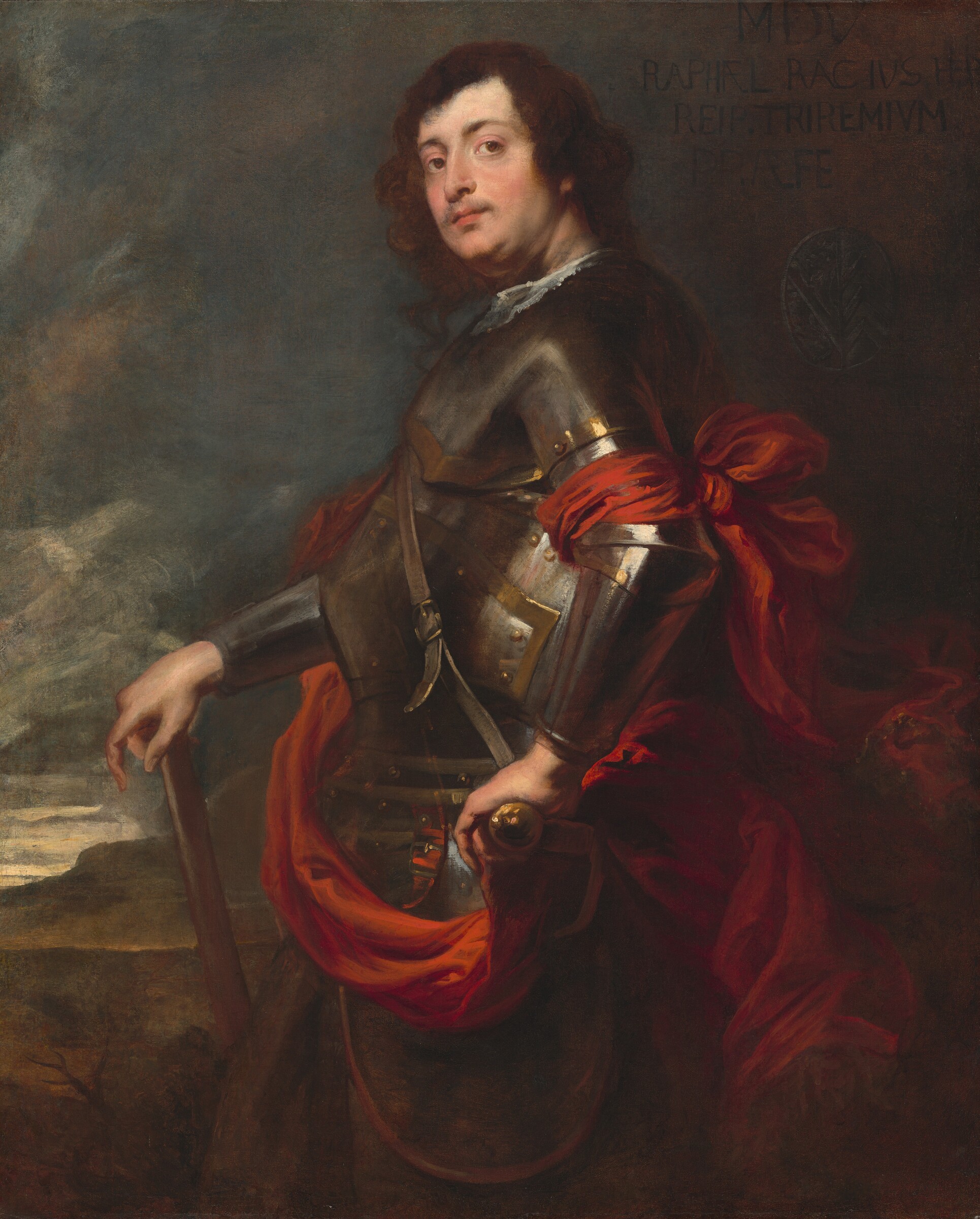
Le Portrait d'Isabella Brant est un tableau du peintre flamand baroque Antoine van Dyck réalisé en 1621 représentant Isabella Brant, la première épouse du peintre Pierre Paul Rubens. Van Dyck, qui était l'assistant et le disciple de Rubens, avait sans doute fait cette toile pour l'offrir au couple juste avant qu'il ne parte lui-même pour l'Italie.
Lire plus
Ce tableau fut longtemps attribué à Rubens qui avait lui-même réalisé plusieurs portraits de son épouse, mais il s'agit bien de l'une des toutes premières œuvres de van Dyck. Il existe une certaine similitude avec un portrait d'Isabella Brant fait par Rubens puisque dans les deux toiles la jeune femme porte la même coiffure. On peut imaginer que van Dyck se soit inspiré de la toile de Rubens faite à la même période. D'ailleurs, la similitude était renforcée par le style de van Dyck dont les coups de pinceau, le choix de la palette de couleur, du costume et du fond rouge drapé qui sont tous des éléments habituellement utilisés par Rubens.
Cette toile fait partie de la collection de la National Gallery of Art de Washington.
Notice
- Numéro d’inventaire
- 1937.1.47
Ce qu’elle montre
Au catalogue
Expositions
Exposée · Salle 42 · Bâtiment ouest, étage principal
National Gallery of Art · 29 sept. 2026 — aujourd’hui · Vérifié
Était exposée · Salle 42 · Bâtiment ouest, étage principal
National Gallery of Art · 29 sept. 2026 — 29 sept. 2026 · Vérifié
Était exposée · Salle 42 · Bâtiment ouest, étage principal
Musée de l'Ermitage · 28 sept. 2026 — 29 sept. 2026 · Vérifié
Était exposée · Salle 42 · Bâtiment ouest, étage principal
National Gallery of Art · 30 août 2026 — 28 sept. 2026 · Vérifié
Sources
- Musée de l'Ermitage
- Image : National Gallery of Art — Museum open access
Dans la vie de Anthony van Dyck
La vie entière1620
First Trip to London to the Court of James I
In October 1620, at the age of twenty-one, Van Dyck moved to London to the court of King James I at the urging of the Duke of Buckingham and the Earl of Arundel; he received an annual pension of one hundred pounds sterling from the king.
20 November 1621
Departure for Italy, Arrival in Genoa
In 1621 Van Dyck decided to go to Italy; Rubens supplied him with funds and letters of introduction. On 20 November 1621 he arrived in Genoa and remained in Italy for six years, where his fame as a portraitist was consolidated.
winter 1622
Winter in Venice, Studying Titian
Van Dyck spent the winter of 1622 in Venice, where, accompanied by Titian's nephew Cesare Vecellio, he fulfilled a long-held dream of seeing the works of Titian and Paolo Veronese; on the way he stopped in Bologna and Parma, where he admired Correggio's frescoes.
1622
Journey to Rome
In February 1622 Van Dyck left for Rome, where he stayed until August of that year and for most of 1623; he was introduced into the best circles of society and copied Renaissance masterpieces at the Palazzo Ludovisi and the Villa Borghese.