 Anthony van DyckFlandre, 1599–1641
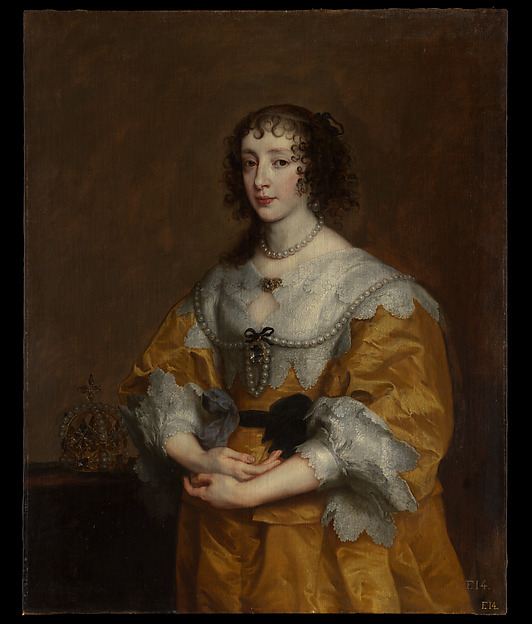
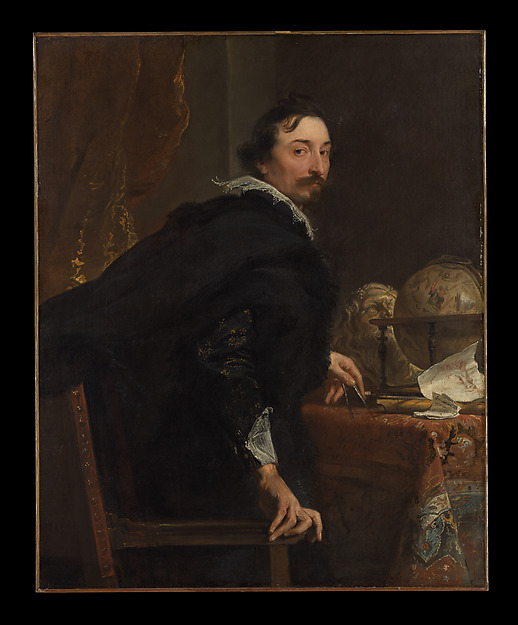
Lucas van Uffel (died 1637)
Peut-on la voir ?
Oui, exposée actuellement
Où est « Lucas van Uffel (died 1637) » aujourd’hui ? Metropolitan Museum of Art, Salle 618, New York. Oui, exposée actuellement. Vérifié 29 septembre 2026.

New York, États-Unis
Ouvert· jusqu’à 21:00
Présentée au public.
- Vérifié
- Dans cet état depuis
- Source
- Le musée
Notice
- Numéro d’inventaire
- 14.40.619
Ce qu’elle montre
Au catalogue
Sources
- Metropolitan Museum of Art
- Image : Metropolitan Museum of Art — Open Access (CC0)
Dans la vie de Anthony van Dyck
La vie entière1620
First Trip to London to the Court of James I
In October 1620, at the age of twenty-one, Van Dyck moved to London to the court of King James I at the urging of the Duke of Buckingham and the Earl of Arundel; he received an annual pension of one hundred pounds sterling from the king.
20 November 1621
Departure for Italy, Arrival in Genoa
In 1621 Van Dyck decided to go to Italy; Rubens supplied him with funds and letters of introduction. On 20 November 1621 he arrived in Genoa and remained in Italy for six years, where his fame as a portraitist was consolidated.
winter 1622
Winter in Venice, Studying Titian
Van Dyck spent the winter of 1622 in Venice, where, accompanied by Titian's nephew Cesare Vecellio, he fulfilled a long-held dream of seeing the works of Titian and Paolo Veronese; on the way he stopped in Bologna and Parma, where he admired Correggio's frescoes.
1622
Journey to Rome
In February 1622 Van Dyck left for Rome, where he stayed until August of that year and for most of 1623; he was introduced into the best circles of society and copied Renaissance masterpieces at the Palazzo Ludovisi and the Villa Borghese.
1624
Quarantine During the Plague in Palermo
In Palermo Van Dyck found himself in quarantine during the plague of 1624, one of the most severe in Sicily's history; there he created an important series of paintings of Saint Rosalia, the city's patroness, establishing her iconography for the Italian Baroque.
1624
Invitation to Palermo
In April 1624 Emmanuel Philibert of Savoy, Viceroy of Sicily, invited Van Dyck to Palermo to paint his portrait.