 Paul KleeAllemagne, 1879–1940
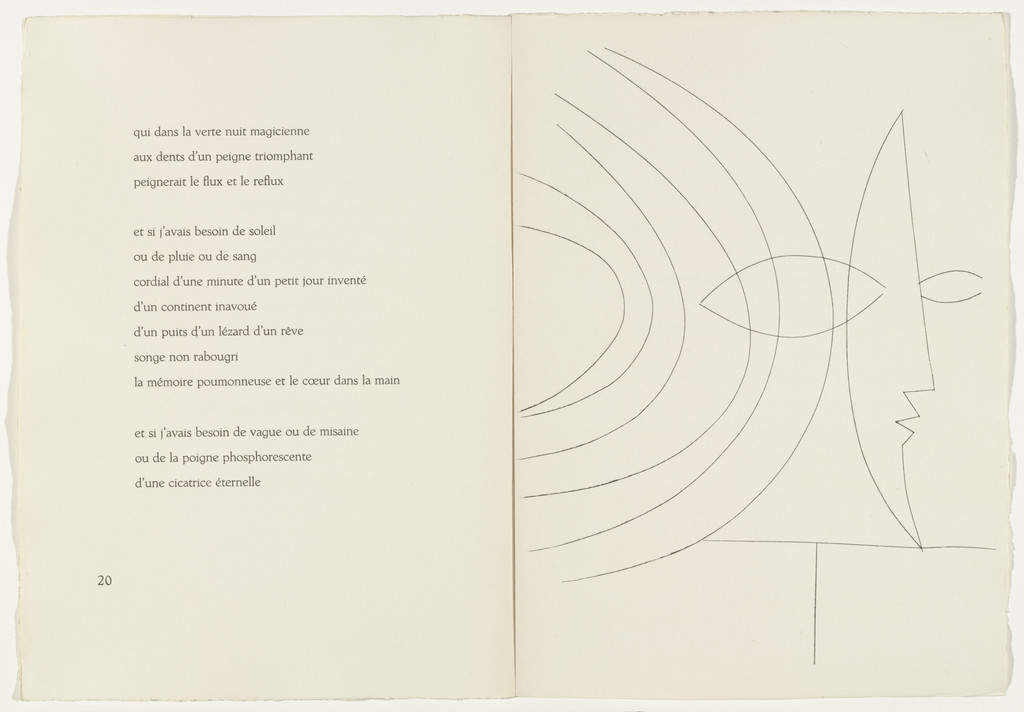
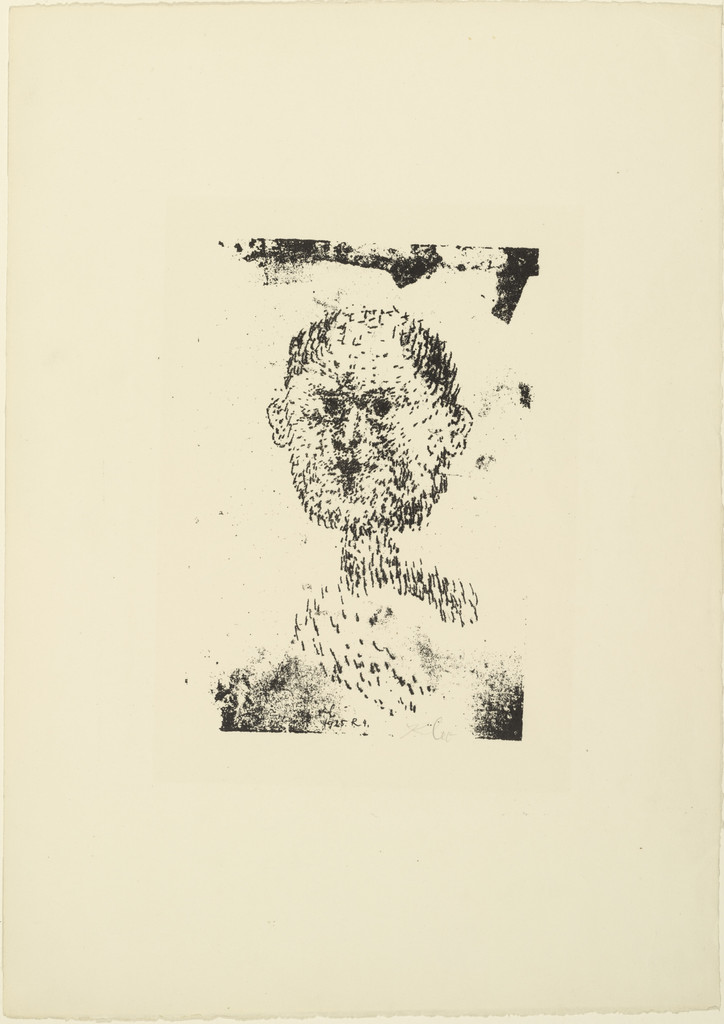
Head (Kopf)
Peut-on la contempler ?
Elle ne reçoit pas en ce moment

Museum of Modern Art
New York, États-Unis
Elle appartient à la collection, mais n’est pas présentée en ce moment.
- Vérifié
- Source
- Les données de collection du musée lui-même
Notice
- Numéro d’inventaire
- 122.1946
Au catalogue
Sources
- Museum of Modern Art: the museum's own open data · obtenue il y a 13 jours
- Image : Museum of Modern Art — © the artist or rights holder
Pendant ce temps, chez Paul Klee
La vie entière1921–1931
The preliminary course on the “theory of form”
Klee developed a preliminary course in the “theory of form” that began with the “point as the beginning of all beginnings”, moving through space, and the “cosmic egg” from which line, spiral, square, circle and cube are born. Students listened to lectures illustrated with Klee’s own abstract watercolours and then painted their own, trying to express movement, balance, flight and tension.
1923
Galka Scheyer and the “Blue Four”
At the instigation of Galka Scheyer the “Blue Four” was formed — Klee, Kandinsky, Lyonel Feininger and Alexej von Jawlensky. Scheyer subsequently organised exhibitions of their work in the United States.
26 January 1924
The lecture “On Modern Art” in Jena
At his exhibition at the Kunstverein in Jena Klee delivered the lecture “On Modern Art” (Über moderne Kunst).
1924–1925
Success with the Paris Surrealists
In 1924 Klee exhibited in Paris for the first time and became a hit with the French Surrealists, who were drawn to his partly morbid motifs. At the Paris Surrealist exhibition of 1925 Max Ernst was impressed by his work.
1928–1929
A journey to Egypt
Egypt impressed Klee less than Tunisia, yet in the desert he felt an almost mystical bond with the land: he was drawn to the proportions of the ancient funerary monuments and to the esoteric numerology by which they were built. His later “Ad Parnassum” was influenced by the trip.
1931
Leaving the Bauhaus for the Düsseldorf Academy
Teaching at the Bauhaus shifted ever more from painting towards an architectural aesthetic, which no longer suited Klee: in 1931 he gave up his post there and became a professor at the Düsseldorf Academy of Art.