ART WIKI32 963 en salle
CarteCollectionArtistesMuséesExpositionsJournal
Connexion

ART WIKI

Où est accroché le chef-d’œuvre, et quand on vous laisse entrer.

Collections : Art Institute of Chicago, Cleveland Museum of Art, Galerie Tretiakov, Hirshhorn Museum and Sculpture Garden, J. Paul Getty Museum, Metropolitan Museum of Art, Minneapolis Institute of Art, Musée de l'Ermitage, Musée des Beaux-Arts Pouchkine, Musée du Louvre, musée national d'art asiatique, Musée russe, Musées d'Art de Harvard, Museum of Modern Art, National Gallery of Art, National Portrait Gallery, Rijksmuseum Amsterdam, Smithsonian American Art Museum, Statens Museum for Kunst, Victoria and Albert Museum, Villa Getty, Whitney Museum of American Art, Catalogue d’État du fonds muséal de Russie (274 musées), Europeana (19 musées), Wikidata (6 musées), Paris Musées (12 musées) et Joconde, la base des musées du ministère de la Culture (495 musées). Les images appartiennent à leurs ayants droit.

Rubriques

  • Carte
  • Recherche
  • Collection
  • Chefs-d’œuvre
  • Exposées en ce moment
  • Artistes

Et aussi

  • Musées et galeries
  • Expositions
  • Journal
  • D’où viennent les données
  • Confidentialité et cookies
AccueilCarteCatalogue
  1. Collection/
  2. Minneapolis Institute of Art/
  3. Five Sparrows on Bamboo
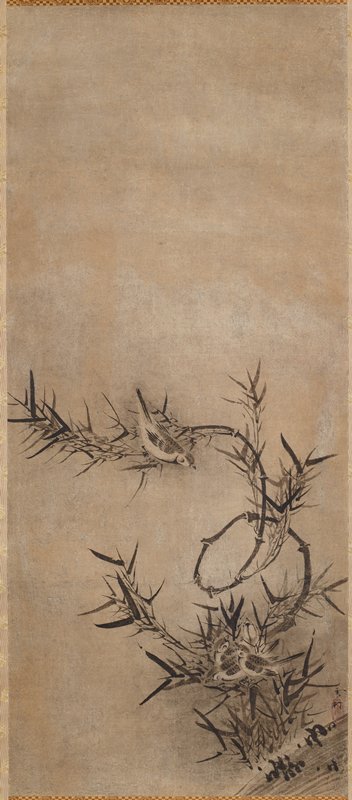
Five Sparrows on Bamboo, Traditionally attributed to Sesson Shūkei, 16th century
TTraditionally attributed to Sesson ShūkeiJapon

Five Sparrows on Bamboo

16th century · Painting

Peut-on la contempler ?

Elle ne reçoit pas en ce moment

Minneapolis Institute of Art

Minneapolis, États-Unis

Elle appartient à la collection, mais n’est pas présentée en ce moment.

Vérifié
il y a 3 jours
Dans cet état depuis
25 sept. 2026
Source
Le musée
Sur la cartePage du musée

À propos du tableau

In the 1500s and 1600s Japanese painters created works inspired by the Chinese Zen monk-painter Muqi Fachang (active c. 1210–after 1269). Sometimes they painted in his style, and other times they painted subjects associated specifically with him. This painting does both: the subject matter and the painting style hearken back to Muqi. Japan’s military rulers owned a painting of sparrows on bamboo by Muqi. This painting became well known because it was copied and distributed widely. Japanese people came to associate this subject with Muqi.

Lire la suite

Here, a Japanese artist shows a family of sparrows on a corkscrewing shoot of bamboo. Four chicks are huddled near the ground, while their mother watches over them from above. The birds are all painted without any outlines; instead, their bodies are described using areas of diluted ink-wash on top of which small brushstrokes indicate the birds’ eyes, beaks, feathers, etc. This technique, known in China and Japan as “boneless” (i.e., without contour lines), was associated in Japan with Muqi, whose works helped introduced this technique to Japan.

Minneapolis Institute of Art

Notice

Numéro d’inventaire
2013.29.32

Au catalogue

PeinturesEncrePeinture japonaiseJapon

Sources

  • Minneapolis Institute of Art
  • Image : Minneapolis Institute of Art — public domain
Sous le même toit : Minneapolis Institute of Art

Page du musée
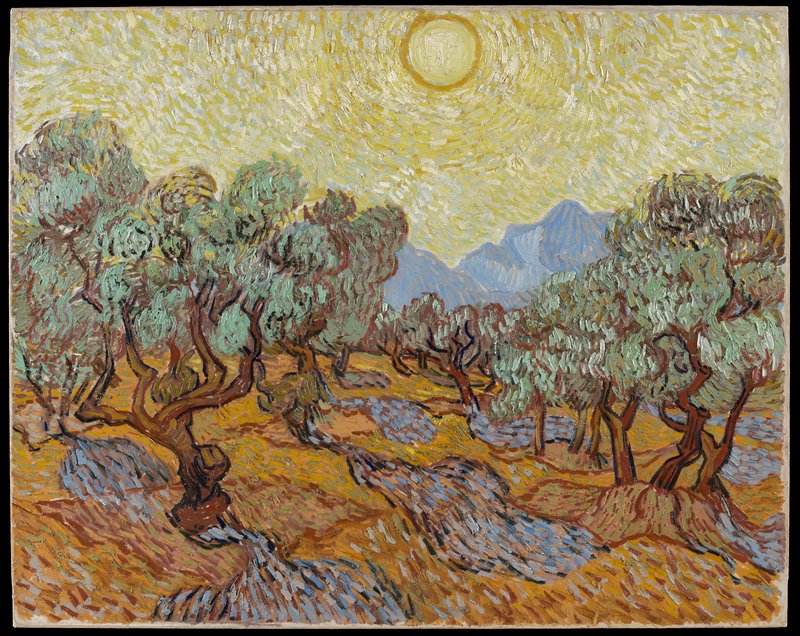
Olive Trees, Vincent van Gogh, 1889

Vincent van Gogh

Olive Trees, 1889

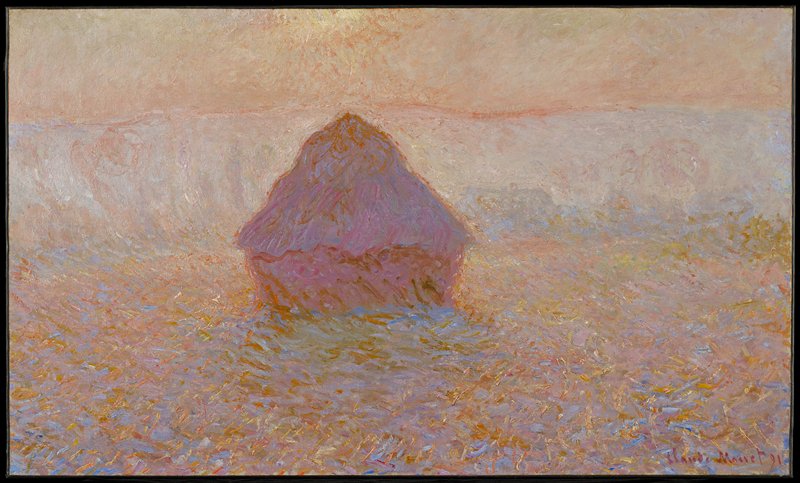
Grainstack, Sun in the Mist, Claude Monet, 1891

Claude Monet

Grainstack, Sun in the Mist, 1891

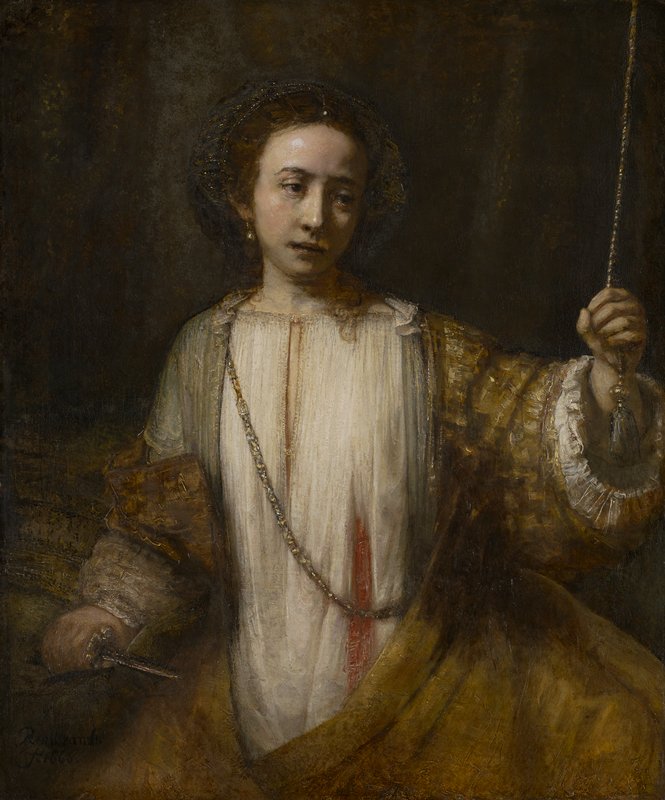
Lucretia, Rembrandt van Rijn, 1666

Rembrandt van Rijn

Lucretia, 1666

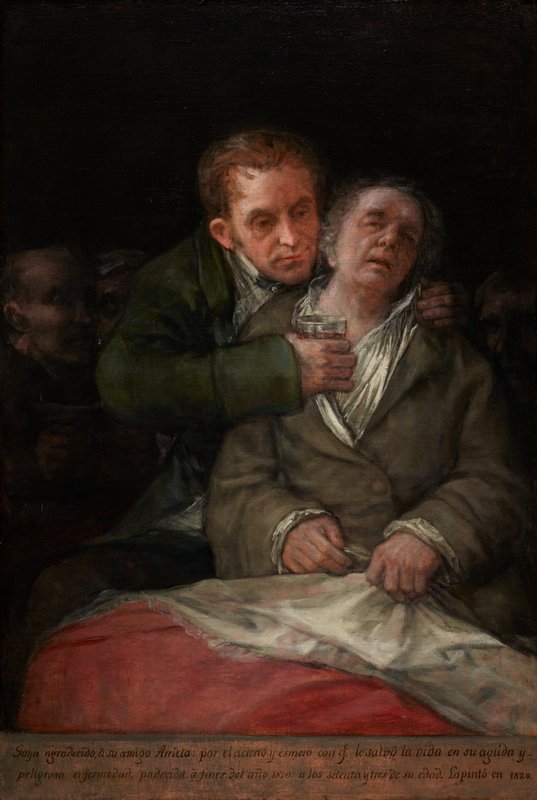
Self-Portrait with Dr. Arrieta, Francisco José de Goya y Lucientes, 1820

Francisco de Goya

Goya et son médecin, 1820

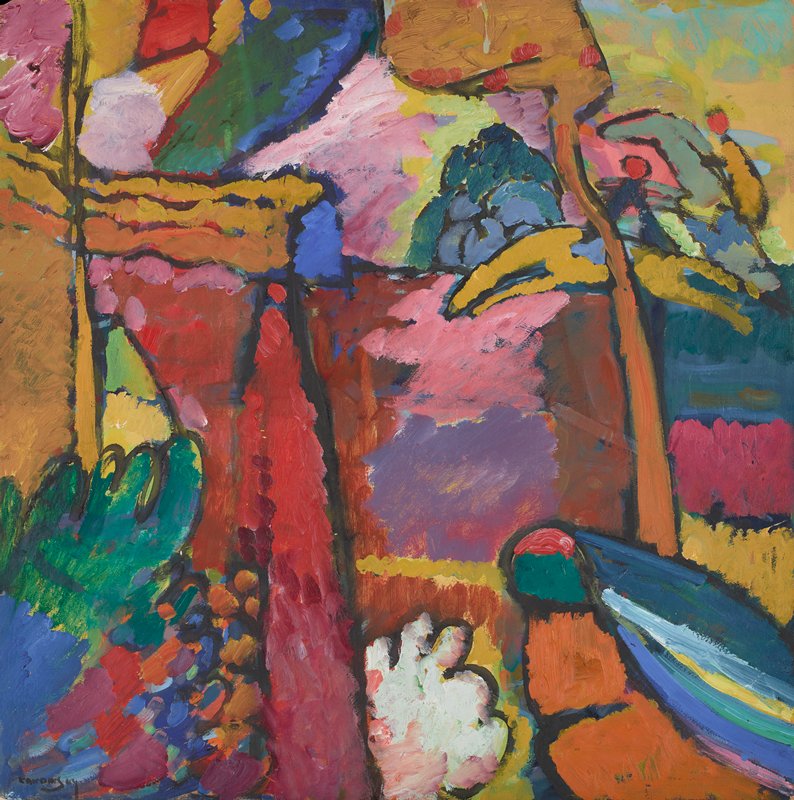
Study for Improvisation V, Vassily Kandinsky, 1910

Vasily Kandinsky

Study for Improvisation V, 1910

Tahitian Landscape, Paul Gauguin, 1891

Paul Gauguin

Tahitian Landscape, 1891

Chestnut Trees at Jas de Bouffan, Paul Cézanne, c. 1885–86

Paul Cézanne

Chestnut Trees at Jas de Bouffan, c. 1885–86

The Union of England and Scotland (Charles I as the Prince of Wales), Peter Paul Rubens, 1633–34

Peter Paul Rubens

The Union of England and Scotland (Charles I as the Prince of Wales), 1633–34