 Edward RuschaÉtats-Unis, 1937
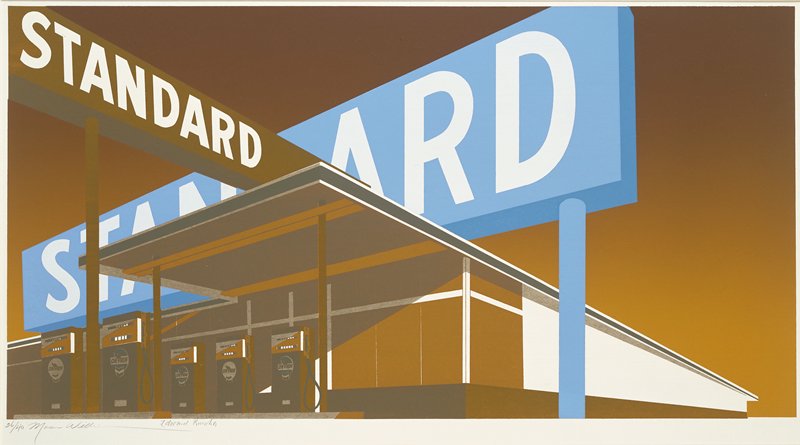
Double Standard
Peut-on la contempler ?
Elle ne reçoit pas en ce moment

Minneapolis Institute of Art
Minneapolis, États-Unis
Elle appartient à la collection, mais n’est pas présentée en ce moment.
- Vérifié
- avant-hier
- Dans cet état depuis
- 25 sept. 2026
- Source
- Les données de collection du musée lui-même
À propos de l’œuvre
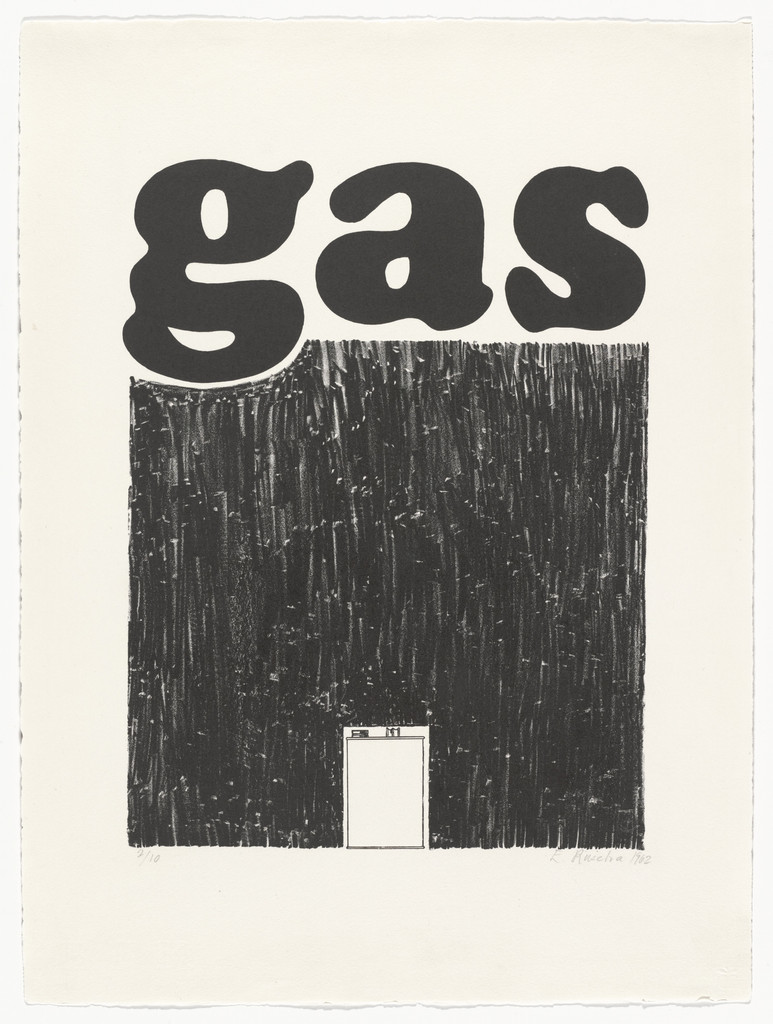
In 1962 Ruscha produced a book called Twentysix Gasoline Stations, a collection of deadpan documentary photographs he made of gas stations along Route 66 between Los Angeles and his hometown of Oklahoma City. Later he produced a painting and several screenprints based on the photographs. Like many of Ruscha's works, Double Standard has a punning title. The Standard sign urges you to buy your gas here, but it has other connotations--the model against which others should be measured, for example, and mediocre or commonplace. The title Double Standard—deriving from the crossed signs—suggests unfairness, especially in judging male and female behavior.
Minneapolis Institute of Art
Notice
- Numéro d’inventaire
- P.70.55
Au catalogue
Sources
- Minneapolis Institute of Art: the museum's own open data · obtenue il y a 5 jours
- Image : Minneapolis Institute of Art — © Ed Ruscha and Mason Williams
Pendant ce temps, chez Edward Ruscha
La vie entière1965–1969
Layout designer at Artforum as “Eddie Russia”
After college he worked as a layout artist for the Carson-Roberts advertising agency in Los Angeles, and from 1965 to 1969 as layout designer for Artforum magazine under the pseudonym “Eddie Russia”; in 1969 he was a visiting professor of printing and drawing at UCLA.
1967
Marries Danna Knego
He marries Danica “Danna” Knego, whom he met in 1965; the couple has two children, a son, Edward “Eddie”, and a daughter, Sonny.
1967–1970
Self-imposed exile from painting: gunpowder and graphite drawings
During a period of self-imposed exile from painting (1967–1970) he makes gunpowder and graphite drawings: single words in a trompe l'oeil technique, as if formed from ribbons of curling paper.
1968
First solo show in Europe, in Cologne
His first European solo show takes place in Cologne, at Galerie Rudolf Zwirner.
1970
The “Chocolate Room” at the Venice Biennale
Ruscha represents the United States at the Venice Biennale as part of a survey of American printmaking with an on-site workshop, and constructs “Chocolate Room”: 360 sheets of paper permeated with chocolate hang like shingles on the gallery walls, and the pavilion smells like a chocolate factory. In 2003 the Museum of Contemporary Art in Los Angeles acquires the installation (then worth about $1.5 million).
1970
Joins the Leo Castelli Gallery
He joins the Leo Castelli Gallery; his first solo exhibition there will come only in 1973.