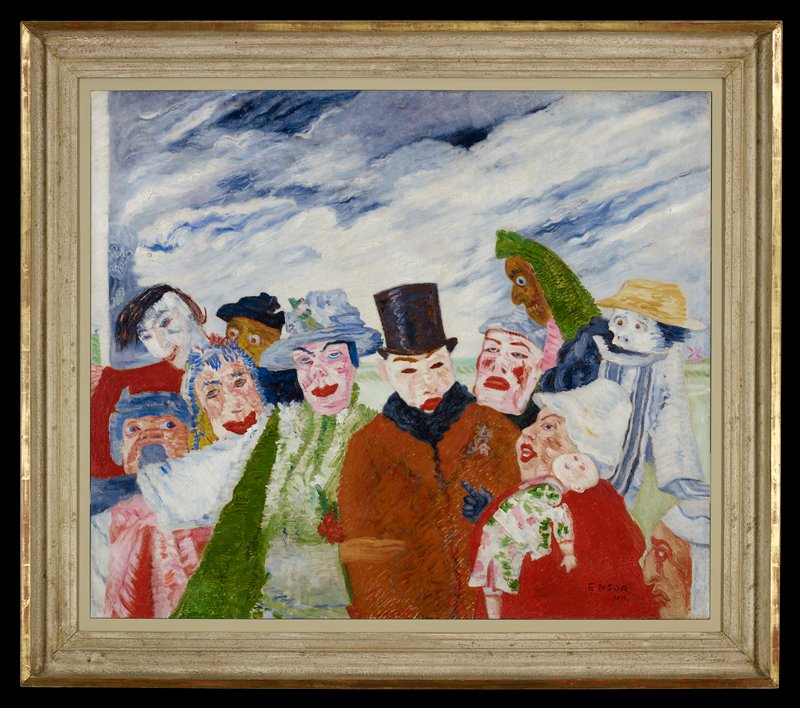
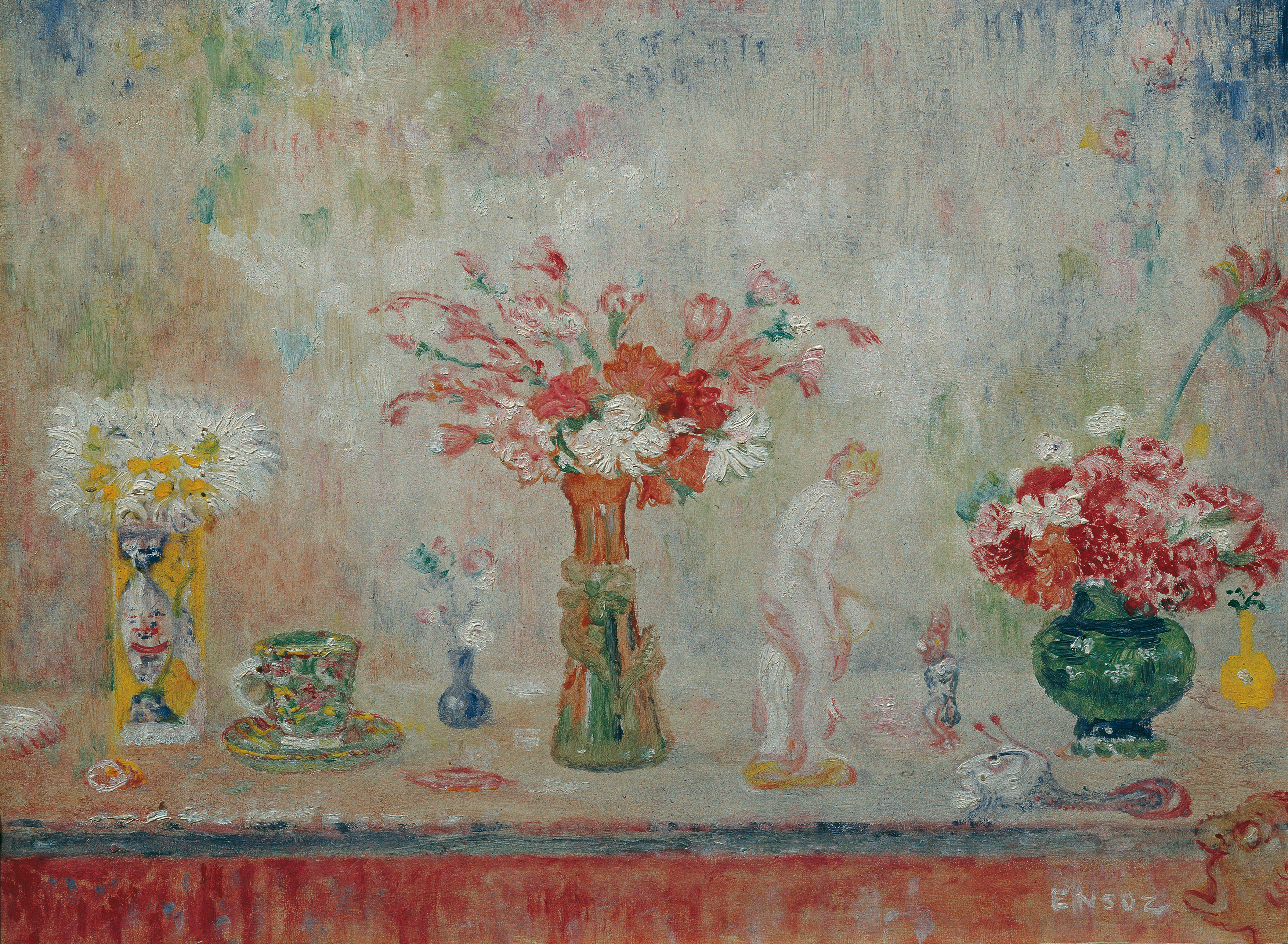
Ensor, JamesBelgique, 1860–1949
Death of Jezebel
Peut-on la voir ?
Pas exposée actuellement
Où est « Death of Jezebel » aujourd’hui ? Collection: Art Institute of Chicago, Chicago. Pas exposée actuellement. Vérifié 29 septembre 2026.

Chicago, États-Unis
Elle appartient à la collection, mais n’est pas présentée en ce moment.
- Vérifié
- Dans cet état depuis
- Source
- Le musée
Notice
- Numéro d’inventaire
- 1960.156
Au catalogue
Sources
- Art Institute of Chicago
- Image : Art Institute of Chicago — © the artist or rights holder
Dans la vie de Ensor, James
La vie entière1860–1949 · Lieu de travail
Ostend
1877–1880
Brussels friends and the Rousseau household
At the Academy Ensor befriended Willy Finch, Fernand Khnopff and Théo Hannon, and through Hannon met Ernest Rousseau, a professor at the Free University of Brussels, whose house drew the Brussels avant-garde to debate socialist and anarchist ideas. The lady of the house, Mariette Rousseau, became one of the few women close to him, though she kept him at a certain distance.
1880
A studio in the attic of his parents' house
Disappointed by the dry teaching, Ensor left the Brussels Academy — 'an establishment for the half-blind' — and returned to Ostend, where until 1917 he worked in the attic of his parents' house above his mother's souvenir shop. There he created all his key paintings of the 19th century — even the huge “Christ's Entry into Brussels”, which, under the low ceiling, he painted now kneeling, now standing on a chair.
1881
First exhibition, with La Chrysalide
Ensor first showed his work in public, with the Belgian avant-garde group La Chrysalide in Brussels.
1882
The Paris Salon: 'rubbish'
Ensor's works were shown at the Paris Salon with the Brussels association L'Essor, but one critic called his pictures 'rubbish'.
1882
The Salon rejects “The Oyster Eater”
“The Oyster Eater”, a portrait of the artist's sister, was rejected by the Antwerp Salon, and a year later by L'Essor, because of its unconventional composition. These setbacks led Ensor to join Les XX, founded in 1883 with Khnopff, Finch and Théo van Rysselberghe among its members.